
Small Habits That Turn Self-Knowledge to Practice!
There were times when I felt utterly out of control, a realization that didn’t come with a map—only the uneasy knowledge that thinking harder wouldn’t change how I reacted. What helped was an ongoing practice of curiosity and embodiment: tiny experiments like three daily check-ins, a weekly trigger log, or a 30-day journal that forced me out of intellectual comfort and into the messy, tender territory of felt experience. Anchoring these practices in relationships—people who could notice with me, hold me accountable, or simply listen—turned isolated attempts into lasting habits. Those small, repeated actions gradually closed the gap between knowing and being, softening reactions and aligning choices so emotional intelligence shifted from a trendy idea to the steady, humane way I move through life—exactly the gentle, persistent work this blog’s conclusion urges you to begin.
Why “know yourself” matters Without a clear sense of what’s inside you—your triggers, values, habitual reactions, energy patterns, and underlying stories—you can’t intentionally choose how to respond. You’re more likely to react on autopilot: snap when stressed, avoid hard conversations, or keep burning the candle for approval. Knowing yourself gives you options. It gives you the ability to pause in that gap between stimulus and response and choose rather than default.
Instead of just writing narrative today I wanted to give you some tips and practice.
This post has 9 or 10 things you can do to improve knowing yourself. Lynette and I taught this when we were with Six Seconds and use it now in our coaching. We have seen results from these practices because it is not merely a cognitive exercise.
True self-knowledge is embodied. It combines accurate assessment with felt reflection and repeated practice. Here are practical ways to deepen the practice, plus examples you can start using today.
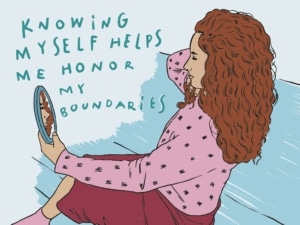
Let’s start with three daily check-ins and practice one:
One of the simplest, most powerful habits is to pause and name what you feel three times a day. Stop, breathe, and say aloud or in a journal: “I feel anxious,” “I feel tired,” “I feel excited.” Use plain language. Don’t argue with the emotion; label it.
Why it works:
Naming an emotion moves it from automatic reactivity into conscious awareness. Once named, it’s easier to examine the cause, notice bodily sensations, and choose an appropriate response.
Practice one:
- Morning: Right after waking, notice and name one feeling (e.g., “I feel hopeful”).
- Midday: Pause after lunch; name what’s present (e.g., “I feel irritated”).
- Evening: Before bed, note the headline emotion of your day and one bodily sensation that accompanied it.
Use a body scan to root awareness Intellectual awareness without bodily feeling tends to stay theoretical. A short body scan links mind and body. Sit quietly for two minutes and scan from head to toe. Notice tightness, temperature, weight, or movement without judgment.
Why it works:
Emotions show up in the body—tight chest, clenched jaw, shallow breath. Bringing attention to those sensations grounds your experience and makes emotional information actionable.
Practice two:
- When you notice a strong emotion, pause and ask: Where do I feel this in my body? Describe it (e.g., “a knot in my stomach,” “heat in my face”). Breathe into that area for three breaths and note any change.
Run a 30-day reflection journal. Short daily entries over a month reveal patterns that a single insight won’t show. Spend 10–15 minutes each day with a prompt and at the end of each week, scan for themes.
Why it works:
Repetition uncovers recurring triggers, times of day when you’re drained or energized, and stories you tell yourself.
Prompts to use across 30 days:
- What felt most alive for me today? What drained me?
- When did I feel proud or competent? When did I feel ashamed or small?
- What did I avoid and why? Whose approval did I seek today? At the end of each week, summarize the top three themes you see. Over four weeks, patterns start to feel like a map you can navigate rather than random events.
Map your triggers. Trigger mapping makes visible the situations that reliably produce strong reactions. For one week, log moments when you feel a spike of emotion: the situation, what was said or done, your immediate thought, and your bodily reaction.
Why it works:
You’re often reacting to old narratives or unmet needs, not the present reality. Mapping reveals those hidden drivers and creates space for choice.
Practice three:
- At the first sign of irritation or panic, jot down: setting, other person’s words, your first thought (“I’m not good enough”), and the physical sensations. After a week, look for clusters—maybe criticism activates shame, or ambiguity triggers control anxiety.
Clarify values with trade-offs. Values become meaningful when placed in tension. Choose five candidate values (e.g., autonomy, family, security, creativity, community) then simulate scenarios that force trade-offs.
Why it works:
It exposes the values you will prioritize under pressure—not the ones you’d like to have.
Practice 4:
- Scenario A: A secure well-paid job with predictable hours but limited creative freedom.
- Scenario B: A lower-paid, uncertain job that gives time to create. Which do you choose and why? Try multiple trade-offs (family time vs. career advancement; stability vs. adventure) and notice where your real priorities lie.
Design tiny experiments:
The brain changes when it collects evidence that a new response works. Design small, low-risk experiments to test alternatives to habitual reactions.
Why it works:
Small wins build expectancy that you can act differently, and expectancy shifts behavior.
Practices:
- If you snap when stressed, commit to a 30-second breath before responding to criticism for one week.
- If you avoid difficult conversations, set a goal to raise one small concern in the next team meeting, keeping it under two minutes.
Practice with others—anchor learning in relationships Emotional intelligence is relational. Practice intentions with a trusted colleague, friend, or partner. Share a commitment (“I’m practicing listening without giving advice”) and ask for gentle feedback.
Why it works: \
Real relationships give safety, accountability, and real-time coaching. They also mirror blind spots in ways solitary practice can’t.
Practice five:
- Pair up with someone for a weekly check-in. One person practices a chosen skill during the week and then debriefs—what happened, what felt hard, what changed.
Move from insight to embodied practice. Use role-plays, walking meetings, or breathwork to translate cognitive insight into felt experience. Embodiment helps the heart remember what the mind discovers.
Why it works:
The body stores patterns. Repeating new behaviors in a sensory-rich way helps make them automatic.

Practice six:
- In a role-play, rehearse a difficult conversation multiple times, noticing voice tone, posture, and breath. After a few tries, the physical cues make the new behavior feel more natural.
Cultivate self-compassion rituals
Knowing yourself also means treating yourself kindly when you fail to live up to your intentions. Create a short self-forgiveness script to use after missteps.
Why it works:
Compassion keeps you experimenting; shame makes you retreat. Self-kindness sustains practice.
Practice seven:
- After a misstep, say: “I’m learning. What can I try differently next time?” Repeat a two-minute compassion practice in the morning—wish someone well, then extend the same wish to yourself.
Tell a new story about who you are Identity matters. Shift the story from “I get triggered” to “I notice when I’m triggered and pause.” Act in ways that confirm the new story; identity and behavior reinforce each other.
Why it works:
When action aligns with a coherent identity, change is easier and more sustainable.
Practice eight:
- Write and repeat one identity sentence each morning for two weeks: “I am someone who pauses before responding when I feel triggered.” Notice situations where the sentence helps you choose differently.
Measure wisely. Measurement can support growth when used for learning rather than judgment. Track only whether you did the practice—did you pause, name, or experiment? Celebrate the attempts.
Why it works:
Simple metrics build momentum without turning practice into a performance.
Practice nine:
- Keep a checklist of the week’s small practices (three check-ins, one breath-before-response experiment, one compassionate reflection). Note completion, not perfection.
Knowing yourself is not the endpoint.
Begin with gentleness: change rarely arrives in a single, dramatic moment but in the small, deliberate acts that teach your body and heart new habits. By practicing curiosity, checking in with yourself a few times a day, keeping a trigger log, or committing to a short daily journal, you move from intellectual understanding to lived experience. Those tiny experiments—grounded in relationships that hold you accountable and compassionate—shrink the gap between knowing and being. Over time your reactions soften, your choices align with your values, and emotional intelligence becomes less a buzzword and more the quietly steady pulse that guides how you show up for yourself and others.
