
Walking Together: Quiet Practices of Contemplation
Some of you may have of heard about contemplation and written it off as a bunch of woo woo. But contemplation is less a set of techniques and more a shared journey inward—one we take together, step by quiet step. It slowly rewires our brains so we can meet reality as it is: without judgment, without comparison. That transformation doesn’t happen overnight. It is gentle and cumulative, like water shaping stone. Along the way we can find many paths—chanting, breath work, sitting in silence, moving with intention—and each one invites us to hold everything that arises, both joy and sorrow, in a single, loving presence.
How does that sound so far?
Imagine us walking a path that begins in ordinary life. The day presses in deadlines, relationships, the small urgencies that crowd our attention. Most of us learn to react quickly—assess, compare, jump to solution. These habits serve immediate needs but harden into patterns that narrow perception. Contemplation invites us to widen our view. It asks us to notice how we notice, to befriend the raw material of experience rather than pushing it away or pinning it to a story.
I want to tell you about two people I’ve walked with (both with permission)—Susan and Robert—because their stories are not lessons to perfect, but companions along the trail.
Susan’s life felt noisy. Her father’s illness filled the house with schedules, calls, and the relentless inner commentary that turned every decision into a moral exam. She began waking at night with her chest tight, images and judgments replaying like an old film. A counselor suggested she try five minutes before dawn: sit, breathe, and simply be.
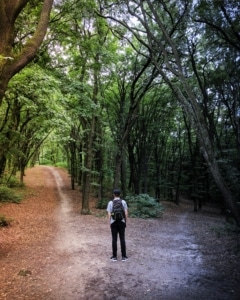
The first mornings felt absurdly small. The mind leapt from one worry to another, and Susan wanted/needed to “do” something—fix, plan, save, prevent. Instead, she learned an art of returning: (more on this subject later) notice the thought, name it (“worry,” “planning”), soften back to the breath. This part is important, because those five minutes did not erase her responsibilities; they made her able to carry them differently. The racing that used to stay with her all morning lifted. In conversations with her father, she discovered a steadier presence—less urgency, more listening. The practice didn’t change the facts of his illness, but it changed how she lived inside those facts. Contemplation became the quiet harbor she returned to when the sea of life grew rough.
Robert’s day held a strange juxtaposition: a long-awaited promotion and the sudden loss of a friend. He thought the right move was to split the feelings—celebrate at work, grieve in private. But the separation felt precarious, as if one life could not sustain both truth and grief. A friend invited him to sit in silence each evening and simply allow whatever was present. At first Robert bristled; there is something unnerving about giving grief permission to sit beside joy. Yet, as nights passed, unexpected things happened: laughter would arise in the middle of tears; a memory brightened the next day’s work; the two truths began to coexist with fewer ruptures.
These stories are not heroic. They’re ordinary evidence that when we practice together—when we commit to small, shared acts of attention—our interior landscape changes. Contemplation does not aim to make us perfect. It offers a steadying alchemy: and this is key, the ability to notice what’s happening without immediately becoming it. A breath becomes an anchor. A chant becomes a shared pulse. A silent sitting becomes a room where the mind can lay down the heavy burdens of judgment and comparison.
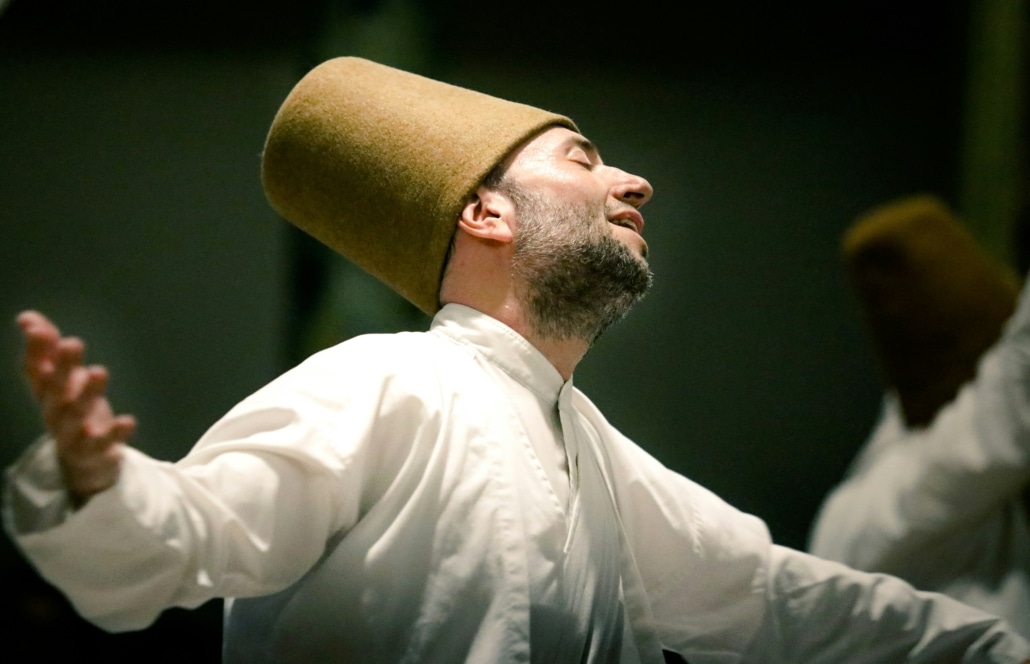
There are different ways to travel this inner landscape. Sometimes we sit and listen, letting the silence teach us how loud our lives have been. Sometimes we use sound—repeating a phrase, a mantra, a chant—so the mind has a steady thread to follow back when it wanders. Sometimes we move with attention, walking slowly until each footfall becomes a meditation. None of these is a destination; each is a doorway. Together, they form the landscape of a contemplative life: varied, alive, and practical.
I invite you now to picture a day of shared, small practices—please, not as a checklist but as moments where we meet ourselves. Morning might begin with a few breaths, a communal inhale that reminds us we are alive and present. Later, when midday fatigue sets in, a short whisper of a mantra can be a thread that pulls us home. In the afternoon, a slow walk with a friend—no agendas, just steps—becomes a moving conversation between body and world. Evening can be the time we sit in silence and allow the day’s textures—joys, sorrows, confusions—to rest together in one field of attention.
Rumi’s poem here says it all.
Out beyond ideas of wrongdoing and right doing,
There is a field. I’ll meet you there.
When the soul lies down in that grass,
The world is too full to talk about.
Ideas, language, even the phrase each other
Doesn’t make any sense.
On this path, what changes is not our need for love, success, safety, or meaning. Those needs persist. What changes is our relationship to them. Contemplation teaches us to notice the story-making mind—the one that compares, judges, and colors experience with old fears. Instead of neutralizing feelings, we learn to enlarge the capacity that holds them. We become more capable of carrying paradox: grief and gratitude, loss and possibility, fatigue and wonder. The result is not stoic suppression but a kind of spacious intimacy with life.
There is a tenderness in learning alongside others. Practicing with a friend, a small group, or even in a city park where strangers sit in the same silence creates a subtle reciprocity. Each person’s steadiness supports the others. We become witnesses to one another’s interior worlds, without the demands of fixing or advising. In that shared attention, something else is cultivated: humility. We remember that everyone carries hidden weight. We learn to offer simple acknowledgments— “I see you,” “I’m here”—that, in their quietness, are often enough.
This is not a prescription for ignoring injustice or avoiding action. Contemplation can deepen our capacity for compassionate action. When we don’t rush to judgment, we’re better able to discern the right next step. We act from clarity rather than from the quick comfort of being right. In this way, contemplative practice becomes a form of social courage, because it helps us face hard truths without closing.
The journey is patient. It does not demand dramatic change. It starts with small, shared choices—breathing before reaching for the phone, exchanging a few minutes of silence with another, walking slowly with attention. Over time, those choices rewire us. The brain’s old grooves remain, but new pathways form that allow for a kinder, steadier response to life’s surprises.
So let us travel together. Let us try a breath, a chant, a silent sitting, a mindful step. Let us notice when comparison or judgment arises and gently bring ourselves back to what’s here. When sorrow visits, we will not exile joy. When joy arrives, we will not pretend sorrow is absent. We will learn to hold both with a broad, loving hand.

Contemplation asks only for presence. It asks us to be there for the small moments because they are the scaffolding of the large ones. In the ordinary repetitions of daily life—cups of tea, brief phone calls, evening walks—there is an invitation: to slow, to notice, to hold. In accepting that invitation together, we find that our lives are not fractured into neat compartments but held in a single, warming field of attention. Joy and sorrow sit beside one another, seen and loved. And gradually, without fanfare, our minds and hearts rearrange to meet the world as it is—open, compassionate, and awake.


Leave a Reply
Want to join the discussion?Feel free to contribute!