
Posts

From EQ Theory to Heart: The Three Intentions Practice

You’ve probably heard the phrase “emotional intelligence” thrown around in meetings, on LinkedIn posts, and in self-help emails. It’s become one of those buzzwords that can feel both promising and slippery — promising because it suggests we can get better at being human with each other, slippery because it can stay as a concept in our minds without ever changing how we live. Lynette and I learned this the hard way.

Years ago, when EQ still lived a bit on the edges of mainstream leadership development, we fell into it in a way that felt like fate. We trained with Six Seconds — the Emotional Intelligence Network — and with Josh Freedman, who was and is leading the organization. Back in those days Josh was able to be pretty much one on one with people that were interested in EQ, and we learned a lot from him. We didn’t just take a course or two; we drank deeply. We took every training Six Seconds had at the time and offered it through our company, Spirit of EQ. By learning the tools and the models, and eventually served as Regional Network Directors for North America we found out the meaning of a deeper walk with our emotions.And that meant we were surrounded by people who had a real heart for change: coaches, educators, leaders who wanted to bring more humanity into their work and lives.

But here’s a truth we discovered: no matter how many models you memorize, how many assessments you score, or how many workshops you deliver, moving emotional intelligence from the head into the heart — truly owning it — is harder than it looks. Intellectual understanding is tidy and safe. It sits in the mind, where ideas can be argued and adjusted. The heart, by contrast, is raw and messy. Owning EQ means translating insight into felt experience and consistent action. It means living it, not just thinking about it.

What we learned made the difference between clever jargon and more about structure, practice, and values. Their approach centers around three practical intentions that are easy to understand and hard to neglect: Know Yourself, Choose Yourself, Give Yourself. These are not slogans. They’re invitations to live differently.

Know Yourself This is the foundation. If you don’t know what’s living inside you — your triggers, your default reactions, your values and fears — you can’t intentionally choose how to respond. Six Seconds and its SEI tools support accurate self-assessment, and that’s a useful starting point. But assessment without felt reflection is like reading your own weather report without stepping outside. To own EQ in your heart, you must turn awareness into felt reality.

Practice:

  • Start small with regular check-ins: pause three times a day and name what you feel (not just what you think). Use simple language: “I feel anxious,” “I feel tired,” “I feel excited.” Naming an emotion moves it from automatic reactivity to conscious awareness.
  • Use a body scan: where do you feel that emotion? A tight chest, a knot in the stomach, a quickened heartbeat? Bringing attention to bodily sensations roots intellectual understanding in bodily truth.

Choose Yourself This is the hinge. Knowing yourself gives you options; choosing yourself means you act on them intentionally instead of re-acting. It’s about the space between stimulus and response that Viktor Frankl talked about — that space is where EQ lives.

Practice:

  • Identify one pattern that doesn’t serve you (e.g., snapping when stressed, avoiding tough conversations). Define a tiny alternative action you can take in moments of stress and practice it relentlessly.
  • Anchor to values. If kindness is important to you, pre-decide what a small kind action looks like when you feel defensive. That pre-decision helps you act from choice, not from old habit.

Give Yourself This is the outward expression. EQ is not an internal hobby; it’s a way of relating. When you give from a place of presence and purpose, the heart opens. Give Yourself also means self-compassion — you must offer yourself the same patience you give others while you’re learning.

Practice:

  • Practice small acts of service or connection that align with your values. These don’t have to be grand: a sincere thank-you note, a five-minute listening session with a colleague, or arriving ten minutes early to be fully present in a meeting.\
  • Build a ritual of self-forgiveness. When you fail (and you will), practice an internal script of learning rather than self-judgment: “I’m learning. What can I try differently next time?”

Bringing these three intentions into daily life is how EQ stops being a theory and becomes a way of living. But there are still practical obstacles: busyness, skepticism, and the defense mechanisms that keep us stuck in the head. Here are concrete ways we learned to bridge that gap — ways that helped the people we worked with when we were regional directors, and that helped us in our own lives.

And here is the part where I do a shameless self-promotion: we at Spirit of EQ can help you with these trainings.

  1. Use tiny experiments to build evidence

The brain cares about results. When you run small experiments — “Today I’ll breathe for 30 seconds before responding to criticism” — you gather evidence that different responses work. Accumulated evidence rewires expectation and hence behavior.

  1. Anchor learning in relationships EQ isn’t a solo sport.

Practice with a trusted person: share your intention (“I’m practicing listening without giving advice”), ask for feedback, and debrief what happened. Real relationships provide both safety and accountability.

  1. Move from intellectual insight to sensory experience.

 We often “know” something in our mind without sensing it in our body. Use approaches that require embodiment: role-plays, expressive movement, breath work, or even walking meetings where you name feelings aloud. The body remembers what the mind forgets.

  1. Create an identity shift– Tell a new story about yourself:

not “I’m someone who gets triggered,” but “I’m someone who notices when I’m triggered and pauses.” Identity influences action. The more you act from that story, the more the heart will follow. Reframe, reframe, reframe.

  1. Practice compassion rituals Moving from head to heart requires warmth toward yourself and others.

Start each day with a two-minute compassion practice: think of someone you care about and wish them well, then extend that same wish to yourself. Science and tradition both show compassion practices open the heart.

  1. Use measurement to fuel growth (wisely).

Six Seconds’ approach includes measurement tools like the SEI assessment to track progress. Measurement is useful when it’s used for learning, not judgment. Use data to celebrate growth and to identify patterns you want to shift — not to shame yourself.

  1. Connect purpose with practice

 People consistently embody EQ when their practices are connected to a larger purpose. Ask yourself: “Why do I want to get better at emotional intelligence? What would that allow me to bring to my family, team, or community?” When the head’s motivation aligns with heart-felt purpose, change accelerates.

A story that stays with me: we were running a regional workshop and one participant, a manager of a busy nonprofit team, was skeptical. He’d been to countless trainings and felt they were mostly fluff. Halfway through, during an exercise to name emotions and bodily sensations, he blurted out that he’d always been taught to “keep his face on.” The muscles around his eyes relaxed for the first time in the workshop. He admitted that for years he’d been protecting himself by staying emotionally flat. That admission was intellectual, but the group’s non-judgmental witnessing shifted something in him — his shoulders sagged, his voice softened — and for the first time in years he felt something like relief. He later told us that he didn’t become a different person overnight, but that one small felt moment made it possible for him to experiment with being authentic. He started a weekly habit of one minute of naming before staff meetings and eventually began to model vulnerability for his team.

That’s the turning point we saw again and again: an intellectual insight met with a felt experience, supported by practice and community. That’s how EQ moves from the head to the heart.

If you want to own EQ — not just understand it — begin where you are. Choose one small practice from above and make it non-negotiable for a week. Tell someone about what you’re trying. Measure nothing more than whether you did the practice. Notice the felt changes. Then expand.

The work of those many years showed us that emotional intelligence is less a destination and more a living skill — like learning a language or playing an instrument. You won’t master it in a weekend, but you can grow it every day. And when you do, something quietly powerful happens: your choices come from a place of alignment, your relationships deepen, and your life becomes an expression of the values you claim.

We’ve carried that lesson through our careers and into our everyday lives. We still study, we still measure, and yes, we still read the research. But what matters most is the slow, steady translation of insight into action — the felt practice of showing up differently. That’s how EQ stops being a buzzword and starts being a way of living from the heart.

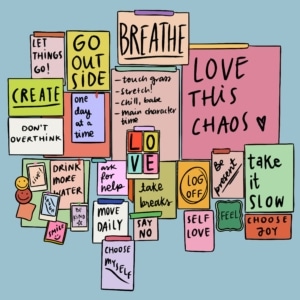
Walking Together: Quiet Practices of Contemplation

Some of you may have of heard about contemplation and written it off as a bunch of woo woo. But contemplation is less a set of techniques and more a shared journey inward—one we take together, step by quiet step. It slowly rewires our brains so we can meet reality as it is: without judgment, without comparison. That transformation doesn’t happen overnight. It is gentle and cumulative, like water shaping stone. Along the way we can find many paths—chanting, breath work, sitting in silence, moving with intention—and each one invites us to hold everything that arises, both joy and sorrow, in a single, loving presence.

How does that sound so far?

Imagine us walking a path that begins in ordinary life. The day presses in deadlines, relationships, the small urgencies that crowd our attention. Most of us learn to react quickly—assess, compare, jump to solution. These habits serve immediate needs but harden into patterns that narrow perception. Contemplation invites us to widen our view. It asks us to notice how we notice, to befriend the raw material of experience rather than pushing it away or pinning it to a story.

I want to tell you about two people I’ve walked with (both with permission)—Susan and Robert—because their stories are not lessons to perfect, but companions along the trail.

Susan’s life felt noisy. Her father’s illness filled the house with schedules, calls, and the relentless inner commentary that turned every decision into a moral exam. She began waking at night with her chest tight, images and judgments replaying like an old film. A counselor suggested she try five minutes before dawn: sit, breathe, and simply be.

The first mornings felt absurdly small. The mind leapt from one worry to another, and Susan wanted/needed to “do” something—fix, plan, save, prevent. Instead, she learned an art of returning: (more on this subject later) notice the thought, name it (“worry,” “planning”), soften back to the breath. This part is important, because those five minutes did not erase her responsibilities; they made her able to carry them differently. The racing that used to stay with her all morning lifted. In conversations with her father, she discovered a steadier presence—less urgency, more listening. The practice didn’t change the facts of his illness, but it changed how she lived inside those facts. Contemplation became the quiet harbor she returned to when the sea of life grew rough.


Robert’s day held a strange juxtaposition: a long-awaited promotion and the sudden loss of a friend. He thought the right move was to split the feelings—celebrate at work, grieve in private. But the separation felt precarious, as if one life could not sustain both truth and grief. A friend invited him to sit in silence each evening and simply allow whatever was present. At first Robert bristled; there is something unnerving about giving grief permission to sit beside joy. Yet, as nights passed, unexpected things happened: laughter would arise in the middle of tears; a memory brightened the next day’s work; the two truths began to coexist with fewer ruptures.

These stories are not heroic. They’re ordinary evidence that when we practice together—when we commit to small, shared acts of attention—our interior landscape changes. Contemplation does not aim to make us perfect. It offers a steadying alchemy: and this is key, the ability to notice what’s happening without immediately becoming it. A breath becomes an anchor. A chant becomes a shared pulse. A silent sitting becomes a room where the mind can lay down the heavy burdens of judgment and comparison.

There are different ways to travel this inner landscape. Sometimes we sit and listen, letting the silence teach us how loud our lives have been. Sometimes we use sound—repeating a phrase, a mantra, a chant—so the mind has a steady thread to follow back when it wanders. Sometimes we move with attention, walking slowly until each footfall becomes a meditation. None of these is a destination; each is a doorway. Together, they form the landscape of a contemplative life: varied, alive, and practical.

I invite you now to picture a day of shared, small practices—please, not as a checklist but as moments where we meet ourselves. Morning might begin with a few breaths, a communal inhale that reminds us we are alive and present. Later, when midday fatigue sets in, a short whisper of a mantra can be a thread that pulls us home. In the afternoon, a slow walk with a friend—no agendas, just steps—becomes a moving conversation between body and world. Evening can be the time we sit in silence and allow the day’s textures—joys, sorrows, confusions—to rest together in one field of attention.

Rumi’s poem here says it all.

Out beyond ideas of wrongdoing and right doing,
There is a field. I’ll meet you there.
When the soul lies down in that grass,
The world is too full to talk about.
Ideas, language, even the phrase 
each other
Doesn’t make any sense.

On this path, what changes is not our need for love, success, safety, or meaning. Those needs persist. What changes is our relationship to them. Contemplation teaches us to notice the story-making mind—the one that compares, judges, and colors experience with old fears. Instead of neutralizing feelings, we learn to enlarge the capacity that holds them. We become more capable of carrying paradox: grief and gratitude, loss and possibility, fatigue and wonder. The result is not stoic suppression but a kind of spacious intimacy with life.

There is a tenderness in learning alongside others. Practicing with a friend, a small group, or even in a city park where strangers sit in the same silence creates a subtle reciprocity. Each person’s steadiness supports the others. We become witnesses to one another’s interior worlds, without the demands of fixing or advising. In that shared attention, something else is cultivated: humility. We remember that everyone carries hidden weight. We learn to offer simple acknowledgments— “I see you,” “I’m here”—that, in their quietness, are often enough.

This is not a prescription for ignoring injustice or avoiding action. Contemplation can deepen our capacity for compassionate action. When we don’t rush to judgment, we’re better able to discern the right next step. We act from clarity rather than from the quick comfort of being right. In this way, contemplative practice becomes a form of social courage, because it helps us face hard truths without closing.

The journey is patient. It does not demand dramatic change. It starts with small, shared choices—breathing before reaching for the phone, exchanging a few minutes of silence with another, walking slowly with attention. Over time, those choices rewire us. The brain’s old grooves remain, but new pathways form that allow for a kinder, steadier response to life’s surprises.

So let us travel together. Let us try a breath, a chant, a silent sitting, a mindful step. Let us notice when comparison or judgment arises and gently bring ourselves back to what’s here. When sorrow visits, we will not exile joy. When joy arrives, we will not pretend sorrow is absent. We will learn to hold both with a broad, loving hand.

Contemplation asks only for presence. It asks us to be there for the small moments because they are the scaffolding of the large ones. In the ordinary repetitions of daily life—cups of tea, brief phone calls, evening walks—there is an invitation: to slow, to notice, to hold. In accepting that invitation together, we find that our lives are not fractured into neat compartments but held in a single, warming field of attention. Joy and sorrow sit beside one another, seen and loved. And gradually, without fanfare, our minds and hearts rearrange to meet the world as it is—open, compassionate, and awake.

SEQ: Connect to Self, Others, and the World Deeply

Blending Emotional and Spiritual Intelligence: Adding connection to Yourself (awareness), Your Familiar others (belonging),, and the World (insight).

A story that shaped everything

My wife Lynette and I were at a conference in Italy for 6 Seconds when all our stuff was stolen while we stopped for lunch. We came back to the car, looked over the top of the car, and started laughing — not because nothing was lost, but because we chose meaning and connection over panic. The CEO of 6 Seconds noticed how we were handling it and suggested adding a spiritual layer to their emotional intelligence assessment, the powerhouse that had rocketed around the world into 185 countries. That seed became a one-page profile report and a 27-page development report that helps people understand how their connection in the world is working and thriving.

Spiritual Emotional intelligence (SEQ) blends thinking, feeling, and sensing clarity, emotional regulation, and a felt sense of connection and purpose. To apply this effectively, it helps to see connection at three domains: yourself, familiar others (friends/colleagues/community, family), and the world at large. Below I use the SEQ assessment — brief indicators, reflective prompts, and development actions — to help you integrate connection practically into each of the three domains.


How to use the SEQ assessment concept.

Think of this like a quick self-check: for each domain, rate yourself from 1–5 (1 = rarely / 5 = consistently). Then use the prompts and development actions to grow. The aim is not perfection but awareness and repeatable practices.

Domain 1 Awareness— Connection to Yourself (self-awareness): Quick self-check indicators:

  • I know what grounds me and can return to it when I’m shaken.
  • I treat myself with kinder language during setbacks.
  • I can identify my core values and make small choices that align with them.

Reflective prompts:

  • What makes me feel truly at home in my own skin?
  • When I’m distressed, what internal voice dominates (critic, protector, supporter)?
  • Which small gestures (breath, pause, note) make me feel anchored?

Development actions:

  • Morning Awareness Check: 2 minutes — name one value you’ll live by today and one bodily cue to monitor (e.g., tight shoulders).
  • Ritual for small setbacks: Ground (60s breathing) + Reconnect (ask: what does this reveal about what matters?).
  • Narrative rewiring: Practice telling one short story each week that emphasizes resilience and connection to yourself.

Domain 2 Belonging — Connection to Familiar Others (friends, colleagues, local community and Family): Quick self-check indicators:

  • I can express need and receive care within my family.
  • We have shared rituals that create community.
  • Conflicts are resolved in ways that preserve connection.
  • I have a balanced network: people who support me emotionally, practically, and intellectually.
  • I show up in community with consistent, small actions.
  • I both give and receive in friendships.

Reflective prompts:

  • Which friendships sustain my sense of purpose, and which drain it?
  • Which family rituals help me feel rooted? Which are missing?
  • When family tension arises, how quickly do I move to blame vs. curiosity?
  • What roles do I habitually play (rescuer, fixer, avoider), and how do they affect connection?
  • How regularly do I invest time in people closest to me?

Development actions:

  • Family “Connection Minute”: weekly check-in where each person shares one moment, they felt connected and one need.
  • Conflict pause: name emotion, ask one open question, reflect shared values before problem-solving.
  • Create a family map of connection: list people, places, and shared practices that generate belonging; keep it visible.
  • Map your Belonging Network: list 6–8 names across roles (mentor, peer, creative friend) and commit to one outreach/month per person you want to strengthen.
  • Practice compassionate curiosity: in conversation, name your feeling, then ask “What mattered most to you there?”
  • Micro-rituals of presence: three minutes of focused attention (no devices) when meeting a friend or colleague.

Domain 3 (Insight)— Connection to the World (Higher power, people all over the world, causes, and meaning). Quick self-check indicators:

  • I feel part of something bigger than myself (nature, cause, tradition).
  • I can find meaning in setbacks by connecting them to larger narratives.
  • I contribute in ways that align with my values.

Reflective prompts:

  • What larger stories (civic, spiritual, environmental) provide me with meaning?
  • Where do I experience awe or transcendence? How often?
  • What practical contribution can I make that affirms my connection to the world?
  • In workplace interactions, when do I feel most seen and when do I feel invisible?

Development actions:

  • Weekly Meaning Inventory: record three moments of connection to something larger (a natural scene, a piece of music, volunteering).
  • Public acts of connecting: small consistent contributions (time, skills, donations) to a cause you care about.
  • Embodied practice: regular time in nature or contemplative practice that cultivates a felt sense of connection.

Putting it together:

Try a simple SEQ-style one-page check (Go here for PDF)

Create your own one-page Connection Snapshot. Columns: Write each Domain | and your Current Rating (1–5) | One Strength | One Next Step. Complete it weekly for a month and watch patterns emerge. This mirrors SEQ assessments (short, actionable, feedback-driven) and invites SEQ reflection (meaning, role in the larger web).

Use this sample example of a one-page layout (use a notebook or digital note)

  • Yourself — Rating: 3 — Strength: morning ritual — Next step: add a 60-second body scan.
  • Familiar others — Rating: 2 — Strength: close colleague — Next step: reach out to two friends this month.
  • World — Rating: 3 — Strength: monthly volunteering — Next step: schedule weekly nature walks.

Practical routines to anchor the work

  • Daily micro-routine (5–10 minutes): Morning Connection Check + brief body scan. Midday pause: name feeling and three breaths. Evening: short meaning Inventory entry.
  • Weekly routine (20–30 minutes): Update one-page Connection Snapshot, plan one relational outreach, and take a reflective walk.
  • Monthly routine: Review progress across three domains, adjust network map, commit to one new public act of connection.

Why this matters Connection at multiple levels stabilizes you when life is unpredictable.

You can count on life being unpredictable.

In Italy, our laughter after theft came from inner connection (Awareness), our close relationship (Belonging), and a larger orientation to life’s story (Insight). Emotional intelligence gave us regulation; spiritual intelligence gave us purpose and perspective. Together, they help you respond with presence, resilience, and aligned connections.

Final invitation Try a one-week experiment: complete the quick self-check for the three domains on day one, use the micro-routines daily, and revisit your one-page snapshot at week’s end. Notice shifts in emotion, decisions, and relationships. SEQ is built in small, repeated acts: one breath, one question, one connection step at a time.

Go to www.spiritofe.com/blog for more posts.

Lungs Over Blame: Finding Breath Between Head & Heart

Lynette shared that I needed to read some of John Rodels stuff the other day as he wrote a poem about the brain divorcing its heart. I could not help myself and this reflection flowed from that moment. She was right I needed to read it and so do you!

His Facebook link is below.

This a long post and I appreciate your reading it.

The poem…….

my brain and
heart divorced

a decade ago

over who was
to blame about
how big of a mess
I have become

eventually,
they couldn’t be
in the same room
with each other

now my head and heart
share custody of me

I stay with my brain
during the week

and my heart
gets me on weekends

they never speak to one another

– instead, they give me
the same note to pass
to each other every week

and their notes they
send to one another always
says the same thing:

“This is all your fault”

on Sundays
my heart complains
about how my
head has let me down
in the past

and on Wednesday
my head lists all
of the times my
heart has screwed
things up for me
in the future

they blame each
other for the
state of my life

there’s been a lot
of yelling – and crying

so,

lately, I’ve been
spending a lot of
time with my gut

who serves as my
unofficial therapist

most nights, I sneak out of the
window in my ribcage

and slide down my spine
and collapse on my
gut’s plush leather chair
that’s always open for me

~ and I just sit
until the sun comes up

last evening,
my gut asked me
if I was having a hard
time being caught
between my heart
and my head

I nodded

I said I didn’t know
if I could live with
either of them anymore

“my heart is always sad about
something that happened yesterday
while my head is always worried
about something that may happen tomorrow,”
I lamented

my gut squeezed my hand

“I just can’t live with
my mistakes of the past
or my anxiety about the future,”
I sighed

my gut smiled and said:

“in that case,
you should
go stay with your
lungs for a while,”

I was confused
– the look on my face gave it away

“if you are exhausted about
your heart’s obsession with
the fixed past and your mind’s focus
on the uncertain future

your lungs are the perfect place for you

there is no yesterday in your lungs
there is no tomorrow there either

there is only now
there is only inhale
there is only exhale
there is only this moment

there is only breath

and in that breath
you can rest while your
heart and head work
their relationship out.”

this morning,
while my brain
was busy reading
tea leaves

and while my
heart was staring
at old photographs

I packed a little
bag and walked
to the door of
my lungs

before I could even knock
she opened the door
with a smile and as
a gust of air embraced me
she said

“what took you so long?”

~ john Roedel

There is a quiet brilliance in the poem you wrote, John:  a person whose head and heart have divorced, who passes the same accusatory note between them each week, who finds solace with a grounding gut and finally acceptance at the threshold of the lungs. It’s a compact, visceral image of what many of us I think feel individually—and what our culture looks like collectively: divided, exhausted, and out of breath.

This post translates that metaphor into a diagnosis of our current cultural shape and as I try to offer three practical action items any individual, workplace, or community can take to begin repairing the rupture.

The cultural symptom: head vs. heart, repeating blame

The poem’s most striking detail is the ritual of blame. The head reads the future and warns of danger; the heart catalogues the past and grieves its wounds. They cannot be in the same room. Instead, each week they pass the identical note to the other: “This is all your fault.” That single image feels painfully familiar in public life: institutions who prioritize risk management and metrics versus communities whose identity is built on memory and moral recall. Instead of conversation, they trade blame. Instead of repair, they escalate.

Hmmmmmmmmmm, sounds familiar…

On a societal level this shows up in several ways:

  • Politics and media that reward constant forecasting of doom or perpetual moral cataloguing.
  • Institutions that respond procedurally to crises without the emotional (one of my big beefs) labor needed for repair.
  • Online ecosystems that amplify immediate outrage and punish rather than slow down and reconcile.

The poem isn’t merely about individual distress; it’s a model for the cycles that wear down trust in workplaces, neighborhoods, civic institutions, and digital communities. The result: people feel split, defensive, and alone forced to manage their past and future without a shared present. More to think about here then just reading it and moving on to the next sentence.

The needed counterweight: lungs (and the role of the gut)

Two quieter figures in the poem are the gut and the lungs. The gut—an unofficial therapist—listens without pontificating. It recognizes how exhausting it is to be lodged between memory and anxiety. Its prescription is surprising: go stay with your lungs. The lungs don’t erase the past or deny future risk. Instead, they insist on the present: inhale, exhale, and be here now. Ekhart Tolle would be proud.

For a culture, the lungs are the practices and spaces where people slow down together: restorative conversations, shared rituals, community centers, deliberative forums, even workplaces that deliberately schedule time for presence and listening. These are not merely therapeutic niceties; they are the conditions for social repair. Without them, head and heart will continue their duel—and we will continue to exhaust ourselves passing notes that say, “This is all your fault.”

Three practical action items to help a culture breathe

Below are three concrete, scalable steps individuals, organizations, and local communities can take to shift from repeated blame toward shared presence, repair, and resilience.

  1. Create mandated “breathing rooms” in decision processes What it is: A formal pause or cooling period before punitive or irreversible actions—especially public accusations, disciplinary decisions, or high-stakes announcements. During the pause, parties must engage in structured listening and fact-gathering, and an impartial mediator facilitates initial dialogue. I have found that this works well and worth a try.

Why it matters: Rapid, punitive responses often deepen wounds and prevent context, nuance, and reconciliation. A short pause reduces performative outrage and gives people space to explain, listen, and recalibrate.

How to implement:

  • Organizations (companies, schools, nonprofits) adopt a “72-hour breathing rule” for major personnel decisions and public statements: no final action or public posting for 72 hours after allegations surface.
  • Workplaces appoint a small pool of trained mediators or restorative facilitators who can convene confidential listening sessions during the pause.
  • Digital communities and moderators apply a temporary hold on amplification (no trending tags, no top placement) until a brief review and mediation step has occurred.
  1. Invest in local “lungs”: community spaces for listening, repair, and presence What it is: Neighborhood-level, low-barrier spaces and programs dedicated to relational work—restorative circles, grief and memory sessions, deliberative salons, and facilitated story-sharing. These are not primarily political organizing centers; they are places to practice civic breathing.

Why it matters: Trust is rebuilt through repeated small interactions. When people practice listening and mutual storytelling in neutral settings, civic relationships strengthen and collective memory becomes reparative rather than weaponized.

How to implement:

  • Cities, libraries, and foundations fund pilot hubs (use underutilized rooms in libraries or rec centers) for monthly restorative circles that bring diverse neighbors together around guided prompts and shared meals.
  • Schools integrate restorative justice and deliberative practices into their teaching, so young people learn presence and conflict navigation early.
  • Employers sponsor offsite or on-site “presence labs”: short, guided sessions where teams practice listening, reflection, and shared breathing exercises to improve empathy and reduce reactivity.
  1. Rebalance incentives: measure relational outcomes, not just output What it is: Shift institutional metrics so success includes relational indicators—trust, reintegration rates, reduction in repeated harms, and quality of civic participation—in addition to efficiency and throughput.

Why it matters: What organizations measure is what they prioritize. If institutions reward speed, headlines, and punitive action only, they will continue to incentivize head-only solutions. Relational metrics direct attention to repair and long-term stability.

How to implement:

  • Philanthropic funders and boards require pilot programs to include qualitative evaluation of trust and reintegration (surveys, follow-ups, case studies) alongside quantitative performance data.
  • HR and leadership KPIs expand to include measures like “percent of resolved conflicts with mutual agreement,” “employee-reported psychological safety,” and “community reintegration success rate.”
  • Journalists and platforms adopt editorial policies that prioritize follow-up reporting, context, and restorative perspectives, reducing the incentive for immediate sensational headlines.

A closing invitation everyone: choose the lungs without abandoning heart or head

The poem’s final image—walking to the lungs and being met with a warm entrance—feels like an invitation rather than an escape. The lungs do not ask us to forget the past or ignore the future. They offer a place to breathe so that heart and head can eventually coexist without tearing us apart. For organizations and communities, this is a practical aim: preserve and respect memory and expertise, but build more places where presence, listening, and repair is the default

If you lead a team, a neighborhood group, or a school board, try one small experiment this month: a 72-hour breathing rule for any controversy; a one-hour restorative circle; or a change in how you track outcomes to include relational metrics. These are small structural moves but with outsized effects: they make it harder for blame to become a ritual and easier for people to find the shared present.

We cannot legislate empathy, Lynette and I found this to be true with our time at 6 Seconds, but we can design systems that make it easier to breathe together. The poem’s final line— “what took you so long?”—is not a rebuke. It’s a gentle reminder that the lungs have always been there. We only need to practice going home to them.

Thank you, John, for this wonderful look into our human journey.

Poem by John Roedel and go to his Facebook here to see other exciting posts