
Let Me Listen: Shared Humanity Love
Let Me Listen: A Love Letter to Shared Humanity (and What It Asks of Us

There’s a particular kind of courage in saying: let me listen. Not “let me fix.” Not “let me respond.” Not even “let me impress you with my empathy.” Just… listen.
In a poem by Charles Anthony Silvestri (2022), that invitation becomes the heart of a relationship—between two people, yes, but also between any two humans who have crossed paths and recognized the sacred value of another person’s inner world. I have learned that we do not need to rush to claim space; we ask permission to walk alongside someone for a while, to hear their story, to respect their silence, and to be present long enough that loneliness can loosen its grip.
If you’ve ever felt overlooked, talked over, or trapped in a conversation where you were really just waiting to be heard—this poem may land with surprising force. Because listening is not merely a skill; it’s a form of emotional attention. And emotional attention changes people.
A Brief History of Listening (That Isn’t Just “Being Quiet”)
Listening has been discussed for centuries, but what’s powerful about Silvestri’s poem is how it modernizes the idea: not listening as passive silence but listening as a relational commitment.
- In many traditions, listening is treated as a spiritual discipline. Ancient teachings often place “attentive listening” at the center of wisdom—because wisdom requires receptivity.
- In philosophy and ethics, listening becomes a way of acknowledging another person’s reality rather than dismissing it as irrelevant.
- In psychology, listening is central to connection and mental health. Therapists and counselors often emphasize that feeling truly heard can reduce stress and shame while increasing emotional safety.
- In communication research, we’ve learned that “active listening” involves behaviors—reflecting feelings, asking clarifying questions, and validating experiences—rather than simply keeping quiet. What we do in Spiritual Direction.
But Silvestri’s poem goes a step further. It frames listening as presence with boundaries: if the other person’s silence is their choice, the listener doesn’t break it. They honor it. That is both an emotional intelligence skill and a relational ethics practice: letting someone control their pacing and their vulnerability.
“We Come from Different Places” Why Listening Begins Before Speech
The poem opens with difference: “We come from different places… on different paths we journey.” This matters. Many of us approach conversation as though common ground is required before empathy can begin. Silvestri suggests the opposite: you can begin connection precisely because people are different. You can honor a person’s path without needing it to match your own.
That’s a subtle shift and a powerful one….
- Instead of asking, “Does your story make sense to me?” we start with, “What is true for you?”
- Instead of asking, “What can I say to show I understand?” we ask, “What do you need from me right now?”
- Instead of rushing to similarity, we slow down to curiosity.
Emotional intelligence begins with awareness—of self, of emotion, of impact. If you’re carrying your own anxiety into the conversation, your listening will become a performance. But if you arrive grounded, you can stay open long enough to see what’s there.
Loneliness Ends When Someone Learns Your Song
Silvestri writes about convergence: “So briefly do our lonely paths converge… Yours and mine, along this human journey.” That line hits me because loneliness isn’t always about being alone. Sometimes it’s about being misread. It’s about feeling like your story doesn’t get recognized.
Then comes one of the most striking phrases in the poem: “what hollow loss to never hear your song.” The metaphor of a “song” is more than romantic language. It implies identity—each person has a unique rhythm, a pattern of hopes and griefs, strengths and wounds. If we never listen deeply enough, we don’t just miss information. We miss meaning.
In real life, this looks like
- Someone repeating the same emotional truth because nobody responded to it the first time.
- Someone choosing silence because every previous attempt to share was met with judgment or speed.
- Someone shrinking themselves to fit the conversation, only to become quieter over time.
Listening restores dignity. It tells a person: You matter enough for me to slow down.
“Let Me Listen” The Emotional Intelligence of Being With
The poem’s repeated refrain— “Let me listen”—isn’t only a request. It’s a method. Listening here includes
- Allowing the story to be theirs.
The speaker says: “Your story never has been mine to tell—so let me listen.” This is emotional intelligence at work. Some of us accidentally steal someone’s narrative by translating it into our experiences (“That happened to me too…”). Others appropriate by concluding how the person must feel or what they must have meant. Silvestri’s speaker refuses that impulse. They don’t take over the narrative; they honor the ownership of the voice.
- Valuing the whole range of emotion.
“Your triumphs and your tears / Your trials and your fears.” Many people are comfortable with success stories but stumble with pain. Yet real listening includes joy and sorrow. It also means you don’t treat sadness as an inconvenience or “overreaction.” You recognize emotion as information.
- Staying present without forcing resolution.
Listening doesn’t always lead to solutions. Sometimes the “help” a person needs is not action but witnessing. Emotional safety often comes from being allowed to feel without being rushed to fix.
- Respecting silence as a choice.
“And if a silence is your choice to keep, then I will keep it with you.” This is especially rare. Many conversations become uncomfortable when someone stops talking, and that discomfort pushes the other person to fill space or pressure them for more. But Silvestri suggests something gentler: you can stay in the quiet and still communicate care.
If you’ve ever felt pressured to “say something” while your heart was still assembling its words, you’ll understand why that line matters. Silence is sometimes where grief breathes. Silence can also be where a person regains control after overwhelming.
“Too Long You’ve Waited” Listening Is Also an Act of Repair
The poem concludes with urgency: “Too long you’ve waited, too long, to share your journey, your song—so let me listen.” That “too long” is a mirror. It asks: how many people around us have been waiting—patiently or desperately—for someone to hear them?
Waiting may show up as
- Being consistently the “strong one,” while everyone else forgets they also need care.
- Staying agreeable, because honesty has not led to safety in the past.
- Sharing gradually, as if testing whether the listener will punish vulnerability.
When you truly listen, you don’t just respond to words—you signal that waiting is no longer necessary.
Practice Listening Like You Mean It
So, what can we do with this poem right now—today—with real emotional intelligence, not just inspiration?
Here are three practical actions you can take, whether with a partner, friend, coworker, parent, or even yourself

- Choose a listening posture for 10 minutes.
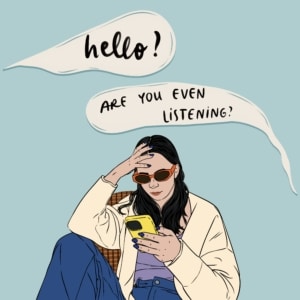
Put your phone away. Don’t plan your reply. Ask one open question: “What part of your story feels most important for me to understand?” Then reflect what you heard: “It sounds like…” and “What I’m noticing is…” Keep going until they say you got it.
- Validate the emotion before evaluating the facts.
Try phrases like,
- “That sounds painful.”
- “I can see why you’d feel that way.”
- “Your fear makes sense given what you’ve been through.”
Validation doesn’t mean you agree—it means you respect the person’s internal experience.
- Honor silence without panic.
If they go quiet, don’t rush to fill it. Let the quiet exist. You can say: “I’m here. Take your time.” That sentence alone can create safety.
And if you want a simple daily prompt: Listen for the “song.” Ask yourself: What unique rhythm is this person carrying—what are they trying to express that words can’t fully capture?
Make Listening a Way of Loving
Charles Anthony Silvestri’s poem is ultimately a vow. It says: I will not rush you. I will not take your story. I will walk beside you. And if you cannot speak yet, I will stay with your silence.
If we take that seriously, relationships change. Communities change. Even workplaces change—because listening is one of the fastest pathways to trust.
So, here’s your invitation, in the spirit of the poem:
Who in your life has waited too long to be heard?
Choose one person. Give them ten minutes of honest listening this week. Let your presence be the response. And when they share—triumphs, tears, trials, fears—remember, you don’t need to become their hero. You only need to be a safe witness.
Let me listen. Now—go do it.
Peace and every good
We come from different places,
You and I,
on different paths we journey;
let me walk beside you for a while –
let me listen.
So briefly do our lonely paths converge,
Yours and mine,
along this human journey;
what hollow loss to never hear your song –
let me listen.
Let me listen,
let me listen as you tell your story:
Your triumphs and your tears,
Your trials and your fears.
Your story never has been mine to tell –
so let me listen.
And if a silence is your choice to keep,
then I will keep it with you;
as long as we walk together,
You and I,
I will listen.
Too long you’ve waited, too long,
to share your journey, your song –
so let me listen.
– Charles Anthony Silvestri, 2022