Posts

Be the Light: Support Ser-Kallai, Heal Communities

There are moments when a single idea — compassion made practical — can change a life and, eventually, a community. That is the group I have worked alongside for the last few years. Lynette and I have served on the board and in the field, and from firsthand experience we know what this work means to people affected by poverty and trauma. That’s the promise at the heart of Ser‑Kallai. Founded in 2019 with a name that means “to be light,” Ser‑Kallai grew from the simple conviction that trauma healing, emotional intelligence, and community connection are not luxuries but essentials for thriving societies. Today, as our country faces growing emotional and social challenges, Ser‑Kallai’s programs are not only timely — they’re pivotal.

A personal beginning, a universal mission

Nathalie Caycedo’s story is the origin of Ser‑Kallai. Born in Colombia and shaped by early volunteering in neighborhoods scarred by poverty and violence, she learned that small acts of attention and care can create lasting opportunities. Years later, when she helped refugee families adjust to life in the U.S., she saw that healing comes from trust, from consistency, and from programs that teach emotional skills along with academic support.

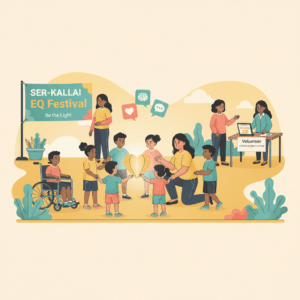
That experience seeded a nonprofit that centers emotional intelligence (EQ), trauma‑informed care, and community resilience. With help from her church, Living Word Christian Community, Nathalie and a committed team began offering after‑school programs, coaching, workshops and high‑impact EQ festivals that equip children, teens and adults to handle life’s stresses and build stronger relationships. Ser‑Kallai has already made a measurable difference across Arizona, California, Ohio and Florida, supporting foster and kinship families, federal‑custody teens, refugees and low‑income communities.

Why this work matters now

We live in turbulent times. Rates of anxiety, depression, and interpersonal conflict have surged across age groups. Children are navigating more complex emotional landscapes than prior generations. Communities dealing with the aftermath of displacement, economic strain and systemic trauma need resources that go beyond immediate aid — they need tools to rebuild capacity and hope.

Emotional intelligence is not just “soft” enrichment

It is the foundation for better decision‑making, improved school and work performance, and healthier families. When we teach children and adults how to recognize emotions, regulate responses, and build empathetic relationships, we invest in a future of lower violence, higher civic engagement, and stronger workforce readiness. Ser‑Kallai’s programs do exactly that — they transform vulnerability into resilience.

My personal perspective

Working with Ser‑Kallai has been one of the most meaningful commitments of my life. On the board and in program rooms, I’ve seen small, quiet breakthroughs that ripple outward: a teen who finds a new way to communicate with their caregiver, a parent who learns to manage their own stress so they can be present, a classroom that shifts from reactive to restorative. Those moments fill me with gratitude and hope. At the same time, I feel urgency — the need to scale what works so more families and neighborhoods can find stability and healing.

I’m proud of what Ser‑Kallai has accomplished, and I’m deeply moved by the people we serve. Every success is earned through the courage of participants, the dedication of volunteers and staff, and the generosity of supporters. Personally, I give my time and energy because I have seen the difference that consistent care and practical emotional skills make in a life. I believe that when a community learns to tend its emotional wounds, it becomes stronger and kinder.

Your gift creates tangible results

Donations to Ser‑Kallai go directly into programs that produce measurable outcomes:

• After‑school enrichment that combines academic support with EQ lessons, helping kids succeed in school while building emotional resilience.

• Trauma‑informed workshops and coaching for families affected by foster care, displacement, or systemic inequities.

• Community‑level events like EQ festivals that bring practical tools to large groups, fostering connection and collective healing.

• Virtual and in‑person training so local leaders, teachers and volunteers can replicate Ser‑Kallai’s model in more neighborhoods.

Each dollar multiplies: a workshop can reach dozens of children and their caregivers; a festival creates networks that last long after the lights go out.

How you can help?

If you’re moved by this work, there are several ways to be the light: donate, volunteer, share Ser‑Kallai’s story with friends and local organizations, or bring our training model to your school or faith community. Every action matters.

Give today: https://serkallai.org/get-involved

My closing,

I am convinced that healing and emotional education are essential building blocks for resilient communities. Ser‑Kallai is putting those ideas into practice, and it’s an honor to stand with them. Please join us — your support helps more people move from hurt to hope.

Lynette’s DMin: Deepening Spiritual-Emotional Care

There are moments in life when personal accomplishment and communal mission converge in a way that changes everything. Lynette’s completion of her Doctor of Ministry  in Spiritual Direction is precisely one of those moments. This degree represents years of disciplined study, late nights balancing family and ministry, deep reflection, and the courage to push into new theological and practical territory. But beyond the diploma lies the person I’ve always known, compassionate, inquisitive, disciplined, and humble—someone who models faithful service and thoughtful leadership. Her DMin is not merely a credential; it is a deepening of the wisdom and skill she brings to everything she touches. For our family, for me personally, and for everyone connected to Spirit of EQ, it is a cause for celebration and renewed purpose. I am profoundly proud of Lynette, and my admiration for her grows with every step she takes in service to others.

As we move forward at Spirit of EQ, Lynette’s scholarship and pastoral insight will shape how we support individuals, leaders, and communities in cultivating emotional and spiritual maturity. The Spiritual Emotional Intelligence Assessment (the SEQ) has long been our foundational tool—designed to help people name where they are spiritually and emotionally, and to chart a path toward greater resilience, clarity, and wholeness. With Lynette’s advanced training in integrating theology, emotional intelligence and practical ministry, the SEQ will become even more robust. Expect enhancements that will weave research with pastoral sensitivity: richer assessment items that capture relational patterns and spiritual practices, evidence-informed interpretation guides, and culturally attuned frameworks that honor diversity of belief, experience, and context. The goal is not simply to measure, but to illuminate—helping clients see the intersections of their inner life, relationships, and spiritual formation so they can move toward healing and flourishing.


Practically, the work we will do with clients will deepen across several dimensions. First, our assessment process will be more integrative. Rather than offering a static score, the SEQ will provide a narrative map that identifies strengths, vulnerabilities, and possibilities—linking emotional regulation and spiritual practices. This map will be used in collaborative coaching and spiritual direction contexts, helping clients translate insight into sustainable practices. Second, our interventions will be more evidenced-informed and pastorally sensitive. Using evidence-based modalities—such as emotion-focused techniques, narrative practices, and contemplative disciplines—paired with Lynette’s pastoral spiritual direction training, we will support people in learning practical tools for self-regulation, conflict navigation, and meaning-making. Third, we will expand our training offerings for leaders and teams. Churches, nonprofits, and organizations seeking emotionally intelligent spiritual leadership will find workshops, retreats, and certification tracks that marry theological depth with applied emotional skills: how to lead with empathy under pressure, how to sustain pastoral identity over a long ministry career, and how to cultivate staff and congregational wellbeing without sacrificing mission.

One of the most exciting changes is how we will incorporate qualitative, story-centered work alongside quantitative assessment. People are not numbers; their lives are narratives. Lynette’s project work emphasized case-based learning—listening deeply to life stories, isolating turning points, and carrying those insights into tailored growth plans. At Spirit of EQ, that means every person who comes to us will receive an assessment that honors their story: how they were formed, how they are coping now, and what practices or relational shifts can help them move forward. For couples and families, this approach will allow us to identify not only individual spiritual-emotional patterns but the relational rhythms that either support or undermine flourishing. For leaders, it will highlight vocational strengths, blind spots, and sustainable rhythms of work and rest that preserve long-term effectiveness.

We will also broaden our community offerings. Lynette’s work has deepened our capacity to design group experiences that cultivate corrective emotional and spiritual experiences—small groups, peer supervision cohorts for clergy, and community healing circles that use structured practices to promote trust and transformation. These community modalities are powerful because they provide both accountability and belonging. People practice new ways of relating in safe contexts and then carry those practices back into their families, workplaces, and congregations. The ripple effects are significant. When a leader learns to regulate under pressure, their staff experience decreases in burnout and increases in trust. When congregation members learn compassionate ways of speaking about pain, the entire community can become a cradle for healing rather than a site of hidden suffering.

We are also committed to elevating accessibility and cultural relevance in all our work. Lynette’s DMin emphasized contextual theology through spiritual direction application and culturally sensitive care, and that emphasis will shape how we adapt the SEQ for diverse populations. Assessments, coaching curricula, and training materials will be offered in ways that respect linguistic, cultural, and theological differences—so that people from all backgrounds can find the language and tools that resonate with their faith and experience. We will invest in partnerships with local congregations and community organizations to co-create programs that address specific needs: supporting immigrant communities, equipping inner-city pastors, or providing transitional support for people moving through major life changes.

Finally, this degree enhances our capacity to contribute to broader conversations about spiritual and emotional health. With Lynette’s research skills and pastoral credibility, Spirit of EQ will produce resources—white papers, training manuals, podcasts, and workshops—that synthesize best practices at the intersection of faith and emotional intelligence. We want to equip not only individual clients but also the wider fields of ministry, counseling, and organizational leadership with tools that are both theologically grounded and psychologically sound. Our aim is to be a resource hub: offering practical, scalable interventions that help people live not just coping lives, but flourishing lives.

None of this would be possible without the love, perseverance, and integrity Lynette has shown throughout her journey. Her achievement is both deeply personal and profoundly public—an example of how disciplined study and faithful service can amplify a mission. I am endlessly proud of her and grateful for how she continues to shape our shared work. As Spirit of EQ enters this new season, we do so with greater clarity, deeper resources, and renewed hope: to help people name their struggles, cultivate practices that sustain them, build relationships that heal, and live into the fullness of their spiritual and emotional calling. If you or someone you love is seeking a compassionate, rigorous, and practical pathway to greater wholeness, we are here to walk alongside you—now with even more training, heart, and skill than ever before.

Lungs Over Blame: Finding Breath Between Head & Heart

Lynette shared that I needed to read some of John Rodels stuff the other day as he wrote a poem about the brain divorcing its heart. I could not help myself and this reflection flowed from that moment. She was right I needed to read it and so do you!

His Facebook link is below.

This a long post and I appreciate your reading it.

The poem…….

my brain and
heart divorced

a decade ago

over who was
to blame about
how big of a mess
I have become

eventually,
they couldn’t be
in the same room
with each other

now my head and heart
share custody of me

I stay with my brain
during the week

and my heart
gets me on weekends

they never speak to one another

– instead, they give me
the same note to pass
to each other every week

and their notes they
send to one another always
says the same thing:

“This is all your fault”

on Sundays
my heart complains
about how my
head has let me down
in the past

and on Wednesday
my head lists all
of the times my
heart has screwed
things up for me
in the future

they blame each
other for the
state of my life

there’s been a lot
of yelling – and crying

so,

lately, I’ve been
spending a lot of
time with my gut

who serves as my
unofficial therapist

most nights, I sneak out of the
window in my ribcage

and slide down my spine
and collapse on my
gut’s plush leather chair
that’s always open for me

~ and I just sit
until the sun comes up

last evening,
my gut asked me
if I was having a hard
time being caught
between my heart
and my head

I nodded

I said I didn’t know
if I could live with
either of them anymore

“my heart is always sad about
something that happened yesterday
while my head is always worried
about something that may happen tomorrow,”
I lamented

my gut squeezed my hand

“I just can’t live with
my mistakes of the past
or my anxiety about the future,”
I sighed

my gut smiled and said:

“in that case,
you should
go stay with your
lungs for a while,”

I was confused
– the look on my face gave it away

“if you are exhausted about
your heart’s obsession with
the fixed past and your mind’s focus
on the uncertain future

your lungs are the perfect place for you

there is no yesterday in your lungs
there is no tomorrow there either

there is only now
there is only inhale
there is only exhale
there is only this moment

there is only breath

and in that breath
you can rest while your
heart and head work
their relationship out.”

this morning,
while my brain
was busy reading
tea leaves

and while my
heart was staring
at old photographs

I packed a little
bag and walked
to the door of
my lungs

before I could even knock
she opened the door
with a smile and as
a gust of air embraced me
she said

“what took you so long?”

~ john Roedel

There is a quiet brilliance in the poem you wrote, John:  a person whose head and heart have divorced, who passes the same accusatory note between them each week, who finds solace with a grounding gut and finally acceptance at the threshold of the lungs. It’s a compact, visceral image of what many of us I think feel individually—and what our culture looks like collectively: divided, exhausted, and out of breath.

This post translates that metaphor into a diagnosis of our current cultural shape and as I try to offer three practical action items any individual, workplace, or community can take to begin repairing the rupture.

The cultural symptom: head vs. heart, repeating blame

The poem’s most striking detail is the ritual of blame. The head reads the future and warns of danger; the heart catalogues the past and grieves its wounds. They cannot be in the same room. Instead, each week they pass the identical note to the other: “This is all your fault.” That single image feels painfully familiar in public life: institutions who prioritize risk management and metrics versus communities whose identity is built on memory and moral recall. Instead of conversation, they trade blame. Instead of repair, they escalate.

Hmmmmmmmmmm, sounds familiar…

On a societal level this shows up in several ways:

  • Politics and media that reward constant forecasting of doom or perpetual moral cataloguing.
  • Institutions that respond procedurally to crises without the emotional (one of my big beefs) labor needed for repair.
  • Online ecosystems that amplify immediate outrage and punish rather than slow down and reconcile.

The poem isn’t merely about individual distress; it’s a model for the cycles that wear down trust in workplaces, neighborhoods, civic institutions, and digital communities. The result: people feel split, defensive, and alone forced to manage their past and future without a shared present. More to think about here then just reading it and moving on to the next sentence.

The needed counterweight: lungs (and the role of the gut)

Two quieter figures in the poem are the gut and the lungs. The gut—an unofficial therapist—listens without pontificating. It recognizes how exhausting it is to be lodged between memory and anxiety. Its prescription is surprising: go stay with your lungs. The lungs don’t erase the past or deny future risk. Instead, they insist on the present: inhale, exhale, and be here now. Ekhart Tolle would be proud.

For a culture, the lungs are the practices and spaces where people slow down together: restorative conversations, shared rituals, community centers, deliberative forums, even workplaces that deliberately schedule time for presence and listening. These are not merely therapeutic niceties; they are the conditions for social repair. Without them, head and heart will continue their duel—and we will continue to exhaust ourselves passing notes that say, “This is all your fault.”

Three practical action items to help a culture breathe

Below are three concrete, scalable steps individuals, organizations, and local communities can take to shift from repeated blame toward shared presence, repair, and resilience.

  1. Create mandated “breathing rooms” in decision processes What it is: A formal pause or cooling period before punitive or irreversible actions—especially public accusations, disciplinary decisions, or high-stakes announcements. During the pause, parties must engage in structured listening and fact-gathering, and an impartial mediator facilitates initial dialogue. I have found that this works well and worth a try.

Why it matters: Rapid, punitive responses often deepen wounds and prevent context, nuance, and reconciliation. A short pause reduces performative outrage and gives people space to explain, listen, and recalibrate.

How to implement:

  • Organizations (companies, schools, nonprofits) adopt a “72-hour breathing rule” for major personnel decisions and public statements: no final action or public posting for 72 hours after allegations surface.
  • Workplaces appoint a small pool of trained mediators or restorative facilitators who can convene confidential listening sessions during the pause.
  • Digital communities and moderators apply a temporary hold on amplification (no trending tags, no top placement) until a brief review and mediation step has occurred.
  1. Invest in local “lungs”: community spaces for listening, repair, and presence What it is: Neighborhood-level, low-barrier spaces and programs dedicated to relational work—restorative circles, grief and memory sessions, deliberative salons, and facilitated story-sharing. These are not primarily political organizing centers; they are places to practice civic breathing.

Why it matters: Trust is rebuilt through repeated small interactions. When people practice listening and mutual storytelling in neutral settings, civic relationships strengthen and collective memory becomes reparative rather than weaponized.

How to implement:

  • Cities, libraries, and foundations fund pilot hubs (use underutilized rooms in libraries or rec centers) for monthly restorative circles that bring diverse neighbors together around guided prompts and shared meals.
  • Schools integrate restorative justice and deliberative practices into their teaching, so young people learn presence and conflict navigation early.
  • Employers sponsor offsite or on-site “presence labs”: short, guided sessions where teams practice listening, reflection, and shared breathing exercises to improve empathy and reduce reactivity.
  1. Rebalance incentives: measure relational outcomes, not just output What it is: Shift institutional metrics so success includes relational indicators—trust, reintegration rates, reduction in repeated harms, and quality of civic participation—in addition to efficiency and throughput.

Why it matters: What organizations measure is what they prioritize. If institutions reward speed, headlines, and punitive action only, they will continue to incentivize head-only solutions. Relational metrics direct attention to repair and long-term stability.

How to implement:

  • Philanthropic funders and boards require pilot programs to include qualitative evaluation of trust and reintegration (surveys, follow-ups, case studies) alongside quantitative performance data.
  • HR and leadership KPIs expand to include measures like “percent of resolved conflicts with mutual agreement,” “employee-reported psychological safety,” and “community reintegration success rate.”
  • Journalists and platforms adopt editorial policies that prioritize follow-up reporting, context, and restorative perspectives, reducing the incentive for immediate sensational headlines.

A closing invitation everyone: choose the lungs without abandoning heart or head

The poem’s final image—walking to the lungs and being met with a warm entrance—feels like an invitation rather than an escape. The lungs do not ask us to forget the past or ignore the future. They offer a place to breathe so that heart and head can eventually coexist without tearing us apart. For organizations and communities, this is a practical aim: preserve and respect memory and expertise, but build more places where presence, listening, and repair is the default

If you lead a team, a neighborhood group, or a school board, try one small experiment this month: a 72-hour breathing rule for any controversy; a one-hour restorative circle; or a change in how you track outcomes to include relational metrics. These are small structural moves but with outsized effects: they make it harder for blame to become a ritual and easier for people to find the shared present.

We cannot legislate empathy, Lynette and I found this to be true with our time at 6 Seconds, but we can design systems that make it easier to breathe together. The poem’s final line— “what took you so long?”—is not a rebuke. It’s a gentle reminder that the lungs have always been there. We only need to practice going home to them.

Thank you, John, for this wonderful look into our human journey.

Poem by John Roedel and go to his Facebook here to see other exciting posts