
Posts

When Family and Values Collide

On loving people, you deeply disagree with — and staying whole at the table.

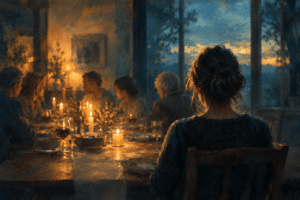
Every family has a table, and every table has a moment. It might arrive over a holiday meal, or in a text thread that turns suddenly ugly, or in the silence after someone finally says “the thing”, they’ve been holding back. It’s the moment when the people you love and the things you believe stop pointing in the same direction — when staying close to your family seems to require betraying something true about yourself, and staying true to yourself seems to require distance from your family. Love and conviction, pulling opposite ways. And it hurts!

If you’ve felt that pull, you are neither unusual nor failing. A recent 2025 survey found that nearly four in ten American adults are currently estranged from at least one family member (YouGov, 2025). And researchers who have followed thousands of parent–child relationships keep arriving at the same finding: differing values are among the strongest predictors of a family rift (Knowable Magazine). The collision we’re describing is not a private failure of your family. It is one of the defining strains of this cultural moment. Right here right now!

The two escapes

When values and family collide, most of us reach instinctively for one of two escapes. The first is to capitulate — to go quiet, to soften what we believe, to laugh off the comment and keep the peace by making ourselves smaller. The second is to cut off — to protect our values by withdrawing our presence, to win the argument by leaving the room. Both feel like solutions. Which is dualistic thinking and both are really forms of self-protection. One abandons the self to keep the relationship; the other abandons the relationship to keep the self. And neither does the thing we most deeply want, which is to remain both whole and connected.

I’ll say it plainly: I’m a centrist, and much of my extended family is not including my children. We don’t line up on politics, and honestly, and sometimes not on a few other things either. For a long time I treated those gaps as problems to be solved — as if the right sentence, delivered at the right moment, would finally fix everyone around. It never did. What changed wasn’t them; it was my awareness. I started catching the exact moment my chest tightened and my mind began drafting a rebuttal before the other person had even finished — that little internal lurch toward being right. Naming that reaction, instead of riding it, is where everything else becomes possible. I can hold my convictions firmly and still notice when I’m about to trade a relationship for a point.

Once I could see my own reactivity, the real question came into focus, and it turned out to be one of belonging: the goal at a family table isn’t agreement, it’s connection — and confusing the two is what turns a difference of opinion into a wound. I can disagree with someone and still refuse to make their place at our table contingent on sharing my views. That’s the ground insight grows in. Now, when a conversation heads toward the cliff, I get curious before I get defensive: What is my aunt actually afraid of losing? What does my cousin love that I haven’t bothered to see? Underneath most political positions is a value, and underneath most values is a story. When I stay with the story instead of arguing the position, the temperature drops. I don’t win those conversations anymore — but I don’t lose the people, either, and after years of trying it the other way, I’ve decided that’s the trade worth making.
The harder capacity: staying yourself while staying close

There’s a name in family-systems work for what this moment asks of us- –differentiation. It’s the capacity to stay connected to people without dissolving into them — to hold on to who you are and what you value while remaining in relationship with people who see the world differently. Differentiation is the opposite of both escapes. It doesn’t melt into the family’s expectations, and it doesn’t sever the tie to feel safe. It stays. It stays, and it remains itself.

This is emotional intelligence doing its hardest work. The collision at the table triggers something in us — the flush of anger, the old childhood urges to please, the fear of being cast out — and EQ is the discipline of catching that reaction early enough to choose a response rather than be run by it. It asks the question we return to repeatedly in this work: what is rising in me right now, and is it something to act on, or something to manage? The sting you feel when a father dismisses your faith, or a daughter dismisses yours, is information about your own tender places. It is not, by itself, instruction about what to do next.

The Enneagram makes the pattern concrete. A Nine keeps the peace by quietly disappearing. A Six manages the anxiety by over-explaining and over-defending. An Eight (this one I know well) turns a difference of belief into a contest of wills. Knowing your pattern doesn’t excuse it — it buys you the half-second of freedom in which you might do something other than the automatic thing.

Love is not the same as agreement

Here the contemplative tradition says something bracing. We tend to imagine the spiritual ideal is a family in seamless harmony. But Jesus, of all people, said otherwise — that he came not to bring a false peace but, at times, a sword; that fidelity to the deepest things would sometimes set a person at odds even within their own household (Matthew 10:34–36). He was not blessing conflict. He was telling the truth about what integrity can cost. Love and agreement are not the same thing. You can love someone with your whole heart and still be unable to pretend their conviction is yours. Sigh!


The desert mothers and fathers understood the discipline this requires. Abba Poemen said the first act of love is to leave the other person free — not to coerce them into your understanding of the good, not to make your love conditional on their agreement. And that freedom runs both directions. Your family is free to believe what they believe. You are free to remain who you are without needing their permission, or their approval, to be at peace.

A third way through

So, there is a third way through the collision, and it is harder than either escape. It is to stay at the table without surrendering your center. To love people you disagree with, out loud, while refusing to pretend the disagreement isn’t real. To set a boundary not as a weapon but as an act of love — because a boundary is often the only thing that keeps a relationship possible at all. Sometimes faithfulness looks like showing up to the dinner and letting the comment pass. Sometimes it looks like saying, gently and without apology, “I love you, and I can’t talk about this the way you want me to.” And sometimes — this is the hardest one — faithfulness looks like distance for a season, chosen not in anger but as the only way to stay whole. Distance is not always the failure of love. Occasionally it is love’s most honest available form.

None of this dissolves the tension, and that is precisely the point. The contemplative life trains us to hold what cannot yet be fixed — to remain in the discomfort of loving people who wound us, without lunging toward either surrender or exile. That capacity to hold tension without collapsing it is, in the end, what maturity is made of, emotionally and spiritually alike.

When Your Values Collide Reflection Guide

What you were made for

Your values are not weapons to win the family with, and your family is not a jury whose verdict decides your worth. The goal was never to conquer the table or to flee it. It was to remain, at that table, a person who is both loving and true — connected and yourself, tender and unbroken. That is the work of a lifetime. It is also, we think, exactly the work the soul was made for.

If you’re carrying a collision like this right now — a relationship that pulls hard against something you cannot betray — that is precisely the kind of weight spiritual direction is built to hold. Not to fix it, but to companion you as you find your way to staying whole within it.

Peace and every good.


About Jim & Lynette Vaive

Jim and Lynette Vaive are the co-founders of spirit of EQ and co-authors of The Mystical Seeker. They are Master Certified Coaches, certified Narrative Enneagram teachers, and Certified Spiritual Directors, and together they hold credentials in Spiritual Emotional Intelligence (SEQ) — a framework rooted in Lynette’s Doctor of Ministry research. Learn more at spiritofeq.com.

Sources

YouGov (2025) — Family estrangement: how often and why it happens: yougov.com

Knowable Magazine — The troubling rise of family estrangement (value dissimilarity as a driver): knowablemagazine.org

“Thanksgiving: Embracing Gratitude, Kindness, and Community”

When you think of Thanksgiving, what comes to mind? For some, it’s a time of gathering with family and friends, sharing a bountiful meal, and expressing gratitude for the blessings in our lives. For me and my family, Thanksgiving always meant a trip to my Aunt Joanne’s home. She, along with my Uncle Pete and my five cousins, would orchestrate a grand feast. The menu was a culinary extravaganza: turkey, ham, pork, three kinds of potatoes, ten varieties of vegetables, gravies, breads, jellies, and five different kinds of desserts. The list seemed endless. In those days, much to my later chagrin, the women did the work while the men sat around the TV, watching football and drinking Stroh’s beer. I didn’t know enough to be irritated by that until later in life. And there were always a few “odd people out” at the table too—neighbors, a co-worker or two, and occasionally, a future spouse.

Thanksgiving was a time when we all had our parts to play in this drama of life and celebration. It was a time for giving thanks for what we had and, sometimes, remembering those who had much less. Growing up in Detroit, I had many opportunities to go downtown and volunteer to help feed those in need. These experiences taught me the true spirit of Thanksgiving: gratitude, generosity, and community.

Thanksgiving as we know it today has its roots in the early 17th century. The first Thanksgiving is often traced back to 1621, when the Pilgrims and the Wampanoag people shared a harvest feast in Plymouth, Massachusetts. This event is considered one of the first Thanksgiving celebrations in the colonies. The Pilgrims, who had endured a harsh winter and lost many of their group, were grateful for the successful harvest and the help they received from the Native Americans.

However, the concept of giving thanks and celebrating the harvest is not unique to the Pilgrims. Many cultures around the world have held similar celebrations for centuries. For example, the ancient Greeks held a festival called Thesmophoria to honor Demeter, the goddess of agriculture. Similarly, the Chinese celebrate the Mid-Autumn Festival, a time to give thanks for the harvest and the harmony of family.

Thanksgiving became an official holiday in the United States in 1863, when President Abraham Lincoln proclaimed a national day of “Thanksgiving and Praise to our beneficent Father who dwelleth in the Heavens.” Since then, Thanksgiving has been celebrated on the fourth Thursday of November.

Thanksgiving is more than just a day for feasting; it’s a time for reflection and gratitude. It’s an opportunity to pause and appreciate the blessings in our lives, both big and small. In our world going helter-skelter, it’s easy to take things for granted. Thanksgiving can remind us to slow down and be thankful for the people and experiences that enrich our lives, if we let it.

For many families, Thanksgiving is a time to come together and strengthen bonds. It’s a chance to reconnect with loved ones, share stories, and create lasting memories. The act of gathering around the table, sharing a meal, and expressing gratitude can foster a sense of belonging and community.

Thanksgiving is also a time to think about those who are less fortunate. Volunteering and giving back to the community are important aspects of the holiday. Whether it’s serving meals at a local shelter, donating to a food bank, or simply reaching out to someone in need, there are many ways to make a positive impact.

Growing up, I had the opportunity to volunteer in Detroit, helping to feed those who had so much less. These experiences were eye-opening and humbling. They taught me the importance of empathy and compassion. Volunteering not only helps those in need but also enriches our own lives by fostering a sense of purpose and connection. (“Proverbs 11:17”)

Hopefully after thanksgiving is over, we can look ahead to what’s next. It would be cool if we could carry the spirit of Thanksgiving with us throughout the year. Gratitude and kindness should not be limited to a single day, right? By embracing these values of gratitude in our daily lives, we can create a more compassionate and connected world.

I was thinking of a few ways to embed this practice in our lives every day.

Practicing mindful gratitude! You can do that by taking a few moments each day to reflect on the things you are grateful for. Sort of like an examine of conscience, this simple practice can shift your perspective and increase your overall sense of well-being.

Perform random acts of kindness! Small acts of kindness can have a big impact. Whether it’s holding the door for someone, offering a compliment, or helping a neighbor. I remember a time when in the grocery line at Kroger’s I saw this old man counting out change to pay for his food, which was meager, and he did not have enough, the woman behind him stepped in and paid for the whole bill, smiled, hugged the man and stepped back into line. I teared up.

Volunteering regularly takes effort and is not easy. Find a cause that resonates with you and commit to volunteering when you can. Whether it’s at a local shelter, school, or community center, your time and effort can make a difference.

By fostering meaningful connections, you can nurture your relationships with family and friends. Reach out to loved ones, listen actively, and show appreciation for their presence in your life. I have at times been estranged from a family member here and there and have gently reached out to reconnect with some success. Try it.

By being kind to yourself which is extending empathy and compassion to you. Practicing self-care and being gentle with you will get you through those challenging times.

Thanksgiving is a reminder of the power of gratitude and the importance of community. As we gather with loved ones and reflect on our blessings, let’s also commit to spreading kindness and compassion in our everyday lives. By doing so, we can create a more loving and connected world for ourselves and future generations.

Embracing Our Ancestors: A Living Legacy of Strength

In the confusion that many of us find ourselves in modern life, it’s easy to become disconnected from the past. We often find ourselves so focused on the present and the future that we forget to look back and appreciate the rich tapestry of history that has shaped us. Yet, as Steven Charleston, Choctaw elder and retired Episcopal bishop, points out, our ancestors are not just figures of the past; they are a living source of strength and wisdom that can guide us through the challenges we face today.

Charleston’s words remind us that the struggles we encounter are not unique to our time. Our ancestors faced their own battles—fear of illness, heartbreak, family conflicts, and the looming threat of war. They lived in a world where corrupt politicians held power and natural disasters struck without warning. Despite these challenges, they persevered, driven by love, faith, and an unwavering determination to carry on. You can know this to be true, as you are here now, smile.

This resilience is a testament to the human spirit. Our ancestors walked through life’s storms with courage and grace, refusing to succumb to despair. They found ways to navigate their grief and struggles, drawing strength from their communities and their beliefs. Their ability to endure and overcome is a powerful reminder that we, too, can rise above our difficulties. But, please make no mistake, they were not always happy, they had lives just like ours.

In many cultures, honoring the ancestors is not just a quaint tradition but a vital part of daily life. It is a way of acknowledging the sacrifices and achievements of those who came before us, recognizing that their experiences and wisdom continue to shape our lives. By connecting with our ancestral roots, we gain a deeper understanding of who we are and where we come from. Consider that many people are very interested in the genealogy websites that track your roots. What can we find out about those investigations?

I wanted to see where I came from so my brother and I with our families traveled to the upper peninsula of Michigan to a little mining town called Copper Harbor. We found graves from when the area was first settled after the copper ore was found. We stopped to see the frame homes that the boards which made up the outside skin of the home. It seemed to lack the ability to form a seal to keep the frigid wind out. With no insulation, and a small potbellied stove to warm that 3 room home. Snow from lake effect sometimes was 345 inches a year. We then went down into the mines where the copper was pulled out of the earth with little more than hand tools in the beginning. I had no idea of those roots of my heritage; I was stunned into silence. The air closed around me as I thought thinking, feeling, grateful for the heritage that was my past. I knew that those miners, and the women who supported them were all stronger than I ever understood and that strength was in my blood, yes, in my blood and I know now, without a doubt that I have the strength to live my life on my terms. Thank you, Ancestors!

The stories of our ancestors are woven into the fabric of our identities. They are the foundation upon which we build our lives, providing us with a sense of belonging and continuity. When we take the time to learn about their lives, we discover the values and lessons that have been passed down through generations. These stories offer us guidance and inspiration, helping us to navigate our own paths with confidence and purpose.

With this knowledge I am proud to talk about where I came from and what it means to be a Vaive.

In today’s fast-paced world, it can be challenging to find the time to reflect on our heritage. However, doing so can be incredibly rewarding. By exploring our family histories, we can uncover the rich tapestry of experiences that have shaped our families and communities. We can learn about the triumphs and trials of our ancestors, gaining insight into the resilience and strength that have been passed down to us.

One way to connect with our ancestors is through storytelling. Sharing stories about our family’s past can be a powerful way to keep their memories alive and to pass on their wisdom to future generations. These stories can be shared around the dinner table, at family gatherings, or through written accounts that can be preserved for posterity. By keeping these stories alive, we ensure that the legacy of our ancestors continues to inspire and guide us.

Did you know that most things we read from long ago were first passed along to each generation as a story told, most often around tables while eating? That narrative is the most engaging way to share information.

Another way to honor our ancestors is by participating in cultural traditions and rituals. Many cultures have specific practices that are designed to honor and remember those who have passed on. These rituals can provide a sense of connection and continuity, linking us to our past and reminding us of the enduring strength of our heritage. Whether it’s lighting a candle in memory of a loved one, participating in a traditional ceremony, or simply taking a moment to reflect on the lives of those who came before us, these practices can be a meaningful way to honor our ancestors.

In addition to personal reflection and storytelling, we can also draw inspiration from the broader historical context in which our ancestors lived. By studying history, we can gain a deeper understanding of the challenges and triumphs that shaped their lives. This knowledge can provide us with valuable insights into the resilience and determination that enabled them to overcome adversity. It can also help us to appreciate the progress that has been made over time and to recognize the ongoing struggles that we must continue to address.

As we reflect on the legacy of our ancestors, it’s important to remember that their strength and resilience are not just relics of the past. They are qualities that we can cultivate in our own lives. By embracing the lessons of our ancestors, we can find the courage and determination to face our own challenges with grace and resolve. We can draw on their wisdom to navigate the complexities of modern life, finding hope and inspiration in their enduring spirit.

Like my brother and I going up to Copper Harbor we found that our ancestors are a living source of strength and wisdom that can guide us through the challenges of today. By honoring their legacy, we were able to see a deeper understanding of ourselves and our place in the world. We can draw inspiration from their resilience and determination, finding the courage to face our own struggles with hope and faith. As we navigate the complexities of modern life, let us remember the enduring spirit of our ancestors and the lessons they have to offer. Together, we can carry their legacy forward, finding strength in their timeless wisdom.