To Everyone Standing at the Edge of the Room

A CONVERSATION WITH DR. DON AJENÉ WILCOXSON · PART THREE OF THREE

When the Whisper Is Louder Than the Fear

On racial injustice, the cost of standing up, and what he wants to say to everyone at the edge of the room

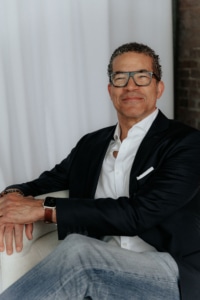
There is a particular kind of courage that does not announce itself. It does not look like charging a hill. It looks, more often, like a young man walking to the principal’s office to report something dangerous, knowing full well that the danger will follow him home.

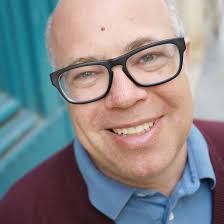
Dr. Don Ajené Wilcoxson was in high school when he discovered that the Ku Klux Klan was recruiting on his campus. He reported it. Threats followed. He did not stop. When I asked him about it in our conversation, sitting with decades of distance from that moment, he said something I have turned over many times since: speaking out felt natural. It would have been uncomfortable not to speak out.

That sentence says a great deal about who he is. It also says something about the world he grew up in — a world where a young Black man could not afford the luxury of looking away from what was happening around him, where naming the danger was not bravery so much as clarity.

Speaking out felt natural. It would have been uncomfortable not to speak out.

He carried that clarity with him into his professional life. When he was hired at Riverside City College, someone told him directly that he had been selected because he was Black — even though he was more qualified than other candidates. He did not walk away from that institution. He went on to become one of only three or four people in the college’s history to earn the rank of Distinguished Professor and was recognized nationally as one of twenty faculty nationwide to receive the ACBSP Teaching Excellence Award.

He outlasted the smallness of that moment by becoming larger than it. But becoming larger than a moment does not mean the moment didn’t happen. And it does not mean the moments have stopped coming.

I asked him plainly, as his friend, to name what is breaking his heart right now. He did not flinch.

“A minority has influenced America to turn its back on its own ideology, on decency itself. That grieves me deeply.”

He is a Nine on the Enneagram — the Peacemaker — and Nines are not typically the ones who reach for the prophetic register. They are wired for harmony, for holding multiple perspectives, for reducing tension rather than naming it. And yet Ajené carries a grief about racial injustice that he does not minimize or set aside. The two things coexist in him: the genuine desire for peace, and the refusal to purchase that peace at the cost of silence.

He told me that he struggles. That he experiences depression at times. That watching the erosion of spaces where people on the margins were beginning to find room — watching that happen in real time, in a country whose stated ideals he has spent his life embodying — presses on him in ways that are not always easy to carry. He said this without drama, without performance, with the same steadiness he brings to everything. Which, I think, made it land harder.

In the Six Seconds emotional intelligence framework, one of the deepest competencies is what they call “increasing empathy” — the capacity to genuinely enter another person’s experience, not just understand it intellectually. Ajené has developed this to a rare degree. He extends it even toward those causing harm, drawing on Dr. Martin Luther King Jr.’s concept of “sincere ignorance” — the idea that some people do harm not from malice but from the limits of what they have been willing to see. He holds space for that distinction without surrendering his clarity about the harm itself.

That is a sophisticated and costly kind of empathy. It requires you to stay open without becoming numb. It requires you to show grace without pretending things are fine. Howard Thurman, who walked closely with the grief of his people and still wrote about the luminous possibility of human encounter across difference, described something similar: the discipline of seeing the person inside the ideology without excusing the ideology. Ajené practices this. It costs him something every time.

“The good people in my life who are trying to live reflectively and do important work — they are what keeps the pilot light lit.”

He does not sustain that kind of openness alone. He draws on the people around him — friends, collaborators, the daily presence of those who are choosing, in their own lives, to do the harder thing. He draws on what he calls ancestral energies — the sense that he is held by something larger and older than his present circumstances, a living connection to those who walked this road before him. He draws on rest: not collapse but the intentional return to breath, to presence, to the moment that is here.

And he draws on the conviction that the work of justice is necessary even when it does not produce visible results. “Even if it only changes one person’s perspective,” he said. There is no calculation of return in that sentence. There is only the clarity of calling — the same clarity that walked a teenager to a principal’s office in the face of threats, the same clarity that stayed at a college that had diminished him and built something remarkable there anyway.

Toward the end of our conversation, I asked him what he would say to someone watching who wonders whether there is a place for them — someone standing at the edge of a room, uncertain whether they are welcome, uncertain whether their presence matters. His answer was quiet and unhurried and direct.

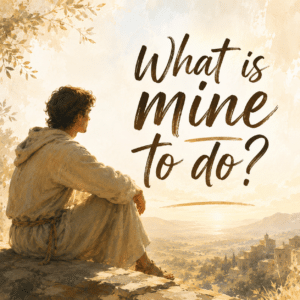
“Fear wants you to hold back. But if you are called to live your purpose, have faith that the calling knows your direction. The call, even as a whisper, is more powerful than the fear you are experiencing.”

I have heard a lot of encouragement in my years of work in the EQ and formation space. Most of it is well-meant but lands lightly. This did not land lightly. It landed the way things land when the person speaking to them has earned the right to say them — when the words come not from aspiration but from having stood in that place, in that fear, and taken the next step anyway.

He is in his winter season now — spacious, steady, deep. He hopes for more presence over productivity, more wisdom than certainty, more love over fear, more accompaniment over expertise. He is done, he said, trying to become more. He is learning to become enough.

Three conversations with this man. Three movements of a life still very much in motion. The formation that made him. The work that holds him. And the fire that, even in winter, has not gone out.

If you are doing hard work in difficult conditions — work for justice, work for belonging, work that nobody may be watching — he is speaking to you. The whisper is louder than the fear. He would know. To get in touch with Ajene use this link. ajene@donajene.com

If this conversation touched something in you, we invite you to explore how emotional intelligence and spiritual formation can deepen your own capacity for courage and presence at spiritofeq.com.

Peace and every good.

spiritofeq.com/blog & mystical seeker.substack.com

The Work That Holds Everything Together

A CONVERSATION WITH DR. DON AJENÉ WILCOXSON · PART TWO OF THREE

A Man Who Stands in the Room

On teaching, spiritual direction, and what it means to carry many callings at once

There is a question I have wanted to ask Ajené for years, and as we continue our 3 part conversation I finally asked it when we sat down together: what is the connective tissue across everything you do? Because from where I sit, the list is remarkable. Distinguished Professor at Riverside City College — recently elevated to Professor Emeritus after more than three decades. Spiritual director. Six Seconds EQ faculty. Enneagram teacher. Minister. Business consultant. Dream worker trained in the Jungian mystical tradition at the Haden Institute. Scuba diver, salsa dancer, Lego builder, student of classical guitar.

He smiled at the question. Then he said something I have been turning over ever since.

“Emotional intelligence is intertwined with who I am at a soul level. One moves the other. From this perspective, I am passionate about living and teaching how to experience a soul-centered emotionally intelligent life.”

That is the connective tissue. Not a set of skills or roles, but a way of being — the conviction that what we feel and what we believe and how we treat the people in front of us are not separate compartments but a single integrated life. Everything Ajené does flows from that integration.

The classroom is where I have seen him described most often by others, and the descriptions are strikingly consistent. His dean at RCC said he has a natural ability to connect with his students — that he “allows students to find solace in his presence when they are struggling.” The Accreditation Council for Business Schools and Programs recognized him with their Teaching Excellence Award; he was one of only twenty faculty nationwide to receive it that year. But when you ask Ajené what he is doing in the classroom, he does not talk about pedagogy. He talks about presence.

“The classroom is the students’ space, not mine,” he told me. “I enter their space with respect. I leave my own baggage outside the door so I can meet them where they are.” His approach is rooted in listening rather than answers — in the recognition that every person arriving in that room is carrying something, and that learning cannot happen until the person feels held.

This is, at its core, an emotional intelligence practice. In the Six Seconds model, the capacity to “increase empathy” — to genuinely enter another person’s experience before responding to it — is one of the deepest and most difficult competencies to develop. Ajené has built a classroom around it. And notably, he has done this in a business and entrepreneurship department, which is not the first place most people would look for this kind of formation work. That gap between where it is expected and where he practices it is, I think, part of the point.

The spiritual direction practice carries the same posture into a different room. Ajené works with people across Buddhist, Christian, Hindu, Islamic, Jewish, and no-tradition backgrounds — a range that reflects his own formation. He grew up with a mother who was Jehovah’s Witness, a father who was Buddhist, a grandmother who was Baptist, an uncle who was Muslim, and a Catholic school. His doctorate from New York Theological Seminary was in interfaith, inter-spiritual, and intercultural theology — not because he chose a specialty, but because he was already living at that intersection and needed language for it.

He describes his approach to spiritual diversity through a Baha’i image: the most beautiful garden is a mixture of flowers. He is not interested in resolving difference into uniformity. He is interested in what each tradition offers to the whole — and in holding space wide enough that a person from any background can find their own ground.

“The most beautiful gardens are a mixture of flowers. I see my own spiritual life that way — enriched by every stream, not threatened by any of them.”

His work as a Narrative Enneagram teacher sits at the center of all of this. The Narrative tradition is distinctive in that it asks real people to speak from their own lived experience of a type — not to have a type explained to them, but to hear from those who inhabit it. Ajené is a Nine, the Peacemaker, and he brings to that work a rare self-awareness about both the gift and the cost of his type. Nines tend to minimize their own needs and giftedness in service of harmony. They absorb the priorities of others. They can mistake self-erasure for humility.

When I asked him where his Nine-ness serves him most and where it costs him most, he was characteristically honest. The gift: the capacity to enter any room and genuinely see every person in it, to hold multiple realities at once without needing to collapse them into a winner. The cost: the temptation to smooth over things that need to be said, to defer his own voice when it is exactly his voice that is required. He is aware of both. That awareness is itself the work.

He describes his current life season as winter — and he is careful to define what he means. Not decline. Not retreat. Spaciousness. The steadiness that comes from having built something over decades and knowing now what matters. He hopes, he told me, for more presence over productivity, more wisdom than certainty, more accompaniment over expertise. And the phrase that has stayed with me: not trying to become more but learning to become enough.

That phrase does a particular kind of work on me, because it runs counter to almost everything our culture tells us about professional life. Enough is not a word our productivity-saturated age handles well. But for a man who has earned Distinguished Professor status and a national teaching award and a doctorate and a spiritual direction practice and three decades of student relationships — for that man to say he is learning to become enough — that is not resignation. That is a different kind of ambition entirely.

There is a thread in the contemplative tradition — I am thinking of Thomas Merton, of Howard Thurman, of the desert fathers and mothers — about the movement from doing to being, from accumulation to presence. Ajené is living that transition with his eyes open. He knows what season he is in. And he is choosing to inhabit it rather than fight it.

In our next conversation, we will go to the harder places. The grief he carries about racial injustice. The threats he faced in high school for speaking up. The discrimination he encountered at the institution where he would go on to build one of the most distinguished careers in its history. And his word — direct and unhurried — to the people standing at the edge of the room, wondering whether there is a place for them.

But here, in this middle movement, I want to simply name what I see when I look at his life whole: a man who has refused, across decades and contexts, to let his work be less than his faith. That refusal is its own kind of witness.

To get in touch with Ajene use this link. mailto:ajene@donajene.com

If you are curious about how emotional intelligence and the Enneagram can deepen your own integration of work, faith, and presence, we would love to continue the conversation at spiritofeq.com.

Peace and every good.


The Garden He Grew from Honest Contradiction

Post One:   The Garden He Grew From

Formation, the village of mentors, and the name given by a king

Post Two:   A Man Who Stands in the Room

Teaching, spiritual direction, EQ practice, and the soul-centered integrated life

Post Three:  When the Whisper Is Louder Than the Fear

Racial injustice, the cost of speaking, grief, and the word for those at the edge of the room


A CONVERSATION WITH DR. DON AJENÉ WILCOXSON · PART ONE OF THREE

The Garden He Grew From

What hard soil and an unlikely village made of one remarkable man

There is a photograph I keep returning to in my mind — not a real one, but the kind your imagination makes when someone tells you a story about a boy walking to school alone, afraid, and arriving anyway. I have known Dr. Don Ajené Wilcoxson for years. I know the man he became. But it was only when we sat down together for a long conversation that I began to understand the terrain that formed him.

He described his childhood plainly, without self-pity, in the way that people speak about hard things they have long since made peace with. Physical abuse. A biological father he never met. The daily threat of being beaten walking to school. He called it “really challenging.” What stayed with me was not the weight of those words but the steadiness with which he carried them — the way a man speaks about weather he has already walked through.

“I was blessed,” he said, and meant it. Because running alongside those hardships was something else: a community of people who saw him and chose to stay.

His adoptive father became, in his words, “the best thing that could ever happen” to his life — a man who taught him about all cultures, all music, all the beautiful width of what it means to be human.

There was also Dell Roberts, a friend who showed him what it looks like for a young Black man to move through the world with dignity. His mother, who helped him find stillness. His godmother, who taught him ethics — not as rules, but as a way of being. And his nana, who pressed into him the twin practices of listening and caring. He didn’t point to a single turning point the way we often hope people will. He pointed instead to a village.

There is a concept in the Enneagram — and Ajené is a deeply self-aware Nine — about the way the Peacemaker absorbs the world around them, becoming, in some sense, an amalgam of the people they love. What he described from his childhood is not just biography. It is the formation of a man who would go on to hold space for people from every tradition, every background, every wound — and do it with the naturalness of someone who learned to navigate difference before he could name it.

He was the darkest member of his family. Extended family and outsiders noticed. He noticed. And rather than letting that experience narrow him, it became a doorway. “It taught me to navigate that difference,” he said, “and that helped me work across cultures and faiths later.” What looked, from the outside, like a wound had quietly become a gift.

This is the movement that the Six Seconds emotional intelligence framework calls “exercising optimism” — not the naive insistence that things are fine, but the practiced discipline of asking what is generative alongside what is broken. Ajené did not learn this from a book. He learned it the way most lasting things are learned: by living through something hard and refusing to let it be the last word.

The name Ajené arrived later. He was in his mid-twenties, teaching, when an African king whose daughter had been moved by his work gave him the name. It means, roughly, “a businessman who truths” — which Ajené himself acknowledged is something of an oxymoron, a contradiction held together by purpose. He carries that name now not as an identity to perform but as a reminder. Something higher, he said, is always calling him in everything he does.

“The name is a constant reminder that I have something higher that is calling me in everything I do.”

That sense of calling runs through everything that follows: the classroom, the sanctuary, the spiritual direction session, the emotional intelligence coaching circle. But it began here, in the soil of a childhood that was genuinely difficult and genuinely held — held by a father who taught him wonder, a friend who modeled dignity, a grandmother who modeled listening, a godmother who modeled integrity.

There is a phrase from the Celtic tradition that has long moved me: the idea that what we are is not something we construct alone, but something we receive — from the land, from the ancestors, from the people who pray over us before we know we need praying over. Ajené did not use that language, but he described that reality. He is, in a deep sense, a man made by his village.

And the village made something extraordinary. A man who enters rooms prepared to meet whoever is already inside. A man who learned, before he had words for it, that difference is not a problem to be solved but a garden to be tended. A man who was given a name that named him more truly than he could have named himself — and who has spent the decades since trying to live worthy of it.

On Wednesday and Thursday, we will follow Ajené into the classroom and the sanctuary, into his work at the intersection of emotional intelligence and spiritual formation, and into the harder places — the grief he carries about racial injustice, the cost of speaking when silence would be easier, and what keeps the pilot light lit even now. But this is where we begin: with the boy, and the village, and the soil that made him.

The boy walked to school afraid and arrived anyway. That was, perhaps, the first lesson.

To get in touch with Ajene use this link.ajene@donajene.com

If this reflection stirred something in you, we invite you to explore the work of emotional intelligence and spiritual formation at spiritofeq.com and mystical seeker.substack.com

Peace and every good.

The Most Intelligent Thing You Can Do Is Slow Down

When You Know Why You React, You Can Choose How You Respond

What the Enneagram and emotional intelligence reveal about the space between trigger and response

There is a photograph I keep coming back to in my mind — not an actual photograph, but the kind that forms over years of sitting across from people in coaching conversations. It is the image of a person mid-sentence, eyes slightly wide, voice pitched a half-step higher than usual, saying something they will probably wish they hadn’t. And in the moment before the words arrive, there is this invisible space — a fraction of a second, maybe less — where everything that matters is happening.

Viktor Frankl called it the space between stimulus and response. He wrote about it from inside a concentration camp, which means he earned the right to talk about it. That space, he said, is where our freedom lives. It is also, I’ve come to believe, where emotional intelligence and the Enneagram converge into something genuinely transformative.

The Intelligence Beneath the Surface

Emotional intelligence, as Daniel Goleman mapped it, begins with self-awareness — the capacity to notice what’s happening inside you before it moves through you and into the world. Josh Freedman of Six Seconds distills it differently, into a sequence I return to often: Know Yourself, Choose Yourself, Give Yourself. The knowing comes first. Without it, we are largely reactive — moved by currents we can’t name.

Most of us have experienced this. A colleague’s offhand comment lands wrong and we feel our jaw tighten before we understand why. A family member raises a familiar complaint and we hear ourselves responding in the old way again — the way we promised ourselves we wouldn’t. The reaction isn’t irrational exactly. It’s just faster than our awareness.

This is where the Enneagram enters the room.

A Map of the Interior

The Enneagram is a nine-type system of personality that goes deeper than behavior into motivation — into the core fears and longings that drive us. It is not a label to be worn comfortably. At its best, it is an unsettling mirror, one that shows you not only what you do but why, and what you are protecting when you do it.

A Type Eight (the Challenger) doesn’t lead aggressively because they are cruel. They lead that way because somewhere underneath the forcefulness is a terror of being controlled or betrayed — and strength feels like the only reliable protection. A Type Two (the Helper) doesn’t overextend themselves because they are foolish. They do it because their worth, in some deep and often unconscious way, feels contingent on being needed.

When you understand this about yourself — really understand it, not just intellectually but in the body — something shifts. The reaction doesn’t disappear. But there is more space around it.

The Place Where They Meet

I’ve seen this play out in workshops and in one-on-one coaching more times than I can count. A leadership team I worked with had a Type Eight and a Type Nine in constant friction. The Eight moved fast, spoke bluntly, made decisions before the Nine felt heard. The Nine withdrew, agreed on the surface, and then quietly undermined the direction — not out of malice but out of a desperate need for harmony they didn’t know how to ask for. What made it harder was that both of them were genuinely trying. The Eight believed clarity and decisiveness were acts of respect — waste no one’s time, say what’s true, move forward. The Nine believed keeping the peace was its own form of care — absorb the friction, hold the group together, avoid the rupture. Neither of them was wrong exactly. They were just operating from entirely different interior maps, and no one had ever handed them the other person’s.

When we named what was happening through the lens of both the Enneagram and emotional intelligence, something loosened. The Eight didn’t need to become soft. The Nine didn’t need to become confrontational. They needed to understand each other’s interior logic — and then, from that understanding, choose something different than their default. What I watched happen in that room was not a personality makeover. It was something quieter and more durable: two people recognizing that the other person’s behavior had a reason, and that the reason wasn’t contempt or weakness. That recognition created enough safety for genuine conversation — maybe for the first time in years of working together.

That’s the intersection. The Enneagram names what’s underneath. Emotional intelligence gives you tools to work with it. Together, they create the conditions for what I’d call non-reactive presence — the ability to be fully in a difficult moment without being fully hijacked by it.

Some Places to Begin

If this is new territory for you, here are a few entry points worth sitting with:

  1. Get curious before you get defensive. The next time you feel a strong reaction — irritation, anxiety, the urge to withdraw or escalate — ask yourself what it’s protecting. Not in a clinical way, but genuinely. What’s at stake for me right now?
  2. Learn your Enneagram type as a spiritual practice, not a personality quiz. The Narrative Enneagram tradition invites you into the type through lived experience and community, not just a test score. There’s a difference.
  3. Practice the pause. Frankl’s space between stimulus and response can be cultivated. Centering Prayer, mindful breathing, simple body awareness — any practice that builds your capacity to notice before acting will serve you here.
  4. Make it relational. Understanding your own type is valuable. Understanding the types of the people you love and work with alongside yours is where transformation tends to happen. The framework becomes a bridge rather than a mirror.

I don’t think any of us become non-reactive all the way down. That would require not being human. But I do believe we can cultivate the capacity to meet our reactions with a little more light and a little less automatic machinery. The Enneagram helps us see ourselves clearly. Emotional intelligence gives us something to do with what we see.

That space between stimulus and response — Frankl was right. Something important lives there. And with practice, we can learn to inhabit it.

If you’re curious about exploring the Enneagram and EQ together — for yourself, your team, or your community — visit spiritofeq.com to learn more about our workshops and coaching.

Peace and every good.

— — —

Subscribe to The Mystical Seeker on Substack  — in-depth posts on the contemplative life

The Exquisite Risk of Letting the Dark Do Its Work

There is a photograph I have carried in my memory for decades — not one taken on film, but one pressed into the body the way cold presses into bone. It is a winter morning in Detroit, still dark at six a.m., and I am standing at the kitchen window watching my mother mix paint in the silence before the house woke up. She wasn’t sad. She wasn’t lost. She was in that rare place artists sometimes go — a place that looks like emptiness from the outside but is, from the inside, a particular kind of waiting. A necessary hollow. I didn’t have words for it then. I do now.

The mystics called it la noche oscura — the dark night of the soul.

When the Ground Falls Away

Most of us arrive at the dark night not by choice but by collapse. Something that once held meaning — a career, a faith practice, a sense of self, a relationship — gives way beneath us. The fall is disorienting precisely because we didn’t see it coming, and because the things we reach for on the way down don’t hold.

This is not ordinary sadness. It is not burnout, though it can look like it. It is not clinical depression, though it can travel alongside it, and if it is significantly impairing your daily life or generating thoughts of self-harm, please reach out to a licensed professional — that is not weakness, it is wisdom.

What distinguishes the dark night is its spiritual texture: the loss isn’t just of energy or motivation but of meaning itself. Things that once lit you up feel hollow. Your spiritual practices go silent. You withdraw. You wonder, quietly or loudly, whether you have lost God, or whether God was ever there at all.

St. John of the Cross — a sixteenth-century Spanish mystic who wrote from inside a prison cell no larger than a closet, where he had been confined by the very religious order he was trying to reform — would say: you are exactly where you need to be.

That is hard to hear in the dark. It was for me.


The Poem That Knows the Way

What John wrote in that cell was not a lament. It was, against all reason, a love poem.

“Dark Night of the Soul” — in Mirabai Starr’s luminous translation opens not in despair but in secret motion. The soul slips out of the house while everything is still. She travels in darkness, not despite the darkness but through it, guided not by any external lamp but by something burning in her own chest.

No other light, no other guide Than the one burning in my heart. — St. John of the Cross, trans. Mirabai Starr

This is the paradox the dark night holds: what feels like abandonment is, in John’s vision, a form of being led. The stripping away of every consolation — every spiritual feeling, every certainty, every framework that once made sense — is not punishment. It is preparation. The soul is being emptied so that something truer can fill it.

The poem ends not in the darkness but in a garden. In rest. In transformation. Lover transformed in Beloved.

John doesn’t promise the journey will be short. He doesn’t promise it won’t hurt. He promises it goes somewhere.

What Emotional Intelligence Has to Do with It

Here is where the contemplative tradition and emotional intelligence meet in a way I find profound: both ask us to stay present with what is, rather than immediately managing it away.

One of the core competencies in the Six Seconds model of EQ is what we call Feel Your Feelings — the capacity to move toward your inner experience rather than away from it. Not to be consumed by it. Not to perform it. But to let it be what it is, without premature resolution.

The dark night, spiritually understood, asks for the same posture. It resists the fixes we reach for — the productivity systems, the five-step frameworks, the urgent need to locate the lesson and extract it. Those impulses are understandable. They are also, in the dark night, exactly what is being dismantled.

What the dark night wants from you is not your solutions. It wants your surrender.

And surrender — in the contemplative sense — is not passivity. It is a particular kind of courage: the willingness to stop managing the mystery and begin inhabiting it.


Five Things to Do When You Are in the Dark

I want to offer not a ladder out but a way of being in. These are not performance targets. They are invitations.

Stay close to your body.  The dark night is disorienting in the mind, but the body often knows more than we credit it with. Walk. Sit with your back against something solid. Pay attention to what you can smell, hear, feel. The Incarnation — God taking on a body — is itself a theological argument that matter matters. You are allowed to be a creature.

Release the spiritual performance.  If your prayer feels empty, don’t force it into the shape it used to have. John wrote from inside a prison cell with nothing but scraps of cloth and the words forming in him in the dark. The form of devotion may need to change entirely. Let it.

Find one trustworthy companion.  Not someone who will rush you to resolution, but someone who can sit in the not-knowing with you. A spiritual director. A therapist. A friend formed in contemplative patience. The dark night is not meant to be survived alone, even when it demands solitude.

Practice lectio divina with the darkness itself.  What if you read the darkness the way monastics read scripture — slowly, with openness, asking not what does this mean but what is this forming in me? The dark night, John insists, is doing something. You may not be able to name it yet. That is alright.

Trust the heart that burns inside.  Even when you cannot feel it. Even when the candle seems to have gone out. John’s soul travels the whole dark journey guided by what is burning inside her chest — not what she can see, not what makes rational sense, but what is alive in her. There is something in you that has not gone out. It may be very quiet. Tend it like an ember.

What the Darkness Already Knows Reflection Guide


What the Darkness Already Knows

My mother would finish her mixing before the sun came up, and then she would begin. I used to think the dark hours were the waiting. I understand now they were the work.

The dark night of the soul is not a detour from the spiritual life. For John of the Cross, for Meister Eckhart, for Howard Thurman writing from the underside of suffering, for Julian of Norwich holding her visions in the midst of plague — the darkness has always been the passage. Not the destination. But not the obstacle either.

It is, to borrow Mirabai Starr’s phrase, an exquisite risk.

And if you are in it right now — if the house has gone still and everything you reached for is no longer where you left it — you are not broken. You are, perhaps, being made.

The night that joins the lover with the Beloved does not announce itself. It simply comes. And it leads.

St. John of the Cross, Dark Night of the Soul, translated by Mirabai Starr, Riverhead Books, 2002 —

If this found you in a threshold season, we’d be honored to walk alongside you — explore spirit of EQ’s community on Substack or join us in our Mighty Networks space for ongoing conversation.

Peace and every good.

When the Map Runs Out: Finding Your Way Through the Desert In-Between

When the Map Runs Out: Finding Your Way Through the Desert In-Between

On liminal seasons, sacred disorientation, and the slow work of becoming

There is a moment — if you have ever been truly lost — when the map in your hand stops making sense. The road it promises isn’t there. The landmarks don’t match. And you realize, with a strange mix of dread and something almost like relief, that you have entered unmapped territory.

That is the desert. Not necessarily sand and scorching heat, though those images carry real weight across ancient wisdom traditions. The desert is any season where the familiar landmarks disappear — where the identity you carried into a transition no longer fits, and the one you will carry out has not yet taken shape. Theologians and contemplatives have long called it the wilderness. Anthropologist Arnold van Gennep named it liminality, from the Latin limen, meaning threshold. You are on the threshold. Neither here nor there. The door is open, but you haven’t stepped through.

I have lived in that doorway. In different seasons, I found myself between jobs, between marriages, and navigating the slow aftermath of a health crisis — like pancreatitis, which has a way of stripping everything to bare essentials with very little ceremony. Each loss arrived not as a single blow but as a kind of systemic unraveling. What I thought I knew about myself, about my direction, about what I was building — all of it came into question at once.

What I did not expect was that the desert would become a teacher.

The Threshold Has a Name

Liminal space is the technical name for the in-between — the transitional zone that exists between what was and what will be. Van Gennep first mapped it in his study of rites of passage: every significant human transition, he observed, moves through three phases. There is separation from the old identity, a liminal period of disorientation and becoming, and eventually reincorporation into a new form.

The middle phase — the liminal — is not a waiting room. It is a crucible.


Ancient traditions knew this. The Hebrew Bible is full of desert wandering — forty years for a people who needed to become something they were not yet. Moses on Sinai. Elijah under the broom tree. Jesus in the wilderness before the beginning of his public ministry. The desert, in these stories, is never incidental. It is the point. Something essential is being formed that could not have been formed any other way.

The desert fathers and mothers — those early Christian monastics who literally fled to the Egyptian wilderness in the third and fourth centuries — went to the desert on purpose. They understood that the stripping of comfort was not punishment but preparation. What could not be heard in the noise of ordinary life could sometimes be heard in the silence of the barren places.

“The desert is unadorned. It removes noise and clutter allowing you to reevaluate your values and focus on what is truly essential.”

I did not choose my desert. Most of us don’t. But I did, eventually, choose how to inhabit it.

What the Desert Actually Does

There is a temptation, when you are in a liminal season, to treat it as a problem to be solved. To scramble for the next thing, the next role, the next relationship — anything to end the suspension. I understand that impulse deeply. The in-between is uncomfortable in ways that are hard to articulate to people who are not in it.


But the desert has purposes that cannot be rushed.

It strips away self-reliance. When the external scaffolding of identity falls away — the job title, the relationship, the health you assumed — you are brought into contact with something deeper. Who are you when you are not who you were? That question, honestly held, is one of the most spiritually generative questions a person can carry.

It establishes roots. A plant in the desert sends its root system down far deeper than plants in well-watered soil. It must, to survive. Liminal seasons do something similar in us. The roots we grow in the in-between often reach depths we would never have explored in ordinary seasons.

It offers distillation. The desert is ruthlessly clarifying. What matters to you? What were you carrying that was never really yours to carry? What were you building toward that came from someone else’s vision for your life? The desert asks these questions quietly and persistently, and if you are still enough to hear them, the answers begin to come.

During my own desert season, I found myself returning again and again to contemplative practices — extended periods of silence, long walks without destination. Not as escape, but as a form of listening. I was learning to let the quiet do its work.

The emotional intelligence framework Lynette and I work with at spirit of EQ has a concept that became very real to me during this time: the difference between reaction and response. In a liminal season, there is enormous pressure to react — to fill the silence, to fix the disorientation, to manufacture certainty. Learning to pause, to stay present to what is really happening rather than what you fear might happen, is one of the deepest EQ practices I know. And the desert is where I learned it at a cellular level.

Learning to Look for Small Signs of Life

One of the most important practices I developed in those seasons was what I can only describe as desert botany — the discipline of looking for small signs of life in apparently barren ground.

The desert is never as empty as it first appears. It is full of life that has adapted to scarcity, that blooms in small and unexpected ways, that knows how to wait. When I stopped looking for the dramatic turnaround — the moment when everything would resolve — and started looking for the small green shoots, something shifted.

A conversation that went deeper than I expected. A morning of clarity after weeks of fog. A friendship that appeared out of nowhere and offered exactly what was needed. A passage from a desert father that named something I hadn’t been able to name.

Julian of Norwich, writing from her own experience of suffering and disorientation, offered words I returned to often: that all shall be well, and all shall be well, and all manner of thing shall be well. Not as denial of the present difficulty, but as an orientation toward a goodness that exists beyond the current view. The desert does not last forever. It has a purpose, and when that purpose is accomplished, a new season comes.

But the new season is shaped by how we inhabit the desert. Those who fight it or flee it arrive depleted. Those who learn to dwell in it — not comfortably, but honestly — often arrive at the other side with something they could not have acquired any other way.

Desert Journal Worksheet Link

A Practice for the In-Between: The Three Questions

This exercise is best done slowly, with a journal or open space for reflection. Allow at least twenty minutes. There are no right answers — only honest ones.

The desert fathers practiced a form of structured self-inquiry they called examen — a slow, honest review of what was present, what was absent, and what was stirring beneath the surface. This exercise draws on that tradition.

Settle first. Before you begin, take three slow breaths. Release the urgency of solving anything. You are here to notice, not to fix.

Question One: What has been stripped away?

Name, without judgment, the things that have fallen away in this season — roles, relationships, certainties, identities. Don’t evaluate whether their loss is deserved or fair. Simply name them.

Question Two: What remains?

When the stripping has been named, turn your attention to what has not been taken. What is still true? What in you has endured? These are often the things that matter most — the ones the desert is revealing rather than removing.

Question Three: What small sign of life can you see today?

Not a resolution. Not a next step. Just one small sign — a glimmer, a green shoot, a moment of clarity or connection. If you cannot see one today, that is honest information too. Write it down.

The Map Will Come

I am on the other side of that desert for now — or perhaps more accurately, I am in a different landscape, carrying what I learned in the in-between. The job that came after that season shaped Lynette and me into what we now call spirit of EQ. The health crisis that stripped my certainty about my physical resilience also deepened my empathy for people navigating their own fragility. The relational losses became — slowly, painfully, eventually — the soil from which something more honest grew.

I don’t want to romanticize the desert. It was hard. There were stretches of genuine desolation. But I also don’t want to minimize what it gave me — a set of roots that go deeper than anything I had before, a clarity about what matters, and a capacity to sit with others in their own liminal seasons without needing to rush them out the door.

If you are in the in-between right now — between who you were and who you are becoming, in a season of dryness, disorientation, or loss — I want you to know two things. First: you are not lost. You are in unmapped territory, which is a different thing entirely. And second: the map will come. It is being drawn, even now, by the roots you are growing.

The threshold is not the end of the journey. It is the most important part of it.

Peace and every good.


Today Is Hard. Tomorrow Is Worse. Why I Kept Going

The Day After Tomorrow

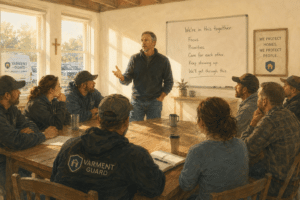
There is a photograph I keep in my mind from the early days of Varment Guard — not an actual photograph, just the image burned in from living it. It’s a door. A plain commercial door, nothing fancy about it, with a small wooden frame above it. And inside that frame, four words someone had taken the time to put there deliberately: Failure was not an option.

Mike M. and I had been meeting for eight months before we ever turned a key in a lock. Eight months of yellow legal pads and bad coffee and spreadsheets that kept being wrong and late-night conversations that neither of us was willing to end because ending felt like quitting. We were two people trying to think of everything — preparing the way you prepare for something that matters — and when we finally opened those doors, we discovered we hadn’t thought of even half of what was coming for us.

THE FOUNDERS HONEST LOOK WORKBOOK

That’s when Jack Ma’s words would have hit differently. “Today is hard and tomorrow will be worse, but the day after tomorrow will be sunshine.” — Jack Ma, Founder, Alibaba Group.

Hold that sentence for a moment. It isn’t a motivational poster. It’s a map.

WHAT’S BEHIND THE WORDS

Jack Ma didn’t build Alibaba from a position of ease or advantage. He was rejected by Harvard ten times. When KFC came to his city and hired 23 of 24 applicants, he was the one they passed on. China’s first public internet company turned him away. When he finally pitched the idea of an online marketplace for Chinese small businesses in 1999, he did it in his apartment, to a handful of friends who weren’t completely sure they believed him. He knew today is hard the way you only know something you’ve actually lived.

The history of business is, at its marrow, a history of stubborn people who refused to let a bad today become a permanent condition. Henry Ford failed twice before building the company that changed manufacturing forever. Milton Hershey lost everything in New York and again in Chicago before returning home to Pennsylvania with nothing but a process he still believed in. Walt Disney was told he lacked imagination by the very newspaper that had hired him. The pattern is so consistent it might seem like a cliché — except for the people living it. For them, it never feels like a pattern. It feels personal. It feels like an exception. It feels like it might be permanent.

What the ones who make it through seem to understand — sometimes while it’s happening, sometimes only years later — is that the difficulty is not a detour from the path. It is the path. The hard is not a sign you’ve chosen wrong. More often, it’s a sign you’ve chosen something real.

WHAT WE KNEW AND WHAT WE DIDN’T

When Mike and I opened Varment Guard, we believed we were ready for the hard. What we hadn’t prepared for was the texture of it. Not the spreadsheet problems — those were almost welcome, because spreadsheets have answers. It was everything else. The family dinners missed, and then just stopped being expected. The friendships that didn’t end loudly — they just went quiet because you weren’t available and eventually people found their rhythm without you. The money questions that didn’t arrive as dramatic crises but as a low, grinding background hum that followed you everywhere, even into sleep.

Nobody writes that part down. Not honestly. Because the real story of building something is longer and more irregular than any narrative shape can hold, and no one wants to tell you how much it costs before you’ve decided to pay it — because if they did, maybe fewer people would start.

So why did we do it?

Why does anyone?

The easy answers are all true: we believed in the idea, we wanted to build something that was ours, we wanted to see if we could. But the real answer lives underneath all of those. It has to do with identity. With the recognition that there was a version of life available — something that matched what was inside you — and that settling for something smaller would be a slow erosion you weren’t willing to live with. We did it because the alternative was becoming someone we didn’t recognize. And that felt worse than everything that came with the doing.

WHAT WE GAINED AND WHAT WE LOST

What did we gain? That part comes easier now than it did in the middle of it. We built something real — a company with a culture, a reputation, a set of values that held through hard seasons. Over the years, Varment Guard employed hundreds of people. Families were fed. Skills were developed. Careers were built that might not have existed otherwise. There is no dollar figure for any of that. And there is something else, quieter but just as real: you find out what you are actually made of. You discover your own capacity. You learn what you can carry. You don’t find that out any other way. No shortcut delivers it. Only the going does.

What did we lose? That one is easier in the dark than in the daylight. Sleep, certainly — and the kind of easy rest that comes when you’re not carrying something large. Margin, regularly. Time with people we loved, which you cannot really reclaim even if the relationships survived. Parts of yourself that were softer and more patient that got traded, over time, for something harder and faster and more efficient. I won’t call all of it loss, exactly. But I notice the absence of some of it. I think that’s worth naming honestly.

HOW TO KEEP GOING WHEN YOU FEEL ALONE

DAY AFTER TOMORROW WORKBOOK

Here is the part no one tells you about keeping going when you feel like you’re carrying it entirely by yourself: you are. You actually are. And that’s not a crisis — that’s the position.

Every person who has built anything real has sat in a room where no one else fully grasped what they were holding. Not the advisors. Not the investors. Not even the partners — because it’s your specific weight, shaped to your specific frame, and no one else quite feels it the same way. You can resent that solitude or you can learn to read it as information.

What it’s telling you is simple: the decision to continue is yours. Which means it cannot be taken from you. The market can’t take it. A bad quarter can’t take it. A difficult competitor can’t take it. A hard year can’t take it. Only you can put it down.

Jack Ma is telling you something real when he promises sunshine on the third day. But he’s also telling you something harder: you have to make it through the first two. Not around them. Not above them. Through them.

The frame above that door at Varment Guard wasn’t decoration. It was a daily instruction — renewed every morning when someone walked under it. Failure is not an option doesn’t mean failure is impossible. It means you’ve decided in advance that however bad today gets, and however much worse tomorrow is, you are not stopping here. The sunshine isn’t guaranteed. But it’s only available to the ones who are still there when it arrives.

Mike and I didn’t think of half the things that would come for us. But we had made a decision. And on the hardest days, honestly, the decision was the only thing.

Make the decision. Keep making it. The day after tomorrow is real.

Peace and every good.