Posts

Numbness, Discernment, and Voting with Care

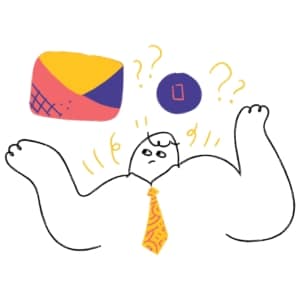
Sometimes I am just plain numb.

Not in a dramatic, storybook way—no fireworks, no sudden collapse. It’s quieter than that. It feels like driving through fog for days: my hands still move, my calendar still gets filled, my words still come out in the right order. I can answer emails. I can make dinner. I can show up.

But something inside me turns down the brightness.

It’s as if my heart has decided, If I can’t carry all this, I’ll carry less. Do you know what I mean here? Not because I’ve stopped caring—at least not exactly—but because my body seems to be trying to protect me from the cost of caring all at once, for too long, in a world that never stops asking for attention. EVER!

Numbness doesn’t always announce itself. Sometimes it disguises itself as competence. Sometimes it sounds like, “It’s fine,” when what I mean is, “I can’t feel the full weight of this moment and still function.”

Then the information comes.

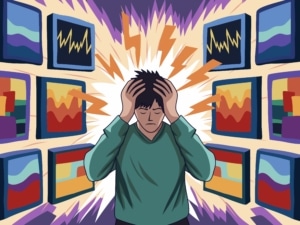
It doesn’t arrive all at once anymore—it arrives like weather. Right? Headlines. Updates. Breaking news. A constant parade of opinions wrapped in certainty, wrapped in urgency, wrapped like they’re personal medicine for whatever I’m currently hungry for. You don’t even have to choose it. It just finds you. It knows what makes you afraid. It knows what makes you feel righteous. It knows what you’re lonely for.

And somehow it keeps stacking until numbness looks less like rest and more like survival.

I used to think numbness was the opposite of hope. Lately I’m wondering if numbness can be a protective shutoff—not because we stopped caring, but because we’ve been overwhelmed with caring for too many things we can’t fix alone.

And that leads me to a question that keeps waking me up at night:

What can we believe? Anything?

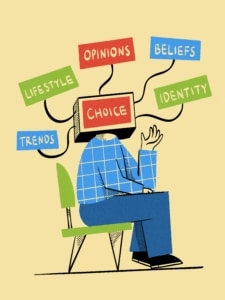
Because belief—at least the kind that’s constantly being pushed at us—doesn’t always arrive through reflection. It arrives through pressure. Through targeting. Through personalization. Through a feed that seems to understand my nerves better than I do.

If everything is designed to convince you, then belief itself becomes slippery. I don’t just weigh information; I experience a kind of emotional tug-of-war. I borrow certainty for relief in the moment. I scroll until I find a voice that makes my feelings sound wise. I trade listening for winning. I trade the slow work of discernment for the quick thrill of being right.

Then the next wave arrives.

And I realize the certainty I leaned on wasn’t built to last inside me. It doesn’t grow roots in my values or my conscience. It just briefly covers the exposed parts of me. It soothes discomfort without earning trust. It can feel true because it feels stabilizing—but stability isn’t the same thing as truth.

What I didn’t fully understand until very recently is that the battle isn’t only “what people believe.” The battle is also the environment that trains my mind to adopt beliefs quickly, intensely, and defensively.

And I’ve felt what that training does to me—especially when I start getting stuck around elections.

I keep thinking about how I decide when everything feels like it’s trying to decide for me.

Not just who wins. Not just what side I’m on. But what I can responsibly believe long enough to vote. I was talking with one of my daughters the other day, and she is pretty dog gone smart, we got into this tug of war over voting, who’s right, who’s wrong. Because there are only two choices, correct? I mean we must stand on that statement, right?

Well, voting isn’t theoretical for me. It’s a real choice with real consequences. And I don’t want numbness to steal my discernment while I’m pretending, I’m just “being realistic.”

I’ve noticed a pattern in myself that I don’t like but can’t ignore when information gets relentless, I start chasing certainty. Then I start getting suspicious. Then I start getting overwhelmed. Then numbness shows up again—not calm, not peace, but a kind of emotional dimming so I don’t have to keep bracing.

It’s not that I can’t think. It’s that my thinking gets hijacked by urgency. Can you hear that? Urgency!

So, I’ve been trying to build a decision process that slows down instead of speeding up—one that treats belief like something I cultivate, not something I grab.

Here are a few shifts that have helped me, at least a little:

1) I check my nervous system before I check the headline.

When I’m tense, my brain reads like a courtroom. I look for evidence that will make me feel safe in my conclusion. If I notice my body is on alert, I don’t scroll as much. I pause long enough to ask: Am I trying to find truth—or trying to calm fear? Those are very different tasks.

2) I separate “credible” from “certain.”

A claim can sound confident and still be unreliable. A person can sound convincing and still be careless. When I’m tempted to treat certainty as proof, I try to look for things that last longer than a moment: consistency, willingness to update, clear sourcing, and an ability to hold up under questions.

3) I let my values be a filter, not a shortcut.

Values matter to me—compassion, justice, truth-seeking. But I’ve learned that values can accidentally become permission slips. So instead of asking, “Does this match my values?” I try to ask, “If this policy is applied in the world, who does it help, who does it harm, what tradeoffs are being ignored?”

4) I make decisions in steps, not in panic.

The election cycle tempts me to compress everything into one anxious sprint: gather all info, feel certain, choose immediately, feel morally resolved. But discernment doesn’t work well under time pressure that’s designed by other people. I’ve started asking myself what I can know enough to make the next small responsible decision—and what I need to postpone until I can look again with better clarity.

5) I treat belief like a draft.

If I notice my belief requires me to reject nuance completely—if it demands, I treat disagreement as stupidity or betrayal—that’s a sign. I want convictions that can survive complexity, not convictions that collapse the moment reality gets complicated.

Numbness and discernment both show up as signals, not enemies. Numbness can mean I’m overloaded. It can mean I need boundaries with my attention. It can mean I’ve absorbed too much conflict with no outlet except more information.

But numbness can also become its own trap: a quiet way of opting out. A way of “not feeling” that looks like neutrality while it quietly reshapes what I’m willing to care about.

I don’t want numbness to decide my vote by dulling my conscience. I don’t want exhaustion to turn into apathy dressed as wisdom.

And this is where my concern returns, again and again—back to elections.

I worry about how easily I can be pulled into certainty that doesn’t actually come from evidence. I worry about how easily my mind can be trained to treat emotion as proof. I worry about how the feed can make every issue feel like a personal referendum on whether I’m good, smart, safe, or right.

I worry that the louder the certainty gets, the more I may reach for it simply to stop the feeling of being unmoored.

When I think about voting, I try to come back to a simpler question than “Who is correct?”—a harder question that might protect my integrity:

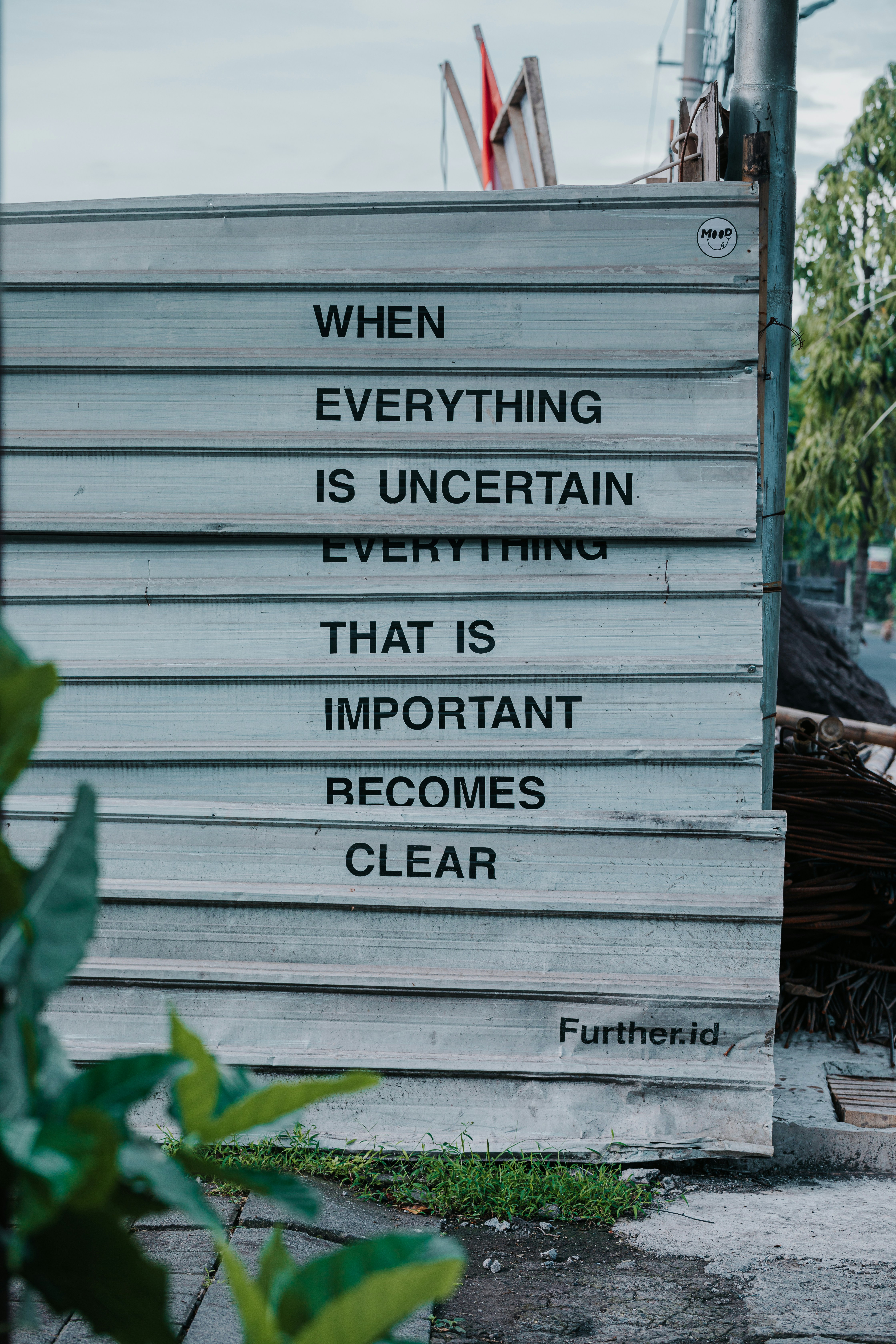
What would I choose if I weren’t being rushed into belief?

Not what would feel best in the moment. Not what would win the argument. Not what would make me feel righteous fastest. What would I choose if I had time to look carefully, compare responsibly, and accept that I might need to revisit my understanding?

I’m still learning how to do that. I’m still prone to getting tugged into the certainty treadmill, still vulnerable to the fog.

But I’m trying to treat this moment—this election moment—as more than a headline cycle. As a chance to practice discernment instead of numbness. As a chance to believe with care, not with cravings for certainty.

Because at the end of all this, I want my vote to be an act of responsibility, not an act of shutdown. And I want my belief to be sturdy enough to survive contact with reality—especially when reality keeps changing.

Peace and every good!

Desert Wisdom: Context is Everything

Reflecting on where we stand in life and the decisions, we make is not a luxury reserved for philosophers or the privileged; it is a practical necessity for anyone who shoulders responsibility—whether as a leader, a parent, a partner, or a friend. Every choice we make ripples outward: policies we endorse shape communities, the tone we set in our family’s shapes children’s emotional landscapes, and the way we respond to friends in crisis models what compassion looks like. When the pace of life accelerates and the noise of competing opinions grows louder, pausing to reflect helps us separate what is urgent from what is important. Reflection is the practice of stepping back long enough to see patterns, notice motivations, and weigh consequences. It gives us the mental and moral space to act with intention rather than reactivity, to lead with clarity rather than impulse, and to love with presence rather than distraction.

This capacity for reflective life is under strain in times of social, political, or spiritual disruption. Anxiety narrows our attention; polarization simplifies complex choices into binary demands; and scarcity—of resources, attention, or trust—pushes us toward short-term fixes instead of sustainable care. Yet precisely in such moments, reflection becomes more valuable. Leaders who cultivate a reflective habit are less prone to adopt popular but harmful policies; parents who slow down can respond rather than punish; friends who listen deeply become anchors when networks fray. Reflection is not passivity; it is a form of preparedness: an inner readiness that allows us to respond to external turbulence with steadiness, wisdom, and, crucially, hope.

There is deep, practical help available if we look to the contemplative practices of earlier generations. The desert mothers and fathers—Christian ascetics who retreated into the deserts of fourth- and fifth-century Egypt, Palestine, and Syria—faced their own forms of upheaval. Their world was marked by the collapse of old political certainties, shifting religious allegiances, economic insecurity, and the daily challenge of survival in a harsh landscape. Communities and institutions that once felt permanently secure were in flux. In that context, these seekers turned inward, developing practices designed to anchor the heart and clarify the mind: silence, disciplined prayer or attention, fasting, communal counsel, and a rigorous form of discernment aimed at identifying the motives behind action.

It’s easy to caricature the desert fathers and mothers as isolated oddities, but their practices emerged from and responded to real social stress. Solitude was a tool to remove the cacophony of public life and to make the inner life audible; silence and repetitive prayer shaped attention and broke cycles of reactivity; accountability to a spiritual community protected against spiritual pride and isolation. Their teachings were practical: notice the impulse before you act, name the fear or desire energizing you, seek counsel, and cultivate a steady interior ground that is not won by control but by clarity. In other words, their wisdom was not about withdrawing from the world out of despair but about preparing oneself to engage the world more faithfully.

Why should these ancient practices matter to us now? Because the human heart and the social dynamics that shape it have not changed as much as our technologies have. Fear, greed, ambition, envy, compassion, and love still govern behavior. Practices that train attention and regulate emotion speak to perennial human conditions. Integrating contemplative habits into modern life can provide two immediate benefits: First, they reduce reactivity and promote clearer decision-making. When leaders or family members cultivate habits of silence and discernment—simple practices such as pausing before responding, taking structured times for quiet reflection, or keeping a short journal of motivations—their choices are more likely to reflect long-term values than immediate pressure. This leads to steadier policies, more thoughtful parenting, and deeper friendships.

Second, these practices cultivate an inner reservoir of hope. Hope is not the same as optimism; it is a stable belief in the possibility of good action and transformation even when outcomes are uncertain. The desert wisdom teaches that hope is best sustained not by constant positive thinking but by disciplined attention to what is true and actionable in the present moment. Regular practices that calm the nervous system and sharpen moral perception—breath-focused attention, brief daily silence, or communal sharing of struggles—create psychological space where hope can grow. When we know how to listen to ourselves and to each other, despair loses its hold and the imagination for constructive possibility widens.

Translating these practices into contemporary contexts does not require cloistering oneself in a cave. Two specific, accessible ways to integrate ancient practices into modern life are particularly practical. First, establish micro-practices of silence and reflection embedded in daily routines. This could be a three- to five-minute pause at the start or end of the day, a brief breath-counting exercise before meetings, or a ritual of asking two questions before important decisions: “What am I afraid of right now?” and “What good do I most want to preserve or bring about?” These small practices act like cognitive reset buttons, allowing emotions to settle and values to guide choices.

Second, create structures of communal discernment. The desert tradition emphasized accountability and counsel: individuals would bring their struggles to experienced guides and to a community for testing and correction. In the modern setting, this might look like regular peer check-ins among leaders, family councils where major decisions are discussed slowly and with listening rules, or small groups of friends committed to honest feedback. Such structures slow decision-making constructively, expose hidden biases or blind spots, and distribute responsibility in ways that reduce burnout and improve wisdom. They also restore a sense of shared purpose and mutual support that counters the isolating effects of crisis.

Context matters: the desert mothers and fathers were responding to a world in transition—political empires shifting, communities redefining themselves, and everyday life marked by scarcity and vulnerability. Their practices were adaptive responses to conditions of uncertainty. They learned to live with less reliance on external securities and more on cultivated internal resources: discernment that distinguished helpful counsel from harmful flattery, silence that tempered projection and rumor, and community that corrected extremes of pride or despair. In short, their practices were designed to produce people who could act faithfully and resiliently when the external world was unreliable.

When we tie that ancient context to our own, the hopefulness becomes practical rather than sentimental. The same practices that helped people withstand the dislocations of their time can be adapted to ours, not by mimicking every ancient behavior but by translating the underlying principles: create space for reflection, practice disciplined attention, seek accountable community, and orient actions toward the common good rather than narrow expediency. By doing so we develop inner resources that make us less dependent on the immediate approval of the crowd and more able to pursue long-term flourishing.

If you are reading this and feeling the strain of present uncertainties, know that hope can be cultivated. Start small: choose one micro-practice of silence or reflection to try daily for two weeks. Invite one or two trusted people into a monthly conversation where you ask each other honest questions and hold one another accountable for decisions. Notice how these practices change not only your inner tone but the quality of your actions—decisions made with care, responses delivered with compassion, and leadership grounded in discernment rather than fear. Over time, these habits compound. They rebuild trust inwardly and outwardly, making it possible to navigate disruption with steadiness rather than fracture.

Ancient wisdom and present-day insight are not opposed; they are complementary. The desert mothers and fathers offer tested methods for cultivating inner freedom and clarity; contemporary psychology and organizational practices provide ways to embed those methods in modern life effectively. Together they offer a path not of retreat from the world, but of preparation for loving and courageous engagement with it. In a time that tempts us toward panic or paralysis, disciplined reflection, communal discernment, and small faithful practices can sustain hope and enable action that lasts.