Posts

Beholding: Learning to See What’s Always There

The Art of Beholding: Learning to See What Has Always Been There

There is a particular quality of light that appears in the late afternoon of an Ohio April. It arrives low and amber, slanting through leaves that have already begun their eager growth to bright greens. If you are moving fast enough — hurrying to a car, glancing at a phone, managing the thousand small demands of a day — you will miss it entirely. Not because it isn’t there. Because you haven’t learned to behold it.

Beholding is an old word. It carries weight in it, a kind of gravity. We use “seeing” now, or “looking,” but beholding suggests something more — a sustained, willing act of attention that changes both the one who gazes and the thing being gazed upon. It is, in its truest form, a practice. And like all practices, it has a history.

An Ancient Hunger

Long before cell phones, before television, before the printing press turned information into a torrent, human beings struggled to pay attention. The desert fathers and mothers of fourth-century Egypt walked out into the Saharan silence precisely because the noise of Alexandria made attention impossible. They were not fleeing the world so much as trying to see it. To behold it, without the distortion of constant stimulation.

The medieval contemplatives — Hildegard of Bingen, Meister Eckhart, Julian of Norwich — built entire theologies around the act of sustained looking. Julian, sealed in a small room attached to a church in Norwich, spent decades beholding a series of visions she called her “showings.” She looked at them not once but repeatedly across a lifetime, returning, noticing new things, going deeper. Her great work, Revelations of Divine Love, is less a transcript of mystical experience than a record of what happens when someone refuses to look away.

What they all understood — and what we are slowly, painfully rediscovering — is that attention is not passive. It is not what happens when you have nothing else to do. It is, as spiritual writer Amy Frykholm describes it, a form of discipline every bit as demanding as any physical practice. “The practice of beholding,” she writes, “takes desire and discipline.” The desire is the easier part. We often want to see more deeply, feel more fully, live with more presence. The discipline is where most of us quietly give up.

A Story About a Garden

I remember when my grandmother kept a garden in the backyard of a house in a small Michigan town up in the thumb area. It was not a grand garden — a few beds, a few tomato stakes listing to one side, herbs growing in a few terra cotta pots along the fence. But she tended it with a quality of attention I didn’t understand as a child and have spent most of my adult life trying to remember these times of quiet and what they meant.

She would go out in the mornings, before it was fully light, and simply stand in it. Not weeding, not harvesting, not doing anything that could be explained by utility. Just standing. Sometimes she held a cup of coffee. Sometimes she didn’t. I asked her once what she was doing. She thought about it for a moment and said: I’m watching it wake up. WOW!

I thought she was being poetic. Now I think she was being precise.

She had learned, through years of practice, to behold. To give her full attention to something outside herself without immediately needing to act on it, explain it, or use it for something else. She was, in the language of the contemplatives, practicing presence. And the garden — the wet soil smell, the hum of early insects, the way light moved through bean leaves like green stained glass — the garden held her in return.

The Difficulty Is the Point

Frykholm names the struggle honestly: “Don’t underestimate the paradigm shift required for the act of beholding, just how different it is from our everyday lives and just how shiny and compelling our everyday life will seem when we propose pausing.”

This is not a problem technology created. Technology has sharpened it, given it new urgency, made distraction faster and more elegant. But the problem itself is ancient. The mind that wanders from prayer in a stone monastery cell and the mind that reaches for its phone in the middle of a sunset are doing the same thing: fleeing the discomfort of full presence.

Because presence is uncomfortable. To truly behold something — a person, a landscape, an idea, a grief — is to become vulnerable to it. You cannot behold something and remain entirely in control of what it means to you or what it does to you. This is why beholding is an act of courage as much as attention.

And then there is the second difficulty Frykholm names, the one that arrives even after we’ve managed to sit still. Our own thoughts. The internal narrator who cannot stop generating commentary, to-do lists, memories, anxieties. “Any act of attention is not a sustained experiencing,” she writes. “It’s a series of successive efforts to bring attention back to the same thing, considering it again and again.”

This reframe is quietly revolutionary for us. We tend to judge ourselves harshly for the mind that wanders — as though a wandering mind is evidence of failure. But Frykholm describes the return itself as the practice. Every time you bring your attention back, you are training something. You are doing the work. The wandering is not the obstacle. The returning is the path.

What Beholding Makes of Us

My grandmother died on a cold day in November. The garden had long gone to frost by then. But on the morning of her funeral, I went outside and stood in my own backyard — not her backyard, mine, a inner city lot quite different then hers — and tried to do what I had watched her do. I tried to behold. Her passing touched a part of me that needed to wake up.

The sky was the gray of Midwestern November, cold, stark, the kind that seems to press down gently on everything beneath it. A cardinal landed on the fence, bright as a wound, and regarded me with one black eye. I noticed my thoughts moving immediately toward meaning — a sign, she’s here, she’s saying goodbye — and I watched myself doing it, watched the mind rushing to make the moment useful, to metabolize it into narrative.

So, I came back. To the cardinal. To the gray sky. To the cold that was starting to find the gaps in my coat.

And for a few seconds — Frykholm says sometimes it is only a few seconds — something opened. The fence and the bird and the sky and my grief and the cold and the smell of dead leaves all existed together without needing to be explained or arranged. I was held by it.

“Whatever you behold,” Frykholm writes, “you eventually become beholden to. You enter into a love relation.”

This is the fruit of the practice: not escape from the world, not transcendence of the ordinary, but a deepening into it. A recognition of what has always been present, waiting for us to slow down long enough to receive it. The interconnected, openhearted world, as she puts it, welcomes us — not as strangers who finally arrived, but as the ones it has been waiting for all along.

My grandmother knew this. The desert fathers knew it. Julian knew it, sealed in her small stone room, looking and looking and looking.

The light is still there, amber and low, arriving every October afternoon.

We are still learning to see it.

Peace and every good


As cited by the Center for Action and Contemplation.

Chicago/Turabian: Frykholm, Amy. Journey to the Wild Heart. Maryknoll, NY: Orbis Books, 2025, pages 28–30.
Let Me Listen: Shared Humanity Love

Let Me Listen: A Love Letter to Shared Humanity (and What It Asks of Us

There’s a particular kind of courage in saying: let me listen. Not “let me fix.” Not “let me respond.” Not even “let me impress you with my empathy.” Just… listen.

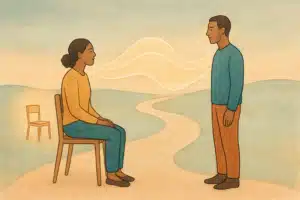
In a poem by Charles Anthony Silvestri (2022), that invitation becomes the heart of a relationship—between two people, yes, but also between any two humans who have crossed paths and recognized the sacred value of another person’s inner world. I have learned that we do not need to rush to claim space; we ask permission to walk alongside someone for a while, to hear their story, to respect their silence, and to be present long enough that loneliness can loosen its grip.

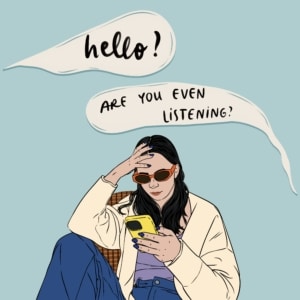
If you’ve ever felt overlooked, talked over, or trapped in a conversation where you were really just waiting to be heard—this poem may land with surprising force. Because listening is not merely a skill; it’s a form of emotional attention. And emotional attention changes people.

A Brief History of Listening (That Isn’t Just “Being Quiet”)

Listening has been discussed for centuries, but what’s powerful about Silvestri’s poem is how it modernizes the idea: not listening as passive silence but listening as a relational commitment.

  • In many traditions, listening is treated as a spiritual discipline. Ancient teachings often place “attentive listening” at the center of wisdom—because wisdom requires receptivity.
  • In philosophy and ethics, listening becomes a way of acknowledging another person’s reality rather than dismissing it as irrelevant.
  • In psychology, listening is central to connection and mental health. Therapists and counselors often emphasize that feeling truly heard can reduce stress and shame while increasing emotional safety.
  • In communication research, we’ve learned that “active listening” involves behaviors—reflecting feelings, asking clarifying questions, and validating experiences—rather than simply keeping quiet. What we do in Spiritual Direction.

But Silvestri’s poem goes a step further. It frames listening as presence with boundaries: if the other person’s silence is their choice, the listener doesn’t break it. They honor it. That is both an emotional intelligence skill and a relational ethics practice: letting someone control their pacing and their vulnerability.

“We Come from Different Places” Why Listening Begins Before Speech

The poem opens with difference: “We come from different places… on different paths we journey.” This matters. Many of us approach conversation as though common ground is required before empathy can begin. Silvestri suggests the opposite: you can begin connection precisely because people are different. You can honor a person’s path without needing it to match your own.

That’s a subtle shift and a powerful one….

  • Instead of asking, “Does your story make sense to me?” we start with, “What is true for you?”
  • Instead of asking, “What can I say to show I understand?” we ask, “What do you need from me right now?”
  • Instead of rushing to similarity, we slow down to curiosity.

Emotional intelligence begins with awareness—of self, of emotion, of impact. If you’re carrying your own anxiety into the conversation, your listening will become a performance. But if you arrive grounded, you can stay open long enough to see what’s there.

Loneliness Ends When Someone Learns Your Song

Silvestri writes about convergence: “So briefly do our lonely paths converge… Yours and mine, along this human journey.” That line hits me because loneliness isn’t always about being alone. Sometimes it’s about being misread. It’s about feeling like your story doesn’t get recognized.

Then comes one of the most striking phrases in the poem: “what hollow loss to never hear your song.” The metaphor of a “song” is more than romantic language. It implies identity—each person has a unique rhythm, a pattern of hopes and griefs, strengths and wounds. If we never listen deeply enough, we don’t just miss information. We miss meaning.

In real life, this looks like

  • Someone repeating the same emotional truth because nobody responded to it the first time.
  • Someone choosing silence because every previous attempt to share was met with judgment or speed.
  • Someone shrinking themselves to fit the conversation, only to become quieter over time.

Listening restores dignity. It tells a person: You matter enough for me to slow down.

“Let Me Listen” The Emotional Intelligence of Being With

The poem’s repeated refrain— “Let me listen”—isn’t only a request. It’s a method. Listening here includes

  1. Allowing the story to be theirs.

The speaker says: “Your story never has been mine to tell—so let me listen.” This is emotional intelligence at work. Some of us accidentally steal someone’s narrative by translating it into our experiences (“That happened to me too…”). Others appropriate by concluding how the person must feel or what they must have meant. Silvestri’s speaker refuses that impulse. They don’t take over the narrative; they honor the ownership of the voice.

  1. Valuing the whole range of emotion.

“Your triumphs and your tears / Your trials and your fears.” Many people are comfortable with success stories but stumble with pain. Yet real listening includes joy and sorrow. It also means you don’t treat sadness as an inconvenience or “overreaction.” You recognize emotion as information.

  1. Staying present without forcing resolution.

Listening doesn’t always lead to solutions. Sometimes the “help” a person needs is not action but witnessing. Emotional safety often comes from being allowed to feel without being rushed to fix.

  1. Respecting silence as a choice.

“And if a silence is your choice to keep, then I will keep it with you.” This is especially rare. Many conversations become uncomfortable when someone stops talking, and that discomfort pushes the other person to fill space or pressure them for more. But Silvestri suggests something gentler: you can stay in the quiet and still communicate care.

If you’ve ever felt pressured to “say something” while your heart was still assembling its words, you’ll understand why that line matters. Silence is sometimes where grief breathes. Silence can also be where a person regains control after overwhelming.

“Too Long You’ve Waited” Listening Is Also an Act of Repair

The poem concludes with urgency: “Too long you’ve waited, too long, to share your journey, your song—so let me listen.” That “too long” is a mirror. It asks: how many people around us have been waiting—patiently or desperately—for someone to hear them?

Waiting may show up as

  • Being consistently the “strong one,” while everyone else forgets they also need care.
  • Staying agreeable, because honesty has not led to safety in the past.
  • Sharing gradually, as if testing whether the listener will punish vulnerability.

When you truly listen, you don’t just respond to words—you signal that waiting is no longer necessary.

Practice Listening Like You Mean It

So, what can we do with this poem right now—today—with real emotional intelligence, not just inspiration?

Here are three practical actions you can take, whether with a partner, friend, coworker, parent, or even yourself

  1. Choose a listening posture for 10 minutes.

Put your phone away. Don’t plan your reply. Ask one open question: “What part of your story feels most important for me to understand?” Then reflect what you heard: “It sounds like…” and “What I’m noticing is…” Keep going until they say you got it.

  1. Validate the emotion before evaluating the facts.

Try phrases like,

  • “That sounds painful.”
  • “I can see why you’d feel that way.”
  • “Your fear makes sense given what you’ve been through.”

Validation doesn’t mean you agree—it means you respect the person’s internal experience.

  1. Honor silence without panic.

If they go quiet, don’t rush to fill it. Let the quiet exist. You can say: “I’m here. Take your time.” That sentence alone can create safety.

And if you want a simple daily prompt: Listen for the “song.” Ask yourself: What unique rhythm is this person carrying—what are they trying to express that words can’t fully capture?

Make Listening a Way of Loving

Charles Anthony Silvestri’s poem is ultimately a vow. It says: I will not rush you. I will not take your story. I will walk beside you. And if you cannot speak yet, I will stay with your silence.

If we take that seriously, relationships change. Communities change. Even workplaces change—because listening is one of the fastest pathways to trust.

So, here’s your invitation, in the spirit of the poem:

Who in your life has waited too long to be heard?

Choose one person. Give them ten minutes of honest listening this week. Let your presence be the response. And when they share—triumphs, tears, trials, fears—remember, you don’t need to become their hero. You only need to be a safe witness.

Let me listen. Now—go do it.

Peace and every good

We come from different places,
You and I,
on different paths we journey;
let me walk beside you for a while –
let me listen.

So briefly do our lonely paths converge,
Yours and mine,
along this human journey;
what hollow loss to never hear your song –
let me listen.

Let me listen,
let me listen as you tell your story:
Your triumphs and your tears,
Your trials and your fears.
Your story never has been mine to tell –
so let me listen.

And if a silence is your choice to keep,
then I will keep it with you;
as long as we walk together,
You and I,
I will listen.

Too long you’ve waited, too long,
to share your journey, your song –
so let me listen.

             – Charles Anthony Silvestri, 2022


 The Power of Posture: Transforming the World Through Spiritual Alignment

In this world that often feels fragmented and disconnected, the quest for harmony and understanding becomes even more pressing. We search for ways to bridge divides, foster empathy, and cultivate a sense of belonging. What if the key to this transformation lies not in grand gestures or sweeping reforms, but in something as simple and personal as our posture?

I would like to suggest that when we think of posture, we typically envision the physical—how we stand, sit, or move. Yet, posture is so much more than a physical stance; it is a way of being, a manner in which we present ourselves to the world. It encompasses wonder, empathy, openness, gratitude, compassion, hope, and empowerment. You can consciously aligin your physical and spiritual postures, you can create ripples of change that extend far beyond yourself.

The historical roots of how the concept of spirituality has evolved over centuries, originating from the Latin word *spiritualitas* in the 5th century. Initially, it referred to spiritual conduct and devoutness, but over time, it has come to signify an inner, personal spiritual life. This evolution mirrors the way our understanding of posture has expanded beyond the physical to include the spiritual and emotional dimensions.

In the early days, spirituality was closely tied to physical expressions—kneeling in humility, raising hands in praise, or sitting in meditation. These postures were not mere rituals; they were profound expressions of one’s inner state and alignment with a higher power. Today, as we seek to reconnect with the essence of spirituality, we can draw inspiration from these ancient practices, recognizing the deep connection between our physical and spiritual selves.


Our physical posture is our reflection to the world and often serves as a nonverbal communication of our internal spiritual/emotional  states. Consider the act of kneeling, which conveys humility and reverence, or the lifting of hands, symbolizing joy and praise. These gestures are more than symbolic; they are powerful expressions of our spiritual alignment to ourselves and world around us.

When we sit with closed-off postures, such as folded arms, we may be signalling a lack of engagement or a guarded heart. Conversely, an open and upright posture can reflect a readiness to embrace new experiences and connect with others. By becoming aware of our physical postures, we can cultivate a deeper understanding of our spiritual attitudes and intentions.


The relationship between posture and spirituality is bidirectional. Just as our spiritual mindset can influence our physical posture, so too can our physical stance impact our spiritual experiences. This mind-body connection is a powerful tool for enhancing our spiritual practices.

Remember that what some people call “soul” and others call “energy” is the essence that flows through us. our “isness” if you will. what makes us, us. without it we are not here. And that essence is what we might be calling spiritual or our true nature. More on this concept in later blogs.

Taking an upright posture, for example, allows for better breathing and energy flow, supporting spiritual focus and clarity. Ritualistic body postures, such as bowing or prostrating, can facilitate a deeper spiritual connection, anchoring our beliefs and practices in the body. By consciously adopting postures that align with our spiritual intentions, we can create a more holistic and embodied spiritual/emotional experience.

Our physical postures also have profound psychological effects, influencing our emotions and mental states during spiritual practice. Downcast or constrictive postures may evoke feelings of humility and introspection, while upright or expansive postures can inspire confidence, praise, and a sense of empowerment.

By experimenting with different postures, we can explore the psychological and emotional dimensions of our spirituality and emotions. This exploration can lead to greater self-awareness and a deeper connection with our inner selves, our isness, fostering a sense of peace and fulfillment.

Empowerment is a key aspect of both posture and spirituality. When we stand tall and open, we project confidence and strength, embodying our spiritual identity. This empowerment extends beyond the individual, influencing our interactions with others and our ability to effect positive change in the world.

By embracing postures that reflect empowerment, we can inspire others to do the same. Our physical stance becomes a beacon of hope and possibility, encouraging those around us to stand tall in their own spiritual journeys. In this way, posture becomes a powerful tool for creating a more harmonious and compassionate world.

Gratitude and compassion are integral to both posture and spirituality. When we adopt a posture of gratitude, we open ourselves to the abundance of life, recognizing the beauty and blessings that surround us. This openness fosters a sense of connection and belonging, nurturing our relationships with others and the world.

Similarly, a posture of compassion invites us to extend kindness and understanding to ourselves and others. By embodying compassion in our physical stance, we create a space for healing and reconciliation, bridging divides and fostering unity.

In a world that often feels divided and disconnected, the power of posture offers a simple yet profound path to transformation. By aligning our physical and spiritual postures, we can cultivate wonder, empathy, openness, gratitude, compassion, hope, and empowerment. These qualities become the foundation for a more harmonious and compassionate world.

As we embark on this journey of alignment, let us remember that change begins with us. By consciously choosing our postures, we can create ripples of change that extend far beyond ourselves, inspiring others to join us in the quest for a better world. Together, we can stand tall, embodying the values and virtues that will guide us toward a brighter future.