
Intent Verses Impact and Its Causes
Impact vs. Intention
Why “I didn’t mean it that way” is almost always true — and almost never the point.
There is a sentence almost every one of us has said, usually with real feeling, usually while something in the room is going badly: I didn’t mean it that way. It is usually true. And it almost never helps.
The gap is built into us
This is something we have all experienced; it is standard human equipment. The actor–observer bias means I explain my own behavior by my circumstances — the pressure, the fatigue, the good intention I started with — while I explain yours by your character, even though I don’t know what is inside of you. (actor–observer bias). I am late because the meeting ran long. You are late because you are the kind of person who is late.
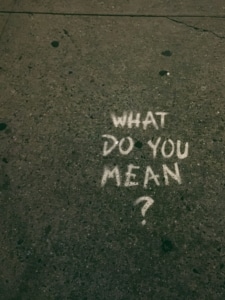
Layered on top of all of this is the illusion of transparency — we badly overestimate how clearly others can read what we are thinking (illusion of transparency). I know my short reply was a joke. I know my silence meant I was thinking, not disapproving. I know it so vividly that it feels broadcast. It is not broadcast. They received the words, or the tone, or the silence. They did not receive the intention behind it. They never do. Ever.
I want to say this part gently, Intention is not meaningless — it is the difference between a mistake and a cruelty. But intention is a fact about me, and impact is a fact about you. The error is offering a fact about myself as though it settled a question about someone else. Your foot still hurts.
The zinger I was proud of
I was co-leading a group of about twenty-five people with a friend. We were both sarcastic and both good at it — that was part of how we worked together. It had always been play.
She landed a zinger on me. I fired one right back, and I will be honest: I thought it was world class.
And she started to cry.
In that half second everything I had meant by it evaporated. It did not matter that it was a joke, or that she had gone first, or that this was how we always talked. What I intended never made it across the room. What landed was something else entirely, and I could see it on her face in front of twenty-five people.
So, I stopped the meeting and apologized to her out loud, in front of everyone who had just watched it happen. I have not done it since.
And I try very hard not to use sarcasm; you see sarcasm is a sharpened instrument. I had been telling myself I was using it well. I was just using it on people.
What repairs
Roy Lewicki and his colleagues at Ohio State tested the six components of an apology to see which ones truly land. The two most effective were acknowledgment of responsibility — this is my fault — and the offer of repair — here is what I will do about it. The least effective, in both studies, was the request for forgiveness (Ohio State, 2016).
That is worth sitting with, because the weakest element is the one most of us lean on hardest. “I’m so sorry. I really didn’t mean it. Are we okay?” Listen to the shape of what I just wrote, my feeling, my intention, and then a request that the person I hurt do something for me — reassure me, release me, restore me to being a good person. It is an apology organized around the comfort of the apologizer. What the injured person needs is simpler and harder: own it and fix it.
Restorative justice has been built on that shape for decades. Since I did Kairos prison ministry for decades, I know a little about this. Rather than asking what rule was broken and what the offender deserves, it asks: who was harmed, what do they need, and whose obligation is it to make it right — not one of which is a question about what anybody meant. And it is not soft. A 2025 meta-analysis finds restorative approaches produce modest but highly cost-effective reductions in reoffending, significantly higher satisfaction among those harmed, and greater accountability from those who caused it (Criminology & Criminal Justice). Centering impact is not merely kinder. It works better.
The repair that stayed with me
Years later I was on the other side of it. A man who I will call George W. came to me and apologized. A situation had gone badly because of choices George made, and those choices had landed on me.
What hurt was not only the outcome. It was that he had decided who I was — and decided wrong. George acted on a version of me that did not exist, and I had to live inside the consequences of a story about me that was not true.
When George apologized, he did not explain. He did not walk me through his reasoning or ask me to understand the pressure he had been under. He named what he had done, he named that it had hurt me, and he did not ask me to make him feel better about it.
It did not undo everything. We never got along well after that. But something in me softened that had been hard a long time. Being seen accurately at last, by the person who had gotten me wrong — that was the repair.
Intent Verses Impact Reflection Sheet
What love asks
In emotional intelligence terms this is a trainable skill, one that we in the west are so to acknowledge and it is not the same as being nice: the ability to hold what I meant and what landed at the same time, without collapsing either. Most of us can only hold the first, so the moment impact is raised we defend intention, and the conversation quietly becomes about whether I am a good person instead of what happened to you. The practice is small and genuinely hard. Do not explain yet. Ask — “tell me more about how that hit you” — and stay in it longer than is comfortable. Then own your part, with no but anywhere in the sentence, and ask what would help.
The contemplative tradition arrived here long before the research did. The first act of love, said Abba Poemen, is to leave the other person free — and part of what we must leave free is their account of their own experience. I do not get to tell you that what happened to you did not happen, simply because I would prefer to be the kind of person who did not cause it. That is why this is spiritual work and not a communication technique: centering impact means giving up the story in which I am the good guy, and that takes a true strength to survive being wrong.
I did not mean it that way. Almost none of us ever do. The question is what I do in the next thirty seconds, once I know.
Peace and every good.
About Jim & Lynette Vaive
Jim and Lynette Vaive are the co-founders of spirit of EQ and co-authors of The Mystical Seeker. They are Master Certified Coaches, certified Narrative Enneagram teachers, and Certified Spiritual Directors, and together they hold credentials in Spiritual Emotional Intelligence (SEQ) — a framework rooted in Lynette’s Doctor of Ministry research. Learn more at spiritofeq.com.
Sources
Ohio State University — the six elements of an effective apology (Lewicki et al., 2016): news.osu.edu
Actor–observer bias: EBSCO · Illusion of transparency: overview
Meta-analysis of restorative justice outcomes (2025): Criminology & Criminal Justice
