Posts

From the Frats to the Hippies: How Not Belonging Taught Me to See

Good Enough for This Life

Do you ever think about whether you are good enough for this life?

I ask it that way on purpose — not “good enough at your job” or “good enough for the relationship” but for this life, the whole thing, the fact of being a particular kind of person moving through a world that was mostly built for a different kind of person. It is a question I have carried for a long time. And I want to tell you where it came from, because the origin of this story matters.

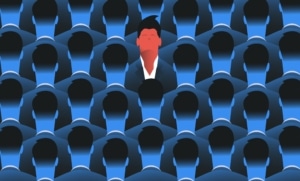
Picture a room full of people who seem to know where to stand. You are at the edge, not by design but because the middle arrived too fast and too loud, because you are already receiving the room — not just the nearest conversation but every conversation, the ambient emotional temperature, the undercurrent of music, the way the light is sitting differently on one side than the other. You are cataloging all of it without meaning to, because that is simply how your mind moves.

I know that room. I spent most of my adolescence looking for the group that would finally let me in — not merely tolerate me but receive what I was bringing. I tried the frats, with their crisp hierarchies and their belonging-by-exclusion, their handshakes and their unwritten ledgers of who counted. I tried the greasers, leather and bravado, a different code but a code all the same, enforced with the same quiet ferocity. I tried the soul brothers, drawn by the warmth and the music and the sense that community here might stretch wide enough to hold more kinds of people. And finally, tentatively, I found the hippies — loose-structured, philosophically suspicious of tight categories, practicing a kind of radical acceptance that was imperfect and sometimes chaotic but real. They were the closest thing to a fit I had found. And even there, I was only partly in.

What I didn’t understand then, standing at the edges of all those circles, was that the thing keeping me out was also the thing that made me able to see.

I have dyslexia and ADHD. Together. Which, if you’ve lived it, means the mind doesn’t run one stream of consciousness but several — simultaneous, layered, cross-referencing, sometimes chasing each other into corners before snapping back. The squirrel jokes are accurate. Mid-sentence, mid-thought, something peripheral catches your sight and suddenly you are somewhere else entirely, following a thread that no one else in the room can see.

What I couldn’t name as a teenager was the experience of receiving a conversation on six channels at once — the words someone was saying and the words they weren’t saying, the slight tension in their shoulders, the way their story didn’t quite line up with their eyes, the ambient emotional weather of the room, the connection to something said three exchanges ago that suddenly mattered now. All of it arriving at the same time. All of it real.

This was not comfortable. For years it was almost unbearable — the sensation of always arriving sideways to the conversation, unable to slow the intake down enough to meet people where they were. I tried to explain it, and it came out tangled. I tried to belong and it came out strange. Large parties still overwhelm me quickly; the signal-to-noise ratio collapses under too many inputs running at once, and I learned early to find the wall, the corner, the quieter edge where the room could be read rather than absorbed whole. And so, the question I carried — quietly, persistently, the way you carry things you cannot put down — was: Am I good enough for this?

Howard Gardner’s theory of multiple intelligences, developed in the early 1980s, named what many people had quietly suspected: that intelligence is not a single axis running from less to more, but a wide range of distinct capacities — linguistic, spatial, musical, interpersonal, intrapersonal, and more — that show up differently in different people, and are cultivated or suppressed depending on the environments those people move through. Ned Hallowell, who has written about ADHD from the inside for decades, describes it as a Ferrari engine with bicycle brakes: enormous processing power that simply needs a different kind of structure to channel it well. What both are pointing toward is this — the brain that struggles in one environment is often extraordinarily capable in another. Not as consolation. As fact.

The multiple streams I couldn’t turn off at parties became, in smaller rooms and deeper conversations, something closer to precision. I could hear what people meant underneath what they said. I could hold several threads at once and notice where they crossed without losing either. I could sit with someone in confusion and not rush them toward clarity, because I knew from the inside what it felt like to have the mind moving in many directions at once and not yet know which one was true. The gift and the difficulty were the same thing, running on the same hardware, expressed differently depending on context.

I think now about that teenager trying the frats and the greasers and the soul brothers and the hippies — not as someone who failed to find a home, but as someone learning, by accumulation and by refusal, what belonging required. It wasn’t a group that would tolerate him. It was a context in which his actual nature could be useful. The hippies came closest because they had, almost by philosophy, released the requirement to be one thing, to arrive in a straight line, to present a coherent and unified self at all times. They were practicing, imperfectly and sometimes chaotically, the idea that a loose structure could hold more kinds of people and more kinds of minds.

What I do now — working with people around emotional intelligence, around the interior life, around the persistent gap between who we are and who we think we should be — is built directly from those years of standing at the edges of rooms and learning to read them. The overwhelm at large gatherings is still real. The squirrels still appear. But I have learned to trust the multiple streams, to follow rather than fight them, to understand that the signal is often in the thing that looks like noise. Observation turns out to be one of the rarest things one person can offer another. And it was built, in me, precisely by not being comfortable in the middle.

So: do you ever think about whether you are good enough for this life?

Edge Of Room Workbook

Here is the reframe I want to offer — not a reassurance, not “of course you are, everyone is,” which is kind but lame and thin. Instead, the question assumes a standard that was probably never built for you. The thing you experience as a deficit — the way you process or move or think or feel that doesn’t match the room — may be exactly the mechanism by which you will eventually see most clearly.

I still sometimes find myself at the edge of a room, taking in more than I was asked to take in, following threads no one else is following. But I am no longer trying to get to the middle.

The edge, it turns out, is a very good place to observe from. And observation, it turns out, is exactly what most people are waiting for someone to offer them.

If this landed somewhere in you, the conversation continues at [Substack/Mighty Networks] — a community that keeps asking these same questions together.

Peace and every good.

Small Openings: From Isolation Back Into Life Now!

I have been thinking a lot about our human existence and the quiet ways many of us feel cut off from life. These aren’t dramatic breaks — not the kind a single event can explain — but slow separations: a tightening around the chest when someone smiles at us and we don’t know how to return it, the habit of watching life through a window instead of stepping through the door, the small, accumulating evidence that we are apart from the dance. I remember being treated cruelly, and I remember, with shame, the times I treated someone else cruelly because my own pain made it hard to be anything else. Those memories sit beside each other now, like two sides of a coin: harm received, harm given. Both taught me something about the life I wanted and the life I feared.

I grew up in a rust-belt city — Detroit — and that landscape shaped me in complicated ways. Its neighborhoods smelled of oil and hot asphalt in summer, and in winter the sky often held a gray hush that felt as if it could hold back laughter. The city brought together different cultures, and there was beauty in that: sharing food at makeshift tables, hearing music spill from open windows, strangers laughing about the same joke in different accents. There were lessons in the way neighbors rebuilt things instead of replacing them, and in the communal pride that even a small victory could spark — a mural finished on a boarded-up shop, a storefront window that at least had something new in it.

But the same things that were strengths could also be wounds. The cultures that came together in close quarters sometimes meant you were “othered” for aspects of yourself: your accent, the shape of your hair, the way your family prayed. In school, “fitting in” felt like a currency I didn’t have. I wanted it so badly I could taste it, but at times there were no ways in. Doors closed in places where I needed them open. My attempts to belong sometimes pushed me toward behaviors that were unkind — not the heroic cruelty of stories, but the quieter cruelties: sarcasm instead of empathy, mockery instead of curiosity, shutting someone out because I feared they would close me out first.

There was a boy in my school who would always arrive late and sit in the back. He had a habit of humming to himself and wore oversized jackets. People whispered about him; one day, someone put a sticky note on his desk with a joke about his clothes. The laughter that followed felt like relief for everyone except him. I joined in. Looking back, I can feel the heat of embarrassment in my chest — a reflex to hide by aligning myself with the majority. At the time, I told myself it wasn’t me who was cruel; it was just what everyone did. But the memory of his quiet face, the way he flinched, is a weight I carry. That small action taught me how easy it is to perpetuate harm when we are trying to survive socially.

There were also moments of deep reciprocal kindness. An older neighbor, Hal, once invited my family to dinner not because he was obligated but because he wanted to really get to know us. That felt like a bridge. In that house, across a kitchen table with mismatched chairs, the city’s harsh edges softened for a night. I remember the smells, the way the light hit the linoleum, and the lines on Hal’s hands as he told stories about a city that had been good and bad to him. I remember leaving with a sense that belonging could be offered, not just earned.

Those polar experiences — being hurt, hurting others, being welcomed — taught me how fragile our connection to life can be. Feeling cut off is not just an emotional state; it is a posture. Your shoulders round, your voice tightens, and you begin to measure every interaction as potential rejection. That posture changes how you see the world. It flattens it into black-and-white choices: safe or dangerous, friend or enemy, belong or be excluded. But the truth is messier. People are often both kind and flawed. Places are both beautiful and damaged. Recognizing that complexity is the first step toward reconnecting.

So how do we move from being cut off to being in life? I thought of two practical pathways — methods I’ve tried, tested, and returned to — each illustrated with a small example from my life and the outcomes I noticed.

  1. Start with small, intentional openings.

When I moved into my first apartment, I made a ritual of picking up a newspaper from a corner store and reading it on the stoop each morning. At first, it was a way to occupy my hands. Then a neighbor — a woman who walked her dog daily — started nodding and saying, “Morning.” I began returning the nod. After a month, she introduced herself. We swapped stories about where we were from. That simple, steady act of being present changed both of our days. The outcome from those small, repeated openings changes the posture of isolation. They tell the world, and tell yourself, that you are available for connection. The stakes are low, so the risk feels manageable, but the effect is real: a neighbor becomes an ally, a nod turns into conversation, and slowly, life feels less like a window and more like a door.

  1. Name your own pain without weaponizing it

After years of folding my hurt into sarcasm, (and I was good at it) I started practicing a different approach with friends: naming the feeling instead of attacking them. Once, when a joke landed poorly, instead of laughing along and deepening a wedge, I said, “I know I hurt you with that joke, I am sorry! I was nervous to open that door, but the vulnerability invited real dialogue. The other person shared a similar fear. We both paused — not to retaliate, but to understand.  When you articulate your hurt, you reduce the chances it will be unconsciously turned outward. Naming is disarming. It allows others to respond to you as a human being rather than a target. Over time, relationships shift from performance to presence. And I so very much need presence.

The feelings these practices evoke aren’t always rosy. Opening yourself up can be terrifying; naming pain can be humbling; rituals can feel like small boats in a storm. Yet the outcomes are concrete: less loneliness, more honest relationships, a steadier sense of presence. You learn to see people less as adversaries and more as fellow travelers, each carrying their own set of wounds and the occasional bright kindness.

There are collective consequences too. When individuals begin to show up — when we take even modest steps to be present, honest, and grounded — communities knit tighter. In my neighborhood, those small acts multiplied: shared meals, neighborhood cleanups, impromptu music sessions on a stoop. The city still bore its scars, but there was more laughter and fewer places where people felt entirely invisible.

I don’t pretend to have fixed everything. I still stumble; I still occasionally say something mean because I’m scared. But remembering both sides of my story — the cruelty I absorbed and the cruelty I inflicted — keeps me accountable. It reminds me that being human is messy, but we can choose a kind of practice that pulls us away from isolation and toward life.

If you feel cut off, know that the way in often begins with something small: a nod, a named feeling, a few minutes of noticing. These acts are not grandiose, but they are honest. They create cracks in the walls we build and let light leak through. Over time, those cracks widen, and life—noisy, fragile, complicated—finds its way back in.