
Posts

The Garden He Grew from Honest Contradiction

Post One:   The Garden He Grew From

Formation, the village of mentors, and the name given by a king

Post Two:   A Man Who Stands in the Room

Teaching, spiritual direction, EQ practice, and the soul-centered integrated life

Post Three:  When the Whisper Is Louder Than the Fear

Racial injustice, the cost of speaking, grief, and the word for those at the edge of the room


A CONVERSATION WITH DR. DON AJENÉ WILCOXSON · PART ONE OF THREE

The Garden He Grew From

What hard soil and an unlikely village made of one remarkable man
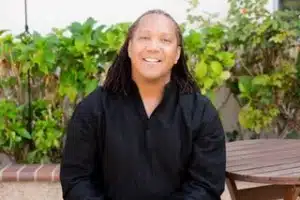
There is a photograph I keep returning to in my mind — not a real one, but the kind your imagination makes when someone tells you a story about a boy walking to school alone, afraid, and arriving anyway. I have known Dr. Don Ajené Wilcoxson for years. I know the man he became. But it was only when we sat down together for a long conversation that I began to understand the terrain that formed him.

He described his childhood plainly, without self-pity, in the way that people speak about hard things they have long since made peace with. Physical abuse. A biological father he never met. The daily threat of being beaten walking to school. He called it “really challenging.” What stayed with me was not the weight of those words but the steadiness with which he carried them — the way a man speaks about weather he has already walked through.

“I was blessed,” he said, and meant it. Because running alongside those hardships was something else: a community of people who saw him and chose to stay.

His adoptive father became, in his words, “the best thing that could ever happen” to his life — a man who taught him about all cultures, all music, all the beautiful width of what it means to be human.

There was also Dell Roberts, a friend who showed him what it looks like for a young Black man to move through the world with dignity. His mother, who helped him find stillness. His godmother, who taught him ethics — not as rules, but as a way of being. And his nana, who pressed into him the twin practices of listening and caring. He didn’t point to a single turning point the way we often hope people will. He pointed instead to a village.

There is a concept in the Enneagram — and Ajené is a deeply self-aware Nine — about the way the Peacemaker absorbs the world around them, becoming, in some sense, an amalgam of the people they love. What he described from his childhood is not just biography. It is the formation of a man who would go on to hold space for people from every tradition, every background, every wound — and do it with the naturalness of someone who learned to navigate difference before he could name it.

He was the darkest member of his family. Extended family and outsiders noticed. He noticed. And rather than letting that experience narrow him, it became a doorway. “It taught me to navigate that difference,” he said, “and that helped me work across cultures and faiths later.” What looked, from the outside, like a wound had quietly become a gift.

This is the movement that the Six Seconds emotional intelligence framework calls “exercising optimism” — not the naive insistence that things are fine, but the practiced discipline of asking what is generative alongside what is broken. Ajené did not learn this from a book. He learned it the way most lasting things are learned: by living through something hard and refusing to let it be the last word.

The name Ajené arrived later. He was in his mid-twenties, teaching, when an African king whose daughter had been moved by his work gave him the name. It means, roughly, “a businessman who truths” — which Ajené himself acknowledged is something of an oxymoron, a contradiction held together by purpose. He carries that name now not as an identity to perform but as a reminder. Something higher, he said, is always calling him in everything he does.

“The name is a constant reminder that I have something higher that is calling me in everything I do.”

That sense of calling runs through everything that follows: the classroom, the sanctuary, the spiritual direction session, the emotional intelligence coaching circle. But it began here, in the soil of a childhood that was genuinely difficult and genuinely held — held by a father who taught him wonder, a friend who modeled dignity, a grandmother who modeled listening, a godmother who modeled integrity.

There is a phrase from the Celtic tradition that has long moved me: the idea that what we are is not something we construct alone, but something we receive — from the land, from the ancestors, from the people who pray over us before we know we need praying over. Ajené did not use that language, but he described that reality. He is, in a deep sense, a man made by his village.

And the village made something extraordinary. A man who enters rooms prepared to meet whoever is already inside. A man who learned, before he had words for it, that difference is not a problem to be solved but a garden to be tended. A man who was given a name that named him more truly than he could have named himself — and who has spent the decades since trying to live worthy of it.

On Wednesday and Thursday, we will follow Ajené into the classroom and the sanctuary, into his work at the intersection of emotional intelligence and spiritual formation, and into the harder places — the grief he carries about racial injustice, the cost of speaking when silence would be easier, and what keeps the pilot light lit even now. But this is where we begin: with the boy, and the village, and the soil that made him.

The boy walked to school afraid and arrived anyway. That was, perhaps, the first lesson.

To get in touch with Ajene use this link.ajene@donajene.com

If this reflection stirred something in you, we invite you to explore the work of emotional intelligence and spiritual formation at spiritofeq.com and mystical seeker.substack.com

Peace and every good.
Understand your growing edge

“Look well to the growing edge. All around us worlds are dying and new worlds are being born; all around us life is dying and life is being born. The fruit ripens on the tree, the roots are silently at work in the darkness of the earth against a time when there shall be new leaves, fresh blossoms, green fruit. Such is the growing edge. Look well to the growing edge.”

Howard Thurman

There are moments when the world around us feels raw and divided, when headlines and conversations seem to pull us apart rather than bring us together. In those moments I return to Howard Thurman’s words and find an invitation: to look for the small, persistent beginnings — the growing edge — where life quietly insists on renewal. Thurman’s lines are not a denial of loss; they are a map of hope. They remind us that endings and births travel side by side, that even in the shadow of decay there is an unseen labor preparing the next season.

Think of the growing edge as the slender green that appears on a branch after winter, or the first breath that follows exhaustion. As Thurman says, it is “the extra breath from the exhausted lung, the one more thing to try when all else has failed.” It is the steady, stubborn impulse that keeps us trying, learning, and reaching for what is better. This impulse is not grandiose or flashy; often it is quiet and humble — a neighbor listening, a teacher staying late, a community garden taking root in a vacant lot. Those acts, multiplied, become the scaffolding for something new.


Our world today bears many fractures — political rancor, social pain, environmental strain. Yet if we look only at what is breaking, we miss the synchronous birth of possibility. “All around us life is dying and life is being born.” If we pay attention to the growing edge, we can choose to live in alignment with that emergence. That doesn’t mean ignoring difficulty. It means placing our energy where life is being renewed: toward understanding, toward repair, toward building structures that invite flourishing rather than entrenching harm.

How do we tend the growing edge in the life we live? First, by embracing change instead of fearing it. Change is the canvas where new worlds are painted. Thurman’s vision encourages us to accept transformation as natural and necessary — to learn, adapt, and be curious about new perspectives. This openness creates the possibility of connection where division once stood.

Second, by intentionally looking for the positive developments that flicker into being. When we “look well to the growing edge,” we train our attention on those emerging efforts that point toward life: grassroots movements organizing for justice, teachers designing classrooms that foster belonging, neighbors organizing to protect a local river. These are the places where hope is not theoretical but practical. Thurman calls this “the upward reach of life when weariness closes in upon all endeavor.” Even a single upward reach can change the direction of a weary heart.

Third, by cultivating resilience. The growing edge is “the basis of hope” because it gives us evidence that renewal is possible. When we recognize obstacles as opportunities to grow, we reclaim agency. Speaking truth, showing up for others, and insisting on dignity in daily choices are acts that compound. They make us stronger and they signal to others that building anew is worth the struggle.

Fourth, by engaging in meaningful dialogue. When “times are out of joint and men have lost their reason,” Thurman suggests the incentive to carry on lives in relation, in listening and in sharing. Conversation done with patience and empathy can soften hardened positions and reveal common aims. It’s not always easy; it requires humility and courage to speak and to listen. But such exchanges often become the quiet work of the roots, preparing fertile ground for new leaves and blossoms.

I have to say without a shadow of a doubt there have been times in my life where I did not want to “engage in meaningful dialogue”. I even went so far as to decry the impulse to do so. How can you expect me to talk with “this person” for what they are doing around them?

It is HARD. It is WORTH IT!

Finally, by nurturing new leaders and ideas. “The birth of a child — life’s most dramatic answer to death” points to the profound power of beginnings. Supporting those who are starting — young people, marginalized voices, community organizers — replenishes our collective capacity to imagine and build alternatives. Their insights are often fresh because they are less encumbered by the constraints of what has always been.

History and daily life offer countless examples of the growing edge in motion: movements that transformed societies, technologies that reconnected people across distances, community responses to climate crises that turned despair into action. These all began as something small and persistent — a few people refusing to accept the finality of the old story.

There are challenges. Cynicism can blunt our sight; uncertainty can make us cling to familiar pain; idealism without grounding can falter. Thurman’s call — “Look well to the growing edge” — is precisely a remedy for these trials. It trains attention toward the life that insists on being born even in difficult soil.

So, when the world feels fractured, remember to look for the new leaves, the fresh blossoms, the quiet roots working underground. Tend to them when you find them. Join them when you can. In that practice, one extra breath at a time, we become participants in a larger turning — from fragmentation toward a renewed and shared life. Look well to the growing edge.

Folks, reading Howard Thurman is a life changing experience for those with eyes to see and ears to hear.

Peace and every good.

Small Openings: From Isolation Back Into Life Now!

I have been thinking a lot about our human existence and the quiet ways many of us feel cut off from life. These aren’t dramatic breaks — not the kind a single event can explain — but slow separations: a tightening around the chest when someone smiles at us and we don’t know how to return it, the habit of watching life through a window instead of stepping through the door, the small, accumulating evidence that we are apart from the dance. I remember being treated cruelly, and I remember, with shame, the times I treated someone else cruelly because my own pain made it hard to be anything else. Those memories sit beside each other now, like two sides of a coin: harm received, harm given. Both taught me something about the life I wanted and the life I feared.

I grew up in a rust-belt city — Detroit — and that landscape shaped me in complicated ways. Its neighborhoods smelled of oil and hot asphalt in summer, and in winter the sky often held a gray hush that felt as if it could hold back laughter. The city brought together different cultures, and there was beauty in that: sharing food at makeshift tables, hearing music spill from open windows, strangers laughing about the same joke in different accents. There were lessons in the way neighbors rebuilt things instead of replacing them, and in the communal pride that even a small victory could spark — a mural finished on a boarded-up shop, a storefront window that at least had something new in it.

But the same things that were strengths could also be wounds. The cultures that came together in close quarters sometimes meant you were “othered” for aspects of yourself: your accent, the shape of your hair, the way your family prayed. In school, “fitting in” felt like a currency I didn’t have. I wanted it so badly I could taste it, but at times there were no ways in. Doors closed in places where I needed them open. My attempts to belong sometimes pushed me toward behaviors that were unkind — not the heroic cruelty of stories, but the quieter cruelties: sarcasm instead of empathy, mockery instead of curiosity, shutting someone out because I feared they would close me out first.

There was a boy in my school who would always arrive late and sit in the back. He had a habit of humming to himself and wore oversized jackets. People whispered about him; one day, someone put a sticky note on his desk with a joke about his clothes. The laughter that followed felt like relief for everyone except him. I joined in. Looking back, I can feel the heat of embarrassment in my chest — a reflex to hide by aligning myself with the majority. At the time, I told myself it wasn’t me who was cruel; it was just what everyone did. But the memory of his quiet face, the way he flinched, is a weight I carry. That small action taught me how easy it is to perpetuate harm when we are trying to survive socially.

There were also moments of deep reciprocal kindness. An older neighbor, Hal, once invited my family to dinner not because he was obligated but because he wanted to really get to know us. That felt like a bridge. In that house, across a kitchen table with mismatched chairs, the city’s harsh edges softened for a night. I remember the smells, the way the light hit the linoleum, and the lines on Hal’s hands as he told stories about a city that had been good and bad to him. I remember leaving with a sense that belonging could be offered, not just earned.

Those polar experiences — being hurt, hurting others, being welcomed — taught me how fragile our connection to life can be. Feeling cut off is not just an emotional state; it is a posture. Your shoulders round, your voice tightens, and you begin to measure every interaction as potential rejection. That posture changes how you see the world. It flattens it into black-and-white choices: safe or dangerous, friend or enemy, belong or be excluded. But the truth is messier. People are often both kind and flawed. Places are both beautiful and damaged. Recognizing that complexity is the first step toward reconnecting.

So how do we move from being cut off to being in life? I thought of two practical pathways — methods I’ve tried, tested, and returned to — each illustrated with a small example from my life and the outcomes I noticed.

  1. Start with small, intentional openings.

When I moved into my first apartment, I made a ritual of picking up a newspaper from a corner store and reading it on the stoop each morning. At first, it was a way to occupy my hands. Then a neighbor — a woman who walked her dog daily — started nodding and saying, “Morning.” I began returning the nod. After a month, she introduced herself. We swapped stories about where we were from. That simple, steady act of being present changed both of our days. The outcome from those small, repeated openings changes the posture of isolation. They tell the world, and tell yourself, that you are available for connection. The stakes are low, so the risk feels manageable, but the effect is real: a neighbor becomes an ally, a nod turns into conversation, and slowly, life feels less like a window and more like a door.

  1. Name your own pain without weaponizing it

After years of folding my hurt into sarcasm, (and I was good at it) I started practicing a different approach with friends: naming the feeling instead of attacking them. Once, when a joke landed poorly, instead of laughing along and deepening a wedge, I said, “I know I hurt you with that joke, I am sorry! I was nervous to open that door, but the vulnerability invited real dialogue. The other person shared a similar fear. We both paused — not to retaliate, but to understand.  When you articulate your hurt, you reduce the chances it will be unconsciously turned outward. Naming is disarming. It allows others to respond to you as a human being rather than a target. Over time, relationships shift from performance to presence. And I so very much need presence.

The feelings these practices evoke aren’t always rosy. Opening yourself up can be terrifying; naming pain can be humbling; rituals can feel like small boats in a storm. Yet the outcomes are concrete: less loneliness, more honest relationships, a steadier sense of presence. You learn to see people less as adversaries and more as fellow travelers, each carrying their own set of wounds and the occasional bright kindness.

There are collective consequences too. When individuals begin to show up — when we take even modest steps to be present, honest, and grounded — communities knit tighter. In my neighborhood, those small acts multiplied: shared meals, neighborhood cleanups, impromptu music sessions on a stoop. The city still bore its scars, but there was more laughter and fewer places where people felt entirely invisible.

I don’t pretend to have fixed everything. I still stumble; I still occasionally say something mean because I’m scared. But remembering both sides of my story — the cruelty I absorbed and the cruelty I inflicted — keeps me accountable. It reminds me that being human is messy, but we can choose a kind of practice that pulls us away from isolation and toward life.

If you feel cut off, know that the way in often begins with something small: a nod, a named feeling, a few minutes of noticing. These acts are not grandiose, but they are honest. They create cracks in the walls we build and let light leak through. Over time, those cracks widen, and life—noisy, fragile, complicated—finds its way back in.

A Few Stories….

I wanted to share a few stories of self-discovery….

In this world we find ourselves that is bustling with activity and constant distractions, finding a moment of quiet reflection can be challenging at best. Yet, I find the journey toward self-awareness is a rewarding path that had lead to personal growth and deeper connections with others. Through the series of stories below, we can explore how these individuals have embarked on their journey, using tools like journaling, meditation, and the Enneagram to uncover their true selves.

The Journal of Emily: Unveiling Emotional Triggers

Emily always felt overwhelmed by her emotions, especially in stressful situations. She decided to start a journal, hoping to make sense of her feelings. One evening, she sat down with a cup of tea and began writing about her day. As she wrote, she noticed a pattern: her frustration often stemmed from feeling unappreciated at work.

Through her journaling, Emily discovered that her emotional triggers were linked to her need for validation. This realization was a turning point I her life. She began to explore ways to communicate her needs more effectively, both at work and in her personal life. Sharing her insights with a close friend, Emily found support and encouragement, which helped her grow more confident in expressing herself.

David’s Meditation Journey: Finding Peace Within ( I find Davids journey like my own)

David had always been skeptical about meditation. However, after hearing about its benefits, he decided to give it a try. He joined a guided meditation group, where he learned to focus on his breath and observe his thoughts without judgment.

During one session, David was guided through a body scan meditation. As he relaxed, he noticed tension in his shoulders and a knot in his stomach. The instructor encouraged him to breathe into these areas, releasing the tension with each exhale. As he did, David realized that his physical discomfort was linked to his anxiety about an upcoming presentation.

This insight was profound. By acknowledging his anxiety, David was able to address it directly, rather than letting it fester and grow. After the session, he shared his experience with the group, finding comfort in knowing that others faced similar challenges. Meditation became a regular practice for David, helping him navigate life’s stresses with greater ease.

Sarah’s Reflective Discussions: Building Connections

Sarah was part of a community group that met weekly for reflective discussions. Each session began with a simple question: “What did you learn about yourself this week?” At first, Sarah was hesitant to share, worried about being judged. But as she listened to others, she realized that everyone was on their own journey of self-discovery.

One week, Sarah shared a story about a disagreement with a friend. Through the discussion, she recognized that her reaction was rooted in a fear of abandonment. This insight allowed her to approach the situation with empathy, leading to a heartfelt conversation with her friend.

The group became a safe space for Sarah, where she could explore her emotions and learn from others. The support and understanding she found there helped her grow more confident in her relationships, both with herself and others.

Exploring the Enneagram: Tom’s Path to Understanding

Tom had always been curious about personality frameworks, so when he heard about the Enneagram, he was intrigued. He discovered that he was a Type 3, the Achiever, driven by success and validation. This revelation was both enlightening and challenging.

As Tom delved deeper into the Enneagram, he realized that his pursuit of success often overshadowed his true self. He began to question whether his achievements were aligned with his values or simply a means to gain approval. This introspection led Tom to make significant changes in his life, focusing on authenticity rather than external validation.

Tom shared his journey with his Enneagram study group, where others were exploring their own types. Through these discussions, Tom gained new perspectives and learned to appreciate the diversity of motivations and fears that drive human behavior. The Enneagram became a tool for personal growth, helping Tom build more authentic relationships.

When you start on the Ongoing Journey of Self-Discovery you will be excited….

These stories can illustrate for you the transformative power of self-awareness. Whether through journaling, meditation, reflective discussions, or the Enneagram, each individual found a path to deeper understanding and personal growth. Their journeys remind us/me that self-awareness is not a destination but a continuous process of exploration and reflection. You WILL have ups and downs.

As you embark on your own journeys,  remember the importance of community and support. By sharing your insights and learning from one another, you can create a space of understanding and compassion, fostering personal growth and deeper connections with those around us. And together, we can navigate the complexities of this life with greater self-awareness and emotional intelligence.