
Posts

To Everyone Standing at the Edge of the Room

A CONVERSATION WITH DR. DON AJENÉ WILCOXSON · PART THREE OF THREE

When the Whisper Is Louder Than the Fear

On racial injustice, the cost of standing up, and what he wants to say to everyone at the edge of the room
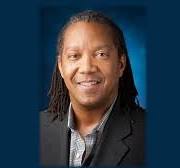
There is a particular kind of courage that does not announce itself. It does not look like charging a hill. It looks, more often, like a young man walking to the principal’s office to report something dangerous, knowing full well that the danger will follow him home.

Dr. Don Ajené Wilcoxson was in high school when he discovered that the Ku Klux Klan was recruiting on his campus. He reported it. Threats followed. He did not stop. When I asked him about it in our conversation, sitting with decades of distance from that moment, he said something I have turned over many times since: speaking out felt natural. It would have been uncomfortable not to speak out.

That sentence says a great deal about who he is. It also says something about the world he grew up in — a world where a young Black man could not afford the luxury of looking away from what was happening around him, where naming the danger was not bravery so much as clarity.

Speaking out felt natural. It would have been uncomfortable not to speak out.

He carried that clarity with him into his professional life. When he was hired at Riverside City College, someone told him directly that he had been selected because he was Black — even though he was more qualified than other candidates. He did not walk away from that institution. He went on to become one of only three or four people in the college’s history to earn the rank of Distinguished Professor and was recognized nationally as one of twenty faculty nationwide to receive the ACBSP Teaching Excellence Award.

He outlasted the smallness of that moment by becoming larger than it. But becoming larger than a moment does not mean the moment didn’t happen. And it does not mean the moments have stopped coming.

I asked him plainly, as his friend, to name what is breaking his heart right now. He did not flinch.

“A minority has influenced America to turn its back on its own ideology, on decency itself. That grieves me deeply.”

He is a Nine on the Enneagram — the Peacemaker — and Nines are not typically the ones who reach for the prophetic register. They are wired for harmony, for holding multiple perspectives, for reducing tension rather than naming it. And yet Ajené carries a grief about racial injustice that he does not minimize or set aside. The two things coexist in him: the genuine desire for peace, and the refusal to purchase that peace at the cost of silence.

He told me that he struggles. That he experiences depression at times. That watching the erosion of spaces where people on the margins were beginning to find room — watching that happen in real time, in a country whose stated ideals he has spent his life embodying — presses on him in ways that are not always easy to carry. He said this without drama, without performance, with the same steadiness he brings to everything. Which, I think, made it land harder.

In the Six Seconds emotional intelligence framework, one of the deepest competencies is what they call “increasing empathy” — the capacity to genuinely enter another person’s experience, not just understand it intellectually. Ajené has developed this to a rare degree. He extends it even toward those causing harm, drawing on Dr. Martin Luther King Jr.’s concept of “sincere ignorance” — the idea that some people do harm not from malice but from the limits of what they have been willing to see. He holds space for that distinction without surrendering his clarity about the harm itself.

That is a sophisticated and costly kind of empathy. It requires you to stay open without becoming numb. It requires you to show grace without pretending things are fine. Howard Thurman, who walked closely with the grief of his people and still wrote about the luminous possibility of human encounter across difference, described something similar: the discipline of seeing the person inside the ideology without excusing the ideology. Ajené practices this. It costs him something every time.

“The good people in my life who are trying to live reflectively and do important work — they are what keeps the pilot light lit.”

He does not sustain that kind of openness alone. He draws on the people around him — friends, collaborators, the daily presence of those who are choosing, in their own lives, to do the harder thing. He draws on what he calls ancestral energies — the sense that he is held by something larger and older than his present circumstances, a living connection to those who walked this road before him. He draws on rest: not collapse but the intentional return to breath, to presence, to the moment that is here.

And he draws on the conviction that the work of justice is necessary even when it does not produce visible results. “Even if it only changes one person’s perspective,” he said. There is no calculation of return in that sentence. There is only the clarity of calling — the same clarity that walked a teenager to a principal’s office in the face of threats, the same clarity that stayed at a college that had diminished him and built something remarkable there anyway.

Toward the end of our conversation, I asked him what he would say to someone watching who wonders whether there is a place for them — someone standing at the edge of a room, uncertain whether they are welcome, uncertain whether their presence matters. His answer was quiet and unhurried and direct.

“Fear wants you to hold back. But if you are called to live your purpose, have faith that the calling knows your direction. The call, even as a whisper, is more powerful than the fear you are experiencing.”

I have heard a lot of encouragement in my years of work in the EQ and formation space. Most of it is well-meant but lands lightly. This did not land lightly. It landed the way things land when the person speaking to them has earned the right to say them — when the words come not from aspiration but from having stood in that place, in that fear, and taken the next step anyway.

He is in his winter season now — spacious, steady, deep. He hopes for more presence over productivity, more wisdom than certainty, more love over fear, more accompaniment over expertise. He is done, he said, trying to become more. He is learning to become enough.

Three conversations with this man. Three movements of a life still very much in motion. The formation that made him. The work that holds him. And the fire that, even in winter, has not gone out.

If you are doing hard work in difficult conditions — work for justice, work for belonging, work that nobody may be watching — he is speaking to you. The whisper is louder than the fear. He would know. To get in touch with Ajene use this link. ajene@donajene.com

If this conversation touched something in you, we invite you to explore how emotional intelligence and spiritual formation can deepen your own capacity for courage and presence at spiritofeq.com.

Peace and every good.

spiritofeq.com/blog & mystical seeker.substack.com
“The Gap Between Good Intentions and Real Justice”

Dr. King, “Sincere Ignorance,” and the Work of Becoming Intelligent

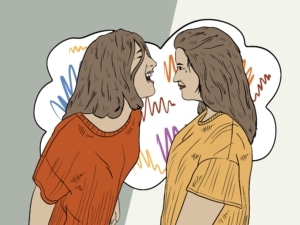
There’s a moment I keep returning to—quiet, ordinary, and surprisingly revealing. A conversation starts with goodwill. People want fairness. They want safety. They want to be decent. Then the same pattern appears facts arrive without their context, a few details get trimmed, and the outcome starts to feel inevitable. What stays with me afterward isn’t only the disagreement. It’s the question: Who is willing to look closer?

Growing up in Detroit in the ’60s, I learned early that social justice isn’t abstract—it’s something you watch unfold in real time. July 1967 lives in me like a knot that never fully unties. I was playing ball at Palmer Park when I looked east and saw smoke rising from the direction of my house. My body understood something was wrong before my mind could name it. I ran home through smoke and fire, searching for friends and neighbors—and finding some of them too late.

The unrest of not looking closer had finally exploded in riot.

I also lived next door to neighbors who looked different than me but carried the same human needs: fear when things worsened, hope when someone promised change, love for family, and a dignity they never asked anyone to grant—only to recognize.

That’s why Dr. King’s words land so gently and so powerfully—not as condemnation, but as an invitation to wake up.

“Nothing in the world is more dangerous than sincere ignorance and conscientious stupidity. We have a responsibility to be intelligent.”

Dr. King wasn’t only warning about cruelty. He was naming something subtler: sincerity that feels honest, and conscience that grows numb—not because people lack intelligence, but because they avoid the work required to use it. This isn’t merely about knowing. It’s about becoming the kind of person who refuses to let comfort masquerade as truth—even when the truth costs you something.

An Invitation into Three Kinds of Becoming

If we approach Dr. King with humility, his warning opens into an invitation:

  1. Becoming the kind of person who can learn without self-protection.
  2. Becoming the kind of person who can keep loving while seeking clarity.
  3. Becoming the kind of person who treats truth as a responsibility—not something to be avoided.

So, let’s take Dr. King’s phrase “sincere ignorance” seriously, not as a label to throw at others, but as a mirror—one that helps us notice where we may be missing something, and where we can grow.

Sincere Ignorance: When Not Knowing Feels Like Innocence

Sincere ignorance can happen even with the best intentions. It often begins quietly—with being handed only a portion of the story. We learn in fragments: family traditions, school lessons, community conversations, headlines. When that information is offered as complete, it can feel natural to accept it as reality. Over time, a partial account can solidify into a belief system—not because someone has thought deeply, but because they were never given a reason to question it.

“Ignorance” here doesn’t mean wrongdoing. It often means you simply didn’t have access to the full record—you weren’t trained to doubt yourself in healthy ways, and you weren’t offered the better questions.

And yet—here is the invitation—staying in that ignorance can still carry harm, even without intent.

Sincere ignorance disguises itself as innocence. Confirmation bias works quietly: we notice what aligns with our assumptions and overlook what doesn’t. We confuse “no doubt” with “truth.” In Detroit, I remember how hard it was to make meaning fast enough—how emotions demanded answers, but language didn’t arrive in time. I carried confusion that never became clarity. Dr. King’s phrase invites us to notice that gap: between what we feel, what we assume, and what we know.

Here’s the layer that makes this personal rather than merely intellectual: sometimes sincere ignorance causes harm through kindness. You respond with genuine empathy to someone who needs help—but the facts you’re relying on are trimmed. You’re responding to a portrayal rather than to the full context. Your compassion, guided by incomplete knowledge, may strengthen the very harm you hoped to prevent.

The invitation is not to shame people for what they didn’t know. It’s to learn how to stay compassionate without becoming careless. Becoming intelligent, in this sense, is how we protect love from becoming blind.

Conscientious Stupidity: When We Could Know and Choose Not To

Dr. King’s second phrase carries more weight, because it points to choice. Learning is possible. Clarity is available. Evidence exists. But discomfort protects comfort.

In daily life, this can look like postponing that never ends—asking for proof indefinitely while the pattern stays visible; insisting everything is too complicated until responsibility disappears; debating endlessly while inaction becomes normal.

Conscientious stupidity shifts the emphasis from not knowing to defending not knowing. It can look like demanding receipts while refusing to examine the receipts already within reach—or choosing abstraction over action, talking about nuance while ignoring what harm looks like on the ground.

It often sounds reasonable. It can wear the mask of “I’m just being cautious,” while quietly avoiding the steps that would test the belief.

But I want to keep this an invitation, not a threat. Dr. King isn’t asking, “Are you bad?” He’s asking, “Are you willing to wake up?”

A Spiritual Lens: What Fruit Are You Producing?

Howard Thurman’s approach to scripture offers a grounding question I find spiritually honest: What fruit is this teaching producing? Does it deepen love in action? Or does it produce obedience without transformation?

That question matters here because becoming intelligent is not only cognitive—it’s spiritual. Faith that cannot bear evidence will eventually become a shelter for denial. But faith that can bear evidence becomes a doorway to courage.

The invitation is to let your theology, your spiritual commitments, and your daily habits be tested by fruit. Are you becoming more loving and more accountable? Or more defended and less open?

What “Be Intelligent” Looks Like in Practice

Becoming intelligent isn’t cold or superior. It’s love with clarity.

  1. Pause before repeating a claim. Ask: Where did this come from? What context might be missing?
  2. Seek the full record. Look for credible evidence—not only persuasive stories. If a claim matters, the sources should matter too.
  3. Read teachings by their fruit. Ask: What does this lens train me to do? Compassion with courage, or comfort without accountability?
  4. Turn learning into one next right action. Share what you learn respectfully. Support local justice work. Join conversations that welcome both evidence and humanity.

Don’t Stop at Agreement

If this resonates with you, don’t stop there. Dr. King’s warning is an invitation to become awake—to let truth shape conscience, and to move from confusion to action, so love doesn’t stay trapped in good intentions but becomes something people can feel in the world.

Pick one claim you’ve heard often—something you’ve repeated without fully checking. Don’t choose something to debunk. Choose something to understand responsibly. Research it thoroughly, then name one specific change you will make: how you will speak, what you will support, what you will no longer excuse.

Then invite someone else—gently—into the same work. Not by humiliating them, but by modeling what humility looks like: the courage to say, “I might be missing something,” and the willingness to learn anyway.

Sincerity is not enough. Intelligence, in Dr. King’s sense, is responsibility: the courage to look again, to learn, and to act as though what’s true matters—and as though what happens next matters too.

Dr. King’s warning is not a verdict of you doing something wrong. It is a doorway for truth and love to abound.

Peace and every good.

Understand your growing edge

“Look well to the growing edge. All around us worlds are dying and new worlds are being born; all around us life is dying and life is being born. The fruit ripens on the tree, the roots are silently at work in the darkness of the earth against a time when there shall be new leaves, fresh blossoms, green fruit. Such is the growing edge. Look well to the growing edge.”

Howard Thurman

There are moments when the world around us feels raw and divided, when headlines and conversations seem to pull us apart rather than bring us together. In those moments I return to Howard Thurman’s words and find an invitation: to look for the small, persistent beginnings — the growing edge — where life quietly insists on renewal. Thurman’s lines are not a denial of loss; they are a map of hope. They remind us that endings and births travel side by side, that even in the shadow of decay there is an unseen labor preparing the next season.

Think of the growing edge as the slender green that appears on a branch after winter, or the first breath that follows exhaustion. As Thurman says, it is “the extra breath from the exhausted lung, the one more thing to try when all else has failed.” It is the steady, stubborn impulse that keeps us trying, learning, and reaching for what is better. This impulse is not grandiose or flashy; often it is quiet and humble — a neighbor listening, a teacher staying late, a community garden taking root in a vacant lot. Those acts, multiplied, become the scaffolding for something new.


Our world today bears many fractures — political rancor, social pain, environmental strain. Yet if we look only at what is breaking, we miss the synchronous birth of possibility. “All around us life is dying and life is being born.” If we pay attention to the growing edge, we can choose to live in alignment with that emergence. That doesn’t mean ignoring difficulty. It means placing our energy where life is being renewed: toward understanding, toward repair, toward building structures that invite flourishing rather than entrenching harm.

How do we tend the growing edge in the life we live? First, by embracing change instead of fearing it. Change is the canvas where new worlds are painted. Thurman’s vision encourages us to accept transformation as natural and necessary — to learn, adapt, and be curious about new perspectives. This openness creates the possibility of connection where division once stood.

Second, by intentionally looking for the positive developments that flicker into being. When we “look well to the growing edge,” we train our attention on those emerging efforts that point toward life: grassroots movements organizing for justice, teachers designing classrooms that foster belonging, neighbors organizing to protect a local river. These are the places where hope is not theoretical but practical. Thurman calls this “the upward reach of life when weariness closes in upon all endeavor.” Even a single upward reach can change the direction of a weary heart.

Third, by cultivating resilience. The growing edge is “the basis of hope” because it gives us evidence that renewal is possible. When we recognize obstacles as opportunities to grow, we reclaim agency. Speaking truth, showing up for others, and insisting on dignity in daily choices are acts that compound. They make us stronger and they signal to others that building anew is worth the struggle.

Fourth, by engaging in meaningful dialogue. When “times are out of joint and men have lost their reason,” Thurman suggests the incentive to carry on lives in relation, in listening and in sharing. Conversation done with patience and empathy can soften hardened positions and reveal common aims. It’s not always easy; it requires humility and courage to speak and to listen. But such exchanges often become the quiet work of the roots, preparing fertile ground for new leaves and blossoms.

I have to say without a shadow of a doubt there have been times in my life where I did not want to “engage in meaningful dialogue”. I even went so far as to decry the impulse to do so. How can you expect me to talk with “this person” for what they are doing around them?

It is HARD. It is WORTH IT!

Finally, by nurturing new leaders and ideas. “The birth of a child — life’s most dramatic answer to death” points to the profound power of beginnings. Supporting those who are starting — young people, marginalized voices, community organizers — replenishes our collective capacity to imagine and build alternatives. Their insights are often fresh because they are less encumbered by the constraints of what has always been.

History and daily life offer countless examples of the growing edge in motion: movements that transformed societies, technologies that reconnected people across distances, community responses to climate crises that turned despair into action. These all began as something small and persistent — a few people refusing to accept the finality of the old story.

There are challenges. Cynicism can blunt our sight; uncertainty can make us cling to familiar pain; idealism without grounding can falter. Thurman’s call — “Look well to the growing edge” — is precisely a remedy for these trials. It trains attention toward the life that insists on being born even in difficult soil.

So, when the world feels fractured, remember to look for the new leaves, the fresh blossoms, the quiet roots working underground. Tend to them when you find them. Join them when you can. In that practice, one extra breath at a time, we become participants in a larger turning — from fragmentation toward a renewed and shared life. Look well to the growing edge.

Folks, reading Howard Thurman is a life changing experience for those with eyes to see and ears to hear.

Peace and every good.