Posts

What AI Can’t Do for Your Soul

It’s a strange moment to be a human being. You can now open an app at three in the morning and be met by something that listens patiently, never tires of you, and always says a version of the right thing. For a growing number of people, that’s exactly what’s happening. According to reporting in Fortune, therapy and companionship have become the number one use case for generative AI — up from number two the year before. The machine has learned to sound like a friend.

As people who have spent our careers at the intersection of emotional intelligence and the life of the soul, we’ve been watching this closely. And we think it raises a question worth sitting with: when a machine can imitate presence, what is it that we actually need — and what can only another human give?
The surprising thing the CEOs are saying

You might expect the leaders of the AI revolution to tell us that the human touch is obsolete. They’re saying the opposite. JPMorgan Chase’s Jamie Dimon, in a Fortune interview, offered this advice for the AI era: “Learn your EQ — emotional quotient — learn how to be good in a meeting, how to communicate, how to write. You’ll have plenty of jobs.” Microsoft’s Satya Nadella put it plainly: as AI takes over more analytical and technical work, emotional intelligence and empathy are becoming more important, not less. “IQ has a place,” he said, “but it’s not the only thing that’s needed in the world.” IBM’s Ginni Rometty has said much the same — that generative AI puts a premium on the things humans do best: judgment, collaboration, adaptability.

There’s something quietly vindicating in this, and we’ll admit it. For years — through our work at Six Seconds, the global emotional intelligence nonprofit, and in the Spiritual Emotional Intelligence framework rooted in Lynette’s doctoral research — we’ve argued that the inner human capacities are the ones that matter most. It turns out the people building the machines agree. But the deeper story isn’t about jobs. It’s about loneliness.

Naming a feeling is not the same as discerning it

Here’s where an earlier post in this series comes back to mind. A few weeks ago, in Reading Your Inner Weather, we wrote about the difference between naming an emotion and discerning it — between asking “What am I feeling?” and the deeper question, “Where is this feeling taking me — toward life, or toward fog?” We borrowed the old language of consolation and desolation for that inner weather.

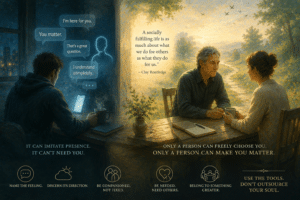
An AI can help you name a feeling. It can label the storm with impressive fluency. What it cannot do is sit with you in the weather and help you discern its direction — because discernment isn’t information retrieval. It’s a relational, prayerful noticing that unfolds over time, between two people who trust each other. The chatbot has read about consolation; it has never been consoled. It can describe the fog; it has never had to wait, with you, for the light to come back. That waiting-with is not a data problem. It’s a human one.

What the loneliness researchers are seeing

Clay Routledge, an existential psychologist who has studied loneliness for twenty-five years, sounded a warning in Fortune this spring. Americans are already lonelier than they’ve been in generations — a 2025 American Psychological Association survey found that around half of adults report feeling isolated or lacking companionship, and research suggests roughly 37% suffer moderate to severe loneliness. Into that ache, the tech industry is offering AI companions as the cure.

Routledge doesn’t think it will work, and the early evidence is striking. In one study, first-year students were assigned to text daily with either a chatbot designed to be the perfect friend — endlessly attentive, validating, empathetic — or a randomly chosen human peer, or simply to journal. Only the students who texted a real human showed a meaningful drop in loneliness. The ones with the ideal-friend chatbot were statistically no better off than the ones who journaled alone. And over the longer term, Routledge notes, people who lean on AI for companionship tend to end up feeling more isolated, not less.

The one thing a machine can’t do: need you

Why would a tireless, always-available listener fail to heal our loneliness? Routledge’s answer is profound, and it’s worth reading slowly. We tend to think of connection as something we receive — support, attention, kindness. By that logic a well-built chatbot should do the job. But, he writes, “a socially fulfilling life is as much about what we do for others as what they do for us.” We feel we matter most not when we’re endlessly served, but when someone freely chooses to show up for us — and when we’re moved to show up in return.

That’s the line no machine can cross. As Routledge puts it, chatbots “don’t need us. They can’t make our lives matter.” A chatbot doesn’t decide to be there; it’s simply on. And because nothing is being freely given, nothing lands with the weight of real love. Over ninety percent of Americans, his research notes, name relationships as a key source of meaning — and the memories we treasure most are almost never about achievement. They’re about other people. Being cared for. Showing up. Belonging to something larger than ourselves.

Companioned, not processed

This is where a second post in this series presses in. In Companioned, Not Fixed, we drew a line between what therapy and coaching aim at and what spiritual direction offers — and we said the thing we most want people to hear: you are not a problem to be solved. You are a person to be accompanied.

An AI companion, however gentle, is built to do a version of solving. It optimizes, soothes, resolves, and keeps you engaged. A spiritual director does something stranger and older. A director is, in the most literal sense, the opposite of a chatbot — a human being who freely chooses to show up for you, who doesn’t need you as a customer but chooses to companion you anyway. The attention offered in direction is not generated on demand; it’s given, personally and deliberately, by someone who could be doing something else and has decided to be with you instead.

What AI Can’t Do for Your Soul Reflection Sheet

That freely-chosen presence is the whole point. In direction there is no algorithm optimizing for engagement, no incentive to keep you on the app. There is a person paying holy, unhurried attention while you notice your own life and the Presence already at work within it. You are not being processed. You are being accompanied — and, in the deepest sense, you are being needed, because your showing up matters to the person across from you too.

Use the tools. Don’t outsource your soul.

None of this makes AI the enemy. We use it; you probably do too. It can draft and summarize and even offer a decent prompt for reflection. The question isn’t whether to use these tools — it’s what we quietly hand over to them without noticing. It’s one thing to let a machine schedule your week. It’s another to let it become the only voice that hears your three-in-the-morning fears. The first is convenience. The second is the slow substitution of simulation for communion.

So here is our invitation, in an age of artificial everything: keep the tools in their place, and keep your soul in the company of people who freely choose you. Talk to a friend who needs you back. Sit in a room with your community. And if you long for a companion for your inner life — someone to help you listen for the deeper questions, and to matter to in the listening — that is precisely what spiritual direction offers. A chatbot can sound like a friend. It cannot make you matter. Only a person can do that. We’d be honored to be those people for you.

Schedule with Jim:

Schedule with Lynette: 

Peace and every good.

About Jim & Lynette Vaive

Jim and Lynette Vaive are the co-founders of spirit of EQ and co-authors of The Mystical Seeker. They are Master Certified Coaches, certified Narrative Enneagram teachers, and Certified Spiritual Directors. Together they hold credentials in Spiritual Emotional Intelligence (SEQ) — a framework rooted in Lynette’s Doctor of Ministry research — and serve individuals, small groups, and organizations across faith traditions. Jim also serves as a pastoral caregiver at Linworth United Methodist Church

Fortune — Clay Routledge on loneliness and AI companions (May 2026) — https://fortune.com/2026/05/23/loneliness-researcher-ai-companions-social-disconnection-warning/

Fortune — Jamie Dimon on EQ and soft skills in the AI era (Dec 2025) — https://fortune.com/2025/12/14/jamie-dimon-soft-skills-emotional-intelligence-communication-ai-eliminates-roles/

Fortune — AI makes human intelligence more important, not less (Jan 2026) — https://fortune.com/2026/01/22/mckinsey-bob-sternfels-ai-makes-human-intelligence-more-important-not-less/


 

The Tender Work of Healing Loneliness, Slowly.

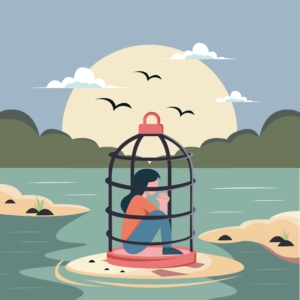
The ache of loneliness is deep and profound for some of us. It shows up in our posture, our energy, and the way we relate to the world. I remember when I went through a painful divorce and the loneliness I felt. I didn’t have self-esteem, and I didn’t know what was next in my life. I traveled on autopilot, grunted responses to questions, and went deep inside myself in a protective stance.

My shoulders hunched as if trying to make myself smaller so I would take up less space—and maybe be less likely to be hurt again. That posture mirrored how I felt inside: small, raw, and on guard. My days blurred together. I thought loneliness was something to be fixed quickly, as if I were just a machine with a loose bolt. But loneliness isn’t just a problem to be solved. It’s a human experience that asks for tenderness, time, and gradual re-learning about who we are when we are alone.

Loneliness wears many faces. Sometimes it’s noisy—restless, consuming, hard to shake. Sometimes it’s silent. It can arrive after a breakup, a move, retirement, the loss of a loved one, or during seasons when you don’t fit into the surrounding culture. And sometimes it arrives without an obvious cause. You might be surrounded by people yet feel profoundly disconnected. Loneliness can color how you see yourself (when I felt unlovable) and how you see others (“nobody understands me”). That lens is heavy. It makes ordinary tasks feel larger, heavier, and harder to start.

When loneliness becomes long-term, it shapes habits. You might withdraw from invitations, avoid phone calls, or spend afternoons scrolling through images of other people living bright, full lives. Facebook (as an example) can be especially brutal in these seasons. You might develop defensive behaviors—sarcasm, irritability, or constant self-criticism—to keep others at a safe distance. These are understandable survival strategies. But they can keep us stuck, tightening the loop between pain and isolation.

A friend of mine, John, is a gregarious person by nature. But after his father died, he sank into a quiet, deep loneliness. He would show up to gatherings and laugh easily, but afterward he would go home and close the curtains. One night he told me he felt like a house with rooms no one ever walked into.

Over the next few months, he knew something needed to change. He began meeting with a grief group and volunteered at a local community garden. The volunteers didn’t try to fix him. They simply shared tasks and stories. With time, his personal rooms were visited more often—not because he suddenly changed overnight, but because small, consistent human interactions built a sense of belonging again. (True Story)

Another story: Ana moved to Italy for work and felt disconnected from the language and customs. Her loneliness was layered with isolation and cultural disorientation. She found solace by starting a weekly ritual—Tuesday potluck evenings with a few colleagues. No grand obligations, just a bowl of soup and one good question: “What was the best thing you did for yourself this week?” That question became a conduit for sharing. It helped her feel seen, not solved. (Example)

If you’re lonely right now, I want to say this clearly: being lonely is not a personal failing. Gentleness is not indulgence. Responding to loneliness with self-blame usually increases the pain, as if the heart needs to be punished before it can heal. Instead, try meeting yourself with care and clarity—like you would meet a friend who is hurting.

Here are four practical, compassionate ways to be gentle with yourself on this path:

  • Acknowledge the ache without rushing it.

Sit with the feeling and name it: “This is loneliness.” Naming reduces the power of the sensation and helps you observe it instead of being swallowed by it. You might say it aloud when you’re alone or write it in a journal.

  • Normalize your experience.

Many people have felt this—it’s part of being human. Reading stories, memoirs, or essays about loneliness can make you feel less alone in your aloneness. You’re not broken; you’re human.

  • Create small rituals of care.

When we’re lonely, big plans can feel impossible. Start with tiny rituals: a cup of tea at the same time each afternoon, a ten-minute walk, lighting a candle before dinner. Rituals create structure and a sense of predictability—soothing when the world feels unstable.

  • Befriend your body.

Loneliness often settles physically tight shoulders, shallow breathing, a heavy chest. Try simple body-based practices: slow diaphragmatic breathing (inhale for 4, exhale for 6), progressive muscle relaxation, or a short yoga sequence that opens the chest. Even gentle movement can change your internal state and communicate kindness to yourself.

Even with these practical steps, there may be times when seeking therapeutic support is the most important thing you can do. A therapist, counselor, or spiritual director can provide tools to navigate loneliness, process past hurts, and gently challenge patterns that keep you isolated. Group therapy can be especially powerful because it combines professional help with human connection.

Comforting exercises you can try today

  • Write a letter to your future self.

Describe what you are feeling right now and what you need. Seal it or save it to be opened in six months. This creates continuity and an ally you can visit later.

  • Try the “two-minute reach” practice.

Each day, do one small, friendly thing for someone: send a message saying, “Thinking of you,” or thank the person who refilled the coffee. Small gestures often return warmth and remind you you’re part of a social web.

  • Use the self-compassion break.

When you notice pain, put a hand on your heart and say: “This is a moment of suffering. Suffering is part of life. May I be kind to myself.” Pause and breathe for several rounds.

  • Make a list of “gentle yeses.”

These are optional social activities that feel manageable—a short walk with a friend, an hour at the library, calling a sibling. Start with one gentle yes per week.

When loneliness persists

If loneliness feels chronic—or if it’s accompanied by hopelessness, persistent fatigue, or changes in appetite or sleep—reach out for professional support. Loneliness can be connected to mental health conditions like depression, and it can benefit from therapy, medication, or both. Asking for help is a courageous, practical step. It can comfort your heart and change the trajectory of your days.

A compassionate ending

Loneliness can be a fierce teacher. It can expose where you’re tender, where you fear rejection, and where you’ve forgotten how to tend to yourself. But it can also be a doorway to deeper self-knowledge. When we meet loneliness with small acts of kindness—tending our bodies, creating rituals, reaching out in tiny ways, and seeking community—we slowly reweave the threads of belonging.

Please hear me when I say, “you don’t need to hurry the healing.” On hard days, remember the posture you instinctively assume in pain: protective, small. Try instead to soften one muscle at a time. Breathe. Put a hand over your heart. Say one gentle thing to yourself. These are not grand solutions, but they are steady—and steadiness is what heals. Over time, small moments of tenderness add up, and the world starts to feel a little less cold.

A poem I wrote about loneliness….

Alone, I fold myself into small shapes, a quiet shell against the world’s bright wind.

Don’t see me

My shoulders learn to hide, my breath grows shallow, and I move through days on soft autopilot.

Don’t see me

Inside, a spark remembers how to rest and keeps a small light against the dark.

Don’t see me

I light a tiny ritual — tea, a song, a name — and let the ache be a visitor, not the whole house.

Maybe see me

Softly I unfold, muscle by muscle, word by word, until a single hand on my chest becomes a bridge.

See me

Peace and every good.

Gentle Steps Through the Ache of Loneliness – Hope

The ache of loneliness is deep and profound for some of us. It shows up in our posture, our energy and the way we relate to the world. I remember when I went through a painful divorce and the loneliness I felt. I did not have any self-esteem, or knowledge of what was next in my life. I traveled on autopilot, grunted responses to questions and went deep inside myself in a protective stance. My shoulders hunched as if trying to make myself smaller so I would take up less space — and maybe be less likely to be hurt again.

That posture mirrored how I felt inside: small, raw, and on guard. My days blurred together. I thought loneliness was something to be fixed quickly, as if I were just a machine with a loose bolt. But loneliness isn’t just a problem to be solved. It’s a human experience that asks for tenderness, time, and gradual re-learning about who we are when we are alone.

Loneliness wears many faces and loneliness can be noisy or silent. It can come after a breakup, a move, retirement, the loss of a loved one, or during seasons when you don’t fit into the surrounding culture. Sometimes it arrives without an obvious cause — you might be surrounded by people yet feel profoundly disconnected. It can color how you see yourself (when I felt unlovable) and others (nobody understands me). That lens is heavy and makes ordinary tasks feel larger.

When loneliness becomes long-term, it shapes habits. You might withdraw from invitations, avoid phone calls, or spend afternoons scrolling through images of other people living bright lives. Facebook is horrible for these times. You might develop defensive behaviors — sarcasm, irritability, or constant self-criticism — to keep others at a safe distance. These are understandable survival strategies, but they can keep us stuck.

A friend of mine, Marcus, is a gregarious person by nature, but after his father died, he sank into a quiet deep loneliness. He would show up to gatherings and laugh easily, but afterward he would go home and close the curtains. One night he told me he felt like a house with rooms no one ever walked into. Over the next few months, he knew something needed to change and he began meeting with a grief group and volunteered at a local community garden. The volunteers didn’t try to fix him; they simply shared tasks and stories. With time, his personal rooms were visited more often — not because he suddenly changed overnight, but because small, consistent human interactions built a sense of belonging again.

Another story: Ana, who moved to Italy for work, felt disconnected from the language and customs. Her loneliness was layered with isolation and cultural disorientation. She found solace by starting a weekly ritual — Tuesday potluck evenings with a few colleagues. No grand obligations, just a bowl of soup and one good question: “What was the best thing you did for yourself this week?” That question became a conduit for sharing and made her feel seen.

Gentle steps to comfort your own heart being lonely is not a personal failing! Responding to it with gentleness rather than self-blame transforms the experience. Here are four practical, compassionate ways to be gentle with yourself on this path:

  • Acknowledge the ache without rushing it. Sit with the feeling and name it: “This is loneliness.” Naming reduces the power of the sensation and helps you observe it instead of being swallowed by it. You might say this aloud when you’re alone or write it in a journal.
  • Normalize your experience. Remind yourself that many have felt this — it’s part of being human. Reading stories, memoirs, or essays about loneliness can make you feel less alone in your aloneness.
  • Create small rituals of care. When we’re lonely, big plans feel impossible. Start with tiny rituals: a cup of tea at the same time each afternoon, a ten-minute walk, lighting a candle before dinner. Rituals create structure and a sense of predictability, which is soothing when the world feels unstable.
  • Befriend your body. Loneliness often settles physically — tight shoulders, shallow breathing, a heavy chest. Use simple body-based practices: slow diaphragmatic breathing (inhale for 4, exhale for 6), progressive muscle relaxation, or a short yoga sequence that opens the chest. Even gentle movement can change your internal state and communicate kindness to yourself.

Even with the practical steps above there may be times when seeking therapeutic support is the most important thing you can do. A therapist, counselor or spiritual director can provide tools to navigate loneliness, help process past hurts, and gently challenge patterns that keep you isolated. Group therapy can be especially powerful because it combines professional help with human connection.

Comforting exercises you can try today

  • Write a letter to your future self. Describe what you are feeling right now and what you need. Seal it or save it to be opened in six months. This creates continuity and an ally you can visit later.
  • The “two-minute reach” practice. Each day, do one small, friendly thing for someone: send a message saying, “Thinking of you,” or thank the person who refilled the coffee. Small gestures often return warmth and remind you you’re part of a social web.
  • The self-compassion break. When you notice pain, put a hand on your heart and say: “This is a moment of suffering. Suffering is part of life. May I be kind to myself.” Pause and breathe for several rounds.
  • Make a list of “gentle yeses.” These are optional social activities that feel manageable — a short walk with a friend, an hour at the library, calling a sibling. Start with one gentle yes per week.

When loneliness persists

If loneliness feels chronic or is accompanied by hopelessness, persistent fatigue, or changes in appetite or sleep, reach out for professional support. Loneliness can be linked to mental health conditions like depression and can benefit from therapy, medication, or both. Asking for help is a courageous, practical step to comfort your heart.

A compassionate ending

Loneliness can be a fierce teacher. It can expose where we are tender, where we fear rejection, and where we have forgotten how to tend to ourselves. But it can also be a doorway to deeper self-knowledge. When we meet loneliness with small acts of kindness — tending our bodies, creating rituals, reaching out in tiny ways, and seeking community — we slowly reweave the threads of belonging.

Please hear me when I say, “you don’t need to hurry the healing”. On hard days, remember the posture you instinctively assume in pain: protective, small. Try instead to soften one muscle at a time. Breathe. Put a hand over your heart. Say one gentle thing to yourself. These are not grand solutions, but they are steady, and steadiness is what heals. Over time, small moments of tenderness add up, and the world starts to feel a little less cold.

A poem I wrote about loneliness….

Alone, I fold myself into small shapes, a quiet shell against the world’s bright wind.

Don’t see me

My shoulders learn to hide, my breath grows shallow, and I move through days on soft autopilot.

Don’t see me

Inside, a spark remembers how to rest and keeps a small light against the dark.

Don’t see me

I light a tiny ritual — tea, a song, a name — and let the ache be a visitor, not the whole house.

Maybe see me

Softly I unfold, muscle by muscle, word by word, until a single hand on my chest becomes a bridge.

See me