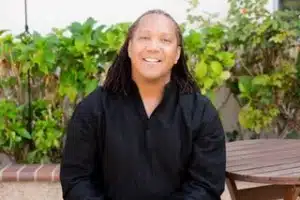
To Everyone Standing at the Edge of the Room
A CONVERSATION WITH DR. DON AJENÉ WILCOXSON · PART THREE OF THREE
When the Whisper Is Louder Than the Fear
On racial injustice, the cost of standing up, and what he wants to say to everyone at the edge of the room
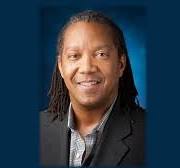
There is a particular kind of courage that does not announce itself. It does not look like charging a hill. It looks, more often, like a young man walking to the principal’s office to report something dangerous, knowing full well that the danger will follow him home.
Dr. Don Ajené Wilcoxson was in high school when he discovered that the Ku Klux Klan was recruiting on his campus. He reported it. Threats followed. He did not stop. When I asked him about it in our conversation, sitting with decades of distance from that moment, he said something I have turned over many times since: speaking out felt natural. It would have been uncomfortable not to speak out.
That sentence says a great deal about who he is. It also says something about the world he grew up in — a world where a young Black man could not afford the luxury of looking away from what was happening around him, where naming the danger was not bravery so much as clarity.
Speaking out felt natural. It would have been uncomfortable not to speak out.
He carried that clarity with him into his professional life. When he was hired at Riverside City College, someone told him directly that he had been selected because he was Black — even though he was more qualified than other candidates. He did not walk away from that institution. He went on to become one of only three or four people in the college’s history to earn the rank of Distinguished Professor and was recognized nationally as one of twenty faculty nationwide to receive the ACBSP Teaching Excellence Award.
He outlasted the smallness of that moment by becoming larger than it. But becoming larger than a moment does not mean the moment didn’t happen. And it does not mean the moments have stopped coming.
I asked him plainly, as his friend, to name what is breaking his heart right now. He did not flinch.
“A minority has influenced America to turn its back on its own ideology, on decency itself. That grieves me deeply.”
He is a Nine on the Enneagram — the Peacemaker — and Nines are not typically the ones who reach for the prophetic register. They are wired for harmony, for holding multiple perspectives, for reducing tension rather than naming it. And yet Ajené carries a grief about racial injustice that he does not minimize or set aside. The two things coexist in him: the genuine desire for peace, and the refusal to purchase that peace at the cost of silence.
He told me that he struggles. That he experiences depression at times. That watching the erosion of spaces where people on the margins were beginning to find room — watching that happen in real time, in a country whose stated ideals he has spent his life embodying — presses on him in ways that are not always easy to carry. He said this without drama, without performance, with the same steadiness he brings to everything. Which, I think, made it land harder.
In the Six Seconds emotional intelligence framework, one of the deepest competencies is what they call “increasing empathy” — the capacity to genuinely enter another person’s experience, not just understand it intellectually. Ajené has developed this to a rare degree. He extends it even toward those causing harm, drawing on Dr. Martin Luther King Jr.’s concept of “sincere ignorance” — the idea that some people do harm not from malice but from the limits of what they have been willing to see. He holds space for that distinction without surrendering his clarity about the harm itself.
That is a sophisticated and costly kind of empathy. It requires you to stay open without becoming numb. It requires you to show grace without pretending things are fine. Howard Thurman, who walked closely with the grief of his people and still wrote about the luminous possibility of human encounter across difference, described something similar: the discipline of seeing the person inside the ideology without excusing the ideology. Ajené practices this. It costs him something every time.
“The good people in my life who are trying to live reflectively and do important work — they are what keeps the pilot light lit.”
He does not sustain that kind of openness alone. He draws on the people around him — friends, collaborators, the daily presence of those who are choosing, in their own lives, to do the harder thing. He draws on what he calls ancestral energies — the sense that he is held by something larger and older than his present circumstances, a living connection to those who walked this road before him. He draws on rest: not collapse but the intentional return to breath, to presence, to the moment that is here.
And he draws on the conviction that the work of justice is necessary even when it does not produce visible results. “Even if it only changes one person’s perspective,” he said. There is no calculation of return in that sentence. There is only the clarity of calling — the same clarity that walked a teenager to a principal’s office in the face of threats, the same clarity that stayed at a college that had diminished him and built something remarkable there anyway.
Toward the end of our conversation, I asked him what he would say to someone watching who wonders whether there is a place for them — someone standing at the edge of a room, uncertain whether they are welcome, uncertain whether their presence matters. His answer was quiet and unhurried and direct.
“Fear wants you to hold back. But if you are called to live your purpose, have faith that the calling knows your direction. The call, even as a whisper, is more powerful than the fear you are experiencing.”
I have heard a lot of encouragement in my years of work in the EQ and formation space. Most of it is well-meant but lands lightly. This did not land lightly. It landed the way things land when the person speaking to them has earned the right to say them — when the words come not from aspiration but from having stood in that place, in that fear, and taken the next step anyway.
He is in his winter season now — spacious, steady, deep. He hopes for more presence over productivity, more wisdom than certainty, more love over fear, more accompaniment over expertise. He is done, he said, trying to become more. He is learning to become enough.
Three conversations with this man. Three movements of a life still very much in motion. The formation that made him. The work that holds him. And the fire that, even in winter, has not gone out.
If you are doing hard work in difficult conditions — work for justice, work for belonging, work that nobody may be watching — he is speaking to you. The whisper is louder than the fear. He would know. To get in touch with Ajene use this link. ajene@donajene.com
If this conversation touched something in you, we invite you to explore how emotional intelligence and spiritual formation can deepen your own capacity for courage and presence at spiritofeq.com.
Peace and every good.
spiritofeq.com/blog & mystical seeker.substack.com