Posts

Presence as Witness: The Quiet Power of Showing Up

I remember the day my youngest child was born like a photograph in slow motion. It was 43 years ago, in a delivery room that smelled of antiseptic and hope. I promised myself I would be there — not because I thought I could do anything technical, but because something inside me insisted I needed to witness this threshold. What unfolded in those hours was not ordinary. It was raw, loud, fragile, triumphant. It was a miracle. And watching it changed me.

The delivery room was a small ecosystem of attention: my wife in the epicenter, midwives and doctors orbiting with focused calm, nurses moving with quiet purpose, machines humming like low prayers. My daughter arrived with a cry that sounded both new and ancient. As I watched, I wasn’t merely observing a birth. I was bearing witness — and that act of presence reshaped how I understood life, love, and what it means to simply be there for another human being.

What does it mean to “bear witness”? For me it meant surrendering the impulse to fix, comment, or perform. It meant holding a space with no agenda other than to attend. I saw my wife in ways I’d never seen before: fierce, vulnerable, triumphant. I saw my newborn, blinking and bewildered, entering a world I had only ever imagined for her. I saw the team at work, each person contributing a small essential piece to a profound whole. In the silence between contractions, in the quick exchanges of hands and glances, I learned something about the power of presence that has stayed with me for decades.

Bearing witness is not limited to dramatic life events like childbirth. It’s the practice of showing up when it matters: in grief, in joy, in mundane moments where another person might otherwise be alone in their experience. And you don’t need words to do it. Sometimes the most powerful language is the sturdy quiet of your attention. When you stand there and truly see what someone else is going through — without interrupting, diagnosing, or diverting — you give them something priceless: validation. You acknowledge their reality as worthy of being seen.

Why this matters now,

We live in a world of interruptions. Notifications, opinions, and obligations make us spectators to our own lives and to the lives of people around us. Bearing witness is an act of resistance against this fragmentation. It restores human connection. It heals small wounds before they become deep scars. It fosters trust and invites vulnerability. And it’s accessible: anyone can do it with a little intention and practice.

So instead of just talking at you I wanted to share two practical steps to start bearing witness today. They’re intentionally minimal so you can repeat them in any context — at home, at work, in a hospital waiting room, or on the street.

  1. The Two-Minute Presence Ritual
  • What to do: When someone begins to share something — good or bad — stop. Put down your phone, close your laptop, and face them. Take two full minutes of uninterrupted presence. Don’t plan a response; don’t analyze or advise. Let your eyes meet theirs, and if it feels natural, offer a soft touch: a hand on the shoulder or a brief squeeze of the hand.
  • Why it works: Two minutes is short enough to be manageable and long enough to break the loop of reactive listening. In those two minutes, you communicate that the person is important, that their experience matters. The ritual trains your nervous system to slow down, reducing the urge to interject or fix.
  • Where to use it: With a partner during a tough conversation, with a friend telling a story, with a colleague after a hard meeting, or even with a stranger who’s visibly distressed.
  1. The Question of Seeing
  • What to do: When someone describes an experience, ask one simple question: “What was that like for you?” Then pause and wait. Resist the urge to paraphrase right away. Allow silence to do some of the work. If the other person hesitates, follow up with: “I want to understand more. I’m here.”
  • Why it works: This question moves the focus away from facts and toward feeling. It invites deeper sharing and avoids the common trap of turning the conversation into a comparison or a problem-solving session. The follow-up line reaffirms your intent to be there for them without imposing your viewpoint.
  • Where to use it: In conversations about loss, transitions, parenting struggles, mental health, or moments of celebration where the other person wants to be witnessed rather than analyzed.

Stories that teach:

In that delivery room, I could have tried to make light of the pain to ease my wife’s tension, or I might have sought to take charge of logistics. Instead, I learned to breathe with her breath, to let my attention rest on the reality before me. Later, when friends and family told me about their own losses or breakthroughs, I found myself showing up differently — less eager to problem-solve and more willing to simply be present. Over time, the small acts of bearing witness built up a quiet network of care around the people I love.

People sometimes worry that bearing witness will overwhelm them, as though absorbing another person’s reality means carrying their whole burden. That’s not true. Bearing witness does not require you to fix anything. It asks only that you offer a portion of your attention and your heart. If emotions become too intense, honest boundaries are part of good witnessing: “I want to be here with you, and I also need a short break so I can come back present.” You can hold both care and self-preservation.

Who benefits? Everyone. The person being witnessed receives validation, validation that can transform isolation into connection. You, the witness, gain emotional fluency and deeper relationships. Communities become more resilient when people practice simple acts of presence. Teams at work perform better when members feel genuinely seen. Families heal faster when they adopt listening as an act of love.

A small practice, a big ripple:

The birth of my daughter taught me a simple truth: sometimes the most revolutionary act is to show up and stay present. You don’t need a certificate or training. You only need the willingness to slow down and give someone else a piece of your attention.

Call to action Try it this week. Choose one person — a partner, friend, coworker, or family member — and practice the Two-Minute Presence Ritual. Then, later in the week, use the question of seeing in a conversation where you usually would have jumped in to advise. Notice what changes: in the other person’s expression, in the flow of conversation, and in how you feel afterward. Share your experience with someone else or post a short note on social media about what you learned using #IWasThere. Invite a friend to try it with you.

If you want, tell me about your moment of bearing witness — what you saw, how it felt, and what changed. I’ll listen. No advice, no judgment. Just presence.

We don’t need words when bearing witness. We just need to be present. And in that simple presence, we can witness miracles — big and small — and be transformed by them.

Looking back on the birth of my daughter in that delivery room 43 years ago, everything contracted and expanded around a single point of arrival. My wife labored with a fierce determination I had never seen; her face was a map of pain and purpose. The medical team moved with practiced urgency, voices calm, hands steady. I stood at her side, breath matching hers, palms clammy but steady on her knee. There were moments of quiet concentration and moments of bright, startling noise — a mix of instructions, encouragement, and the rhythm of machines. Then the cry: a raw, immediate announcement that life had crossed the threshold. They placed my daughter on my wife’s chest and for a second the world narrowed to three breaths and the soft, wet weight of newness. Tears blurred everything; laughter and prayer braided together. In that instant I knew I had witnessed something holy — not because of drama, but because of the raw, shared humanness in that room. That witnessing changed me: it taught me the language of presence in a way no book ever could.

SEQ: Connect to Self, Others, and the World Deeply

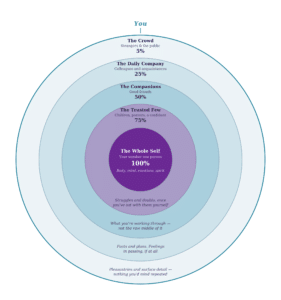
Blending Emotional and Spiritual Intelligence: Adding connection to Yourself (awareness), Your Familiar others (belonging),, and the World (insight).

A story that shaped everything

My wife Lynette and I were at a conference in Italy for 6 Seconds when all our stuff was stolen while we stopped for lunch. We came back to the car, looked over the top of the car, and started laughing — not because nothing was lost, but because we chose meaning and connection over panic. The CEO of 6 Seconds noticed how we were handling it and suggested adding a spiritual layer to their emotional intelligence assessment, the powerhouse that had rocketed around the world into 185 countries. That seed became a one-page profile report and a 27-page development report that helps people understand how their connection in the world is working and thriving.

Spiritual Emotional intelligence (SEQ) blends thinking, feeling, and sensing clarity, emotional regulation, and a felt sense of connection and purpose. To apply this effectively, it helps to see connection at three domains: yourself, familiar others (friends/colleagues/community, family), and the world at large. Below I use the SEQ assessment — brief indicators, reflective prompts, and development actions — to help you integrate connection practically into each of the three domains.


How to use the SEQ assessment concept.

Think of this like a quick self-check: for each domain, rate yourself from 1–5 (1 = rarely / 5 = consistently). Then use the prompts and development actions to grow. The aim is not perfection but awareness and repeatable practices.

Domain 1 Awareness— Connection to Yourself (self-awareness): Quick self-check indicators:

  • I know what grounds me and can return to it when I’m shaken.
  • I treat myself with kinder language during setbacks.
  • I can identify my core values and make small choices that align with them.

Reflective prompts:

  • What makes me feel truly at home in my own skin?
  • When I’m distressed, what internal voice dominates (critic, protector, supporter)?
  • Which small gestures (breath, pause, note) make me feel anchored?

Development actions:

  • Morning Awareness Check: 2 minutes — name one value you’ll live by today and one bodily cue to monitor (e.g., tight shoulders).
  • Ritual for small setbacks: Ground (60s breathing) + Reconnect (ask: what does this reveal about what matters?).
  • Narrative rewiring: Practice telling one short story each week that emphasizes resilience and connection to yourself.

Domain 2 Belonging — Connection to Familiar Others (friends, colleagues, local community and Family): Quick self-check indicators:

  • I can express need and receive care within my family.
  • We have shared rituals that create community.
  • Conflicts are resolved in ways that preserve connection.
  • I have a balanced network: people who support me emotionally, practically, and intellectually.
  • I show up in community with consistent, small actions.
  • I both give and receive in friendships.

Reflective prompts:

  • Which friendships sustain my sense of purpose, and which drain it?
  • Which family rituals help me feel rooted? Which are missing?
  • When family tension arises, how quickly do I move to blame vs. curiosity?
  • What roles do I habitually play (rescuer, fixer, avoider), and how do they affect connection?
  • How regularly do I invest time in people closest to me?

Development actions:

  • Family “Connection Minute”: weekly check-in where each person shares one moment, they felt connected and one need.
  • Conflict pause: name emotion, ask one open question, reflect shared values before problem-solving.
  • Create a family map of connection: list people, places, and shared practices that generate belonging; keep it visible.
  • Map your Belonging Network: list 6–8 names across roles (mentor, peer, creative friend) and commit to one outreach/month per person you want to strengthen.
  • Practice compassionate curiosity: in conversation, name your feeling, then ask “What mattered most to you there?”
  • Micro-rituals of presence: three minutes of focused attention (no devices) when meeting a friend or colleague.

Domain 3 (Insight)— Connection to the World (Higher power, people all over the world, causes, and meaning). Quick self-check indicators:

  • I feel part of something bigger than myself (nature, cause, tradition).
  • I can find meaning in setbacks by connecting them to larger narratives.
  • I contribute in ways that align with my values.

Reflective prompts:

  • What larger stories (civic, spiritual, environmental) provide me with meaning?
  • Where do I experience awe or transcendence? How often?
  • What practical contribution can I make that affirms my connection to the world?
  • In workplace interactions, when do I feel most seen and when do I feel invisible?

Development actions:

  • Weekly Meaning Inventory: record three moments of connection to something larger (a natural scene, a piece of music, volunteering).
  • Public acts of connecting: small consistent contributions (time, skills, donations) to a cause you care about.
  • Embodied practice: regular time in nature or contemplative practice that cultivates a felt sense of connection.

Putting it together:

Try a simple SEQ-style one-page check (Go here for PDF)

Create your own one-page Connection Snapshot. Columns: Write each Domain | and your Current Rating (1–5) | One Strength | One Next Step. Complete it weekly for a month and watch patterns emerge. This mirrors SEQ assessments (short, actionable, feedback-driven) and invites SEQ reflection (meaning, role in the larger web).

Use this sample example of a one-page layout (use a notebook or digital note)

  • Yourself — Rating: 3 — Strength: morning ritual — Next step: add a 60-second body scan.
  • Familiar others — Rating: 2 — Strength: close colleague — Next step: reach out to two friends this month.
  • World — Rating: 3 — Strength: monthly volunteering — Next step: schedule weekly nature walks.

Practical routines to anchor the work

  • Daily micro-routine (5–10 minutes): Morning Connection Check + brief body scan. Midday pause: name feeling and three breaths. Evening: short meaning Inventory entry.
  • Weekly routine (20–30 minutes): Update one-page Connection Snapshot, plan one relational outreach, and take a reflective walk.
  • Monthly routine: Review progress across three domains, adjust network map, commit to one new public act of connection.

Why this matters Connection at multiple levels stabilizes you when life is unpredictable.

You can count on life being unpredictable.

In Italy, our laughter after theft came from inner connection (Awareness), our close relationship (Belonging), and a larger orientation to life’s story (Insight). Emotional intelligence gave us regulation; spiritual intelligence gave us purpose and perspective. Together, they help you respond with presence, resilience, and aligned connections.

Final invitation Try a one-week experiment: complete the quick self-check for the three domains on day one, use the micro-routines daily, and revisit your one-page snapshot at week’s end. Notice shifts in emotion, decisions, and relationships. SEQ is built in small, repeated acts: one breath, one question, one connection step at a time.

Go to www.spiritofe.com/blog for more posts.

Love’s seasons: radiant, sad, and quietly steady!?

I was doing an interview about “love” with my friend Joanna B., (check out herinstagram here @_lvmvmnt) who is starting an outreach mission about love in our world, and it got me thinking about love and what it means. Love is not a single feeling; it is a landscape with bright plains and shadowed valleys, sudden storms and long seasons of quiet weather. There are times when love feels like sunlight on the skin—warm, unmistakable, and life-giving. There are times when love is ravaged, or hidden, or lost. And there are the long stretches in between, where love is less a spectacle and more a steady, subterranean presence shaping who we are. Brianna Wiest’s reminder echoes here: “sometimes the love that saves you doesn’t feel like love at all until you look back and realize it never left. Love’s constancy is often invisible in real time. It moves like groundwater — quiet, persistent, shaping us from below.”

The Wonderful Parts

When love is at its most radiant, it makes everything feel possible. It is the light that frames ordinary moments as precious—the way coffee tastes better across from someone who listens, the ease of a shared silence, the thrill of discovering a new side of someone you thought you already knew. Love in this season feels expansive. It encourages generosity: we write more, create more, take more risks because there is a steady tether to our heart that returns us from the edge.

Examples of what you can do in this season:

  • Invest in rituals: morning texts, shared playlists, weekly date nights, or regular walks. Rituals anchor joy and expand it into habit.
  • Practice gratitude together: verbalizing appreciation for small things (a dinner cooked, a laugh shared) deepens mutual warmth and models mindful, intentional love. When I had pancreatitis recently, Lynette stayed by my side night and day and literally waited on me with consistent love. I was in terrible pain, but I remembered to say “Thank you” every day because I knew what love looked like in those moments.
  • Create memories mindfully: take photographs, keep a journal, or collect small mementos. These tangible traces of good seasons soften memory’s edges and make warmth more retrievable later.
  • Support each other’s growth: celebrate each other’s accomplishments and take an active role in helping each other pursue dreams. Love that encourages independence and growth is often the most resilient.

The Wonderful parts are not naïve bliss; they are built on attention and work. They reward presence. When we lean into the practices that keep connection alive—curiosity, listening, curiosity with compassion—the brilliant parts of love endure longer and deepen.

The Sad Parts

Love’s shadow is unavoidable. Grief, betrayal, loss, or mismatch between partners’ needs can make love feel like an instrument of pain. A beloved’s departure, the quiet vanishing of affection, or a relationship that no longer nourishes either person—these are seasons where love seems absent, and the heart feels raw.

But sadness also clarifies. Pain strips away illusions and reveals what matters. It has a way of interrogating attachment, boundaries, and the stories we tell ourselves. Sometimes the sadness is clean and finite—mourning a loss then gradually integrating it. Other times it is a slow corrosion—trust eroding over months or years until the shape of the relationship has fundamentally changed.

Examples of what you can do in the sad season:

  • Practice grief rituals: write letters you don’t have to send, hold a small ceremony, or create a playlist that helps you move through feeling. Rituals mark transitions and make loss feel respected rather than ignored.
  • Set compassionate boundaries: sadness often clarifies limits. If a relationship is harmful, be clear with yourself and others about what you will and will not accept and act kindly but firmly.
  • Seek community and therapy: grief isolates, but connection heals. Join a support group, talk to trusted friends, or seek a therapist. External perspective can help you navigate the thicket of feelings without becoming lost.
  • Care for your body: eat well, sleep, move. Emotional pain is embodied; tending to physical needs gives resilience and reduces reactivity.

It’s crucial to remember that sadness does not mean you failed at love. Often, letting sorrow be present is precisely the brave work love asks of us—acknowledging that some versions of love cannot be forced, and that letting go can be an act of care.

The In-Between

Between the brightness and the ache lies a long, often underappreciated middle ground: the quietly persistent. This is where Wiest’s image of groundwater matters most. Love’s true architecture is often carved here. It is in the mornings when one person gets coffee for the other without being asked, in the groceries bought the phone calls that check in, the willingness to sit with someone’s small irritations, and the patient, tedious labor of sustaining a life together.

This middle ground is where constancy lives: the slow accumulation of kindnesses and apologies, the patterning of attention across months and years. It’s not dramatic, but it’s the substrate of trust. Often, we don’t notice it in real time because love’s steady acts are ordinary. Yet later, when we look back, these small things reveal themselves as the strands that held everything together.

Examples of what you can do in the in-between:

  • Practice micro-care: small intentional acts—phone calls, a hug, a thoughtful note—keep relational wells filled. They require little time but accumulate significance.
  • Negotiate responsibility openly: distribute chores, emotional labor, and other tasks transparently. Unspoken imbalances corrode goodwill over time.
  • Keep curiosity alive: ask questions about daily life, dreams, fears. Even in long relationships, people change, and remaining curious is a major counterweight to stagnation.
  • Hold repair rituals: when things go wrong, have a language and process for apology and repair. Small reconciliations prevent resentments from calcifying.

The in-between is where steady presence becomes extraordinary precisely because it’s ordinary. To labor quietly for someone else’s wellbeing is one of the purest forms of love.

An Integrated View

The arc of love is rarely linear. We move between light, shadow, and steady ground—sometimes within days, sometimes across decades. Joanna’s outreach aims to hold these truths openly: to celebrate the joy without denying the pain, and to honor the steady labor that often goes unseen. That’s radical in a culture that markets only the spectacular parts of love. The real work—the work that saves you, as Wiest suggests—sometimes looks more like bookkeeping than poetry. It looks like showing up.

Love’s constancy can be invisible in the moment, and that can make it easy to overlook the ways we are already cared for. One practical step is inventory: make a list of small consistent things in your life that indicate care—texts, dinners, the weekly call from a friend, the neighbor who shovels snow. Seeing these items on paper can shift perspective and reveal how much love is at work even when feeling absent.

Conversely, when love is actively harming, the same visibility can prompt action. If patterns are abusive, neglectful, or demeaning, then love must include the courage to remove oneself, or insist on change. Self-love and protection are just as important as devotion.

A Few Concrete Promises

For anyone navigating these seasons, here are a few practical promises to try on:

  • Promise to name what you need: clarity reduces reliance on guesswork and resentment.
  • Promise to listen without fixing sometimes presence matters more than problem-solving.
  • Promise to apologize and to accept apology: repair is a skill that strengthens bonds.
  • Promise to cultivate independent joy: don’t outsource your happiness. Partnerships thrive when each person brings their own light.
  • Promise to seek help when overwhelmed: love is not a solo project; bring in friends, family, or professionals.

Ending with Hope

Love’s many faces teach patience and courage. The joyful parts teach us how vast the heart can expand; the sad parts teach us how deeply it can feel and how resilient it can be; the in-between teaches that quiet, consistent acts are often the truest keepers of connection. Joanna’s outreach is a timely reminder that we need language and practices for all these seasons—celebration without shaming sadness, steadiness without romanticizing labor, and courage without losing compassion.

If love is groundwater, then our task is to tend the channels that allow it to flow: to build rituals that support tenderness, practices that help us grieve well, and habits that keep small acts of care from vanishing into the ordinary. In doing so we honor the full spectrum of love—the luminous, the heartbreaking, and the quietly sustaining—and we make space for it to continue reshaping us from below.