
Posts

Intent Verses Impact and Its Causes

Impact vs. Intention

Why “I didn’t mean it that way” is almost always true — and almost never the point.

There is a sentence almost every one of us has said, usually with real feeling, usually while something in the room is going badly: I didn’t mean it that way. It is usually true. And it almost never helps.

The gap is built into us

This is something we have all experienced; it is standard human equipment. The actor–observer bias means I explain my own behavior by my circumstances — the pressure, the fatigue, the good intention I started with — while I explain yours by your character, even though I don’t know what is inside of you. (actor–observer bias). I am late because the meeting ran long. You are late because you are the kind of person who is late.
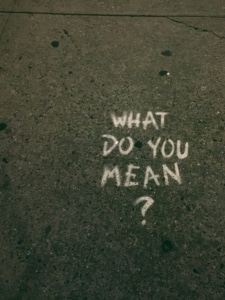
Layered on top of all of this is the illusion of transparency — we badly overestimate how clearly others can read what we are thinking (illusion of transparency). I know my short reply was a joke. I know my silence meant I was thinking, not disapproving. I know it so vividly that it feels broadcast. It is not broadcast. They received the words, or the tone, or the silence. They did not receive the intention behind it. They never do. Ever.

I want to say this part gently, Intention is not meaningless — it is the difference between a mistake and a cruelty. But intention is a fact about me, and impact is a fact about you. The error is offering a fact about myself as though it settled a question about someone else. Your foot still hurts.

The zinger I was proud of

I was co-leading a group of about twenty-five people with a friend. We were both sarcastic and both good at it — that was part of how we worked together. It had always been play.

She landed a zinger on me. I fired one right back, and I will be honest: I thought it was world class.

And she started to cry.

In that half second everything I had meant by it evaporated. It did not matter that it was a joke, or that she had gone first, or that this was how we always talked. What I intended never made it across the room. What landed was something else entirely, and I could see it on her face in front of twenty-five people.

So, I stopped the meeting and apologized to her out loud, in front of everyone who had just watched it happen. I have not done it since.

And I try very hard not to use sarcasm; you see sarcasm is a sharpened instrument. I had been telling myself I was using it well. I was just using it on people.

What repairs

Roy Lewicki and his colleagues at Ohio State tested the six components of an apology to see which ones truly land. The two most effective were acknowledgment of responsibility — this is my fault — and the offer of repair — here is what I will do about it. The least effective, in both studies, was the request for forgiveness (Ohio State, 2016).

That is worth sitting with, because the weakest element is the one most of us lean on hardest. “I’m so sorry. I really didn’t mean it. Are we okay?” Listen to the shape of what I just wrote, my feeling, my intention, and then a request that the person I hurt do something for me — reassure me, release me, restore me to being a good person. It is an apology organized around the comfort of the apologizer. What the injured person needs is simpler and harder: own it and fix it.

Restorative justice has been built on that shape for decades. Since I did Kairos prison ministry for decades, I know a little about this. Rather than asking what rule was broken and what the offender deserves, it asks: who was harmed, what do they need, and whose obligation is it to make it right — not one of which is a question about what anybody meant. And it is not soft. A 2025 meta-analysis finds restorative approaches produce modest but highly cost-effective reductions in reoffending, significantly higher satisfaction among those harmed, and greater accountability from those who caused it (Criminology & Criminal Justice). Centering impact is not merely kinder. It works better.

The repair that stayed with me

Years later I was on the other side of it. A man who I will call George W. came to me and apologized. A situation had gone badly because of choices George made, and those choices had landed on me.

What hurt was not only the outcome. It was that he had decided who I was — and decided wrong. George acted on a version of me that did not exist, and I had to live inside the consequences of a story about me that was not true.

When George apologized, he did not explain. He did not walk me through his reasoning or ask me to understand the pressure he had been under. He named what he had done, he named that it had hurt me, and he did not ask me to make him feel better about it.

It did not undo everything. We never got along well after that. But something in me softened that had been hard a long time. Being seen accurately at last, by the person who had gotten me wrong — that was the repair.

Intent Verses Impact Reflection Sheet

What love asks

In emotional intelligence terms this is a trainable skill, one that we in the west are so to acknowledge and it is not the same as being nice: the ability to hold what I meant and what landed at the same time, without collapsing either. Most of us can only hold the first, so the moment impact is raised we defend intention, and the conversation quietly becomes about whether I am a good person instead of what happened to you. The practice is small and genuinely hard. Do not explain yet. Ask — “tell me more about how that hit you” — and stay in it longer than is comfortable. Then own your part, with no but anywhere in the sentence, and ask what would help.

The contemplative tradition arrived here long before the research did. The first act of love, said Abba Poemen, is to leave the other person free — and part of what we must leave free is their account of their own experience. I do not get to tell you that what happened to you did not happen, simply because I would prefer to be the kind of person who did not cause it. That is why this is spiritual work and not a communication technique: centering impact means giving up the story in which I am the good guy, and that takes a true strength to survive being wrong.

I did not mean it that way. Almost none of us ever do. The question is what I do in the next thirty seconds, once I know.

Peace and every good.


About Jim & Lynette Vaive

Jim and Lynette Vaive are the co-founders of spirit of EQ and co-authors of The Mystical Seeker. They are Master Certified Coaches, certified Narrative Enneagram teachers, and Certified Spiritual Directors, and together they hold credentials in Spiritual Emotional Intelligence (SEQ) — a framework rooted in Lynette’s Doctor of Ministry research. Learn more at spiritofeq.com.

Sources

Ohio State University — the six elements of an effective apology (Lewicki et al., 2016): news.osu.edu

Actor–observer bias: EBSCO  ·  Illusion of transparency: overview

Meta-analysis of restorative justice outcomes (2025): Criminology & Criminal Justice

THE BRIDGE BETWEEN US PART TWO OF TWO

The Bridge Between Us

What changes when you stop expecting people to meet the world the way you do.

Picture three people around a table with a hard problem in front of them. One wants to slow down and think it through — get the facts straight, see the whole picture. One keeps scanning the faces, quietly asking whether everyone is all right. The third is already halfway out of the chair, ready to do something about it. Within ten minutes all three are frustrated with each other. Each is convinced the others are missing the point.

They are not, in fact, disagreeing about the problem. They are speaking three different first languages.

In Part One we looked at the three Centers of Intelligence — Head, Heart, and Body — and at the first connection, the one within: noticing your home center and gently inviting the quieter ones to the table. This is the second connection, and in some ways the harder one. It is the bridge between us.

We mistake another center’s gift for a flaw

Here is the trouble. Each center, seen from inside, feels like plain good sense. Seen from another center, it can look like a defect. The head-led person, doing exactly what the head does best, can read as cold, detached, slow to commit. The heart-led person, doing exactly what the heart does best, can read as dramatic, over-involved, too much. The body-led person, doing exactly what the body does best, can read as blunt, impulsive, steamrolling.

None of those are character failures. They are intelligences doing their work — and being judged in a language they do not speak. An enormous amount of what we call a personality conflict is really a translation problem.

Three questions, all of them legitimate

Underneath, each center is asking a different question, and each question deserves an answer.

The Head asks: Does this make sense? The Heart asks: Are we okay? The Body asks: What are we going to do?

Most conflicts are three people answering three different questions and assuming everyone is answering theirs. And when only one question gets honored — usually the loudest, or the one belonging to whoever holds the power — somebody leaves that room unseen. Not disagreed with. Unseen. Those are different wounds, and the second one lasts longer.

The people I thought were moving too slowly

For years I got so frustrated with everyone around me. They moved so slowly. I would be three steps ahead, already seeing where this was going, already wanting to move — and the room would still be talking. I would sit there thinking, we could have done this by now.

And here is the part I have to say plainly: I was not wrong about the big picture. I did see it clearly, and I saw it fast. That was real, and it was a gift.

But being right about the big picture made me deaf to everything else in the room. While I was waiting for people to catch up, they were making points that mattered — about how a decision would land on someone, about what we had not thought through, about who would be affected. I missed them. Not because they were not said, but because I had already decided the conversation was slow rather than deep. What I called impatience was really me refusing to learn anyone else’s language.

Empathy is not agreement

This is where emotional intelligence stops being a concept and becomes a discipline. Empathy is not agreeing, and it is not being nice. It is the deliberate work of entering another person’s experience before responding to it — of asking what question they are actually asking, and answering that one first. You can do this without surrendering your own center. In fact you can only do it well from your own center, grounded enough to lean toward someone without losing your footing.

The old image for this is still the best one. Paul wrote to a fractured community that the body has many members, and that the eye cannot say to the hand, “I have no need of you” (1 Corinthians 12). Read that with the centers in mind and it lands differently. A family, a team, a church that honors only one intelligence is a body missing limbs. It will be clever and cold, or warm and directionless, or busy and unreflective — and it will keep wondering why it cannot quite get where it wants to go.

Three-centered justice

This is a large part of why we have been drawn more and more toward restorative justice. Restorative justice does something deceptively simple: it changes the questions. Conventional justice asks what rule was broken, who broke it, and what they deserve. Restorative justice asks instead: who has been harmed, what do they need, and whose obligation is it to make things right (Howard Zehr, Changing Lenses, 1990).

Sit with those three questions for a moment. Who was harmed is a Head question — it asks for truth, clearly seen. What do they needis a Heart question — it asks us to feel our way into another’s experience. Whose obligation is it is a Body question — it asks somebody to actually move. Restorative justice, at its best, is three-centered justice. It refuses to let us settle for a truth that costs us nothing, a sympathy that changes nothing, or an action taken without understanding.

And it asks for exactly the capacity the centers teach: the ability to see a person who is not like you as fully, stubbornly real. Almost all harm begins where someone has been reduced — to a caricature, a category, a nuisance, a threat. Repair begins the moment we can finally hear the question they were asking all along.

When I was the one doing the harm

I have to tell a harder piece of this. There were times I hurt people — not by accident, and not because I meant to. I was so certain I was right that I used what I had to get traction: my size, my presence, the force of my personality. I could fill a room. And when I did, people got quiet.

I told myself I was moving things forward. I was not. I was shutting down the very forward motion that would have served the whole room instead of just me. The ideas that needed air did not get it. The objections that should have slowed me down never got said out loud. People did not change their minds; they just stopped offering them.

It took me a long time to see that clearly, and longer to sit with it without flinching. Those are the three questions I now have to ask of myself before I ask them of anyone else: Who was harmed? What do they need? And whose obligation is it to make it right? The answer to that last one, in those rooms, was mine.

The Bride Between Us Reflection Guide

Practicing the bridge

The practice is small and surprisingly hard. Before you react, translate. Notice which center you are standing in, and then ask yourself what question the other person is really asking. If they need to know the plan makes sense, give them the reasoning before the reassurance. If they need to know you are okay with them, say that before you present your logic. If they need to know something is actually going to happen, name the next step. You are not managing them. You are refusing to make them come all the way over to your side of the bridge to be understood.

Do that often enough, in a marriage or a team or a community trying to repair real harm, and something quietly changes. People stop bracing. They start telling the truth. The body gets its limbs back.

The bridge between us turns out to be built of the same material as the bridge within us: a willingness to enter a room we do not naturally live in. Practiced long enough, and with enough tenderness, that willingness has another name. We call it love. And if each center is a doorway to God, as we said in Part One, then the person sitting across from you — the one whose first language you have never quite learned — may be standing in a doorway you have never walked through.

Peace and every good.


About Jim & Lynette Vaive

Jim and Lynette Vaive are the co-founders of spirit of EQ and co-authors of The Mystical Seeker. They are Master Certified Coaches, certified Narrative Enneagram teachers, and Certified Spiritual Directors, and together they hold credentials in Spiritual Emotional Intelligence (SEQ) — a framework rooted in Lynette’s Doctor of Ministry research. Learn more at spiritofeq.com.

Sources

The Narrative Enneagram — The Three Centers of Intelligence: narrativeenneagram.org

Howard Zehr — restorative justice principles and the three questions (Changing Lenses, 1990): Zehr Institute