

Choose Your Altars: Context Before Commitment Now!
Can I be heretical for a moment? I want to talk about worship—not as doctrine but as human behavior. When we use words like “worship,” “blessed,” or “devotion,” we often assume everyone shares the same map for those terms. But what if we treated those words as claims that require context and interrogation the way we would any major life commitment—like marriage, career choice, or a mortgage? Do we know why we are doing the deeply important things in our lives, and what it really means to be doing them?
Let’s start with a simple observation: language is slippery. “I worship God” can be a conscious, reflective claim about meaning and purpose, or it can be shorthand for a family habit, a cultural identity, or a weekly routine. The same goes for secular “objects” of devotion—money, status, sex, drugs, career. People often enact profound loyalties without pausing to ask whether those loyalties are chosen or inherited, adaptive or harmful.
I talked about context a few posts ago and I want to dive into it a little bit differently.
Examples make this more concrete.
- The executive.
Consider Linda, a chief operations officer who describes herself as “dedicated” to her company. She works 70-hour weeks, vacations with her laptop, and measures self-worth by quarterly results. Her friends joke that she “worships the bottom line.” Is that hyperbole? For Linda it’s not; her weekends are filled with email, she’s missed births and birthdays, and financial metrics shape her identity. The question is: did she choose this life because it aligns with an examined set of values, or because the expectations and incentives around her nudged her into a default devotion? If she says she “devotes her life to work,” what does “devotion” actually mean for Linda—satisfaction, security, avoidance of other pains? What is the context that made work the main altar of her life? (I changed content of each of these examples because I was not given permission to use the people’s identities)
- The influencer.
Jamal, a 23-year-old social media creator, measures success in likes, followers, and brand deals. His waking plan is content production optimized for engagement. That rhythm organizes his social circle, daily habits, and self-esteem. When his follower count stalls, he becomes anxious and makes riskier content decisions to chase virality. Is he worshipping audience approval? Again, the symbol matters: the behaviors are indistinguishable from religious devotion—rituals (posting), community reinforcement (comments), moral accounting (metrics). But does he understand why he chases those metrics? Is it autonomy, recognition, or fear of obscurity?
- The habitual churchgoer.
Sara attends Sunday services every week, has for decades, and calls herself a person of faith. But she admits she often sits in the pew on autopilot—singing the songs, nodding at the sermon, rarely thinking about the theological claims. For her, worship is a social ritual that binds her to family and community. That’s meaningful in certain ways, but if someone asks whether she “devotes her life” to the principles taught there, she struggles to articulate specifics. Is her participation a moral compass, a habit, or a defense against loneliness? Without context, the claim “I worship” can mask a lack of considered commitment.
- The non-believer.
Tom, an engineer, publicly states he does not believe in God or organized religion. What does that mean for him? Is he rejecting the metaphysical claims, the social practices, the institutional authority, or all of the above? For some people, atheism is an intellectual conclusion; for others it’s a cultural stance or even a reaction against abusive institutions. Context matters: a blanket “I don’t believe” can be an invitation to conversation, but it can also be shorthand for “I was hurt,” “I never saw the need,” or “I never had a framework to meaningfully engage.”
- The addict.
Marcus struggled with substance dependence for years. He would prioritize the next fix over relationships, work, and health. In a clinical sense, addiction can look like a form of worship: consistent rituals, surrender of agency, and a value hierarchy in which the substance ranks above all else. When he entered recovery and asked why he had chased substances so relentlessly, he uncovered fears, trauma, and a hunger for acceptance. Recognizing the context changed his approach to life and meaning.
These vignettes point to a few recurring patterns.

First, devotion and habit are not the same. Something you do every week can be either a carefully chosen expression of core values or a default behavior sustained by habit and social reinforcement. We routinely confuse frequency with meaningfulness. The critical move is to ask: does repetition reflect reflective commitment or mere inertia?
Second, context transforms words into claims that can be evaluated. To say “I worship X” without specifying what X is, what X gives you, and what X costs you, is to make an ambiguous claim. Is the worship chosen freely? Is it compensatory (filling a void)? Is it communal or isolating? What happens if X is removed—does the person reorganize their life or collapse?
Third, many social institutions encourage uptake of labels without fostering critical thought. My pastor friend who worries about biblical text being used without context has a secular analogue: workplaces, subcultures, and social media ecosystems often pass down language and practices that people adopt without understanding origins or alternatives. Some call that “faith” or “loyalty”; others call it suspension of inquiry. Either way, it’s worth asking whether your assent is informed.
So, what do practical steps look like if we decide to insist on context before committing to the things that claim our lives?
- Ask the “why” questions: Why this devotion? What needs does it serve? Whose approval or reward structures support it? Try to make a list—psychological, social, economic—that explains the attraction.
- Consider the long-term ledger: How will this devotion look in five, ten, thirty years? What will be served, and what will be sacrificed? Try to envision the trade-offs honestly.
- Test alternatives: Could you allocate attention differently? If your life’s axis shifted even slightly, what would change? Small experiments reveal if a devotion is truly intrinsic or simply convenient.
- Seek external perspectives: Talk to friends, mentors, or a therapist about what they see. People immersed in a system often miss its blind spots.
- Demand specificity from claims: When someone asserts “this is what we do” or “this is who we are,” ask follow-up questions. What do you mean by “this”? What metrics or stories support that definition?
Click Here For Free Workbook Link.
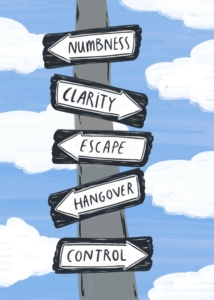
Language matters because it shapes identity. “Worship” is a provocative term because it exposes the sacrificial structure of devotion. You don’t have to use religious vocabulary to admit you are giving your life to something. You can be as devoted to a career, a relationship, a cause, or a compound as anyone kneeling in a chapel. The crucial question is whether that devotion is the result of an informed, reflective choice or an accident of context.
I can’t accept words without context. Can you? If you want to live honestly and with purpose, start asking context questions about the things that claim you. It doesn’t require rejection or conversion—only clarity. And when we have clarity, we gain power: the power to recommit intentionally, to redirect energy where it matters, and to stop pretending that habits equal meaning..


