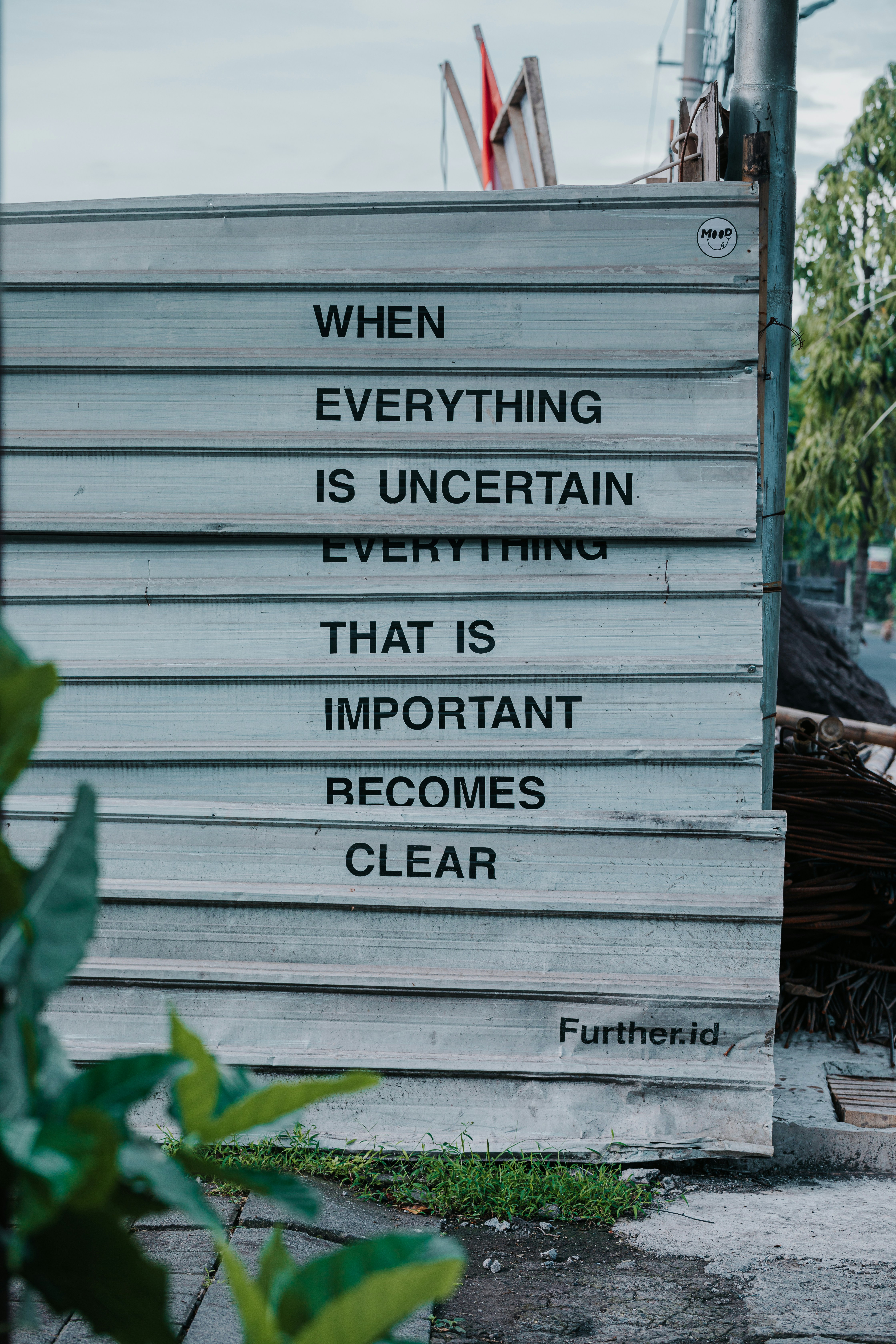
Choose Your Altars: Context Before Commitment Now!

Can I be heretical for a moment? I want to talk about worship—not as doctrine but as human behavior. When we use words like “worship,” “blessed,” or “devotion,” we often assume everyone shares the same map for those terms. But what if we treated those words as claims that require context and interrogation the way we would any major life commitment—like marriage, career choice, or a mortgage? Do we know why we are doing the deeply important things in our lives, and what it really means to be doing them?

Let’s start with a simple observation: language is slippery. “I worship God” can be a conscious, reflective claim about meaning and purpose, or it can be shorthand for a family habit, a cultural identity, or a weekly routine. The same goes for secular “objects” of devotion—money, status, sex, drugs, career. People often enact profound loyalties without pausing to ask whether those loyalties are chosen or inherited, adaptive or harmful.

I talked about context a few posts ago and I want to dive into it a little bit differently.

Examples make this more concrete.

  • The executive.

Consider Linda, a chief operations officer who describes herself as “dedicated” to her company. She works 70-hour weeks, vacations with her laptop, and measures self-worth by quarterly results. Her friends joke that she “worships the bottom line.” Is that hyperbole? For Linda it’s not; her weekends are filled with email, she’s missed births and birthdays, and financial metrics shape her identity. The question is: did she choose this life because it aligns with an examined set of values, or because the expectations and incentives around her nudged her into a default devotion? If she says she “devotes her life to work,” what does “devotion” actually mean for Linda—satisfaction, security, avoidance of other pains? What is the context that made work the main altar of her life? (I changed content of each of these examples because I was not given permission to use the people’s identities)


  • The influencer.

Jamal, a 23-year-old social media creator, measures success in likes, followers, and brand deals. His waking plan is content production optimized for engagement. That rhythm organizes his social circle, daily habits, and self-esteem. When his follower count stalls, he becomes anxious and makes riskier content decisions to chase virality. Is he worshipping audience approval? Again, the symbol matters: the behaviors are indistinguishable from religious devotion—rituals (posting), community reinforcement (comments), moral accounting (metrics). But does he understand why he chases those metrics? Is it autonomy, recognition, or fear of obscurity?

  • The habitual churchgoer.

Sara attends Sunday services every week, has for decades, and calls herself a person of faith. But she admits she often sits in the pew on autopilot—singing the songs, nodding at the sermon, rarely thinking about the theological claims. For her, worship is a social ritual that binds her to family and community. That’s meaningful in certain ways, but if someone asks whether she “devotes her life” to the principles taught there, she struggles to articulate specifics. Is her participation a moral compass, a habit, or a defense against loneliness? Without context, the claim “I worship” can mask a lack of considered commitment.

  • The non-believer.

Tom, an engineer, publicly states he does not believe in God or organized religion. What does that mean for him? Is he rejecting the metaphysical claims, the social practices, the institutional authority, or all of the above? For some people, atheism is an intellectual conclusion; for others it’s a cultural stance or even a reaction against abusive institutions. Context matters: a blanket “I don’t believe” can be an invitation to conversation, but it can also be shorthand for “I was hurt,” “I never saw the need,” or “I never had a framework to meaningfully engage.”

  • The addict.

Marcus struggled with substance dependence for years. He would prioritize the next fix over relationships, work, and health. In a clinical sense, addiction can look like a form of worship: consistent rituals, surrender of agency, and a value hierarchy in which the substance ranks above all else. When he entered recovery and asked why he had chased substances so relentlessly, he uncovered fears, trauma, and a hunger for acceptance. Recognizing the context changed his approach to life and meaning.

These vignettes point to a few recurring patterns.

First, devotion and habit are not the same. Something you do every week can be either a carefully chosen expression of core values or a default behavior sustained by habit and social reinforcement. We routinely confuse frequency with meaningfulness. The critical move is to ask: does repetition reflect reflective commitment or mere inertia?

Second, context transforms words into claims that can be evaluated. To say “I worship X” without specifying what X is, what X gives you, and what X costs you, is to make an ambiguous claim. Is the worship chosen freely? Is it compensatory (filling a void)? Is it communal or isolating? What happens if X is removed—does the person reorganize their life or collapse?

Third, many social institutions encourage uptake of labels without fostering critical thought. My pastor friend who worries about biblical text being used without context has a secular analogue: workplaces, subcultures, and social media ecosystems often pass down language and practices that people adopt without understanding origins or alternatives. Some call that “faith” or “loyalty”; others call it suspension of inquiry. Either way, it’s worth asking whether your assent is informed.

So, what do practical steps look like if we decide to insist on context before committing to the things that claim our lives?

  • Ask the “why” questions: Why this devotion? What needs does it serve? Whose approval or reward structures support it? Try to make a list—psychological, social, economic—that explains the attraction.
  • Consider the long-term ledger: How will this devotion look in five, ten, thirty years? What will be served, and what will be sacrificed? Try to envision the trade-offs honestly.
  • Test alternatives: Could you allocate attention differently? If your life’s axis shifted even slightly, what would change? Small experiments reveal if a devotion is truly intrinsic or simply convenient.
  • Seek external perspectives: Talk to friends, mentors, or a therapist about what they see. People immersed in a system often miss its blind spots.
  • Demand specificity from claims: When someone asserts “this is what we do” or “this is who we are,” ask follow-up questions. What do you mean by “this”? What metrics or stories support that definition?

Click Here For Free Workbook Link.
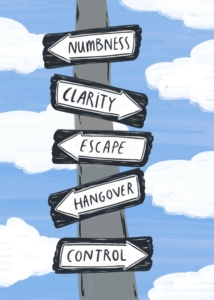
Language matters because it shapes identity. “Worship” is a provocative term because it exposes the sacrificial structure of devotion. You don’t have to use religious vocabulary to admit you are giving your life to something. You can be as devoted to a career, a relationship, a cause, or a compound as anyone kneeling in a chapel. The crucial question is whether that devotion is the result of an informed, reflective choice or an accident of context.

I can’t accept words without context. Can you? If you want to live honestly and with purpose, start asking context questions about the things that claim you. It doesn’t require rejection or conversion—only clarity. And when we have clarity, we gain power: the power to recommit intentionally, to redirect energy where it matters, and to stop pretending that habits equal meaning..

Detroit Eight: From Fury to Integrated Nonviolence

I grew up in Detroit, a city of factories and funeral parades, Motown records and mended fences. The streets I learned to walk on were loud with engines and louder still with ambition. In that city — in that era, especially — toughness was currency. I learned early to stand my ground, to protect my own, to make my small kingdom unassailable. I was quick to anger, 0 to 60 in a tenth of a second. I would ask myself, (because I did not like who I was) what’s wrong with me? No answer came that felt right, and the pattern repeated and repeated: I’d lash out, hurt people I loved, and then retreat into shame. For a long while that cycle defined me.

It took a long time — and a lot of embarrassing, painful failures — before I started to look for explanations that could become pathways instead of the same dead ends. That search, over the last 45 years, led me through countless trainings, retreats, and relationships. I studied plenty of systems and skills, but one of the most meaningful things I discovered was the Narrative Enneagram. Within that circle of nine, I found my number. I was an Eight! At first, being an Eight offered relief — finally a label that explained the force that drove me. But labels can also be prisons. I saw that I was not “integrated.” I was functioning at half speed, armed and dangerous, without most of the inward tools that make a life human.


When people talk about Detroit in the 1960s, they talk about dynamism and danger together. It was a place of industrial might — auto plants humming, assembly lines that made America mobile — and it was also a city simmering with social change, racial tension, and the scream of a neighborhood that felt squeezed. The Detroit of my youth carried the echoes of the Great Migration and the rising voice of civil rights. The city’s heartbeat was Motown: Berry Gordy’s miracle where Black voices found national airwaves and a kind of dignity that shimmered in lacquered records. Yet alongside that soundtrack was the sound of helicopters over riots, the crack of police batons, and the heavy grief of lives upended in streets that once felt safe.


In that environment, my Eight side learned to armor up fast. Eights, by temperament, protect themselves and others. We can be decisive, direct, and resolute. But when an Eight is not integrated — when the strength becomes defensiveness, when the will becomes domination — the results are destructive. I protected, but too often that protection translated into control. I could make things erupt and keep going long after the battle was over. Nonviolence? It felt distant, like a lighthouse across a foggy dreamscape — brilliant and unreachable.

The turning point was not a single dramatic event. It was a slow bringing together of consequences: the relationships I broke, the loneliness that followed victories, the growing realization that power without wisdom made me small, not big. I began to understand that being an Eight did not have to mean living in constant fight or flight. My work — a lifetime of practice — became a work of integration: bringing heart into will, softness into strength. Becoming a Narrative Enneagram Teacher was more than a credential; it was a map and a mirror. The map helped me see the directions toward healthier functioning. The mirror showed me what I had been avoiding: pain, vulnerability, and the need to learn how to love without expecting payment.


Part of what made this path possible was a latent contemplative streak. Even as a tough kid in Detroit, I had a part of myself drawn to silence, to long walks, to listening. But that contemplative part and my Eight-protector part were at war. It took years, and a lot of gentle but relentless practice, to let the contemplative side come in and lead sometimes. Nonviolence slowly revealed itself not as weakness, but as another kind of courage — a deeper, riskier courage that asks you to enter the world without armor and to offer dignity to people who may not deserve it by any conventional measure.


Nonviolence as an ethic is often mistaken for passivity. But the courage to be nonviolent is active; it is fiercely moral. It expects nothing in return. It sees others with dignity and honor. It listens more than it talks. It walks with, sits with, eats with, cries with, works with, and is present with. For me, this shift was seismic. I began practicing presence, sitting still with discomfort instead of scattering it with aggression. I learned restraint — not the brittle restraint of suppressing emotion so it later detonates, but the integrated restraint of feeling fully and choosing a wise response.

Detroit taught me a lot that helped on this path. In the 60s, the city showed both the worst and the best of human responses to pressure. It taught an appreciation for community — neighbors who checked on one another, churches that organized, and storefronts that doubled as meeting houses. It taught resilience. Coming out of factories and through hard winters taught people how to persevere; it taught me, too, that endurance can be tempered with tenderness. The music was a school of its own. Motown taught us how to turn sorrow into voice, outrage into rhythm, and marginalization into artistry. That artistry taught me how expression can be both a release and a bridge.


Becoming a healthy Eight required that I relearn power. True power, I discovered, is not about the loudest voice or the most forceful stance. True power is presence. It is the capacity to hold complexity without collapsing into defensiveness. It is the humility to ask for help. It is the willingness to risk being known as imperfect. I practiced sitting with people I feared, letting them see me, letting me see them. I practiced listening without planning my rebuttal. I practiced the kind of attentiveness that honors the other as worthy.


Was it easy? No. I would be lying if I claimed to have become saintly. Old habits die slowly and some are stubborn in their refusal to die. I am still not perfect. But the change has been profound. The storms have calmed. I have real peace now — a presence that feels more alive and less like a bluff. And that peace has given me the capacity to teach from a place of empathy rather than coercion. As a Narrative Enneagram Teacher, MCC (Master Certified Coach), and a Spiritual Director I don’t just help people identify their numbers; I help them see the paths toward integration: how to bring heart to will, how to temper justice with mercy, how to turn fierce protection into compassionate stewardship.


This journey taught me a lesson that reaches beyond personality systems: transformation is possible when courage is directed inward. The bravest thing I did was not a heroic outward act, but a quiet, repeated turning inward — to ask hard questions, to allow grief and shame to be felt, and to choose differently each time. From Detroit’s fists and furnace, I forged a softer kind of steel: resilient, flexible, and honest.


If you are an Eight reading this, or the loved one of an Eight, know this: your force can be your greatest gift when it is integrated with tenderness. Try to see the lighthouse of nonviolence not as a retreat but as a harbor. If you are someone who grew up in tough places — in cities of industry and unrest, where survival required a hard face — know you can let down that face without losing yourself. You can keep your dignity while showing vulnerability. You can hold others without crushing them.


If you are not an Eight, perhaps you recognize in this story a pattern you know well: a part of you that is reactive; a part that wants to protect at all costs. Our work is similar: to find the courage to be less sure, more present, more generous with silence and attention. To listen. To walk with. To sit with.


I won’t pretend the path is quick. It took me decades to move from a default of fury to a life where peace is possible. But the effort is worth it. The city taught me that too — to endure, to repair, to keep making music even when the world is cracked. There is a tenderness in Detroit that does not compromise grit. There is a sanctity in power when it is used to steward rather than dominate.


Try it. Sit in an uncomfortable silence, and don’t fill it with force. Walk toward someone you fear and stay long enough to see them. Speak quietly when the instinct is to roar. You might be surprised by how powerful you can be when you are softer. You might just like it.

Peace and every good.

Desert Wisdom: Context is Everything

Reflecting on where we stand in life and the decisions, we make is not a luxury reserved for philosophers or the privileged; it is a practical necessity for anyone who shoulders responsibility—whether as a leader, a parent, a partner, or a friend. Every choice we make ripples outward: policies we endorse shape communities, the tone we set in our family’s shapes children’s emotional landscapes, and the way we respond to friends in crisis models what compassion looks like. When the pace of life accelerates and the noise of competing opinions grows louder, pausing to reflect helps us separate what is urgent from what is important. Reflection is the practice of stepping back long enough to see patterns, notice motivations, and weigh consequences. It gives us the mental and moral space to act with intention rather than reactivity, to lead with clarity rather than impulse, and to love with presence rather than distraction.

This capacity for reflective life is under strain in times of social, political, or spiritual disruption. Anxiety narrows our attention; polarization simplifies complex choices into binary demands; and scarcity—of resources, attention, or trust—pushes us toward short-term fixes instead of sustainable care. Yet precisely in such moments, reflection becomes more valuable. Leaders who cultivate a reflective habit are less prone to adopt popular but harmful policies; parents who slow down can respond rather than punish; friends who listen deeply become anchors when networks fray. Reflection is not passivity; it is a form of preparedness: an inner readiness that allows us to respond to external turbulence with steadiness, wisdom, and, crucially, hope.

There is deep, practical help available if we look to the contemplative practices of earlier generations. The desert mothers and fathers—Christian ascetics who retreated into the deserts of fourth- and fifth-century Egypt, Palestine, and Syria—faced their own forms of upheaval. Their world was marked by the collapse of old political certainties, shifting religious allegiances, economic insecurity, and the daily challenge of survival in a harsh landscape. Communities and institutions that once felt permanently secure were in flux. In that context, these seekers turned inward, developing practices designed to anchor the heart and clarify the mind: silence, disciplined prayer or attention, fasting, communal counsel, and a rigorous form of discernment aimed at identifying the motives behind action.

It’s easy to caricature the desert fathers and mothers as isolated oddities, but their practices emerged from and responded to real social stress. Solitude was a tool to remove the cacophony of public life and to make the inner life audible; silence and repetitive prayer shaped attention and broke cycles of reactivity; accountability to a spiritual community protected against spiritual pride and isolation. Their teachings were practical: notice the impulse before you act, name the fear or desire energizing you, seek counsel, and cultivate a steady interior ground that is not won by control but by clarity. In other words, their wisdom was not about withdrawing from the world out of despair but about preparing oneself to engage the world more faithfully.

Why should these ancient practices matter to us now? Because the human heart and the social dynamics that shape it have not changed as much as our technologies have. Fear, greed, ambition, envy, compassion, and love still govern behavior. Practices that train attention and regulate emotion speak to perennial human conditions. Integrating contemplative habits into modern life can provide two immediate benefits: First, they reduce reactivity and promote clearer decision-making. When leaders or family members cultivate habits of silence and discernment—simple practices such as pausing before responding, taking structured times for quiet reflection, or keeping a short journal of motivations—their choices are more likely to reflect long-term values than immediate pressure. This leads to steadier policies, more thoughtful parenting, and deeper friendships.

Second, these practices cultivate an inner reservoir of hope. Hope is not the same as optimism; it is a stable belief in the possibility of good action and transformation even when outcomes are uncertain. The desert wisdom teaches that hope is best sustained not by constant positive thinking but by disciplined attention to what is true and actionable in the present moment. Regular practices that calm the nervous system and sharpen moral perception—breath-focused attention, brief daily silence, or communal sharing of struggles—create psychological space where hope can grow. When we know how to listen to ourselves and to each other, despair loses its hold and the imagination for constructive possibility widens.

Translating these practices into contemporary contexts does not require cloistering oneself in a cave. Two specific, accessible ways to integrate ancient practices into modern life are particularly practical. First, establish micro-practices of silence and reflection embedded in daily routines. This could be a three- to five-minute pause at the start or end of the day, a brief breath-counting exercise before meetings, or a ritual of asking two questions before important decisions: “What am I afraid of right now?” and “What good do I most want to preserve or bring about?” These small practices act like cognitive reset buttons, allowing emotions to settle and values to guide choices.

Second, create structures of communal discernment. The desert tradition emphasized accountability and counsel: individuals would bring their struggles to experienced guides and to a community for testing and correction. In the modern setting, this might look like regular peer check-ins among leaders, family councils where major decisions are discussed slowly and with listening rules, or small groups of friends committed to honest feedback. Such structures slow decision-making constructively, expose hidden biases or blind spots, and distribute responsibility in ways that reduce burnout and improve wisdom. They also restore a sense of shared purpose and mutual support that counters the isolating effects of crisis.

Context matters: the desert mothers and fathers were responding to a world in transition—political empires shifting, communities redefining themselves, and everyday life marked by scarcity and vulnerability. Their practices were adaptive responses to conditions of uncertainty. They learned to live with less reliance on external securities and more on cultivated internal resources: discernment that distinguished helpful counsel from harmful flattery, silence that tempered projection and rumor, and community that corrected extremes of pride or despair. In short, their practices were designed to produce people who could act faithfully and resiliently when the external world was unreliable.

When we tie that ancient context to our own, the hopefulness becomes practical rather than sentimental. The same practices that helped people withstand the dislocations of their time can be adapted to ours, not by mimicking every ancient behavior but by translating the underlying principles: create space for reflection, practice disciplined attention, seek accountable community, and orient actions toward the common good rather than narrow expediency. By doing so we develop inner resources that make us less dependent on the immediate approval of the crowd and more able to pursue long-term flourishing.

If you are reading this and feeling the strain of present uncertainties, know that hope can be cultivated. Start small: choose one micro-practice of silence or reflection to try daily for two weeks. Invite one or two trusted people into a monthly conversation where you ask each other honest questions and hold one another accountable for decisions. Notice how these practices change not only your inner tone but the quality of your actions—decisions made with care, responses delivered with compassion, and leadership grounded in discernment rather than fear. Over time, these habits compound. They rebuild trust inwardly and outwardly, making it possible to navigate disruption with steadiness rather than fracture.

Ancient wisdom and present-day insight are not opposed; they are complementary. The desert mothers and fathers offer tested methods for cultivating inner freedom and clarity; contemporary psychology and organizational practices provide ways to embed those methods in modern life effectively. Together they offer a path not of retreat from the world, but of preparation for loving and courageous engagement with it. In a time that tempts us toward panic or paralysis, disciplined reflection, communal discernment, and small faithful practices can sustain hope and enable action that lasts.

Redefining the people that have walked with us

I have been talking about this subject the last few blogs and although some folks use a very narrow definition of the word ancestor, I use the word as an indicator of legacy and interconnections. The ancestors are elders who pour their lives into the community and family as a testament of love and commitment. They live and die well, and when they transition, hopefully they are lucky enough to do so in full connection with an engaged community. We believe they then dwell in the spaces carved out by our spiritual and cultural expectations. They may be in another life dimension, but they connect with us in dreams, in memories, and in stories.

I want to take this  profound perspective a little further, inspired by one of my favorite authors, Barbara Holmes, which got me thinking about my own journey with people from the past. How do I define an ancestor? Must they be people directly related to me? Do they have to be individuals I knew personally? And how have these people, whether known or unknown, helped me on my own journey?

For some, the idea that our ancestors are with us right now might seem a bit mystical or “woo woo.” However, the concept of epigenetics offers a fascinating scientific perspective on how the experiences of our ancestors can influence us today. Epigenetic’s is the study of changes in organisms caused by modification of gene expression rather than alteration of the genetic code itself. While I do not know what all of it means it does suggests that the life experiences of our ancestors, such as trauma or triumph, can leave a biological imprint on future generations. This means that the legacy of our ancestors is not just a spiritual or cultural phenomenon but also a biological one.

Historically, many cultures have revered their ancestors, believing that they continue to play an active role in the lives of the living. In ancient Egypt, for example, (taken in part from the book of the dead) the practice of ancestor worship was integral to their society. The Egyptians believed that the deceased could influence the fortunes of the living, and they often made offerings to their ancestors to ensure their favor. Similarly, in many African cultures, ancestors are seen as guardians and guides, providing wisdom and protection to their descendants.

In my own life, I have found that connecting with my ancestors, whether through family stories, historical research, or personal reflection, has been a source of strength and guidance. I remember sitting with my grandmother in the kitchen on Rosemont Ave right off of 7 mile in Detroit as she recounted tales of her parents and grandparents, having come from the French speaking areas of Canada,  painting vivid pictures of their lives and struggles. I did not know that some of my cousins were lumber jacks, I was very surprised to learn these stories were more than just family history; they were lessons in resilience, love, and perseverance.

But what about those ancestors we never knew personally? Can they still impact our lives? I believe they can. Consider the stories of historical figures who have inspired generations. Figures like Harriet Tubman, Mahatma Gandhi, and Nelson Mandela have become ancestors to us all, their legacies transcending bloodlines to touch the hearts and minds of people worldwide. Their courage and commitment to justice continue to inspire and guide us, much like the ancestors in our own families.

Have you ever tried talking with those who have gone before us? Whether they were people close to us or individuals we only read about on the front page of the family Bible, reaching out to our ancestors can be a powerful experience. This doesn’t necessarily mean holding a séance or engaging in spiritual rituals, although those practices have their place in many cultures. It can be as simple as reflecting on their lives, writing letters to them, or visiting places that were significant to them.

By doing this, we open ourselves to the wisdom and guidance they have to offer. We may find answers to questions we’ve been pondering or gain new perspectives on challenges we’re facing. Our ancestors, whether known or unknown, have walked paths similar to ours. If we ponder how they have faced adversity, celebrated triumphs, and navigated the complexities of life, we might get answers that have eluded us.. By connecting with them, we tap into a wellspring of experience and insight.

Moreover, acknowledging our ancestors helps us understand our place in the world. We are part of a continuum, a tapestry woven from the threads of countless lives. Each of us is a link in a chain that stretches back through time and will continue into the future. Recognizing this interconnectedness can be both humbling and empowering. It reminds us that we are never truly alone; we carry the hopes, dreams, and wisdom of those who came before us.

As I said on Fridays blog post, with today’s fast-paced world, it’s easy to lose sight of our roots. We become so focused on the present and future that we forget the past. Yet, our ancestors are an integral part of who we are. They have shaped our identities, influenced our values, and laid the groundwork for the lives we lead today.

So, how do we honor our ancestors and keep their memories alive? One way is through storytelling. Sharing family stories, whether around the dinner table or in written form, ensures that the lessons and legacies of our ancestors are passed down to future generations. Engaging in cultural traditions and rituals can also help us maintain a connection with our roots. One of the things I am going to start doing is writing down some of the stories I have heard to remind me and encourage me.

Another way is through personal reflection and meditation. Taking time to contemplate the lives of our ancestors, their struggles, and their triumphs can provide us with valuable insights and inspiration. We can also explore our family histories through research, uncovering hidden stories and connections that enrich our understanding of who we are.

Our ancestors are more than just names on a family tree. They are a living legacy, a source of strength and wisdom that continues to influence our lives. By embracing our connection with them, we honor their memory and ensure that their stories and lessons endure. Whether through spiritual, cultural, or scientific lenses, recognizing the impact of our ancestors enriches our lives and deepens our understanding of ourselves and the world around us.