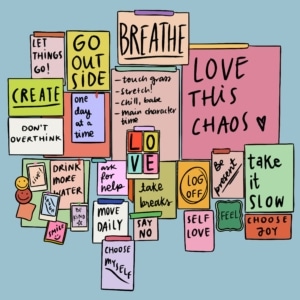
Reflections on emotional intelligence as a spiritual practice — the slow work of self-awareness, staying present to others, and growing whole from the inside out. These posts explore where EQ and the contemplative life meet

Presence as Witness: The Quiet Power of Showing Up

I remember the day my youngest child was born like a photograph in slow motion. It was 43 years ago, in a delivery room that smelled of antiseptic and hope. I promised myself I would be there — not because I thought I could do anything technical, but because something inside me insisted I needed to witness this threshold. What unfolded in those hours was not ordinary. It was raw, loud, fragile, triumphant. It was a miracle. And watching it changed me.

The delivery room was a small ecosystem of attention: my wife in the epicenter, midwives and doctors orbiting with focused calm, nurses moving with quiet purpose, machines humming like low prayers. My daughter arrived with a cry that sounded both new and ancient. As I watched, I wasn’t merely observing a birth. I was bearing witness — and that act of presence reshaped how I understood life, love, and what it means to simply be there for another human being.

What does it mean to “bear witness”? For me it meant surrendering the impulse to fix, comment, or perform. It meant holding a space with no agenda other than to attend. I saw my wife in ways I’d never seen before: fierce, vulnerable, triumphant. I saw my newborn, blinking and bewildered, entering a world I had only ever imagined for her. I saw the team at work, each person contributing a small essential piece to a profound whole. In the silence between contractions, in the quick exchanges of hands and glances, I learned something about the power of presence that has stayed with me for decades.

Bearing witness is not limited to dramatic life events like childbirth. It’s the practice of showing up when it matters: in grief, in joy, in mundane moments where another person might otherwise be alone in their experience. And you don’t need words to do it. Sometimes the most powerful language is the sturdy quiet of your attention. When you stand there and truly see what someone else is going through — without interrupting, diagnosing, or diverting — you give them something priceless: validation. You acknowledge their reality as worthy of being seen.

Why this matters now,

We live in a world of interruptions. Notifications, opinions, and obligations make us spectators to our own lives and to the lives of people around us. Bearing witness is an act of resistance against this fragmentation. It restores human connection. It heals small wounds before they become deep scars. It fosters trust and invites vulnerability. And it’s accessible: anyone can do it with a little intention and practice.

So instead of just talking at you I wanted to share two practical steps to start bearing witness today. They’re intentionally minimal so you can repeat them in any context — at home, at work, in a hospital waiting room, or on the street.

  1. The Two-Minute Presence Ritual
  • What to do: When someone begins to share something — good or bad — stop. Put down your phone, close your laptop, and face them. Take two full minutes of uninterrupted presence. Don’t plan a response; don’t analyze or advise. Let your eyes meet theirs, and if it feels natural, offer a soft touch: a hand on the shoulder or a brief squeeze of the hand.
  • Why it works: Two minutes is short enough to be manageable and long enough to break the loop of reactive listening. In those two minutes, you communicate that the person is important, that their experience matters. The ritual trains your nervous system to slow down, reducing the urge to interject or fix.
  • Where to use it: With a partner during a tough conversation, with a friend telling a story, with a colleague after a hard meeting, or even with a stranger who’s visibly distressed.
  1. The Question of Seeing
  • What to do: When someone describes an experience, ask one simple question: “What was that like for you?” Then pause and wait. Resist the urge to paraphrase right away. Allow silence to do some of the work. If the other person hesitates, follow up with: “I want to understand more. I’m here.”
  • Why it works: This question moves the focus away from facts and toward feeling. It invites deeper sharing and avoids the common trap of turning the conversation into a comparison or a problem-solving session. The follow-up line reaffirms your intent to be there for them without imposing your viewpoint.
  • Where to use it: In conversations about loss, transitions, parenting struggles, mental health, or moments of celebration where the other person wants to be witnessed rather than analyzed.

Stories that teach:

In that delivery room, I could have tried to make light of the pain to ease my wife’s tension, or I might have sought to take charge of logistics. Instead, I learned to breathe with her breath, to let my attention rest on the reality before me. Later, when friends and family told me about their own losses or breakthroughs, I found myself showing up differently — less eager to problem-solve and more willing to simply be present. Over time, the small acts of bearing witness built up a quiet network of care around the people I love.

People sometimes worry that bearing witness will overwhelm them, as though absorbing another person’s reality means carrying their whole burden. That’s not true. Bearing witness does not require you to fix anything. It asks only that you offer a portion of your attention and your heart. If emotions become too intense, honest boundaries are part of good witnessing: “I want to be here with you, and I also need a short break so I can come back present.” You can hold both care and self-preservation.

Who benefits? Everyone. The person being witnessed receives validation, validation that can transform isolation into connection. You, the witness, gain emotional fluency and deeper relationships. Communities become more resilient when people practice simple acts of presence. Teams at work perform better when members feel genuinely seen. Families heal faster when they adopt listening as an act of love.

A small practice, a big ripple:

The birth of my daughter taught me a simple truth: sometimes the most revolutionary act is to show up and stay present. You don’t need a certificate or training. You only need the willingness to slow down and give someone else a piece of your attention.

Call to action Try it this week. Choose one person — a partner, friend, coworker, or family member — and practice the Two-Minute Presence Ritual. Then, later in the week, use the question of seeing in a conversation where you usually would have jumped in to advise. Notice what changes: in the other person’s expression, in the flow of conversation, and in how you feel afterward. Share your experience with someone else or post a short note on social media about what you learned using #IWasThere. Invite a friend to try it with you.

If you want, tell me about your moment of bearing witness — what you saw, how it felt, and what changed. I’ll listen. No advice, no judgment. Just presence.

We don’t need words when bearing witness. We just need to be present. And in that simple presence, we can witness miracles — big and small — and be transformed by them.

Looking back on the birth of my daughter in that delivery room 43 years ago, everything contracted and expanded around a single point of arrival. My wife labored with a fierce determination I had never seen; her face was a map of pain and purpose. The medical team moved with practiced urgency, voices calm, hands steady. I stood at her side, breath matching hers, palms clammy but steady on her knee. There were moments of quiet concentration and moments of bright, startling noise — a mix of instructions, encouragement, and the rhythm of machines. Then the cry: a raw, immediate announcement that life had crossed the threshold. They placed my daughter on my wife’s chest and for a second the world narrowed to three breaths and the soft, wet weight of newness. Tears blurred everything; laughter and prayer braided together. In that instant I knew I had witnessed something holy — not because of drama, but because of the raw, shared humanness in that room. That witnessing changed me: it taught me the language of presence in a way no book ever could.


The Three Intentions Practice of Heart

You’ve probably heard the phrase “emotional intelligence” thrown around in meetings, on LinkedIn posts, and in self-help emails. It’s become one of those buzzwords that can feel both promising and slippery — promising because it suggests we can get better at being human with each other, slippery because it can stay as a concept in our minds without ever changing how we live. Lynette and I learned this the hard way.

Years ago, when EQ still lived a bit on the edges of mainstream leadership development, we fell into it in a way that felt like fate. We trained with Six Seconds — the Emotional Intelligence Network — and with Josh Freedman, who was and is leading the organization. Back in those days Josh was able to be pretty much one on one with people that were interested in EQ, and we learned a lot from him. We didn’t just take a course or two; we drank deeply. We took every training Six Seconds had at the time and offered it through our company, Spirit of EQ. By learning the tools and the models, and eventually served as Regional Network Directors for North America we found out the meaning of a deeper walk with our emotions.And that meant we were surrounded by people who had a real heart for change: coaches, educators, leaders who wanted to bring more humanity into their work and lives.

But here’s a truth we discovered: no matter how many models you memorize, how many assessments you score, or how many workshops you deliver, moving emotional intelligence from the head into the heart — truly owning it — is harder than it looks. Intellectual understanding is tidy and safe. It sits in the mind, where ideas can be argued and adjusted. The heart, by contrast, is raw and messy. Owning EQ means translating insight into felt experience and consistent action. It means living it, not just thinking about it.

What we learned made the difference between clever jargon and more about structure, practice, and values. Their approach centers around three practical intentions that are easy to understand and hard to neglect: Know Yourself, Choose Yourself, Give Yourself. These are not slogans. They’re invitations to live differently.

Know Yourself This is the foundation. If you don’t know what’s living inside you — your triggers, your default reactions, your values and fears — you can’t intentionally choose how to respond. Six Seconds and its SEI tools support accurate self-assessment, and that’s a useful starting point. But assessment without felt reflection is like reading your own weather report without stepping outside. To own EQ in your heart, you must turn awareness into felt reality.

Practice:

  • Start small with regular check-ins: pause three times a day and name what you feel (not just what you think). Use simple language: “I feel anxious,” “I feel tired,” “I feel excited.” Naming an emotion moves it from automatic reactivity to conscious awareness.
  • Use a body scan: where do you feel that emotion? A tight chest, a knot in the stomach, a quickened heartbeat? Bringing attention to bodily sensations roots intellectual understanding in bodily truth.

Choose Yourself This is the hinge. Knowing yourself gives you options; choosing yourself means you act on them intentionally instead of re-acting. It’s about the space between stimulus and response that Viktor Frankl talked about — that space is where EQ lives.

Practice:

  • Identify one pattern that doesn’t serve you (e.g., snapping when stressed, avoiding tough conversations). Define a tiny alternative action you can take in moments of stress and practice it relentlessly.
  • Anchor to values. If kindness is important to you, pre-decide what a small kind action looks like when you feel defensive. That pre-decision helps you act from choice, not from old habit.

Give Yourself This is the outward expression. EQ is not an internal hobby; it’s a way of relating. When you give from a place of presence and purpose, the heart opens. Give Yourself also means self-compassion — you must offer yourself the same patience you give others while you’re learning.

Practice:

  • Practice small acts of service or connection that align with your values. These don’t have to be grand: a sincere thank-you note, a five-minute listening session with a colleague, or arriving ten minutes early to be fully present in a meeting.\
  • Build a ritual of self-forgiveness. When you fail (and you will), practice an internal script of learning rather than self-judgment: “I’m learning. What can I try differently next time?”

Bringing these three intentions into daily life is how EQ stops being a theory and becomes a way of living. But there are still practical obstacles: busyness, skepticism, and the defense mechanisms that keep us stuck in the head. Here are concrete ways we learned to bridge that gap — ways that helped the people we worked with when we were regional directors, and that helped us in our own lives.

And here is the part where I do a shameless self-promotion: we at Spirit of EQ can help you with these trainings.

  1. Use tiny experiments to build evidence

The brain cares about results. When you run small experiments — “Today I’ll breathe for 30 seconds before responding to criticism” — you gather evidence that different responses work. Accumulated evidence rewires expectation and hence behavior.

  1. Anchor learning in relationships EQ isn’t a solo sport.

Practice with a trusted person: share your intention (“I’m practicing listening without giving advice”), ask for feedback, and debrief what happened. Real relationships provide both safety and accountability.

  1. Move from intellectual insight to sensory experience.

 We often “know” something in our mind without sensing it in our body. Use approaches that require embodiment: role-plays, expressive movement, breath work, or even walking meetings where you name feelings aloud. The body remembers what the mind forgets.

  1. Create an identity shift– Tell a new story about yourself:

not “I’m someone who gets triggered,” but “I’m someone who notices when I’m triggered and pauses.” Identity influences action. The more you act from that story, the more the heart will follow. Reframe, reframe, reframe.

  1. Practice compassion rituals Moving from head to heart requires warmth toward yourself and others.

Start each day with a two-minute compassion practice: think of someone you care about and wish them well, then extend that same wish to yourself. Science and tradition both show compassion practices open the heart.

  1. Use measurement to fuel growth (wisely).

Six Seconds’ approach includes measurement tools like the SEI assessment to track progress. Measurement is useful when it’s used for learning, not judgment. Use data to celebrate growth and to identify patterns you want to shift — not to shame yourself.

  1. Connect purpose with practice

 People consistently embody EQ when their practices are connected to a larger purpose. Ask yourself: “Why do I want to get better at emotional intelligence? What would that allow me to bring to my family, team, or community?” When the head’s motivation aligns with heart-felt purpose, change accelerates.

A story that stays with me: we were running a regional workshop and one participant, a manager of a busy nonprofit team, was skeptical. He’d been to countless trainings and felt they were mostly fluff. Halfway through, during an exercise to name emotions and bodily sensations, he blurted out that he’d always been taught to “keep his face on.” The muscles around his eyes relaxed for the first time in the workshop. He admitted that for years he’d been protecting himself by staying emotionally flat. That admission was intellectual, but the group’s non-judgmental witnessing shifted something in him — his shoulders sagged, his voice softened — and for the first time in years he felt something like relief. He later told us that he didn’t become a different person overnight, but that one small felt moment made it possible for him to experiment with being authentic. He started a weekly habit of one minute of naming before staff meetings and eventually began to model vulnerability for his team.

That’s the turning point we saw again and again: an intellectual insight met with a felt experience, supported by practice and community. That’s how EQ moves from the head to the heart.

If you want to own EQ — not just understand it — begin where you are. Choose one small practice from above and make it non-negotiable for a week. Tell someone about what you’re trying. Measure nothing more than whether you did the practice. Notice the felt changes. Then expand.

The work of those many years showed us that emotional intelligence is less a destination and more a living skill — like learning a language or playing an instrument. You won’t master it in a weekend, but you can grow it every day. And when you do, something quietly powerful happens: your choices come from a place of alignment, your relationships deepen, and your life becomes an expression of the values you claim.

We’ve carried that lesson through our careers and into our everyday lives. We still study, we still measure, and yes, we still read the research. But what matters most is the slow, steady translation of insight into action — the felt practice of showing up differently. That’s how EQ stops being a buzzword and starts being a way of living from the heart.

Presence Over Pressure: Rethinking Adulthood at 32

I have started todays blog with a paraphrased story to illustrate this important study for coaching and spiritual direction.

When my friend Lila brought her twenty-four–year–old nephew, Jonah, to the small group at our church last spring, I expected the usual restless energy of someone caught between college and a first job. Jonah sat quietly through the opening prayer, his hands folded, eyes darting now and then to his phone. Then he listened as a woman in her fifties talked about grief; he asked a thoughtful question about responsibility. By the time the meeting ended he admitted, with a nervous laugh, that he sometimes felt like he was “pretending to be an adult.” He wasn’t sure whether that was a confession or a relief.

This part is dense reading but worth the time if you are a coach or spiritual director. The conversation Jonah sparked has stayed with me, (Jim) because it maps a striking piece of science that demands we rethink how we guide young people in coaching and spiritual formation. IN the latest issue of “Presence” a Spiritual Directors International publication it states this study from 2025 that neuroscientists from Cambridge University published in Nature Communications (Mousley et al.) that compared diffusion MRI scans from nearly four thousand human brains ranging from infancy to ninety years old. Rather than finding a smooth, linear path of maturation, they reported discrete shifts at roughly ages nine, thirty-two, sixty-six, and eighty-three. One of the most provocative takeaways: adolescence, in neurological terms, appears to stretch well beyond what most social norms call “adulthood” — actual adulthood, the study suggests, may not begin until around age thirty-two.

This finding upends a lot of assumptions we make in churches, coaching programs, and spiritual direction. If brains remain in a significant developmental flux into the late twenties and early thirties, how should mentors, pastors, and spiritual directors show up for people like Jonah — or for us — in ways that match their neurodevelopment reality?

What the study suggests….

Mousley and colleagues used diffusion MRI to map patterns of white matter — the brain’s communication highways — across the lifespan. Prior to age thirty-two, the brain is still reorganizing: white matter is growing, neural pathways are becoming more efficient, and connectivity patterns are shifting. After roughly thirty-two, the researchers found a more stabilized architecture that often persists for about three decades, followed by later-life shifts around sixty-six and eighty-three. These aren’t just trivia about neurons; they have implications for how people form identity, sustain relationships, and engage with meaning and purpose.

A short story: the mentor, the millennial, the map When I met Jonah months later for coffee, he’d switched jobs twice and was enrolled in a night course on ethics. He confessed he dreaded the “adult checkboxes” — house, marriage, stable job — yet felt impatient with peers who seemed to have them. We talked about mentors: he wanted guidance but bristled at being told what to do. I told him about the Cambridge study — he laughed, then listened.

“Maybe being older isn’t the only way to be wise,” he said. “Maybe people can help me without trying to make me into something I’m not yet.”

That line captures the pastoral (presence) pivot we need: to offer presence without premature pressure, to accompany without imposing finished forms. The neuroscientific finding invites humility and patience. It asks us to honor the ongoing developmental work young adults are doing — neurologically, emotionally, spiritually — while providing steady practices and relational spaces that support maturation without rushing it.

Two ways for us to be present

  1. Practice steady attunement through embodied listening What it is: Embodied listening means attending to the whole person — voice, posture, affect, silence — and not just the words. It requires slowing down, modulating one’s own responses, and noticing shifts in emotion and cognitive framing without immediately correcting or advising.

How to do it:

  • Create predictable space and rhythm: offer recurring meetings that give the person time to try on insights between sessions. Stability matters to a brain still organizing its networks.
  • Use nonverbal check-ins: begin with a single question — “Where is your attention?” — allow a minute of silence, then reflect what you notice about tone and posture before asking probing questions.
  • Resist the fix: when you sense the urge to “solve” identity questions, mirror instead. “I hear uncertainty about responsibility and a desire for meaning.” This models a mind that can hold complexity without collapsing into premade answers.

Why it helps:

For a brain in flux, steady attunement supports the integration of new patterns. It offers a relational scaffold where the young adult can test emerging values and neural pathways safely.

  1. Offer scaffolded practices that combine exploration with ritual What it is: Scaffolded practices are simple, repeatable spiritual exercises that invite both experimentation and the formation of habit. They recognize that neurodevelopment thrives on both novelty (to build new connections) and repetition (to consolidate them).

How to do it:

  • Introduce three-month “experiment” cycles: choose one spiritual practice (e.g., contemplative journaling, short daily silence, or service with reflection) to try for 90 days. Check in weekly for the first month, then biweekly.
  • Combine short, diverse practices with a consistent ritual frame: begin and end with a five-minute centering practice (breath or scripture reading), then introduce a varied middle (creative reflection, dialogue, or action).
  • Encourage meta-reflection: every month, ask: “What patterns do you notice in your responses? What feels alive? What drains you?” This helps the maturing brain integrate experience into identity.

Why it helps: This approach respects the brain’s dual needs: novelty for growth and repetition for stability. Ritual gives a predictable platform for experimentation, reducing anxiety while encouraging exploration.

Why this matters to coaching and spiritual direction

  1. Developmentally informed accompaniment improves outcomes coaching and spiritual direction aim to catalyze growth: in habits, vocation, moral discernment, and interior integration. If the brain continues to rewire well into the late twenties and early thirties, then coaching strategies that treat early adulthood as a finished stage may be ineffective or even harmful. A developmental lens encourages coaches and directors to calibrate expectations, scaffold change plans over longer timelines, and attend to the neurobiological rhythms of consolidation and plasticity.
  2. It reframes maturity as a process, not a milestone spiritual direction, at its best, is about guiding people into deeper coherence — integrating emotions, beliefs, and actions. The Cambridge study reminds us that coherence can be emergent and slow. Rather than treating a thirty-year-old’s doubts as failures, we can see them as part of ongoing integration. This reduces shame and normalizes the nonlinear trajectory of faith and identity formation.
  3. It demands relational humility and patience Both coaching and spiritual direction rely on relationship. Neuroscience underscores that relationship is not merely a context but a mechanism for change: safe, attuned relationships shape neural development. Coaches and directors who cultivate attunement, ritual, and scaffolded experimentation are not just providing tools — they are offering the relational conditions in which the brain can reconfigure toward more adaptive patterns.
  4. It broadens the role of community If individual neurodevelopment unfolds across decades, community becomes a crucial resource — not merely a backdrop. Churches, peer groups, mentorship networks, and coaching cohorts can offer the recurring, low-stakes opportunities to practice new moral habits, relationships, and vocational identities. Programs that build long-term relational continuity will likely be more aligned with how brains mature.

A closing note to mentors and leaders:

When you sit across from someone like Jonah, remember you are not simply transferring information. You’re participating in a slow, relational craft of formation. The Cambridge findings do not strip away responsibility; they expand it. We must give space for the messy apprenticeship of being an adult, provide practices that balance novelty with ritual, and be present in ways that allow the nervous system and the soul to settle into new patterns of coherence.

Jonah eventually stopped checking his phone during our meetings. He still questions, still wanders in and out of certainty. But he’s started keeping a short weekly journal and meets once a month with an older mentor who listens without solving. Watching him, I’m learning to be less anxious about boxes checked and more attentive to the small, steady shifts that mark maturation. That’s the work neuroscience is asking us to honor: presence over pressure, accompaniment over answers, and the patient trust that growing up is a journey that may take longer — and be more sacred — than we thought.

Thank you for reading this study and helpful guide for professionals who coach and do spiritual direction.

Mousley, A., et al. (2025). (2025). Nature Communications. [Mousley et al., 2025, Nature Communications — diffusion MRI lifespan study]

https://pubmed.ncbi.nlm.nih.gov/41290675/

Walking Together: Quiet Practices of Contemplation

Some of you may have of heard about contemplation and written it off as a bunch of woo woo. But contemplation is less a set of techniques and more a shared journey inward—one we take together, step by quiet step. It slowly rewires our brains so we can meet reality as it is: without judgment, without comparison. That transformation doesn’t happen overnight. It is gentle and cumulative, like water shaping stone. Along the way we can find many paths—chanting, breath work, sitting in silence, moving with intention—and each one invites us to hold everything that arises, both joy and sorrow, in a single, loving presence.

How does that sound so far?

Imagine us walking a path that begins in ordinary life. The day presses in deadlines, relationships, the small urgencies that crowd our attention. Most of us learn to react quickly—assess, compare, jump to solution. These habits serve immediate needs but harden into patterns that narrow perception. Contemplation invites us to widen our view. It asks us to notice how we notice, to befriend the raw material of experience rather than pushing it away or pinning it to a story.

I want to tell you about two people I’ve walked with (both with permission)—Susan and Robert—because their stories are not lessons to perfect, but companions along the trail.

Susan’s life felt noisy. Her father’s illness filled the house with schedules, calls, and the relentless inner commentary that turned every decision into a moral exam. She began waking at night with her chest tight, images and judgments replaying like an old film. A counselor suggested she try five minutes before dawn: sit, breathe, and simply be.

The first mornings felt absurdly small. The mind leapt from one worry to another, and Susan wanted/needed to “do” something—fix, plan, save, prevent. Instead, she learned an art of returning: (more on this subject later) notice the thought, name it (“worry,” “planning”), soften back to the breath. This part is important, because those five minutes did not erase her responsibilities; they made her able to carry them differently. The racing that used to stay with her all morning lifted. In conversations with her father, she discovered a steadier presence—less urgency, more listening. The practice didn’t change the facts of his illness, but it changed how she lived inside those facts. Contemplation became the quiet harbor she returned to when the sea of life grew rough.


Robert’s day held a strange juxtaposition: a long-awaited promotion and the sudden loss of a friend. He thought the right move was to split the feelings—celebrate at work, grieve in private. But the separation felt precarious, as if one life could not sustain both truth and grief. A friend invited him to sit in silence each evening and simply allow whatever was present. At first Robert bristled; there is something unnerving about giving grief permission to sit beside joy. Yet, as nights passed, unexpected things happened: laughter would arise in the middle of tears; a memory brightened the next day’s work; the two truths began to coexist with fewer ruptures.

These stories are not heroic. They’re ordinary evidence that when we practice together—when we commit to small, shared acts of attention—our interior landscape changes. Contemplation does not aim to make us perfect. It offers a steadying alchemy: and this is key, the ability to notice what’s happening without immediately becoming it. A breath becomes an anchor. A chant becomes a shared pulse. A silent sitting becomes a room where the mind can lay down the heavy burdens of judgment and comparison.

There are different ways to travel this inner landscape. Sometimes we sit and listen, letting the silence teach us how loud our lives have been. Sometimes we use sound—repeating a phrase, a mantra, a chant—so the mind has a steady thread to follow back when it wanders. Sometimes we move with attention, walking slowly until each footfall becomes a meditation. None of these is a destination; each is a doorway. Together, they form the landscape of a contemplative life: varied, alive, and practical.

I invite you now to picture a day of shared, small practices—please, not as a checklist but as moments where we meet ourselves. Morning might begin with a few breaths, a communal inhale that reminds us we are alive and present. Later, when midday fatigue sets in, a short whisper of a mantra can be a thread that pulls us home. In the afternoon, a slow walk with a friend—no agendas, just steps—becomes a moving conversation between body and world. Evening can be the time we sit in silence and allow the day’s textures—joys, sorrows, confusions—to rest together in one field of attention.

Rumi’s poem here says it all.

Out beyond ideas of wrongdoing and right doing,
There is a field. I’ll meet you there.
When the soul lies down in that grass,
The world is too full to talk about.
Ideas, language, even the phrase 
each other
Doesn’t make any sense.

On this path, what changes is not our need for love, success, safety, or meaning. Those needs persist. What changes is our relationship to them. Contemplation teaches us to notice the story-making mind—the one that compares, judges, and colors experience with old fears. Instead of neutralizing feelings, we learn to enlarge the capacity that holds them. We become more capable of carrying paradox: grief and gratitude, loss and possibility, fatigue and wonder. The result is not stoic suppression but a kind of spacious intimacy with life.

There is a tenderness in learning alongside others. Practicing with a friend, a small group, or even in a city park where strangers sit in the same silence creates a subtle reciprocity. Each person’s steadiness supports the others. We become witnesses to one another’s interior worlds, without the demands of fixing or advising. In that shared attention, something else is cultivated: humility. We remember that everyone carries hidden weight. We learn to offer simple acknowledgments— “I see you,” “I’m here”—that, in their quietness, are often enough.

This is not a prescription for ignoring injustice or avoiding action. Contemplation can deepen our capacity for compassionate action. When we don’t rush to judgment, we’re better able to discern the right next step. We act from clarity rather than from the quick comfort of being right. In this way, contemplative practice becomes a form of social courage, because it helps us face hard truths without closing.

The journey is patient. It does not demand dramatic change. It starts with small, shared choices—breathing before reaching for the phone, exchanging a few minutes of silence with another, walking slowly with attention. Over time, those choices rewire us. The brain’s old grooves remain, but new pathways form that allow for a kinder, steadier response to life’s surprises.

So let us travel together. Let us try a breath, a chant, a silent sitting, a mindful step. Let us notice when comparison or judgment arises and gently bring ourselves back to what’s here. When sorrow visits, we will not exile joy. When joy arrives, we will not pretend sorrow is absent. We will learn to hold both with a broad, loving hand.

Contemplation asks only for presence. It asks us to be there for the small moments because they are the scaffolding of the large ones. In the ordinary repetitions of daily life—cups of tea, brief phone calls, evening walks—there is an invitation: to slow, to notice, to hold. In accepting that invitation together, we find that our lives are not fractured into neat compartments but held in a single, warming field of attention. Joy and sorrow sit beside one another, seen and loved. And gradually, without fanfare, our minds and hearts rearrange to meet the world as it is—open, compassionate, and awake.

SEQ: Connect to Self, Others, and the World Deeply

Blending Emotional and Spiritual Intelligence: Adding connection to Yourself (awareness), Your Familiar others (belonging),, and the World (insight).

A story that shaped everything

My wife Lynette and I were at a conference in Italy for 6 Seconds when all our stuff was stolen while we stopped for lunch. We came back to the car, looked over the top of the car, and started laughing — not because nothing was lost, but because we chose meaning and connection over panic. The CEO of 6 Seconds noticed how we were handling it and suggested adding a spiritual layer to their emotional intelligence assessment, the powerhouse that had rocketed around the world into 185 countries. That seed became a one-page profile report and a 27-page development report that helps people understand how their connection in the world is working and thriving.

Spiritual Emotional intelligence (SEQ) blends thinking, feeling, and sensing clarity, emotional regulation, and a felt sense of connection and purpose. To apply this effectively, it helps to see connection at three domains: yourself, familiar others (friends/colleagues/community, family), and the world at large. Below I use the SEQ assessment — brief indicators, reflective prompts, and development actions — to help you integrate connection practically into each of the three domains.


How to use the SEQ assessment concept.

Think of this like a quick self-check: for each domain, rate yourself from 1–5 (1 = rarely / 5 = consistently). Then use the prompts and development actions to grow. The aim is not perfection but awareness and repeatable practices.

Domain 1 Awareness— Connection to Yourself (self-awareness): Quick self-check indicators:

  • I know what grounds me and can return to it when I’m shaken.
  • I treat myself with kinder language during setbacks.
  • I can identify my core values and make small choices that align with them.

Reflective prompts:

  • What makes me feel truly at home in my own skin?
  • When I’m distressed, what internal voice dominates (critic, protector, supporter)?
  • Which small gestures (breath, pause, note) make me feel anchored?

Development actions:

  • Morning Awareness Check: 2 minutes — name one value you’ll live by today and one bodily cue to monitor (e.g., tight shoulders).
  • Ritual for small setbacks: Ground (60s breathing) + Reconnect (ask: what does this reveal about what matters?).
  • Narrative rewiring: Practice telling one short story each week that emphasizes resilience and connection to yourself.

Domain 2 Belonging — Connection to Familiar Others (friends, colleagues, local community and Family): Quick self-check indicators:

  • I can express need and receive care within my family.
  • We have shared rituals that create community.
  • Conflicts are resolved in ways that preserve connection.
  • I have a balanced network: people who support me emotionally, practically, and intellectually.
  • I show up in community with consistent, small actions.
  • I both give and receive in friendships.

Reflective prompts:

  • Which friendships sustain my sense of purpose, and which drain it?
  • Which family rituals help me feel rooted? Which are missing?
  • When family tension arises, how quickly do I move to blame vs. curiosity?
  • What roles do I habitually play (rescuer, fixer, avoider), and how do they affect connection?
  • How regularly do I invest time in people closest to me?

Development actions:

  • Family “Connection Minute”: weekly check-in where each person shares one moment, they felt connected and one need.
  • Conflict pause: name emotion, ask one open question, reflect shared values before problem-solving.
  • Create a family map of connection: list people, places, and shared practices that generate belonging; keep it visible.
  • Map your Belonging Network: list 6–8 names across roles (mentor, peer, creative friend) and commit to one outreach/month per person you want to strengthen.
  • Practice compassionate curiosity: in conversation, name your feeling, then ask “What mattered most to you there?”
  • Micro-rituals of presence: three minutes of focused attention (no devices) when meeting a friend or colleague.

Domain 3 (Insight)— Connection to the World (Higher power, people all over the world, causes, and meaning). Quick self-check indicators:

  • I feel part of something bigger than myself (nature, cause, tradition).
  • I can find meaning in setbacks by connecting them to larger narratives.
  • I contribute in ways that align with my values.

Reflective prompts:

  • What larger stories (civic, spiritual, environmental) provide me with meaning?
  • Where do I experience awe or transcendence? How often?
  • What practical contribution can I make that affirms my connection to the world?
  • In workplace interactions, when do I feel most seen and when do I feel invisible?

Development actions:

  • Weekly Meaning Inventory: record three moments of connection to something larger (a natural scene, a piece of music, volunteering).
  • Public acts of connecting: small consistent contributions (time, skills, donations) to a cause you care about.
  • Embodied practice: regular time in nature or contemplative practice that cultivates a felt sense of connection.

Putting it together:

Try a simple SEQ-style one-page check (Go here for PDF)

Create your own one-page Connection Snapshot. Columns: Write each Domain | and your Current Rating (1–5) | One Strength | One Next Step. Complete it weekly for a month and watch patterns emerge. This mirrors SEQ assessments (short, actionable, feedback-driven) and invites SEQ reflection (meaning, role in the larger web).

Use this sample example of a one-page layout (use a notebook or digital note)

  • Yourself — Rating: 3 — Strength: morning ritual — Next step: add a 60-second body scan.
  • Familiar others — Rating: 2 — Strength: close colleague — Next step: reach out to two friends this month.
  • World — Rating: 3 — Strength: monthly volunteering — Next step: schedule weekly nature walks.

Practical routines to anchor the work

  • Daily micro-routine (5–10 minutes): Morning Connection Check + brief body scan. Midday pause: name feeling and three breaths. Evening: short meaning Inventory entry.
  • Weekly routine (20–30 minutes): Update one-page Connection Snapshot, plan one relational outreach, and take a reflective walk.
  • Monthly routine: Review progress across three domains, adjust network map, commit to one new public act of connection.

Why this matters Connection at multiple levels stabilizes you when life is unpredictable.

You can count on life being unpredictable.

In Italy, our laughter after theft came from inner connection (Awareness), our close relationship (Belonging), and a larger orientation to life’s story (Insight). Emotional intelligence gave us regulation; spiritual intelligence gave us purpose and perspective. Together, they help you respond with presence, resilience, and aligned connections.

Final invitation Try a one-week experiment: complete the quick self-check for the three domains on day one, use the micro-routines daily, and revisit your one-page snapshot at week’s end. Notice shifts in emotion, decisions, and relationships. SEQ is built in small, repeated acts: one breath, one question, one connection step at a time.

Go to www.spiritofe.com/blog for more posts.

Lungs Over Blame: Finding Breath Between Head & Heart

Lynette shared that I needed to read some of John Rodels stuff the other day as he wrote a poem about the brain divorcing its heart. I could not help myself and this reflection flowed from that moment. She was right I needed to read it and so do you!

His Facebook link is below.

This a long post and I appreciate your reading it.

The poem…….

my brain and
heart divorced

a decade ago

over who was
to blame about
how big of a mess
I have become

eventually,
they couldn’t be
in the same room
with each other

now my head and heart
share custody of me

I stay with my brain
during the week

and my heart
gets me on weekends

they never speak to one another

– instead, they give me
the same note to pass
to each other every week

and their notes they
send to one another always
says the same thing:

“This is all your fault”

on Sundays
my heart complains
about how my
head has let me down
in the past

and on Wednesday
my head lists all
of the times my
heart has screwed
things up for me
in the future

they blame each
other for the
state of my life

there’s been a lot
of yelling – and crying

so,

lately, I’ve been
spending a lot of
time with my gut

who serves as my
unofficial therapist

most nights, I sneak out of the
window in my ribcage

and slide down my spine
and collapse on my
gut’s plush leather chair
that’s always open for me

~ and I just sit
until the sun comes up

last evening,
my gut asked me
if I was having a hard
time being caught
between my heart
and my head

I nodded

I said I didn’t know
if I could live with
either of them anymore

“my heart is always sad about
something that happened yesterday
while my head is always worried
about something that may happen tomorrow,”
I lamented

my gut squeezed my hand

“I just can’t live with
my mistakes of the past
or my anxiety about the future,”
I sighed

my gut smiled and said:

“in that case,
you should
go stay with your
lungs for a while,”

I was confused
– the look on my face gave it away

“if you are exhausted about
your heart’s obsession with
the fixed past and your mind’s focus
on the uncertain future

your lungs are the perfect place for you

there is no yesterday in your lungs
there is no tomorrow there either

there is only now
there is only inhale
there is only exhale
there is only this moment

there is only breath

and in that breath
you can rest while your
heart and head work
their relationship out.”

this morning,
while my brain
was busy reading
tea leaves

and while my
heart was staring
at old photographs

I packed a little
bag and walked
to the door of
my lungs

before I could even knock
she opened the door
with a smile and as
a gust of air embraced me
she said

“what took you so long?”

~ john Roedel

There is a quiet brilliance in the poem you wrote, John:  a person whose head and heart have divorced, who passes the same accusatory note between them each week, who finds solace with a grounding gut and finally acceptance at the threshold of the lungs. It’s a compact, visceral image of what many of us I think feel individually—and what our culture looks like collectively: divided, exhausted, and out of breath.

This post translates that metaphor into a diagnosis of our current cultural shape and as I try to offer three practical action items any individual, workplace, or community can take to begin repairing the rupture.

The cultural symptom: head vs. heart, repeating blame

The poem’s most striking detail is the ritual of blame. The head reads the future and warns of danger; the heart catalogues the past and grieves its wounds. They cannot be in the same room. Instead, each week they pass the identical note to the other: “This is all your fault.” That single image feels painfully familiar in public life: institutions who prioritize risk management and metrics versus communities whose identity is built on memory and moral recall. Instead of conversation, they trade blame. Instead of repair, they escalate.

Hmmmmmmmmmm, sounds familiar…

On a societal level this shows up in several ways:

  • Politics and media that reward constant forecasting of doom or perpetual moral cataloguing.
  • Institutions that respond procedurally to crises without the emotional (one of my big beefs) labor needed for repair.
  • Online ecosystems that amplify immediate outrage and punish rather than slow down and reconcile.

The poem isn’t merely about individual distress; it’s a model for the cycles that wear down trust in workplaces, neighborhoods, civic institutions, and digital communities. The result: people feel split, defensive, and alone forced to manage their past and future without a shared present. More to think about here then just reading it and moving on to the next sentence.

The needed counterweight: lungs (and the role of the gut)

Two quieter figures in the poem are the gut and the lungs. The gut—an unofficial therapist—listens without pontificating. It recognizes how exhausting it is to be lodged between memory and anxiety. Its prescription is surprising: go stay with your lungs. The lungs don’t erase the past or deny future risk. Instead, they insist on the present: inhale, exhale, and be here now. Ekhart Tolle would be proud.

For a culture, the lungs are the practices and spaces where people slow down together: restorative conversations, shared rituals, community centers, deliberative forums, even workplaces that deliberately schedule time for presence and listening. These are not merely therapeutic niceties; they are the conditions for social repair. Without them, head and heart will continue their duel—and we will continue to exhaust ourselves passing notes that say, “This is all your fault.”

Three practical action items to help a culture breathe

Below are three concrete, scalable steps individuals, organizations, and local communities can take to shift from repeated blame toward shared presence, repair, and resilience.

  1. Create mandated “breathing rooms” in decision processes What it is: A formal pause or cooling period before punitive or irreversible actions—especially public accusations, disciplinary decisions, or high-stakes announcements. During the pause, parties must engage in structured listening and fact-gathering, and an impartial mediator facilitates initial dialogue. I have found that this works well and worth a try.

Why it matters: Rapid, punitive responses often deepen wounds and prevent context, nuance, and reconciliation. A short pause reduces performative outrage and gives people space to explain, listen, and recalibrate.

How to implement:

  • Organizations (companies, schools, nonprofits) adopt a “72-hour breathing rule” for major personnel decisions and public statements: no final action or public posting for 72 hours after allegations surface.
  • Workplaces appoint a small pool of trained mediators or restorative facilitators who can convene confidential listening sessions during the pause.
  • Digital communities and moderators apply a temporary hold on amplification (no trending tags, no top placement) until a brief review and mediation step has occurred.
  1. Invest in local “lungs”: community spaces for listening, repair, and presence What it is: Neighborhood-level, low-barrier spaces and programs dedicated to relational work—restorative circles, grief and memory sessions, deliberative salons, and facilitated story-sharing. These are not primarily political organizing centers; they are places to practice civic breathing.

Why it matters: Trust is rebuilt through repeated small interactions. When people practice listening and mutual storytelling in neutral settings, civic relationships strengthen and collective memory becomes reparative rather than weaponized.

How to implement:

  • Cities, libraries, and foundations fund pilot hubs (use underutilized rooms in libraries or rec centers) for monthly restorative circles that bring diverse neighbors together around guided prompts and shared meals.
  • Schools integrate restorative justice and deliberative practices into their teaching, so young people learn presence and conflict navigation early.
  • Employers sponsor offsite or on-site “presence labs”: short, guided sessions where teams practice listening, reflection, and shared breathing exercises to improve empathy and reduce reactivity.
  1. Rebalance incentives: measure relational outcomes, not just output What it is: Shift institutional metrics so success includes relational indicators—trust, reintegration rates, reduction in repeated harms, and quality of civic participation—in addition to efficiency and throughput.

Why it matters: What organizations measure is what they prioritize. If institutions reward speed, headlines, and punitive action only, they will continue to incentivize head-only solutions. Relational metrics direct attention to repair and long-term stability.

How to implement:

  • Philanthropic funders and boards require pilot programs to include qualitative evaluation of trust and reintegration (surveys, follow-ups, case studies) alongside quantitative performance data.
  • HR and leadership KPIs expand to include measures like “percent of resolved conflicts with mutual agreement,” “employee-reported psychological safety,” and “community reintegration success rate.”
  • Journalists and platforms adopt editorial policies that prioritize follow-up reporting, context, and restorative perspectives, reducing the incentive for immediate sensational headlines.

A closing invitation everyone: choose the lungs without abandoning heart or head

The poem’s final image—walking to the lungs and being met with a warm entrance—feels like an invitation rather than an escape. The lungs do not ask us to forget the past or ignore the future. They offer a place to breathe so that heart and head can eventually coexist without tearing us apart. For organizations and communities, this is a practical aim: preserve and respect memory and expertise, but build more places where presence, listening, and repair is the default

If you lead a team, a neighborhood group, or a school board, try one small experiment this month: a 72-hour breathing rule for any controversy; a one-hour restorative circle; or a change in how you track outcomes to include relational metrics. These are small structural moves but with outsized effects: they make it harder for blame to become a ritual and easier for people to find the shared present.

We cannot legislate empathy, Lynette and I found this to be true with our time at 6 Seconds, but we can design systems that make it easier to breathe together. The poem’s final line— “what took you so long?”—is not a rebuke. It’s a gentle reminder that the lungs have always been there. We only need to practice going home to them.

Thank you, John, for this wonderful look into our human journey.

Poem by John Roedel and go to his Facebook here to see other exciting posts

Small Openings: From Isolation Back Into Life Now!

I have been thinking a lot about our human existence and the quiet ways many of us feel cut off from life. These aren’t dramatic breaks — not the kind a single event can explain — but slow separations: a tightening around the chest when someone smiles at us and we don’t know how to return it, the habit of watching life through a window instead of stepping through the door, the small, accumulating evidence that we are apart from the dance. I remember being treated cruelly, and I remember, with shame, the times I treated someone else cruelly because my own pain made it hard to be anything else. Those memories sit beside each other now, like two sides of a coin: harm received, harm given. Both taught me something about the life I wanted and the life I feared.

I grew up in a rust-belt city — Detroit — and that landscape shaped me in complicated ways. Its neighborhoods smelled of oil and hot asphalt in summer, and in winter the sky often held a gray hush that felt as if it could hold back laughter. The city brought together different cultures, and there was beauty in that: sharing food at makeshift tables, hearing music spill from open windows, strangers laughing about the same joke in different accents. There were lessons in the way neighbors rebuilt things instead of replacing them, and in the communal pride that even a small victory could spark — a mural finished on a boarded-up shop, a storefront window that at least had something new in it.

But the same things that were strengths could also be wounds. The cultures that came together in close quarters sometimes meant you were “othered” for aspects of yourself: your accent, the shape of your hair, the way your family prayed. In school, “fitting in” felt like a currency I didn’t have. I wanted it so badly I could taste it, but at times there were no ways in. Doors closed in places where I needed them open. My attempts to belong sometimes pushed me toward behaviors that were unkind — not the heroic cruelty of stories, but the quieter cruelties: sarcasm instead of empathy, mockery instead of curiosity, shutting someone out because I feared they would close me out first.

There was a boy in my school who would always arrive late and sit in the back. He had a habit of humming to himself and wore oversized jackets. People whispered about him; one day, someone put a sticky note on his desk with a joke about his clothes. The laughter that followed felt like relief for everyone except him. I joined in. Looking back, I can feel the heat of embarrassment in my chest — a reflex to hide by aligning myself with the majority. At the time, I told myself it wasn’t me who was cruel; it was just what everyone did. But the memory of his quiet face, the way he flinched, is a weight I carry. That small action taught me how easy it is to perpetuate harm when we are trying to survive socially.

There were also moments of deep reciprocal kindness. An older neighbor, Hal, once invited my family to dinner not because he was obligated but because he wanted to really get to know us. That felt like a bridge. In that house, across a kitchen table with mismatched chairs, the city’s harsh edges softened for a night. I remember the smells, the way the light hit the linoleum, and the lines on Hal’s hands as he told stories about a city that had been good and bad to him. I remember leaving with a sense that belonging could be offered, not just earned.

Those polar experiences — being hurt, hurting others, being welcomed — taught me how fragile our connection to life can be. Feeling cut off is not just an emotional state; it is a posture. Your shoulders round, your voice tightens, and you begin to measure every interaction as potential rejection. That posture changes how you see the world. It flattens it into black-and-white choices: safe or dangerous, friend or enemy, belong or be excluded. But the truth is messier. People are often both kind and flawed. Places are both beautiful and damaged. Recognizing that complexity is the first step toward reconnecting.

So how do we move from being cut off to being in life? I thought of two practical pathways — methods I’ve tried, tested, and returned to — each illustrated with a small example from my life and the outcomes I noticed.

  1. Start with small, intentional openings.

When I moved into my first apartment, I made a ritual of picking up a newspaper from a corner store and reading it on the stoop each morning. At first, it was a way to occupy my hands. Then a neighbor — a woman who walked her dog daily — started nodding and saying, “Morning.” I began returning the nod. After a month, she introduced herself. We swapped stories about where we were from. That simple, steady act of being present changed both of our days. The outcome from those small, repeated openings changes the posture of isolation. They tell the world, and tell yourself, that you are available for connection. The stakes are low, so the risk feels manageable, but the effect is real: a neighbor becomes an ally, a nod turns into conversation, and slowly, life feels less like a window and more like a door.

  1. Name your own pain without weaponizing it

After years of folding my hurt into sarcasm, (and I was good at it) I started practicing a different approach with friends: naming the feeling instead of attacking them. Once, when a joke landed poorly, instead of laughing along and deepening a wedge, I said, “I know I hurt you with that joke, I am sorry! I was nervous to open that door, but the vulnerability invited real dialogue. The other person shared a similar fear. We both paused — not to retaliate, but to understand.  When you articulate your hurt, you reduce the chances it will be unconsciously turned outward. Naming is disarming. It allows others to respond to you as a human being rather than a target. Over time, relationships shift from performance to presence. And I so very much need presence.

The feelings these practices evoke aren’t always rosy. Opening yourself up can be terrifying; naming pain can be humbling; rituals can feel like small boats in a storm. Yet the outcomes are concrete: less loneliness, more honest relationships, a steadier sense of presence. You learn to see people less as adversaries and more as fellow travelers, each carrying their own set of wounds and the occasional bright kindness.

There are collective consequences too. When individuals begin to show up — when we take even modest steps to be present, honest, and grounded — communities knit tighter. In my neighborhood, those small acts multiplied: shared meals, neighborhood cleanups, impromptu music sessions on a stoop. The city still bore its scars, but there was more laughter and fewer places where people felt entirely invisible.

I don’t pretend to have fixed everything. I still stumble; I still occasionally say something mean because I’m scared. But remembering both sides of my story — the cruelty I absorbed and the cruelty I inflicted — keeps me accountable. It reminds me that being human is messy, but we can choose a kind of practice that pulls us away from isolation and toward life.

If you feel cut off, know that the way in often begins with something small: a nod, a named feeling, a few minutes of noticing. These acts are not grandiose, but they are honest. They create cracks in the walls we build and let light leak through. Over time, those cracks widen, and life—noisy, fragile, complicated—finds its way back in.

Seasons of Life: Plant, Cultivate, Harvest, Rest

Spring, Summer, Fall, Winter—four words that map to the weather outside, but also to the arc of a human life. About twenty years ago I developed a simple process to explain the changing seasons of our lives, and since then I’ve used it with people at many mile markers: teenagers, young professionals, midlife leaders, retirees. The metaphor is simple and intuitive, and it helps to name where we are and what work is appropriate for that season. Below I walk through each life-season—Spring, Summer, Fall, Winter—describe its character and give concrete examples of how people typically move through them. Wherever you are, the seasons remind you that change is natural, purposeful, and cyclical. Assuming we live to an average age of 80 please follow along below.


Spring: Ages 0–20 — Planting the seeds of who we might become then Spring is newness. The air smells of possibility. In this life-season we are discovering tastes, talents, and identity. Curiosity rules: children test boundaries, adolescents try on personas, young adults experiment with careers and relationships. Spring is the time for exploration, learning, and making mistakes—because mistakes are how seeds learn to grow.

Examples:

  • The student who tries math club, drama, and robotics before settling on engineering: each trial is a seed of interest, some blossoming later, some composting into wisdom.
  • A teen who travels abroad for the first time and finds an unexpected love for language and culture: that spark becomes the basis for a major in international studies.
  • The young parent who reads every book on infant sleep and nutrition, building a foundation of practical knowledge that will shape family rhythms for years.

What Spring asks of us

  • Curiosity over certainty. Try things without needing to commit forever.
  • Permission to be imperfect. Early experiments are meant to be rough drafts.
  • Support and scaffolding. Mentors, teachers, and family are the gardeners who provide guidance, not commands.

Summer: Ages 20–40 — Cultivation, hard work, and tending to what was planted then Summer is warm and busy. The seeds and seedlings from Spring now require persistent care: long days of watering projects, pruning distractions, fertilizing relationships. This is the period of craft, career-building, relationship consolidation, and parenting young children. The emphasis shifts from exploration to cultivation—turning possibility into reliable growth

Examples:

  • The professional who chooses a job, enrolls in targeted training, and spends years building expertise: through daily grind and focused practice, they develop the competence that makes them indispensable.
  • A couple who buys a first home, balances bills, and learns to co-manage household stress: their relationship grows through negotiation and shared responsibility.
  • An artist who organizes a schedule to write, paint, or rehearse every morning before work: discipline leads to a body of work.

What Summer asks of us

  • Patience and consistency. Growth is the product of repeated action, not one-off inspiration.
  • Discipline and sacrifice. Summer frequently requires saying no to immediate pleasure to protect long-term gain.
  • Adaptability. Heat brings pests and droughts; similarly, setbacks will require recalibration—not abandoning the whole garden.

Fall: Ages 40–60 — Harvest, reaping what you’ve sown then Fall is abundant and reflective. The work of Spring and Summer begins to yield measurable returns. Careers reach plateaus of influence, children launch into their own lives, investments and relationships show fruit. Fall is both a celebration and a reckoning: we gather the harvest and take stock of what was gained—and what might be missing.

Examples:

  • The entrepreneur who sells a company, realizing both financial reward and a sense of accomplishment: the sale is the harvest of years of risk and toil.
  • The parent sitting in an empty nest for the first time: there’s pride in grown children, and space to rediscover self.
  • The teacher who earns tenure and sees former students’ career-success: the lifetime of small moments culminates in visible impact.

What Fall asks of us

  • Gratitude and stewardship. Harvest is a time to enjoy results and wisely distribute them.
  • Honest assessment. Some crops may not have produced as expected—this is an opportunity for learning and for pruning future commitments.
  • Planning for transition. The abundance of Fall can fund new projects, mentorship roles, or simpler living in the seasons ahead.

Winter: Ages 60+ — Rest, reflection, and sharing the wisdom of a fallow ground then Winter is quieter and slower, but not empty. After decades of sowing, tending, and harvesting, the ground becomes fallow and the pace softens. This is a season for reflection, synthesis, and giving. Wisdom rises to the surface. People in Winter often become mentors, grandparents, community elders, or artists of subtlety. They ask new questions about meaning, legacy, and contribution.

Examples:

  • The retired engineer who volunteers to coach a robotics team, passing on practical knowledge and the ethic of craftsmanship.
  • The grandparent who tells family stories, preserving heritage and values for younger generations.
  • An older person who takes up painting later in life, using decades of observation to create work with depth and patience.

What Winter asks of us

  • Acceptance of limits. Winter invites us to appreciate what remains possible rather than mourn what’s past.
  • Generosity. Sharing accumulated knowledge, time, and resources can be among the most fruitful acts in Winter.
  • Curiosity reignited. Although the pace is slower, curiosity can still lead to deep learning—reading, community work, or spiritual exploration.

Seasonal transitions: fluid, non-linear, and deeply personal and one useful feature of the seasons model is that it’s not rigid. People don’t all move in lockstep with their birth year. Life events—immigration, illness, career changes, late parenthood—can shift us into a different season. An entrepreneur in their fifties may still be in a Summer of building, while a young person who experiences early loss may enter a reflective Fall earlier than peers. The model’s strength is in naming patterns: the energy you need to cultivate, the harvest you can expect, and the rest that’s owed.

Examples of non-linear journeys:

  • A 55-year-old who starts a new company after selling their previous one: their season is an energetic Summer nested within a chronological Fall.
  • A 30-year-old who becomes a caregiver for an aging parent: their Summer includes intense caretaking that often resembles Fall’s harvesting responsibilities.
  • A person who experiences a major spiritual awakening in their forties and shifts priorities from accumulation to meaning: their internal season moves toward Winter even as biological age sits in Summer.

Practical ways to honor your season

  • If you’re in Spring: cultivate curiosity. Try internships, travel, and varied learning. Build habits more than plans.
  • If you’re in Summer: protect your daily rituals. Keep a balance that allows for growth without burnout. Prioritize long-term commitments over short-term applause.
  • If you’re in Fall: catalog your achievements and gaps. Delegate, mentor, and think strategically about legacy and impact.
  • If you’re in Winter: simplify. Share stories, mentor, and focus on relationships. Consider how your resources—time, money, knowledge—can serve the next generation.

A final note on beauty and dignity in every season Each life-season has beauty and challenge. Spring’s zeal can be naïve; Summer’s busyness can be myopic; Fall’s harvest can bring unexpected loss; Winter’s quiet can feel lonely. Yet every season also brings opportunities uniquely its own—a first discovery in Spring, a mastery in Summer, a tangible harvest in Fall, and distilled wisdom in Winter. None is superior; all are necessary.

So, as you read this, consider what season you’re in. Name it. Ask what work that season requests of you. Tend your life with the attention appropriate to the season—plant with curiosity, cultivate with discipline, harvest with gratitude, and rest with generosity. When you treat life as a cycle of seasons rather than a single, linear race, you give yourself both grace and a roadmap: the right action at the right time, and the confidence that change is not failure but natural rhythm.

EQ & SEQ: Leading Teams Through AI and Meaning Now

When you hear “soft skills do you automatically think “soft results”? Too many leaders still file emotional intelligence (EQ) and spiritual emotional intelligence (SEQ) under the “nice-to-have” column—pleasant, but peripheral. That mindset is a costly mistake. In a world driven by speed, complexity, and automation, EQ and SEQ are not optional extras; they are strategic differentiators. Here’s a clear, evidence-based case for why skeptical leaders should care, two practical insights for how these capacities produce measurable breakthroughs, and why investing in them is essential in the age of AI.

What I am talking about:

  • EQ (Emotional Intelligence) is the set of skills that helps people perceive, understand, manage, and use emotions—both their own and others’—to navigate social interactions, make decisions, and solve problems.
  • SEQ (Spiritual Emotional Intelligence) builds on EQ by connecting emotional awareness with a deeper sense of meaning, purpose, and values. SEQ helps people align personal and organizational purpose, sustain ethical behavior under pressure, and remain resilient amid uncertainty.

Why leaders should stop treating EQ/SEQ as “soft”

  1. Outcomes, not intentions. Leaders who dismiss EQ/SEQ often focus only on outputs—task completion, process adherence, KPIs. But outputs are produced by humans. Emotions and meaning shape motivation, creativity, collaboration, and change adoption. Those drivers directly affect productivity, quality, turnover, and customer experience.
  2. Hard metrics respond. Multiple studies connect higher EQ with better performance: (See links for study’s below) improved team effectiveness, fewer conflicts, faster decision-making, and better customer satisfaction. SEQ adds another layer—lower burnout, higher retention, and stronger alignment with organizational mission. These translate into reduced recruitment costs, higher lifetime customer value, and faster time-to-market.
  3. Risk mitigation. Poor emotional dynamics cause legal risks, reputational damage, and project failure. EQ and SEQ reduce interpersonal friction, ethical lapses, and the silent disengagement that sinks initiatives.

Two insights that lead to breakthroughs

Insight 1 — Emotional fluency accelerates execution and innovation Employees with higher EQ are better at reading the emotional state of teams and stakeholders, regulating stress under deadlines, and reframing setbacks as learning. This fluency creates faster cleaner communication and fewer stalled projects.

Example: Consider two product teams facing the same technical roadblock. Team A lacks emotional fluency: blame circulates, meetings get longer, decisions are delayed, and morale drops. Team B has high EQ: they quickly acknowledge stress, reframe the problem as “what can we try next,” assign clear roles, and agree on short experiments. Team B iterates faster and ships a solution sooner.

Why this is a breakthrough: Speed and quality of execution increase (at the same time). That accelerates business outcomes—shorter time to revenue, better customer feedback cycles, and lower operational drag.

How to operationalize it:

  • Train leaders and teams in core EQ skills: self-awareness, self-regulation, social awareness, and relationship management.
  • Use “emotion check-ins” at the start of meetings to surface unspoken dynamics.
  • Create rapid experiment protocols so teams can fail fast and learn faster without emotional fallout.

Insight 2 — Purpose-oriented leadership (SEQ) reduces attrition and amplifies discretionary effort SEQ links daily work to deeper meaning. People who feel their work matters—aligned to values and a collective purpose—are more engaged, more creative, and more likely to go beyond the job description when needed. Engagement is not “soft”; it’s the multiplier for performance.

Example: Two customer service centers have identical scripts and tools. The center cultivating SEQ frames their mission as “restoring dignity” rather than merely “managing tickets.” Agents are encouraged to find small, meaningful interventions. The result: higher CSAT scores, fewer escalations, and 20–30% lower turnover over a year.

Why this is a breakthrough: Lower turnover saves substantial hiring and ramp up costs; higher discretionary effort improves customer lifetime value and brand advocacy.

How to operationalize it:

  • Embed purpose into onboarding, performance conversations, and recognition systems.
  • Encourage leaders to connect daily tasks to higher-level impact—use stories and metrics.
  • Support reflective practices (brief journal prompts or team reflections) that help employees surface purpose in their work.

Why EQ and SEQ are essential in the age of AI

AI is astonishing at pattern-matching, prediction, and scale. It will automate many cognitive processes. But three key human domains remain distinct:

  1. Emotional nuance. AI can detect sentiment signals, but truly understanding context, relational history, unspoken tension, and moral complexity is still human territory. Complex negotiations, delicate feedback, and trust-building rely on subtle emotional intelligence.
  2. Meaning and ethical judgment. SEQ involves values-based reasoning and purpose alignment. While AI can optimize for specified objectives, it does not inherently hold or steward organizational values. Leaders with strong SEQ guide ethically aligned choices and ensure long-term stewardship rather than short-term optimization.
  3. Motivation and culture. AI can recommend actions, but it cannot inspire people to care. Cultural cohesion, discretionary effort, and resilience in crises depend on leaders who can connect work to meaning, model values, and emotionally sustain teams.

Put simply: as AI takes on more “what” tasks, human beings must double down on the “who” and “why.” That’s EQ and SEQ.

Practical steps for leaders who are skeptical—but results-focused

  1. Start with a business problem, not a course. Choose a measurable KPI—time-to-market, turnover, customer satisfaction—and pilot an EQ/SEQ intervention tied to that metric. If you can’t link training to a business outcome, don’t start.
  2. Measure what matters. Use both quantitative KPIs (attrition, NPS, cycle time) and short, frequent pulse surveys to capture psychological safety and purpose alignment.
  3. Build EQ/SEQ into leadership expectations. Make emotional and purpose-driven leadership a criterion in performance reviews and promotion decisions.
  4. Invest in coaching and practice, not just seminars. Skills like self-regulation and empathy improve with feedback and coached practice—real 1:1 coaching, role plays, and on-the-job reflection are more effective than a one-off workshop.
  5. Use AI as an amplifier, not a replacement. Leverage AI tools for data signals (e.g., sentiment analytics, workload patterns), then apply human judgment to interpret and act on those signals with EQ and SEQ.

A quick ROI sketch

  • Reducing voluntary turnover by 10% in a 1,000-person org with average hiring/ramp up cost of $20k would save millions.
  • Improving customer satisfaction by even a few percentage points increases retention and lifetime value, multiplying revenue.
  • Shortening project cycle times reduces time-to-market and increases competitive advantage.

All of these outcomes correlate strongly with higher EQ and SEQ in leadership and teams. That is measurable impact, not fuzzy feel-good talk.

Final note to skeptical leaders If you care about getting the job done—and getting it done sustainably, ethically, and repeatedly—EQ and SEQ are not optional. They sharpen execution, safeguard culture, reduce costs of failure, and unlock the kind of discretionary effort that fuels innovation. In an era where AI handles more tasks, the differentiating advantage lies in how humans relate, interpret meaning, and guide values-driven decisions. Those are learnable, coachable skills. They deserve to be treated with the same rigor and investment you give to any other capability that drives your business forward.

If you want, I can help you design a pilot program tied to a specific KPI—select a target metric and I’ll outline a six-week intervention with measurement, training components, and expected impact. Jim@spiritofeq.com Which outcome would you prioritize: faster execution, lower attrition, or higher customer satisfaction?

  1. O’Boyle, E. H., Humphrey, R. H., Pollack, J. M., Hawver, T., & Story, P. A. (2011). The relation between emotional intelligence and job performance: A meta-analysis. Journal of Organizational Behavior, 32(5), 788–818.
  • Link (publisher/abstract): https://onlinelibrary.wiley.com/doi/10.1002/job.714
  • Google Scholar: https://scholar.google.com/scholar?q=O’Boyle+Humphrey+Pollack+Hawver+Story+2011+emotional+intelligence+meta-analysis
  1. Joseph, D. L., & Newman, D. A. (2010). Emotional intelligence: An integrative meta-analysis and cascading model. Journal of Applied Psychology, 95(1), 54–78.
  • Link (publisher/abstract): https://psycnet.apa.org/record/2009-21650-001
  • Google Scholar: https://scholar.google.com/scholar?q=Joseph+Newman+2010+emotional+intelligence+meta-analysis
  1. Côté, S., & Miners, C. T. H. (2006). Emotional intelligence, cognitive intelligence, and job performance. Administrative Science Quarterly, 51(1), 1–28.
  • Link (publisher/abstract): https://journals.sagepub.com/doi/10.2189/asqu.51.1.1
  • Google Scholar: https://scholar.google.com/scholar?q=Cot%C3%A9+Miners+2006+Emotional+intelligence+cognitive+intelligence+job+performance
  1. Wong, C.-S., & Law, K. S. (2002). The Wong and Law Emotional Intelligence Scale (WLEIS): Scale development and validation. Personnel Psychology, 55(4), 881– . (Also includes findings linking WLEIS scores to job outcomes.)
  • Link (publisher/abstract): https://onlinelibrary.wiley.com/doi/10.1111/j.1744-6570.2002.tb00136.x
  • Google Scholar: https://scholar.google.com/scholar?q=Wong+Law+2002+WLEIS

The art of Spiritual Direction

I have had more than a few people ask me if I do spiritual direction (I do) and what is it if I do. So here is a blog to talk about just that.

In the quiet moments of our lives, when the noise of the world fades away, we often find ourselves yearning for a deeper connection with the Divine or the “other”. This longing is not merely a desire for spiritual growth but a profound call to explore the depths of our being and our relationship with God as we try to understand it.  For many, this journey is illuminated through the practice of spiritual direction—a sacred companionship that guides individuals toward a more intimate and authentic relationship with the Divine.

The Essence of Spiritual Direction

Spiritual direction is an ancient practice rooted in the Christian tradition, where a trained spiritual director accompanies an individual, known as the directee, on their spiritual journey. This relationship is characterized by deep listening, compassionate guidance, and a shared commitment to discerning God’s presence in everyday life. Unlike counseling or therapy, which focus on addressing specific psychological issues, spiritual direction centers on nurturing the directee’s relationship with God, fostering spiritual growth, and discerning divine guidance.

A Sacred Companionship

At the heart of spiritual direction lies the concept of companionship. The spiritual director serves as a companion who listens attentively to the directee’s experiences, joys, struggles, and questions, creating a safe and non-judgmental space for exploration. This relationship is built on trust, openness, and a shared commitment to spiritual growth. The director’s role is not to provide answers but to help the directee attune their heart and mind to the movements of the Spirit, fostering a deeper awareness of God’s presence in their life.

I started my own spiritual direction with a director 45 or 50 years ago and have had only three in that time. I can be very vulnerable and say that it has been the most enriching time of my life. Some of the time I was beat up lovingly, some of the time listened to with a deep and abiding love and other times teaching was involved.

Lynette and I now go to the same director at the same time which is not common but can work for those couples that care to grow together. Our present director has helped us greatly by gently guiding, deeply listening and holding us accountable to our choices we wanted to make. I have been seeing her for about 17 years and together we have seen her for about 11 years.

The Process of Spiritual Direction

Typically, spiritual direction involves regular meetings—often once a month—lasting about an hour. During these sessions, the directee is encouraged to reflect on their spiritual experiences, explore questions of faith, and discern God’s guidance in their life. The director may suggest practices such as prayer, meditation, or reading to support the directee’s spiritual journey. The focus is on the directee’s relationship with God within all aspects of life, helping them become more attuned to God’s presence and respond more fully to that presence.

Qualities of a Spiritual Director

In spiritual direction, a holistic approach acknowledges the interconnectedness of the spiritual life with all facets of human existence. A director assists the directee in integrating their faith into daily life, recognizing that the divine presence permeates every aspect of their being. This perspective fosters a deeper awareness that there is nowhere the divine is not, encouraging the directee to perceive and experience the sacred in all moments and activities.

Embodied presence is central to this practice, emphasizing that the body holds profound wisdom. A director encourages the directee to become attuned to their emotions, sensations, and tensions, viewing these bodily experiences as avenues for spiritual insight. By turning actions into prayer and cultivating mindfulness, the directee learns to listen to their body’s language, facilitating a deeper connection with their inner self and the divine. This approach aligns with somatic-informed spiritual care, which combines body-mind psychology with presence-based care to support healing and self-discovery. (artofspiritualcare.com)

Creating spaciousness involves establishing a sacred environment that holds all that the directee brings, allowing for deep listening and receptivity to the divine spark within. This sacred space fosters an atmosphere of acceptance and compassion, enabling the directee to explore their spiritual journey without fear of judgment. Contemplative listening is a key component of this process, where the director listens with the ears and heart of God, offering silence, reflections, and deepening questions to support the directee’s spiritual unfolding.

Trauma-informed sensitivity is crucial in spiritual direction, recognizing the impact of trauma on the body, mind, and spirit. A director grounds the direction in neuroscience and psychology to support healing and integration, being attuned to signs of dysregulation and knowing when to refer to a therapist. By integrating trauma-informed principles, the director creates a safe environment that acknowledges the directee’s experiences and promotes spiritual growth. (hadeninstitute.com)

The Journey of Transformation

Embarking on spiritual direction is a journey of transformation. It involves unlearning old patterns and embracing new ways of being. As one spiritual director notes, “The spiritual life has more to do with unlearning than it does with learning.” This process may require descending into the depths of one’s interior to ascend to new heights of holiness. Rather than achieving perfection, the journey leads to a radical breaking apart that results in wholeness. A spiritual director, having undergone their own crucible, offers a compassionate and spacious presence to hold others in their journey.

Approaching Spiritual Direction

Embarking on the journey of spiritual direction is a profound step toward deepening your relationship with the Divine. Selecting a spiritual director who aligns with your unique spiritual path is crucial for this journey. Compatibility is paramount; choose a director with whom you feel comfortable sharing your spiritual experiences and questions. This comfort fosters an environment of trust and openness, essential for meaningful spiritual growth.

Experience and training are also vital considerations. Seek a director who is experienced in the spiritual life and has received appropriate training in spiritual direction. A well-trained director can offer guidance rooted in a deep understanding of spiritual practices and traditions, ensuring that the direction you receive is both informed and effective. Additionally, openness and receptivity are key traits to look for. A director who is open to your unique spiritual path and receptive to the movements of the Spirit in your life can help you discern and respond to divine guidance more clearly.

As an example, I was first trained 30 years ago by the Dominican Sisters for 2.5 years in Columbus Ohio and then later I went through another 2-year spiritual direction training to brush up on my skills with the Haden Institute in Hendersonville NC. Along with that training, being a MCC, (master certified coach), enneagram teacher, emotional intelligence coach and other things means I can bring a wealth of knowledge to a session.

Remember, spiritual direction is a personal journey, and finding the right companion can make all the difference in deepening your relationship with the Divine. Take the time to prayerfully consider your options, perhaps meeting with a few directors to discern the best fit. As you embark on this path, trust that the Spirit will guide you to a director who will support and challenge you in your spiritual growth.

I feel very strongly that spiritual direction offers a sacred space for individuals to explore their relationship with God, seek guidance, and grow in spiritual maturity. And that area of our being is one of least informed quadrants of the 4 we have, mental, emotional, physical and spiritual. Through the compassionate companionship of a trained director, individuals can discern God’s presence in their lives, integrate their faith into daily experiences, and embark on a transformative journey toward wholeness and holiness. Whether you’re seeking intimacy with God, clarity in life decisions, or simply a deeper understanding of your spiritual path, spiritual direction provides the support and guidance needed to navigate the complexities of the spiritual journey.

Follow my other blog posts at the Spiritofeq.com/blog/

If you are interested in spiritual direction and would like to talk about it my email is jim@spiritofeq.com