
Posts

Intent Verses Impact and Its Causes

Impact vs. Intention

Why “I didn’t mean it that way” is almost always true — and almost never the point.

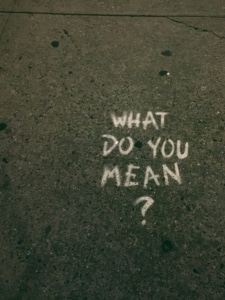
There is a sentence almost every one of us has said, usually with real feeling, usually while something in the room is going badly: I didn’t mean it that way. It is usually true. And it almost never helps.

The gap is built into us

This is something we have all experienced; it is standard human equipment. The actor–observer bias means I explain my own behavior by my circumstances — the pressure, the fatigue, the good intention I started with — while I explain yours by your character, even though I don’t know what is inside of you. (actor–observer bias). I am late because the meeting ran long. You are late because you are the kind of person who is late.
Layered on top of all of this is the illusion of transparency — we badly overestimate how clearly others can read what we are thinking (illusion of transparency). I know my short reply was a joke. I know my silence meant I was thinking, not disapproving. I know it so vividly that it feels broadcast. It is not broadcast. They received the words, or the tone, or the silence. They did not receive the intention behind it. They never do. Ever.

I want to say this part gently, Intention is not meaningless — it is the difference between a mistake and a cruelty. But intention is a fact about me, and impact is a fact about you. The error is offering a fact about myself as though it settled a question about someone else. Your foot still hurts.

The zinger I was proud of

I was co-leading a group of about twenty-five people with a friend. We were both sarcastic and both good at it — that was part of how we worked together. It had always been play.

She landed a zinger on me. I fired one right back, and I will be honest: I thought it was world class.

And she started to cry.

In that half second everything I had meant by it evaporated. It did not matter that it was a joke, or that she had gone first, or that this was how we always talked. What I intended never made it across the room. What landed was something else entirely, and I could see it on her face in front of twenty-five people.

So, I stopped the meeting and apologized to her out loud, in front of everyone who had just watched it happen. I have not done it since.

And I try very hard not to use sarcasm; you see sarcasm is a sharpened instrument. I had been telling myself I was using it well. I was just using it on people.

What repairs

Roy Lewicki and his colleagues at Ohio State tested the six components of an apology to see which ones truly land. The two most effective were acknowledgment of responsibility — this is my fault — and the offer of repair — here is what I will do about it. The least effective, in both studies, was the request for forgiveness (Ohio State, 2016).

That is worth sitting with, because the weakest element is the one most of us lean on hardest. “I’m so sorry. I really didn’t mean it. Are we okay?” Listen to the shape of what I just wrote, my feeling, my intention, and then a request that the person I hurt do something for me — reassure me, release me, restore me to being a good person. It is an apology organized around the comfort of the apologizer. What the injured person needs is simpler and harder: own it and fix it.

Restorative justice has been built on that shape for decades. Since I did Kairos prison ministry for decades, I know a little about this. Rather than asking what rule was broken and what the offender deserves, it asks: who was harmed, what do they need, and whose obligation is it to make it right — not one of which is a question about what anybody meant. And it is not soft. A 2025 meta-analysis finds restorative approaches produce modest but highly cost-effective reductions in reoffending, significantly higher satisfaction among those harmed, and greater accountability from those who caused it (Criminology & Criminal Justice). Centering impact is not merely kinder. It works better.

The repair that stayed with me

Years later I was on the other side of it. A man who I will call George W. came to me and apologized. A situation had gone badly because of choices George made, and those choices had landed on me.

What hurt was not only the outcome. It was that he had decided who I was — and decided wrong. George acted on a version of me that did not exist, and I had to live inside the consequences of a story about me that was not true.

When George apologized, he did not explain. He did not walk me through his reasoning or ask me to understand the pressure he had been under. He named what he had done, he named that it had hurt me, and he did not ask me to make him feel better about it.

It did not undo everything. We never got along well after that. But something in me softened that had been hard a long time. Being seen accurately at last, by the person who had gotten me wrong — that was the repair.

Intent Verses Impact Reflection Sheet

What love asks

In emotional intelligence terms this is a trainable skill, one that we in the west are so to acknowledge and it is not the same as being nice: the ability to hold what I meant and what landed at the same time, without collapsing either. Most of us can only hold the first, so the moment impact is raised we defend intention, and the conversation quietly becomes about whether I am a good person instead of what happened to you. The practice is small and genuinely hard. Do not explain yet. Ask — “tell me more about how that hit you” — and stay in it longer than is comfortable. Then own your part, with no but anywhere in the sentence, and ask what would help.

The contemplative tradition arrived here long before the research did. The first act of love, said Abba Poemen, is to leave the other person free — and part of what we must leave free is their account of their own experience. I do not get to tell you that what happened to you did not happen, simply because I would prefer to be the kind of person who did not cause it. That is why this is spiritual work and not a communication technique: centering impact means giving up the story in which I am the good guy, and that takes a true strength to survive being wrong.

I did not mean it that way. Almost none of us ever do. The question is what I do in the next thirty seconds, once I know.

Peace and every good.


About Jim & Lynette Vaive

Jim and Lynette Vaive are the co-founders of spirit of EQ and co-authors of The Mystical Seeker. They are Master Certified Coaches, certified Narrative Enneagram teachers, and Certified Spiritual Directors, and together they hold credentials in Spiritual Emotional Intelligence (SEQ) — a framework rooted in Lynette’s Doctor of Ministry research. Learn more at spiritofeq.com.

Sources

Ohio State University — the six elements of an effective apology (Lewicki et al., 2016): news.osu.edu

Actor–observer bias: EBSCO  ·  Illusion of transparency: overview

Meta-analysis of restorative justice outcomes (2025): Criminology & Criminal Justice

The Light That Holds Back Darkness 2

First Comes Justice: The Light That Holds Back the Darkness

This is one story I feel strongly about.

I will not soon forget the first time I walked through the heavy steel doors of a state prison with Kairos Prison Ministries. The Sally port has a clang when it shuts behind you that feels final, like the world I knew had been sealed off, and what lay ahead of me in the eyes of forty plus men whose lives most of society had quietly written off was unknown. And what I did not know when I went in is that you cannot get out of the prison until they let you out, period. And I was dead tired that day. I had convinced myself on the drive over that nothing I said would matter. Surely there were better people, more eloquent people, more useful people for this work. I almost turned around in the parking lot. I never told anyone that feeling until today.

But something made me go in. And in the back row sat a man I will call Marcus (not his name) He had not spoken a word the entire first morning, his arms crossed, his eyes anywhere but on us. No trust, none, by the afternoon, he had shifted. By the second day, he raised his hand, and no one made fun of the question. And on the third day, with tears in his eyes, he told me, “Nobody has visited me in fourteen years. Nobody. Until you.” I cried.

That is when I understood something I had read a hundred times but never felt in my bones. Justice is not a verdict handed down from a bench. Justice is a face in a doorway. Justice is the willingness to walk through the gate when every instinct says RUN the other direction. Justice is showing up, especially for the people the world has decided do not count.

Marcus did not need me to fix his life; in fact, he would have run the other way if I had tried. He needed someone to say, by their presence, that his life still mattered. That is the smallest unit of justice, and it is also the largest. Every policy, every program, every reform is built on that single brick. Just a quick note here for those of you maybe thinking this, No I do not think he needed to be let of prison because we from Kairos came to visit. Some statistics put it this way, 10% are innocent, 80% are doing their time for things they have done, and 10% should never see the light of day.

A Little History for Background

The word justice is older than any nation that claims it. In ancient Hebrew, the concept came in two intertwined words. Mishpat described justice in its sharp, courtroom sense, the kind that punishes wrongdoing and protects the innocent. Tzedakah described justice as right relationship, the kind that restores what has been broken between people. The ancients understood that you cannot have one without the other. Punishment without restoration is cruelty. Restoration without accountability is sentimentality. We learned this in Kairos.

Greek philosophers gave us the idea of justice as a virtue, the fair distribution of what is owed. The Romans codified it into law. The framers of Magna Carta in 1215 forced a king to admit that even he stood under it. Centuries later, abolitionists like Frederick Douglass and Harriet Tubman risked their lives to insist that justice could not coexist with chains. Suffragists marched for it. Workers organized for it. Dr. King wrote about it from a Birmingham jail, reminding a comfortable nation that injustice anywhere is a threat to justice everywhere.

Every generation has had to learn the same lesson the hard way. Justice is not inherited. It is not automatic. It is not the natural state of human affairs. We live with it and it is built, defended, and rebuilt by ordinary people who decide that the world as it is cannot be the world as it should be. Again, Kairos helped me here.

Justice Today, Justice Here

We live, right now, in a moment that tests whether we have learned anything at all.

Roughly two million of our neighbors are behind bars in this country, more than in any other nation on earth. And truly if you added up the next few largest countries together, we still have more in our prisons then they in theirs. Tens of millions go to bed hungry in a land of plenty. Healthcare remains a privilege rather than a right for far too many families. When we had our mission, Everyday People Ministries, we gave out 30 tons of food a month. I saw veterans sleep on sidewalks within sight of the monuments built to honor them. Children grow up in zip codes that determine, with frightening accuracy, what their futures will hold. Like the one I grew up in, in Detroit.

These are not natural disasters. They are choices. Our choices. And choices can be unmade.

The good news is that justice still wears a human face. It looks like the nurse who stays an extra hour with the patient who has no visitors. It looks like the teacher who buys school supplies out of her own paycheck. It looks like the volunteer who delivers a meal, the lawyer who takes a case without payment, the neighbor who pays attention. It looks like Lynette and me sitting at tables in countries far from home, learning that loneliness and hunger speak every language. It looks like a Kairos weekend, where men who have done terrible things and men who have had terrible things done to them sit in the same circle and discover that grace is bigger than any of us deserve.

You do not have to fix the whole system to be part of the answer. You only have to refuse the lie that this is somebody else’s problem. Volunteer for one organization. Mentor one young person. Advocate for one policy. Write one letter. Sit with one person in the hospital. The work is never finished, but the work is never wasted either.

The darkness is loud right now. It tells us we are too small to matter, too tired to try, too divided to agree on anything. It wants us to scroll past, to look away, to whisper “not my problem.” Every time we refuse that whisper, we hold the line. Every time we show up, we push the darkness back by an inch. Inches add up.

Linking Arms

I think often about Marcus, and about the hundreds of others I have met inside those walls. They taught me that I nearly missed the gift by almost “not walking through the gate”. How many gates do the rest of us almost not walk through? How many people are waiting on the other side, not for our money or our expertise or our opinions, but simply for our presence?

We began with a question. What is justice in a world teetering on the edge of chaos? It is fairness, yes. It is accountability, yes. It is law, yes. But underneath all of that, justice is love with its sleeves rolled up. All the way up. It is compassion that has stopped talking and started walking. It is the moment when the comfortable decide that the comfort of the comfortable is not the point.

So here we are, you and I. The need has not gotten smaller since you started reading. Somewhere a child is going to bed afraid tonight. Somewhere a sick person is waiting for someone who will not come. Somewhere a person behind bars is wondering if anyone remembers their name. And somewhere, a gate is waiting for someone to walk through it.

Let us be the ones who walk through. Let us be the ones who link arms across our differences and hold back the darkness together. Let us be known not by what we accumulated or what we argued about, but by who we visited, who we lifted, and who we refused to forget. Let us be the fillers of the breach, the lighters of small candles, the keepers of one another.

The world is not going to save itself. Neither is the person across the street, the person across the country, or the person across the wall. They are waiting on us, and we are waiting on each other, and somewhere in the middle of all that waiting, justice is asking whether we will finally say yes.

First comes justice. Everything else, everything good, everything lasting, everything worth handing down, follows.

Peace and every good.

Sources

  1. Hugh Whelchel, “Understanding Tzedakah & Mishpat (Righteousness & Justice),” Institute for Faith, Work & Economics. https://tifwe.org/tzedakah-mishpat-righteousness-justice/ — for the paired meanings of mishpat(rectifying/retributive justice) and tzedakah (right relationship), and the way the two words function together in the Hebrew Scriptures.
  2. Martin Luther King Jr., Letter from Birmingham Jail, April 16, 1963. Full text hosted by the University of Pennsylvania African Studies Center: https://www.africa.upenn.edu/Articles_Gen/Letter_Birmingham.html — source of the line “Injustice anywhere is a threat to justice everywhere.”