Posts

Today Is Hard. Tomorrow Is Worse. Why I Kept Going

The Day After Tomorrow

There is a photograph I keep in my mind from the early days of Varment Guard — not an actual photograph, just the image burned in from living it. It’s a door. A plain commercial door, nothing fancy about it, with a small wooden frame above it. And inside that frame, four words someone had taken the time to put there deliberately: Failure was not an option.

Mike M. and I had been meeting for eight months before we ever turned a key in a lock. Eight months of yellow legal pads and bad coffee and spreadsheets that kept being wrong and late-night conversations that neither of us was willing to end because ending felt like quitting. We were two people trying to think of everything — preparing the way you prepare for something that matters — and when we finally opened those doors, we discovered we hadn’t thought of even half of what was coming for us.

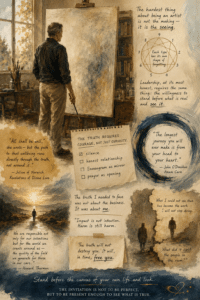
THE FOUNDERS HONEST LOOK WORKBOOK

That’s when Jack Ma’s words would have hit differently. “Today is hard and tomorrow will be worse, but the day after tomorrow will be sunshine.” — Jack Ma, Founder, Alibaba Group.

Hold that sentence for a moment. It isn’t a motivational poster. It’s a map.

WHAT’S BEHIND THE WORDS

Jack Ma didn’t build Alibaba from a position of ease or advantage. He was rejected by Harvard ten times. When KFC came to his city and hired 23 of 24 applicants, he was the one they passed on. China’s first public internet company turned him away. When he finally pitched the idea of an online marketplace for Chinese small businesses in 1999, he did it in his apartment, to a handful of friends who weren’t completely sure they believed him. He knew today is hard the way you only know something you’ve actually lived.

The history of business is, at its marrow, a history of stubborn people who refused to let a bad today become a permanent condition. Henry Ford failed twice before building the company that changed manufacturing forever. Milton Hershey lost everything in New York and again in Chicago before returning home to Pennsylvania with nothing but a process he still believed in. Walt Disney was told he lacked imagination by the very newspaper that had hired him. The pattern is so consistent it might seem like a cliché — except for the people living it. For them, it never feels like a pattern. It feels personal. It feels like an exception. It feels like it might be permanent.

What the ones who make it through seem to understand — sometimes while it’s happening, sometimes only years later — is that the difficulty is not a detour from the path. It is the path. The hard is not a sign you’ve chosen wrong. More often, it’s a sign you’ve chosen something real.

WHAT WE KNEW AND WHAT WE DIDN’T

When Mike and I opened Varment Guard, we believed we were ready for the hard. What we hadn’t prepared for was the texture of it. Not the spreadsheet problems — those were almost welcome, because spreadsheets have answers. It was everything else. The family dinners missed, and then just stopped being expected. The friendships that didn’t end loudly — they just went quiet because you weren’t available and eventually people found their rhythm without you. The money questions that didn’t arrive as dramatic crises but as a low, grinding background hum that followed you everywhere, even into sleep.

Nobody writes that part down. Not honestly. Because the real story of building something is longer and more irregular than any narrative shape can hold, and no one wants to tell you how much it costs before you’ve decided to pay it — because if they did, maybe fewer people would start.

So why did we do it?

Why does anyone?

The easy answers are all true: we believed in the idea, we wanted to build something that was ours, we wanted to see if we could. But the real answer lives underneath all of those. It has to do with identity. With the recognition that there was a version of life available — something that matched what was inside you — and that settling for something smaller would be a slow erosion you weren’t willing to live with. We did it because the alternative was becoming someone we didn’t recognize. And that felt worse than everything that came with the doing.

WHAT WE GAINED AND WHAT WE LOST

What did we gain? That part comes easier now than it did in the middle of it. We built something real — a company with a culture, a reputation, a set of values that held through hard seasons. Over the years, Varment Guard employed hundreds of people. Families were fed. Skills were developed. Careers were built that might not have existed otherwise. There is no dollar figure for any of that. And there is something else, quieter but just as real: you find out what you are actually made of. You discover your own capacity. You learn what you can carry. You don’t find that out any other way. No shortcut delivers it. Only the going does.

What did we lose? That one is easier in the dark than in the daylight. Sleep, certainly — and the kind of easy rest that comes when you’re not carrying something large. Margin, regularly. Time with people we loved, which you cannot really reclaim even if the relationships survived. Parts of yourself that were softer and more patient that got traded, over time, for something harder and faster and more efficient. I won’t call all of it loss, exactly. But I notice the absence of some of it. I think that’s worth naming honestly.

HOW TO KEEP GOING WHEN YOU FEEL ALONE

DAY AFTER TOMORROW WORKBOOK

Here is the part no one tells you about keeping going when you feel like you’re carrying it entirely by yourself: you are. You actually are. And that’s not a crisis — that’s the position.

Every person who has built anything real has sat in a room where no one else fully grasped what they were holding. Not the advisors. Not the investors. Not even the partners — because it’s your specific weight, shaped to your specific frame, and no one else quite feels it the same way. You can resent that solitude or you can learn to read it as information.

What it’s telling you is simple: the decision to continue is yours. Which means it cannot be taken from you. The market can’t take it. A bad quarter can’t take it. A difficult competitor can’t take it. A hard year can’t take it. Only you can put it down.

Jack Ma is telling you something real when he promises sunshine on the third day. But he’s also telling you something harder: you have to make it through the first two. Not around them. Not above them. Through them.

The frame above that door at Varment Guard wasn’t decoration. It was a daily instruction — renewed every morning when someone walked under it. Failure is not an option doesn’t mean failure is impossible. It means you’ve decided in advance that however bad today gets, and however much worse tomorrow is, you are not stopping here. The sunshine isn’t guaranteed. But it’s only available to the ones who are still there when it arrives.

Mike and I didn’t think of half the things that would come for us. But we had made a decision. And on the hardest days, honestly, the decision was the only thing.

Make the decision. Keep making it. The day after tomorrow is real.

Peace and every good.

EQ & SEQ: Leading Teams Through AI and Meaning Now

When you hear “soft skills do you automatically think “soft results”? Too many leaders still file emotional intelligence (EQ) and spiritual emotional intelligence (SEQ) under the “nice-to-have” column—pleasant, but peripheral. That mindset is a costly mistake. In a world driven by speed, complexity, and automation, EQ and SEQ are not optional extras; they are strategic differentiators. Here’s a clear, evidence-based case for why skeptical leaders should care, two practical insights for how these capacities produce measurable breakthroughs, and why investing in them is essential in the age of AI.

What I am talking about:

  • EQ (Emotional Intelligence) is the set of skills that helps people perceive, understand, manage, and use emotions—both their own and others’—to navigate social interactions, make decisions, and solve problems.
  • SEQ (Spiritual Emotional Intelligence) builds on EQ by connecting emotional awareness with a deeper sense of meaning, purpose, and values. SEQ helps people align personal and organizational purpose, sustain ethical behavior under pressure, and remain resilient amid uncertainty.

Why leaders should stop treating EQ/SEQ as “soft”

  1. Outcomes, not intentions. Leaders who dismiss EQ/SEQ often focus only on outputs—task completion, process adherence, KPIs. But outputs are produced by humans. Emotions and meaning shape motivation, creativity, collaboration, and change adoption. Those drivers directly affect productivity, quality, turnover, and customer experience.
  2. Hard metrics respond. Multiple studies connect higher EQ with better performance: (See links for study’s below) improved team effectiveness, fewer conflicts, faster decision-making, and better customer satisfaction. SEQ adds another layer—lower burnout, higher retention, and stronger alignment with organizational mission. These translate into reduced recruitment costs, higher lifetime customer value, and faster time-to-market.
  3. Risk mitigation. Poor emotional dynamics cause legal risks, reputational damage, and project failure. EQ and SEQ reduce interpersonal friction, ethical lapses, and the silent disengagement that sinks initiatives.

Two insights that lead to breakthroughs

Insight 1 — Emotional fluency accelerates execution and innovation Employees with higher EQ are better at reading the emotional state of teams and stakeholders, regulating stress under deadlines, and reframing setbacks as learning. This fluency creates faster cleaner communication and fewer stalled projects.

Example: Consider two product teams facing the same technical roadblock. Team A lacks emotional fluency: blame circulates, meetings get longer, decisions are delayed, and morale drops. Team B has high EQ: they quickly acknowledge stress, reframe the problem as “what can we try next,” assign clear roles, and agree on short experiments. Team B iterates faster and ships a solution sooner.

Why this is a breakthrough: Speed and quality of execution increase (at the same time). That accelerates business outcomes—shorter time to revenue, better customer feedback cycles, and lower operational drag.

How to operationalize it:

  • Train leaders and teams in core EQ skills: self-awareness, self-regulation, social awareness, and relationship management.
  • Use “emotion check-ins” at the start of meetings to surface unspoken dynamics.
  • Create rapid experiment protocols so teams can fail fast and learn faster without emotional fallout.

Insight 2 — Purpose-oriented leadership (SEQ) reduces attrition and amplifies discretionary effort SEQ links daily work to deeper meaning. People who feel their work matters—aligned to values and a collective purpose—are more engaged, more creative, and more likely to go beyond the job description when needed. Engagement is not “soft”; it’s the multiplier for performance.

Example: Two customer service centers have identical scripts and tools. The center cultivating SEQ frames their mission as “restoring dignity” rather than merely “managing tickets.” Agents are encouraged to find small, meaningful interventions. The result: higher CSAT scores, fewer escalations, and 20–30% lower turnover over a year.

Why this is a breakthrough: Lower turnover saves substantial hiring and ramp up costs; higher discretionary effort improves customer lifetime value and brand advocacy.

How to operationalize it:

  • Embed purpose into onboarding, performance conversations, and recognition systems.
  • Encourage leaders to connect daily tasks to higher-level impact—use stories and metrics.
  • Support reflective practices (brief journal prompts or team reflections) that help employees surface purpose in their work.

Why EQ and SEQ are essential in the age of AI

AI is astonishing at pattern-matching, prediction, and scale. It will automate many cognitive processes. But three key human domains remain distinct:

  1. Emotional nuance. AI can detect sentiment signals, but truly understanding context, relational history, unspoken tension, and moral complexity is still human territory. Complex negotiations, delicate feedback, and trust-building rely on subtle emotional intelligence.
  2. Meaning and ethical judgment. SEQ involves values-based reasoning and purpose alignment. While AI can optimize for specified objectives, it does not inherently hold or steward organizational values. Leaders with strong SEQ guide ethically aligned choices and ensure long-term stewardship rather than short-term optimization.
  3. Motivation and culture. AI can recommend actions, but it cannot inspire people to care. Cultural cohesion, discretionary effort, and resilience in crises depend on leaders who can connect work to meaning, model values, and emotionally sustain teams.

Put simply: as AI takes on more “what” tasks, human beings must double down on the “who” and “why.” That’s EQ and SEQ.

Practical steps for leaders who are skeptical—but results-focused

  1. Start with a business problem, not a course. Choose a measurable KPI—time-to-market, turnover, customer satisfaction—and pilot an EQ/SEQ intervention tied to that metric. If you can’t link training to a business outcome, don’t start.
  2. Measure what matters. Use both quantitative KPIs (attrition, NPS, cycle time) and short, frequent pulse surveys to capture psychological safety and purpose alignment.
  3. Build EQ/SEQ into leadership expectations. Make emotional and purpose-driven leadership a criterion in performance reviews and promotion decisions.
  4. Invest in coaching and practice, not just seminars. Skills like self-regulation and empathy improve with feedback and coached practice—real 1:1 coaching, role plays, and on-the-job reflection are more effective than a one-off workshop.
  5. Use AI as an amplifier, not a replacement. Leverage AI tools for data signals (e.g., sentiment analytics, workload patterns), then apply human judgment to interpret and act on those signals with EQ and SEQ.

A quick ROI sketch

  • Reducing voluntary turnover by 10% in a 1,000-person org with average hiring/ramp up cost of $20k would save millions.
  • Improving customer satisfaction by even a few percentage points increases retention and lifetime value, multiplying revenue.
  • Shortening project cycle times reduces time-to-market and increases competitive advantage.

All of these outcomes correlate strongly with higher EQ and SEQ in leadership and teams. That is measurable impact, not fuzzy feel-good talk.

Final note to skeptical leaders If you care about getting the job done—and getting it done sustainably, ethically, and repeatedly—EQ and SEQ are not optional. They sharpen execution, safeguard culture, reduce costs of failure, and unlock the kind of discretionary effort that fuels innovation. In an era where AI handles more tasks, the differentiating advantage lies in how humans relate, interpret meaning, and guide values-driven decisions. Those are learnable, coachable skills. They deserve to be treated with the same rigor and investment you give to any other capability that drives your business forward.

If you want, I can help you design a pilot program tied to a specific KPI—select a target metric and I’ll outline a six-week intervention with measurement, training components, and expected impact. Jim@spiritofeq.com Which outcome would you prioritize: faster execution, lower attrition, or higher customer satisfaction?

  1. O’Boyle, E. H., Humphrey, R. H., Pollack, J. M., Hawver, T., & Story, P. A. (2011). The relation between emotional intelligence and job performance: A meta-analysis. Journal of Organizational Behavior, 32(5), 788–818.
  • Link (publisher/abstract): https://onlinelibrary.wiley.com/doi/10.1002/job.714
  • Google Scholar: https://scholar.google.com/scholar?q=O’Boyle+Humphrey+Pollack+Hawver+Story+2011+emotional+intelligence+meta-analysis
  1. Joseph, D. L., & Newman, D. A. (2010). Emotional intelligence: An integrative meta-analysis and cascading model. Journal of Applied Psychology, 95(1), 54–78.
  • Link (publisher/abstract): https://psycnet.apa.org/record/2009-21650-001
  • Google Scholar: https://scholar.google.com/scholar?q=Joseph+Newman+2010+emotional+intelligence+meta-analysis
  1. Côté, S., & Miners, C. T. H. (2006). Emotional intelligence, cognitive intelligence, and job performance. Administrative Science Quarterly, 51(1), 1–28.
  • Link (publisher/abstract): https://journals.sagepub.com/doi/10.2189/asqu.51.1.1
  • Google Scholar: https://scholar.google.com/scholar?q=Cot%C3%A9+Miners+2006+Emotional+intelligence+cognitive+intelligence+job+performance
  1. Wong, C.-S., & Law, K. S. (2002). The Wong and Law Emotional Intelligence Scale (WLEIS): Scale development and validation. Personnel Psychology, 55(4), 881– . (Also includes findings linking WLEIS scores to job outcomes.)
  • Link (publisher/abstract): https://onlinelibrary.wiley.com/doi/10.1111/j.1744-6570.2002.tb00136.x
  • Google Scholar: https://scholar.google.com/scholar?q=Wong+Law+2002+WLEIS

When will the least go first?

If I can be really, painfully honest for a minute, I’ve always been the type of person who believes in being first. As an “8” on the Enneagram with a 1:1 subtype, I have a personality that can be described as “large or go home.” This trait has shaped my life in many ways, often pushing me to the front of the line—whether it was for food, concert tickets, or training sessions. I was the one who would elbow my way through the crowd, determined to secure my spot at the front. But as I reflect on my past, I realize that this behavior was not just a quirk of my personality; it reflected something deeper within me.

Let me take you back to a summer concert years ago to see the MC5 out of Detroit. The excitement was in the air as fans gathered outside the venue, eagerly awaiting the gates to open. I had been looking forward to this concert for months, and I was determined to be at the front of the line. As I arrived, I noticed a group of people who had been waiting for hours, some even camping out overnight. But that didn’t matter to me. I pushed my way to the front, ignoring the annoyed glances from those who had been patiently waiting. I felt a rush as I secured my spot, but as the concert began, I couldn’t shake the feeling that something was off. I knew in my heart that I had messed up.

As the music played and the crowd jammed, I looked around and saw the faces of those who had been waiting just as long, if not longer, than I had. I realized that my need to be first had come at the expense of others’ experiences. I had prioritized my own desire for front-row access over the feelings of those around me. It was a moment of clarity that left me feeling embarrassed and ashamed. Why did I feel the need to be first? Where did this belief come from?

This question rolled around in my mind long after the concert ended. I began to reflect on my life and the patterns that had emerged. Growing up, I was often praised for my assertiveness and determination. I was the one who took charge in group projects, the one who volunteered to lead discussions, and the one who always seemed to be at the forefront of any situation. But as I delved deeper, I realized that this drive to be first was rooted in a fear of being overlooked, discounted or left behind. It was as if I had internalized the belief that my worth was tied to my ability to be at the front of the line.

I decided that I needed to begin a  quest of self-discovery, I started on a mission to find out more, I needed to understand why I acted this way, so I sought out stories from others who had experienced similar feelings. I spoke with a friend who had once been a competitive athlete. She recounted the pressure she felt to always be the best, to always be first. “I remember a race where I pushed myself so hard that I didn’t even notice the girl who fell behind me,” she shared. “I crossed the finish line, but I felt hollow. I had won, but at what cost?” Her story resonated with me, highlighting the emptiness that can accompany a relentless pursuit of being first. And yes, I know, being an athlete means being the best, first and fastest. But does that entitle us to perform like an athlete off the field in everyday life at the expense of others?

Another friend shared her experience of being a manager in a corporate setting. “I used to think that being the first to speak up in meetings made me a leader,” she said. “But I realized that it often stifled others’ voices. I was so focused on being heard that I didn’t create space for my team to contribute.” Her journey of learning to step back and allow others to shine was a powerful reminder that leadership is not about being at the front but about uplifting those around us.

As I continued to explore these stories, it dawned on me that the need to be first is often a reflection of our insecurities. It’s easy to equate being first with success, but true fulfillment comes from connection and empathy. (refer to Jim Collins book “Good to Great” and what makes a level 5 leader) It made sense after deep reflection to practice being more mindful in situations where I felt the urge to rush to the front. I began to ask myself, “What would it look like to let someone else go first?”

One day, I found myself in line at a coffee shop, and I noticed a young mother with a toddler in tow. The child was fidgeting and clearly restless, and I felt the familiar urge to push ahead. But instead of acting on that impulse, I took a deep breath and let the mother and child go ahead of me. As they moved forward, I saw the relief on her face, and in that moment, I felt a sense of understanding that I had never experienced when I was at the front. It was a small act, but it shifted my perspective. I realized that being at the front of the line didn’t define my worth; it was the kindness I showed to others that truly mattered.

This journey of self-discovery has taught me that there is beauty in allowing others to take the lead. It’s about recognizing that everyone has their own story, their own struggles, and their own desires. When we prioritize being first, we risk missing out on the richness of human connection. I’ve learned that sometimes, the least among us deserve to be at the front of the line, not just because they’ve waited the longest, but because they have something valuable to share.

As I continue to navigate this path, I remind myself that it’s okay to step back and let others shine. I’ve found that true fulfillment comes from lifting others up rather than pushing them down. The next time I find myself in a situation where I feel the urge to be first, I’ll pause and ask myself, “How can I create space for someone else?”

In a world that often celebrates the loudest voices and the fastest runners, let’s not forget the importance of compassion and empathy. Let’s strive to be the kind of people who recognize that sometimes, and not always, the least among us deserve to be at the front of the line. After all, it’s not about being first; it’s about being present, being kind, and being human.

 The Power of Posture: Transforming the World Through Spiritual Alignment

In this world that often feels fragmented and disconnected, the quest for harmony and understanding becomes even more pressing. We search for ways to bridge divides, foster empathy, and cultivate a sense of belonging. What if the key to this transformation lies not in grand gestures or sweeping reforms, but in something as simple and personal as our posture?

I would like to suggest that when we think of posture, we typically envision the physical—how we stand, sit, or move. Yet, posture is so much more than a physical stance; it is a way of being, a manner in which we present ourselves to the world. It encompasses wonder, empathy, openness, gratitude, compassion, hope, and empowerment. You can consciously aligin your physical and spiritual postures, you can create ripples of change that extend far beyond yourself.

The historical roots of how the concept of spirituality has evolved over centuries, originating from the Latin word *spiritualitas* in the 5th century. Initially, it referred to spiritual conduct and devoutness, but over time, it has come to signify an inner, personal spiritual life. This evolution mirrors the way our understanding of posture has expanded beyond the physical to include the spiritual and emotional dimensions.

In the early days, spirituality was closely tied to physical expressions—kneeling in humility, raising hands in praise, or sitting in meditation. These postures were not mere rituals; they were profound expressions of one’s inner state and alignment with a higher power. Today, as we seek to reconnect with the essence of spirituality, we can draw inspiration from these ancient practices, recognizing the deep connection between our physical and spiritual selves.


Our physical posture is our reflection to the world and often serves as a nonverbal communication of our internal spiritual/emotional  states. Consider the act of kneeling, which conveys humility and reverence, or the lifting of hands, symbolizing joy and praise. These gestures are more than symbolic; they are powerful expressions of our spiritual alignment to ourselves and world around us.

When we sit with closed-off postures, such as folded arms, we may be signalling a lack of engagement or a guarded heart. Conversely, an open and upright posture can reflect a readiness to embrace new experiences and connect with others. By becoming aware of our physical postures, we can cultivate a deeper understanding of our spiritual attitudes and intentions.


The relationship between posture and spirituality is bidirectional. Just as our spiritual mindset can influence our physical posture, so too can our physical stance impact our spiritual experiences. This mind-body connection is a powerful tool for enhancing our spiritual practices.

Remember that what some people call “soul” and others call “energy” is the essence that flows through us. our “isness” if you will. what makes us, us. without it we are not here. And that essence is what we might be calling spiritual or our true nature. More on this concept in later blogs.

Taking an upright posture, for example, allows for better breathing and energy flow, supporting spiritual focus and clarity. Ritualistic body postures, such as bowing or prostrating, can facilitate a deeper spiritual connection, anchoring our beliefs and practices in the body. By consciously adopting postures that align with our spiritual intentions, we can create a more holistic and embodied spiritual/emotional experience.

Our physical postures also have profound psychological effects, influencing our emotions and mental states during spiritual practice. Downcast or constrictive postures may evoke feelings of humility and introspection, while upright or expansive postures can inspire confidence, praise, and a sense of empowerment.

By experimenting with different postures, we can explore the psychological and emotional dimensions of our spirituality and emotions. This exploration can lead to greater self-awareness and a deeper connection with our inner selves, our isness, fostering a sense of peace and fulfillment.

Empowerment is a key aspect of both posture and spirituality. When we stand tall and open, we project confidence and strength, embodying our spiritual identity. This empowerment extends beyond the individual, influencing our interactions with others and our ability to effect positive change in the world.

By embracing postures that reflect empowerment, we can inspire others to do the same. Our physical stance becomes a beacon of hope and possibility, encouraging those around us to stand tall in their own spiritual journeys. In this way, posture becomes a powerful tool for creating a more harmonious and compassionate world.

Gratitude and compassion are integral to both posture and spirituality. When we adopt a posture of gratitude, we open ourselves to the abundance of life, recognizing the beauty and blessings that surround us. This openness fosters a sense of connection and belonging, nurturing our relationships with others and the world.

Similarly, a posture of compassion invites us to extend kindness and understanding to ourselves and others. By embodying compassion in our physical stance, we create a space for healing and reconciliation, bridging divides and fostering unity.

In a world that often feels divided and disconnected, the power of posture offers a simple yet profound path to transformation. By aligning our physical and spiritual postures, we can cultivate wonder, empathy, openness, gratitude, compassion, hope, and empowerment. These qualities become the foundation for a more harmonious and compassionate world.

As we embark on this journey of alignment, let us remember that change begins with us. By consciously choosing our postures, we can create ripples of change that extend far beyond ourselves, inspiring others to join us in the quest for a better world. Together, we can stand tall, embodying the values and virtues that will guide us toward a brighter future.