Posts

The Running Wave: A Celtic Journey Into Deep Peace

Deep Peace: A Journey Home to Stillness

There is a moment, if you have ever stood at the edge of the ocean just before dawn, when the world holds its breath. The darkness is not yet gone. The light has not yet fully arrived. And in that thin, trembling space between the two, something ancient stirs. Something that cannot be named — only felt. A peace so deep it seems to rise from the earth itself, from the turning of the stars, from the breath of God moving over the waters.

This is where the story begins. Not on a stage or in a sanctuary, but on a shoreline, in the in-between.

The Ancient Roots of a Blessing

More than fifteen hundred years ago, on the wind-scraped islands off the western coast of Scotland and Ireland, a spiritual movement was quietly taking root. Celtic Christianity, as it would later be called, was unlike anything that had come before it. Where other traditions placed God at a remote and sovereign distance, the Celtic monks and hermits of the early medieval period felt the divine woven into everything — into the moss on stone, into the cry of the curlew, into the rhythm of the tide coming in and going out.

The monks of Iona, that small island off the coast of Mull where Saint Columba landed from Ireland in 563 AD, believed the world was thick with God. They called certain places thin places — locations where the veil between the human and the holy seemed almost transparent. Iona itself was such a place. Pilgrims have been walking its shores for over fourteen centuries, drawn by something they could not always explain.

It was from this tradition — earthy, luminous, deeply attentive to the natural world — that the great Celtic blessings emerged. They were not formal liturgies crafted in marble halls. They were prayers spoken over fishing boats, over sleeping children, over the dying. They were words meant to be carried in the body, not just the mind.

The blessing we now call Deep Peace grew from this soil.

A Pilgrim Sets Out

Let me tell you about a woman — call her by any name, because she is all of us at some point. She had spent years doing everything right. She had built her life with great care: the career, the relationships, the responsibilities. She was capable and admired and deeply, quietly exhausted.

One autumn she found herself standing in a field somewhere in the Scottish Highlands, watching the last light drain from the sky. She had not planned to be there. She had simply driven north when the noise inside her became too loud to bear. She had been looking, she realized, for a long time. Not for answers. Not for success or approval or resolution. She had been looking for peace. Real peace. The kind that doesn’t depend on circumstances being perfect.

That evening she stumbled upon a small stone church. Inside, a handful of people were gathered for an evening service. She sat in the back, unsure why she stayed. And then the minister began to speak words she had never heard before, but somehow already knew.

Deep peace of the running wave to you. Deep peace of the flowing air to you.

She felt something loosen in her chest.

Deep peace of the quiet earth to you. Deep peace of the shining stars to you.

Her eyes filled with tears, and she did not try to stop them.

Deep peace of the gentle night to you. Moon and stars pour their healing light on you.

What Peace Actually Is

We misunderstand peace, most of us. We think of it as the absence of trouble — as a kind of padded silence, a pause in the storm. But the peace described in this ancient Celtic blessing is something altogether different. It is not passive. It is alive.

Look at the images the blessing chooses: a running wave. Flowing air. The shining stars. These are not still images. They are images of constant, purposeful movement. The wave does not stop being peaceful because it is running. The air does not lose its gentleness because it is flowing. Peace, the blessing tells us, is not the absence of motion. It is motion in harmony with its own deepest nature.

The Celtic tradition understood this. To be at peace was not to be removed from the world, floating above its difficulties in some detached serenity. It was to be fully, rooted-ly present within it — moving like water moves, purposefully, without violence against itself.

And then the blessing turns. Having drawn us through the natural world — the wave, the wind, the earth, the stars, the night — it arrives at its center:

Deep peace of Christ, of Christ, of Christ, the light of the world to you.

For the Celtic Christians, this was not a sudden turn away from nature. It was the completion of what the natural world had been pointing to all along. Every wave, every breath of wind, every star burning in the dark — they were all, in some way, expressions of the same light. The same source. The same love.

Christ was not separate from the running wave. Christ was the deep peace that the running wave carried.

Coming Home

The woman in the stone church sat for a long time after the service ended. The minister left. The candles burned down. And she sat in the dark and felt, for the first time in years, that she was not lost.

She had not solved anything. Her circumstances had not changed. The weight of her life was still her life. But something had shifted in the way she was holding it. She had been gripping so tightly, white-knuckled, afraid to let go even for a moment. Now, just briefly, she had opened her hands.

Peace does not arrive like a conquest. It arrives like dawn — gradually, gently, until you realize the darkness has been replaced not by force but by light.

This is the invitation the old blessing has always carried. Not a command to feel peaceful, as if peace were a performance. But a pronouncement. A declaration spoken over you, like water poured on a forehead, like a hand placed gently on a bowed head.

Deep peace to you.

It is being given. You do not have to earn it or construct it or protect it. You only have to receive it.

And so the journey comes full circle — back to the shoreline, back to the edge where darkness and light meet and hold each other without fear. The wave still runs. The air still flows. The stars still burn their quiet fire in the deep.

And somewhere, in a stone church on a windswept island, or in a field at dusk, or in the middle of an ordinary Tuesday when the world is too loud and you are too tired — the ancient words are still being spoken.

Deep peace of the running wave to you. Deep peace of the flowing air to you. Deep peace of the quiet earth to you. Deep peace of the shining stars to you. Deep peace of the gentle night to you. Moon and stars pour their healing light on you. Deep peace of Christ, of Christ, of Christ, the light of the world to you. Deep peace of Christ to you.

May you receive it. All of it. Down to your bones.

Peace and ever good.

“The Gap Between Good Intentions and Real Justice”

Dr. King, “Sincere Ignorance,” and the Work of Becoming Intelligent

There’s a moment I keep returning to—quiet, ordinary, and surprisingly revealing. A conversation starts with goodwill. People want fairness. They want safety. They want to be decent. Then the same pattern appears facts arrive without their context, a few details get trimmed, and the outcome starts to feel inevitable. What stays with me afterward isn’t only the disagreement. It’s the question: Who is willing to look closer?

Growing up in Detroit in the ’60s, I learned early that social justice isn’t abstract—it’s something you watch unfold in real time. July 1967 lives in me like a knot that never fully unties. I was playing ball at Palmer Park when I looked east and saw smoke rising from the direction of my house. My body understood something was wrong before my mind could name it. I ran home through smoke and fire, searching for friends and neighbors—and finding some of them too late.

The unrest of not looking closer had finally exploded in riot.

I also lived next door to neighbors who looked different than me but carried the same human needs: fear when things worsened, hope when someone promised change, love for family, and a dignity they never asked anyone to grant—only to recognize.

That’s why Dr. King’s words land so gently and so powerfully—not as condemnation, but as an invitation to wake up.

“Nothing in the world is more dangerous than sincere ignorance and conscientious stupidity. We have a responsibility to be intelligent.”

Dr. King wasn’t only warning about cruelty. He was naming something subtler: sincerity that feels honest, and conscience that grows numb—not because people lack intelligence, but because they avoid the work required to use it. This isn’t merely about knowing. It’s about becoming the kind of person who refuses to let comfort masquerade as truth—even when the truth costs you something.

An Invitation into Three Kinds of Becoming

If we approach Dr. King with humility, his warning opens into an invitation:

  1. Becoming the kind of person who can learn without self-protection.
  2. Becoming the kind of person who can keep loving while seeking clarity.
  3. Becoming the kind of person who treats truth as a responsibility—not something to be avoided.

So, let’s take Dr. King’s phrase “sincere ignorance” seriously, not as a label to throw at others, but as a mirror—one that helps us notice where we may be missing something, and where we can grow.

Sincere Ignorance: When Not Knowing Feels Like Innocence

Sincere ignorance can happen even with the best intentions. It often begins quietly—with being handed only a portion of the story. We learn in fragments: family traditions, school lessons, community conversations, headlines. When that information is offered as complete, it can feel natural to accept it as reality. Over time, a partial account can solidify into a belief system—not because someone has thought deeply, but because they were never given a reason to question it.

“Ignorance” here doesn’t mean wrongdoing. It often means you simply didn’t have access to the full record—you weren’t trained to doubt yourself in healthy ways, and you weren’t offered the better questions.

And yet—here is the invitation—staying in that ignorance can still carry harm, even without intent.

Sincere ignorance disguises itself as innocence. Confirmation bias works quietly: we notice what aligns with our assumptions and overlook what doesn’t. We confuse “no doubt” with “truth.” In Detroit, I remember how hard it was to make meaning fast enough—how emotions demanded answers, but language didn’t arrive in time. I carried confusion that never became clarity. Dr. King’s phrase invites us to notice that gap: between what we feel, what we assume, and what we know.

Here’s the layer that makes this personal rather than merely intellectual: sometimes sincere ignorance causes harm through kindness. You respond with genuine empathy to someone who needs help—but the facts you’re relying on are trimmed. You’re responding to a portrayal rather than to the full context. Your compassion, guided by incomplete knowledge, may strengthen the very harm you hoped to prevent.

The invitation is not to shame people for what they didn’t know. It’s to learn how to stay compassionate without becoming careless. Becoming intelligent, in this sense, is how we protect love from becoming blind.

Conscientious Stupidity: When We Could Know and Choose Not To

Dr. King’s second phrase carries more weight, because it points to choice. Learning is possible. Clarity is available. Evidence exists. But discomfort protects comfort.

In daily life, this can look like postponing that never ends—asking for proof indefinitely while the pattern stays visible; insisting everything is too complicated until responsibility disappears; debating endlessly while inaction becomes normal.

Conscientious stupidity shifts the emphasis from not knowing to defending not knowing. It can look like demanding receipts while refusing to examine the receipts already within reach—or choosing abstraction over action, talking about nuance while ignoring what harm looks like on the ground.

It often sounds reasonable. It can wear the mask of “I’m just being cautious,” while quietly avoiding the steps that would test the belief.

But I want to keep this an invitation, not a threat. Dr. King isn’t asking, “Are you bad?” He’s asking, “Are you willing to wake up?”

A Spiritual Lens: What Fruit Are You Producing?

Howard Thurman’s approach to scripture offers a grounding question I find spiritually honest: What fruit is this teaching producing? Does it deepen love in action? Or does it produce obedience without transformation?

That question matters here because becoming intelligent is not only cognitive—it’s spiritual. Faith that cannot bear evidence will eventually become a shelter for denial. But faith that can bear evidence becomes a doorway to courage.

The invitation is to let your theology, your spiritual commitments, and your daily habits be tested by fruit. Are you becoming more loving and more accountable? Or more defended and less open?

What “Be Intelligent” Looks Like in Practice

Becoming intelligent isn’t cold or superior. It’s love with clarity.

  1. Pause before repeating a claim. Ask: Where did this come from? What context might be missing?
  2. Seek the full record. Look for credible evidence—not only persuasive stories. If a claim matters, the sources should matter too.
  3. Read teachings by their fruit. Ask: What does this lens train me to do? Compassion with courage, or comfort without accountability?
  4. Turn learning into one next right action. Share what you learn respectfully. Support local justice work. Join conversations that welcome both evidence and humanity.

Don’t Stop at Agreement

If this resonates with you, don’t stop there. Dr. King’s warning is an invitation to become awake—to let truth shape conscience, and to move from confusion to action, so love doesn’t stay trapped in good intentions but becomes something people can feel in the world.

Pick one claim you’ve heard often—something you’ve repeated without fully checking. Don’t choose something to debunk. Choose something to understand responsibly. Research it thoroughly, then name one specific change you will make: how you will speak, what you will support, what you will no longer excuse.

Then invite someone else—gently—into the same work. Not by humiliating them, but by modeling what humility looks like: the courage to say, “I might be missing something,” and the willingness to learn anyway.

Sincerity is not enough. Intelligence, in Dr. King’s sense, is responsibility: the courage to look again, to learn, and to act as though what’s true matters—and as though what happens next matters too.

Dr. King’s warning is not a verdict of you doing something wrong. It is a doorway for truth and love to abound.

Peace and every good.

Let Me Listen: Shared Humanity Love

Let Me Listen: A Love Letter to Shared Humanity (and What It Asks of Us

There’s a particular kind of courage in saying: let me listen. Not “let me fix.” Not “let me respond.” Not even “let me impress you with my empathy.” Just… listen.

In a poem by Charles Anthony Silvestri (2022), that invitation becomes the heart of a relationship—between two people, yes, but also between any two humans who have crossed paths and recognized the sacred value of another person’s inner world. I have learned that we do not need to rush to claim space; we ask permission to walk alongside someone for a while, to hear their story, to respect their silence, and to be present long enough that loneliness can loosen its grip.

If you’ve ever felt overlooked, talked over, or trapped in a conversation where you were really just waiting to be heard—this poem may land with surprising force. Because listening is not merely a skill; it’s a form of emotional attention. And emotional attention changes people.

A Brief History of Listening (That Isn’t Just “Being Quiet”)

Listening has been discussed for centuries, but what’s powerful about Silvestri’s poem is how it modernizes the idea: not listening as passive silence but listening as a relational commitment.

  • In many traditions, listening is treated as a spiritual discipline. Ancient teachings often place “attentive listening” at the center of wisdom—because wisdom requires receptivity.
  • In philosophy and ethics, listening becomes a way of acknowledging another person’s reality rather than dismissing it as irrelevant.
  • In psychology, listening is central to connection and mental health. Therapists and counselors often emphasize that feeling truly heard can reduce stress and shame while increasing emotional safety.
  • In communication research, we’ve learned that “active listening” involves behaviors—reflecting feelings, asking clarifying questions, and validating experiences—rather than simply keeping quiet. What we do in Spiritual Direction.

But Silvestri’s poem goes a step further. It frames listening as presence with boundaries: if the other person’s silence is their choice, the listener doesn’t break it. They honor it. That is both an emotional intelligence skill and a relational ethics practice: letting someone control their pacing and their vulnerability.

“We Come from Different Places” Why Listening Begins Before Speech

The poem opens with difference: “We come from different places… on different paths we journey.” This matters. Many of us approach conversation as though common ground is required before empathy can begin. Silvestri suggests the opposite: you can begin connection precisely because people are different. You can honor a person’s path without needing it to match your own.

That’s a subtle shift and a powerful one….

  • Instead of asking, “Does your story make sense to me?” we start with, “What is true for you?”
  • Instead of asking, “What can I say to show I understand?” we ask, “What do you need from me right now?”
  • Instead of rushing to similarity, we slow down to curiosity.

Emotional intelligence begins with awareness—of self, of emotion, of impact. If you’re carrying your own anxiety into the conversation, your listening will become a performance. But if you arrive grounded, you can stay open long enough to see what’s there.

Loneliness Ends When Someone Learns Your Song

Silvestri writes about convergence: “So briefly do our lonely paths converge… Yours and mine, along this human journey.” That line hits me because loneliness isn’t always about being alone. Sometimes it’s about being misread. It’s about feeling like your story doesn’t get recognized.

Then comes one of the most striking phrases in the poem: “what hollow loss to never hear your song.” The metaphor of a “song” is more than romantic language. It implies identity—each person has a unique rhythm, a pattern of hopes and griefs, strengths and wounds. If we never listen deeply enough, we don’t just miss information. We miss meaning.

In real life, this looks like

  • Someone repeating the same emotional truth because nobody responded to it the first time.
  • Someone choosing silence because every previous attempt to share was met with judgment or speed.
  • Someone shrinking themselves to fit the conversation, only to become quieter over time.

Listening restores dignity. It tells a person: You matter enough for me to slow down.

“Let Me Listen” The Emotional Intelligence of Being With

The poem’s repeated refrain— “Let me listen”—isn’t only a request. It’s a method. Listening here includes

  1. Allowing the story to be theirs.

The speaker says: “Your story never has been mine to tell—so let me listen.” This is emotional intelligence at work. Some of us accidentally steal someone’s narrative by translating it into our experiences (“That happened to me too…”). Others appropriate by concluding how the person must feel or what they must have meant. Silvestri’s speaker refuses that impulse. They don’t take over the narrative; they honor the ownership of the voice.

  1. Valuing the whole range of emotion.

“Your triumphs and your tears / Your trials and your fears.” Many people are comfortable with success stories but stumble with pain. Yet real listening includes joy and sorrow. It also means you don’t treat sadness as an inconvenience or “overreaction.” You recognize emotion as information.

  1. Staying present without forcing resolution.

Listening doesn’t always lead to solutions. Sometimes the “help” a person needs is not action but witnessing. Emotional safety often comes from being allowed to feel without being rushed to fix.

  1. Respecting silence as a choice.

“And if a silence is your choice to keep, then I will keep it with you.” This is especially rare. Many conversations become uncomfortable when someone stops talking, and that discomfort pushes the other person to fill space or pressure them for more. But Silvestri suggests something gentler: you can stay in the quiet and still communicate care.

If you’ve ever felt pressured to “say something” while your heart was still assembling its words, you’ll understand why that line matters. Silence is sometimes where grief breathes. Silence can also be where a person regains control after overwhelming.

“Too Long You’ve Waited” Listening Is Also an Act of Repair

The poem concludes with urgency: “Too long you’ve waited, too long, to share your journey, your song—so let me listen.” That “too long” is a mirror. It asks: how many people around us have been waiting—patiently or desperately—for someone to hear them?

Waiting may show up as

  • Being consistently the “strong one,” while everyone else forgets they also need care.
  • Staying agreeable, because honesty has not led to safety in the past.
  • Sharing gradually, as if testing whether the listener will punish vulnerability.

When you truly listen, you don’t just respond to words—you signal that waiting is no longer necessary.

Practice Listening Like You Mean It

So, what can we do with this poem right now—today—with real emotional intelligence, not just inspiration?

Here are three practical actions you can take, whether with a partner, friend, coworker, parent, or even yourself

  1. Choose a listening posture for 10 minutes.

Put your phone away. Don’t plan your reply. Ask one open question: “What part of your story feels most important for me to understand?” Then reflect what you heard: “It sounds like…” and “What I’m noticing is…” Keep going until they say you got it.

  1. Validate the emotion before evaluating the facts.

Try phrases like,

  • “That sounds painful.”
  • “I can see why you’d feel that way.”
  • “Your fear makes sense given what you’ve been through.”

Validation doesn’t mean you agree—it means you respect the person’s internal experience.

  1. Honor silence without panic.

If they go quiet, don’t rush to fill it. Let the quiet exist. You can say: “I’m here. Take your time.” That sentence alone can create safety.

And if you want a simple daily prompt: Listen for the “song.” Ask yourself: What unique rhythm is this person carrying—what are they trying to express that words can’t fully capture?

Make Listening a Way of Loving

Charles Anthony Silvestri’s poem is ultimately a vow. It says: I will not rush you. I will not take your story. I will walk beside you. And if you cannot speak yet, I will stay with your silence.

If we take that seriously, relationships change. Communities change. Even workplaces change—because listening is one of the fastest pathways to trust.

So, here’s your invitation, in the spirit of the poem:

Who in your life has waited too long to be heard?

Choose one person. Give them ten minutes of honest listening this week. Let your presence be the response. And when they share—triumphs, tears, trials, fears—remember, you don’t need to become their hero. You only need to be a safe witness.

Let me listen. Now—go do it.

Peace and every good

We come from different places,
You and I,
on different paths we journey;
let me walk beside you for a while –
let me listen.

So briefly do our lonely paths converge,
Yours and mine,
along this human journey;
what hollow loss to never hear your song –
let me listen.

Let me listen,
let me listen as you tell your story:
Your triumphs and your tears,
Your trials and your fears.
Your story never has been mine to tell –
so let me listen.

And if a silence is your choice to keep,
then I will keep it with you;
as long as we walk together,
You and I,
I will listen.

Too long you’ve waited, too long,
to share your journey, your song –
so let me listen.

             – Charles Anthony Silvestri, 2022


Numbness, Discernment, and Voting with Care

Sometimes I am just plain numb.

Not in a dramatic, storybook way—no fireworks, no sudden collapse. It’s quieter than that. It feels like driving through fog for days: my hands still move, my calendar still gets filled, my words still come out in the right order. I can answer emails. I can make dinner. I can show up.

But something inside me turns down the brightness.

It’s as if my heart has decided, If I can’t carry all this, I’ll carry less. Do you know what I mean here? Not because I’ve stopped caring—at least not exactly—but because my body seems to be trying to protect me from the cost of caring all at once, for too long, in a world that never stops asking for attention. EVER!

Numbness doesn’t always announce itself. Sometimes it disguises itself as competence. Sometimes it sounds like, “It’s fine,” when what I mean is, “I can’t feel the full weight of this moment and still function.”

Then the information comes.

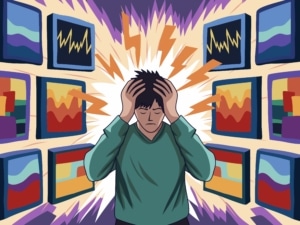
It doesn’t arrive all at once anymore—it arrives like weather. Right? Headlines. Updates. Breaking news. A constant parade of opinions wrapped in certainty, wrapped in urgency, wrapped like they’re personal medicine for whatever I’m currently hungry for. You don’t even have to choose it. It just finds you. It knows what makes you afraid. It knows what makes you feel righteous. It knows what you’re lonely for.

And somehow it keeps stacking until numbness looks less like rest and more like survival.

I used to think numbness was the opposite of hope. Lately I’m wondering if numbness can be a protective shutoff—not because we stopped caring, but because we’ve been overwhelmed with caring for too many things we can’t fix alone.

And that leads me to a question that keeps waking me up at night:

What can we believe? Anything?

Because belief—at least the kind that’s constantly being pushed at us—doesn’t always arrive through reflection. It arrives through pressure. Through targeting. Through personalization. Through a feed that seems to understand my nerves better than I do.

If everything is designed to convince you, then belief itself becomes slippery. I don’t just weigh information; I experience a kind of emotional tug-of-war. I borrow certainty for relief in the moment. I scroll until I find a voice that makes my feelings sound wise. I trade listening for winning. I trade the slow work of discernment for the quick thrill of being right.

Then the next wave arrives.

And I realize the certainty I leaned on wasn’t built to last inside me. It doesn’t grow roots in my values or my conscience. It just briefly covers the exposed parts of me. It soothes discomfort without earning trust. It can feel true because it feels stabilizing—but stability isn’t the same thing as truth.

What I didn’t fully understand until very recently is that the battle isn’t only “what people believe.” The battle is also the environment that trains my mind to adopt beliefs quickly, intensely, and defensively.

And I’ve felt what that training does to me—especially when I start getting stuck around elections.

I keep thinking about how I decide when everything feels like it’s trying to decide for me.

Not just who wins. Not just what side I’m on. But what I can responsibly believe long enough to vote. I was talking with one of my daughters the other day, and she is pretty dog gone smart, we got into this tug of war over voting, who’s right, who’s wrong. Because there are only two choices, correct? I mean we must stand on that statement, right?

Well, voting isn’t theoretical for me. It’s a real choice with real consequences. And I don’t want numbness to steal my discernment while I’m pretending, I’m just “being realistic.”

I’ve noticed a pattern in myself that I don’t like but can’t ignore when information gets relentless, I start chasing certainty. Then I start getting suspicious. Then I start getting overwhelmed. Then numbness shows up again—not calm, not peace, but a kind of emotional dimming so I don’t have to keep bracing.

It’s not that I can’t think. It’s that my thinking gets hijacked by urgency. Can you hear that? Urgency!

So, I’ve been trying to build a decision process that slows down instead of speeding up—one that treats belief like something I cultivate, not something I grab.

Here are a few shifts that have helped me, at least a little:

1) I check my nervous system before I check the headline.

When I’m tense, my brain reads like a courtroom. I look for evidence that will make me feel safe in my conclusion. If I notice my body is on alert, I don’t scroll as much. I pause long enough to ask: Am I trying to find truth—or trying to calm fear? Those are very different tasks.

2) I separate “credible” from “certain.”

A claim can sound confident and still be unreliable. A person can sound convincing and still be careless. When I’m tempted to treat certainty as proof, I try to look for things that last longer than a moment: consistency, willingness to update, clear sourcing, and an ability to hold up under questions.

3) I let my values be a filter, not a shortcut.

Values matter to me—compassion, justice, truth-seeking. But I’ve learned that values can accidentally become permission slips. So instead of asking, “Does this match my values?” I try to ask, “If this policy is applied in the world, who does it help, who does it harm, what tradeoffs are being ignored?”

4) I make decisions in steps, not in panic.

The election cycle tempts me to compress everything into one anxious sprint: gather all info, feel certain, choose immediately, feel morally resolved. But discernment doesn’t work well under time pressure that’s designed by other people. I’ve started asking myself what I can know enough to make the next small responsible decision—and what I need to postpone until I can look again with better clarity.

5) I treat belief like a draft.

If I notice my belief requires me to reject nuance completely—if it demands, I treat disagreement as stupidity or betrayal—that’s a sign. I want convictions that can survive complexity, not convictions that collapse the moment reality gets complicated.

Numbness and discernment both show up as signals, not enemies. Numbness can mean I’m overloaded. It can mean I need boundaries with my attention. It can mean I’ve absorbed too much conflict with no outlet except more information.

But numbness can also become its own trap: a quiet way of opting out. A way of “not feeling” that looks like neutrality while it quietly reshapes what I’m willing to care about.

I don’t want numbness to decide my vote by dulling my conscience. I don’t want exhaustion to turn into apathy dressed as wisdom.

And this is where my concern returns, again and again—back to elections.

I worry about how easily I can be pulled into certainty that doesn’t actually come from evidence. I worry about how easily my mind can be trained to treat emotion as proof. I worry about how the feed can make every issue feel like a personal referendum on whether I’m good, smart, safe, or right.

I worry that the louder the certainty gets, the more I may reach for it simply to stop the feeling of being unmoored.

When I think about voting, I try to come back to a simpler question than “Who is correct?”—a harder question that might protect my integrity:

What would I choose if I weren’t being rushed into belief?

Not what would feel best in the moment. Not what would win the argument. Not what would make me feel righteous fastest. What would I choose if I had time to look carefully, compare responsibly, and accept that I might need to revisit my understanding?

I’m still learning how to do that. I’m still prone to getting tugged into the certainty treadmill, still vulnerable to the fog.

But I’m trying to treat this moment—this election moment—as more than a headline cycle. As a chance to practice discernment instead of numbness. As a chance to believe with care, not with cravings for certainty.

Because at the end of all this, I want my vote to be an act of responsibility, not an act of shutdown. And I want my belief to be sturdy enough to survive contact with reality—especially when reality keeps changing.

Peace and every good!