Posts

From Scoreboard to Tapestry: Embrace Nonviolence

My business partner’s offhand metaphor about the United States not engaging in a nationwide football game—where there are winners and losers—stayed with me. At first, it sounded like a crazy joke, the kind people make to underline how competitive and spectacle-driven our society has become. But on my reflection, that “football” image is more instructive than flippant. It captures a deep, pervasive fact: life as contest, the world as scoreboard. What if we loosened our grip on that metaphor? What if, instead of celebrating winners and humiliating losers, we reimagined success as a collective flourishing and centered a culture of nonviolence? It is a radical reframe, so bear with me and it is also one that deserves serious attention.

Competition has undeniable value. It spurs innovation, drives excellence, and gives shape to many of our institutions—from markets to sports, academic achievement to civic engagement. Yet when competition becomes the dominant frame for all human interaction, it blinds us to alternatives and normalizes collateral damage. A zero-sum mentality assumes that another’s gain is automatically our loss. It trains us to view relationships, resources, and even the planet as limited commodities to be conquered or defended. The result is not just interpersonal friction but systemic harm: escalating violence, widening inequality, environmental degradation, and eroded trust in institutions.

And…I remember times back home when I was just not up to the competition and I got my clock cleaned. The funny thing is, I was not small or weak or without merit, so I became angry, was belittled, and was told that I was less then. I wanted to quit, to run away, to hide and to lash out. Little good it did me with the overwhelming prevailing attitude of the coaches, players, cheerleaders and spectators. I didn’t stand a chance.

This is where the teachings of nonviolence offer a profound corrective. Nonviolence is often mistaken for passivity or simple conflict avoidance. But figures like Jesus and Mahatma Gandhi modeled a far more active ethic. These men and women who lived and walked on the earth had to find a courage that defied comprehension and for them nonviolence, in their practice and lifestyle, was a disciplined way of engaging the world—rooted in courage, principles, and creative action. It is not the absence of conflict; it is the commitment to resolve conflict without dehumanizing others. It asks us to cultivate empathy, to recognize the dignity of adversaries, and to seek solutions that heal rather than simply punish.

Reimagining “winning” through the lens of nonviolence means changing our metrics. Instead of tallying victories and defeats, we begin to ask different questions: Who is flourishing? Are communities strengthened or weakened? Is the planet being cared for or exploited? Do our policies and practices expand freedoms and opportunities for the many, or do they concentrate advantage among the few? Success, in this framework, is measured by collective well-being, resilience, and regenerative practice.

The stakes of this shift are extremely high. Imagine what people will say about you? Because we are living in a moment of converging crises. Climate change destabilizes ecosystems and economies; social and political polarization deepens mistrust and reduces the space for reasoned debate; economic systems often prioritize short-term profit over long-term sustainability. In such a context, a competitive, winner-take-all logic exacerbates harm. It encourages resource extraction without stewardship, political brinkmanship without compromise, and a politics of humiliation that breeds resentment and cycles of retaliation. Nonviolence, conversely, invites us to break those cycles. It reframes adversity as an opportunity for creativity and collective problem-solving.

What would living into this shift look like in practice? First, it requires cultivating inner practices that temper reactivity and encourage empathy. Mindfulness, contemplative traditions, and reflective dialogue help people recognize their fears and attachments. When we know our triggers, we can choose responses that align with shared human dignity rather than reflexively seeking to dominate. Education systems that prioritize social-emotional learning, critical thinking, and civic literacy prepare citizens to engage in public life as collaborators rather than combatants. How would that look?


Second, institutional redesign matters. Democracy works best when it incentivizes cooperation and reduces zero-sum incentives. Electoral systems, media ecosystems, and corporate governance structures can be retooled to reward long-term, inclusive solutions. Policies that incentivize sustainable production, equitable distribution, and restorative justice create feedback loops where nonviolent solutions are not merely moral but also pragmatic. Imagine electoral incentives that reward coalition-building, or corporate accountability systems that value community well-being as much as shareholder profit. These are not utopian fantasies; they are policy directions that have been piloted at local levels and can be scaled.

Third, we must honor the language and practice of restorative justice. Traditional punitive systems focus on retribution, often producing repeat harm. Restorative approaches center repair and the restoration of relationships. They ask victims, offenders, and communities to participate in making amends, offering a path toward reconciliation and reduced recidivism. When societies adopt restorative frameworks, they acknowledge human fallibility while working toward healing—transforming conflict into an opportunity to rebuild trust.

Fourth, environmental stewardship must be reframed as a nonviolent act. Exploiting nature as though it were inert inventory is a form of violence that kills biodiversity, undermines livelihoods, and creates crises that disproportionately burden the most vulnerable. Nonviolent stewardship means honoring ecological limits, investing in regenerative agriculture and clean energy, and ensuring access to resources for future generations. This is not a sacrifice so much as an investment in our common home and in the long-term survival of our species.

This vision of nonviolence is not naive. History is full of examples where nonviolent movements achieved change against overwhelming odds—India’s independence movement, the U.S. civil rights movement, and more recent peaceful uprisings that led to democratic opening in various parts of the world. These movements did not succeed solely because of moral superiority; they succeeded because they leveraged strategy, discipline, broad-based coalition, and the ability to expose the injustice of violent systems without mirroring their brutality.

Adopting a nonviolent orientation at scale will be messy. People will disagree about priorities and means. There will be moments when force is necessary to protect those who cannot protect themselves. The point is not to deny complexity but to insist that violence should not be the default logic for solving problems. Instead, we should design systems and cultures that exhaust nonviolent options first, that prioritize de-escalation and mutual uplift, and that recognize the moral and practical costs of violence.

If we commit to this path, the benefits are both moral and practical. Societies organized around nonviolence tend to be more stable, more prosperous, and more resilient. They foster innovation not by crushing competitors but by building networks of trust and shared purpose. They produce healthier citizens—physically, mentally, and socially—because communities that care for one another reduce the stressors that lead to harm. And they leave a legacy that matters most: a habitable planet and institutions capable of delivering justice and dignity for generations to come.

Returning to my partner’s football metaphor, I now hear it less as a quip and more as an alarm bell. AND you may not feel the way that I am writing this blog, lets have dialogue in the comments. The spectacle of competition can be exhilarating, but it can also normalize division and glorify winners at the expense of many. When we start measuring success by abundance—by how many people thrive, how well ecosystems recover, how justly opportunities are distributed—we remember that life is a tapestry, not a scoreboard. Each thread—human, animal, plant, waterway—contributes to the strength of the whole.

This transformation begins with personal commitments and ripples outward. It begins with conversations where we listen to learn, not to win. It begins with leaders who model humility and curiosity rather than invulnerability. It begins with institutions that reward cooperation and designers who build systems that align individual incentives with collective flourishing.

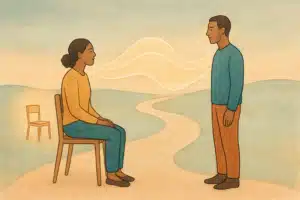
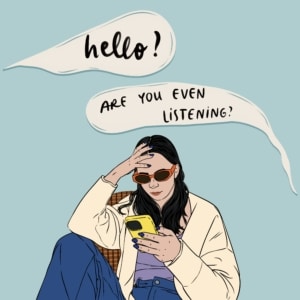
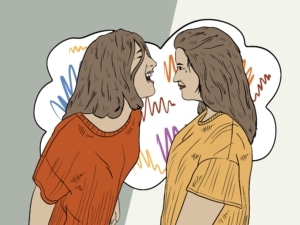
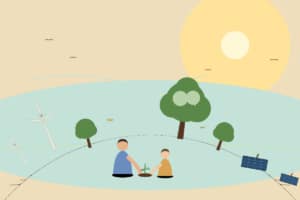
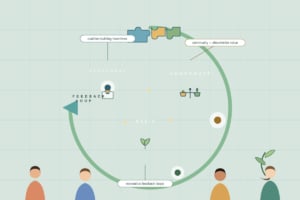
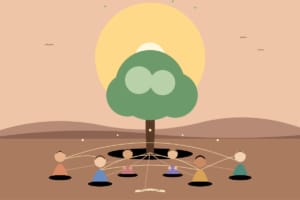
These Illustrations were built and drawn to portray a different way of being. What do you think?

FOR me to close here I must say that winning—if we must use that word—should mean creating conditions where everyone has the opportunity to flourish. It should mean a world where peace is not merely the absence of conflict but the presence of justice, equity, and compassion. It is a lofty aim, but not an impossible one. If even a small fraction of us commit to moving in that direction—toward nonviolence, toward stewardship, toward shared success—the change will be seismic. I promise you: start down that path even a little bit, and everything will begin to change. Hard as it will be.

Presence as Witness: The Quiet Power of Showing Up

I remember the day my youngest child was born like a photograph in slow motion. It was 43 years ago, in a delivery room that smelled of antiseptic and hope. I promised myself I would be there — not because I thought I could do anything technical, but because something inside me insisted I needed to witness this threshold. What unfolded in those hours was not ordinary. It was raw, loud, fragile, triumphant. It was a miracle. And watching it changed me.

The delivery room was a small ecosystem of attention: my wife in the epicenter, midwives and doctors orbiting with focused calm, nurses moving with quiet purpose, machines humming like low prayers. My daughter arrived with a cry that sounded both new and ancient. As I watched, I wasn’t merely observing a birth. I was bearing witness — and that act of presence reshaped how I understood life, love, and what it means to simply be there for another human being.

What does it mean to “bear witness”? For me it meant surrendering the impulse to fix, comment, or perform. It meant holding a space with no agenda other than to attend. I saw my wife in ways I’d never seen before: fierce, vulnerable, triumphant. I saw my newborn, blinking and bewildered, entering a world I had only ever imagined for her. I saw the team at work, each person contributing a small essential piece to a profound whole. In the silence between contractions, in the quick exchanges of hands and glances, I learned something about the power of presence that has stayed with me for decades.

Bearing witness is not limited to dramatic life events like childbirth. It’s the practice of showing up when it matters: in grief, in joy, in mundane moments where another person might otherwise be alone in their experience. And you don’t need words to do it. Sometimes the most powerful language is the sturdy quiet of your attention. When you stand there and truly see what someone else is going through — without interrupting, diagnosing, or diverting — you give them something priceless: validation. You acknowledge their reality as worthy of being seen.

Why this matters now,

We live in a world of interruptions. Notifications, opinions, and obligations make us spectators to our own lives and to the lives of people around us. Bearing witness is an act of resistance against this fragmentation. It restores human connection. It heals small wounds before they become deep scars. It fosters trust and invites vulnerability. And it’s accessible: anyone can do it with a little intention and practice.

So instead of just talking at you I wanted to share two practical steps to start bearing witness today. They’re intentionally minimal so you can repeat them in any context — at home, at work, in a hospital waiting room, or on the street.

  1. The Two-Minute Presence Ritual
  • What to do: When someone begins to share something — good or bad — stop. Put down your phone, close your laptop, and face them. Take two full minutes of uninterrupted presence. Don’t plan a response; don’t analyze or advise. Let your eyes meet theirs, and if it feels natural, offer a soft touch: a hand on the shoulder or a brief squeeze of the hand.
  • Why it works: Two minutes is short enough to be manageable and long enough to break the loop of reactive listening. In those two minutes, you communicate that the person is important, that their experience matters. The ritual trains your nervous system to slow down, reducing the urge to interject or fix.
  • Where to use it: With a partner during a tough conversation, with a friend telling a story, with a colleague after a hard meeting, or even with a stranger who’s visibly distressed.
  1. The Question of Seeing
  • What to do: When someone describes an experience, ask one simple question: “What was that like for you?” Then pause and wait. Resist the urge to paraphrase right away. Allow silence to do some of the work. If the other person hesitates, follow up with: “I want to understand more. I’m here.”
  • Why it works: This question moves the focus away from facts and toward feeling. It invites deeper sharing and avoids the common trap of turning the conversation into a comparison or a problem-solving session. The follow-up line reaffirms your intent to be there for them without imposing your viewpoint.
  • Where to use it: In conversations about loss, transitions, parenting struggles, mental health, or moments of celebration where the other person wants to be witnessed rather than analyzed.

Stories that teach:

In that delivery room, I could have tried to make light of the pain to ease my wife’s tension, or I might have sought to take charge of logistics. Instead, I learned to breathe with her breath, to let my attention rest on the reality before me. Later, when friends and family told me about their own losses or breakthroughs, I found myself showing up differently — less eager to problem-solve and more willing to simply be present. Over time, the small acts of bearing witness built up a quiet network of care around the people I love.

People sometimes worry that bearing witness will overwhelm them, as though absorbing another person’s reality means carrying their whole burden. That’s not true. Bearing witness does not require you to fix anything. It asks only that you offer a portion of your attention and your heart. If emotions become too intense, honest boundaries are part of good witnessing: “I want to be here with you, and I also need a short break so I can come back present.” You can hold both care and self-preservation.

Who benefits? Everyone. The person being witnessed receives validation, validation that can transform isolation into connection. You, the witness, gain emotional fluency and deeper relationships. Communities become more resilient when people practice simple acts of presence. Teams at work perform better when members feel genuinely seen. Families heal faster when they adopt listening as an act of love.

A small practice, a big ripple:

The birth of my daughter taught me a simple truth: sometimes the most revolutionary act is to show up and stay present. You don’t need a certificate or training. You only need the willingness to slow down and give someone else a piece of your attention.

Call to action Try it this week. Choose one person — a partner, friend, coworker, or family member — and practice the Two-Minute Presence Ritual. Then, later in the week, use the question of seeing in a conversation where you usually would have jumped in to advise. Notice what changes: in the other person’s expression, in the flow of conversation, and in how you feel afterward. Share your experience with someone else or post a short note on social media about what you learned using #IWasThere. Invite a friend to try it with you.

If you want, tell me about your moment of bearing witness — what you saw, how it felt, and what changed. I’ll listen. No advice, no judgment. Just presence.

We don’t need words when bearing witness. We just need to be present. And in that simple presence, we can witness miracles — big and small — and be transformed by them.

Looking back on the birth of my daughter in that delivery room 43 years ago, everything contracted and expanded around a single point of arrival. My wife labored with a fierce determination I had never seen; her face was a map of pain and purpose. The medical team moved with practiced urgency, voices calm, hands steady. I stood at her side, breath matching hers, palms clammy but steady on her knee. There were moments of quiet concentration and moments of bright, startling noise — a mix of instructions, encouragement, and the rhythm of machines. Then the cry: a raw, immediate announcement that life had crossed the threshold. They placed my daughter on my wife’s chest and for a second the world narrowed to three breaths and the soft, wet weight of newness. Tears blurred everything; laughter and prayer braided together. In that instant I knew I had witnessed something holy — not because of drama, but because of the raw, shared humanness in that room. That witnessing changed me: it taught me the language of presence in a way no book ever could.

Small Openings: From Isolation Back Into Life Now!

I have been thinking a lot about our human existence and the quiet ways many of us feel cut off from life. These aren’t dramatic breaks — not the kind a single event can explain — but slow separations: a tightening around the chest when someone smiles at us and we don’t know how to return it, the habit of watching life through a window instead of stepping through the door, the small, accumulating evidence that we are apart from the dance. I remember being treated cruelly, and I remember, with shame, the times I treated someone else cruelly because my own pain made it hard to be anything else. Those memories sit beside each other now, like two sides of a coin: harm received, harm given. Both taught me something about the life I wanted and the life I feared.

I grew up in a rust-belt city — Detroit — and that landscape shaped me in complicated ways. Its neighborhoods smelled of oil and hot asphalt in summer, and in winter the sky often held a gray hush that felt as if it could hold back laughter. The city brought together different cultures, and there was beauty in that: sharing food at makeshift tables, hearing music spill from open windows, strangers laughing about the same joke in different accents. There were lessons in the way neighbors rebuilt things instead of replacing them, and in the communal pride that even a small victory could spark — a mural finished on a boarded-up shop, a storefront window that at least had something new in it.

But the same things that were strengths could also be wounds. The cultures that came together in close quarters sometimes meant you were “othered” for aspects of yourself: your accent, the shape of your hair, the way your family prayed. In school, “fitting in” felt like a currency I didn’t have. I wanted it so badly I could taste it, but at times there were no ways in. Doors closed in places where I needed them open. My attempts to belong sometimes pushed me toward behaviors that were unkind — not the heroic cruelty of stories, but the quieter cruelties: sarcasm instead of empathy, mockery instead of curiosity, shutting someone out because I feared they would close me out first.

There was a boy in my school who would always arrive late and sit in the back. He had a habit of humming to himself and wore oversized jackets. People whispered about him; one day, someone put a sticky note on his desk with a joke about his clothes. The laughter that followed felt like relief for everyone except him. I joined in. Looking back, I can feel the heat of embarrassment in my chest — a reflex to hide by aligning myself with the majority. At the time, I told myself it wasn’t me who was cruel; it was just what everyone did. But the memory of his quiet face, the way he flinched, is a weight I carry. That small action taught me how easy it is to perpetuate harm when we are trying to survive socially.

There were also moments of deep reciprocal kindness. An older neighbor, Hal, once invited my family to dinner not because he was obligated but because he wanted to really get to know us. That felt like a bridge. In that house, across a kitchen table with mismatched chairs, the city’s harsh edges softened for a night. I remember the smells, the way the light hit the linoleum, and the lines on Hal’s hands as he told stories about a city that had been good and bad to him. I remember leaving with a sense that belonging could be offered, not just earned.

Those polar experiences — being hurt, hurting others, being welcomed — taught me how fragile our connection to life can be. Feeling cut off is not just an emotional state; it is a posture. Your shoulders round, your voice tightens, and you begin to measure every interaction as potential rejection. That posture changes how you see the world. It flattens it into black-and-white choices: safe or dangerous, friend or enemy, belong or be excluded. But the truth is messier. People are often both kind and flawed. Places are both beautiful and damaged. Recognizing that complexity is the first step toward reconnecting.

So how do we move from being cut off to being in life? I thought of two practical pathways — methods I’ve tried, tested, and returned to — each illustrated with a small example from my life and the outcomes I noticed.

  1. Start with small, intentional openings.

When I moved into my first apartment, I made a ritual of picking up a newspaper from a corner store and reading it on the stoop each morning. At first, it was a way to occupy my hands. Then a neighbor — a woman who walked her dog daily — started nodding and saying, “Morning.” I began returning the nod. After a month, she introduced herself. We swapped stories about where we were from. That simple, steady act of being present changed both of our days. The outcome from those small, repeated openings changes the posture of isolation. They tell the world, and tell yourself, that you are available for connection. The stakes are low, so the risk feels manageable, but the effect is real: a neighbor becomes an ally, a nod turns into conversation, and slowly, life feels less like a window and more like a door.

  1. Name your own pain without weaponizing it

After years of folding my hurt into sarcasm, (and I was good at it) I started practicing a different approach with friends: naming the feeling instead of attacking them. Once, when a joke landed poorly, instead of laughing along and deepening a wedge, I said, “I know I hurt you with that joke, I am sorry! I was nervous to open that door, but the vulnerability invited real dialogue. The other person shared a similar fear. We both paused — not to retaliate, but to understand.  When you articulate your hurt, you reduce the chances it will be unconsciously turned outward. Naming is disarming. It allows others to respond to you as a human being rather than a target. Over time, relationships shift from performance to presence. And I so very much need presence.

The feelings these practices evoke aren’t always rosy. Opening yourself up can be terrifying; naming pain can be humbling; rituals can feel like small boats in a storm. Yet the outcomes are concrete: less loneliness, more honest relationships, a steadier sense of presence. You learn to see people less as adversaries and more as fellow travelers, each carrying their own set of wounds and the occasional bright kindness.

There are collective consequences too. When individuals begin to show up — when we take even modest steps to be present, honest, and grounded — communities knit tighter. In my neighborhood, those small acts multiplied: shared meals, neighborhood cleanups, impromptu music sessions on a stoop. The city still bore its scars, but there was more laughter and fewer places where people felt entirely invisible.

I don’t pretend to have fixed everything. I still stumble; I still occasionally say something mean because I’m scared. But remembering both sides of my story — the cruelty I absorbed and the cruelty I inflicted — keeps me accountable. It reminds me that being human is messy, but we can choose a kind of practice that pulls us away from isolation and toward life.

If you feel cut off, know that the way in often begins with something small: a nod, a named feeling, a few minutes of noticing. These acts are not grandiose, but they are honest. They create cracks in the walls we build and let light leak through. Over time, those cracks widen, and life—noisy, fragile, complicated—finds its way back in.

When will the least go first?

If I can be really, painfully honest for a minute, I’ve always been the type of person who believes in being first. As an “8” on the Enneagram with a 1:1 subtype, I have a personality that can be described as “large or go home.” This trait has shaped my life in many ways, often pushing me to the front of the line—whether it was for food, concert tickets, or training sessions. I was the one who would elbow my way through the crowd, determined to secure my spot at the front. But as I reflect on my past, I realize that this behavior was not just a quirk of my personality; it reflected something deeper within me.

Let me take you back to a summer concert years ago to see the MC5 out of Detroit. The excitement was in the air as fans gathered outside the venue, eagerly awaiting the gates to open. I had been looking forward to this concert for months, and I was determined to be at the front of the line. As I arrived, I noticed a group of people who had been waiting for hours, some even camping out overnight. But that didn’t matter to me. I pushed my way to the front, ignoring the annoyed glances from those who had been patiently waiting. I felt a rush as I secured my spot, but as the concert began, I couldn’t shake the feeling that something was off. I knew in my heart that I had messed up.

As the music played and the crowd jammed, I looked around and saw the faces of those who had been waiting just as long, if not longer, than I had. I realized that my need to be first had come at the expense of others’ experiences. I had prioritized my own desire for front-row access over the feelings of those around me. It was a moment of clarity that left me feeling embarrassed and ashamed. Why did I feel the need to be first? Where did this belief come from?

This question rolled around in my mind long after the concert ended. I began to reflect on my life and the patterns that had emerged. Growing up, I was often praised for my assertiveness and determination. I was the one who took charge in group projects, the one who volunteered to lead discussions, and the one who always seemed to be at the forefront of any situation. But as I delved deeper, I realized that this drive to be first was rooted in a fear of being overlooked, discounted or left behind. It was as if I had internalized the belief that my worth was tied to my ability to be at the front of the line.

I decided that I needed to begin a  quest of self-discovery, I started on a mission to find out more, I needed to understand why I acted this way, so I sought out stories from others who had experienced similar feelings. I spoke with a friend who had once been a competitive athlete. She recounted the pressure she felt to always be the best, to always be first. “I remember a race where I pushed myself so hard that I didn’t even notice the girl who fell behind me,” she shared. “I crossed the finish line, but I felt hollow. I had won, but at what cost?” Her story resonated with me, highlighting the emptiness that can accompany a relentless pursuit of being first. And yes, I know, being an athlete means being the best, first and fastest. But does that entitle us to perform like an athlete off the field in everyday life at the expense of others?

Another friend shared her experience of being a manager in a corporate setting. “I used to think that being the first to speak up in meetings made me a leader,” she said. “But I realized that it often stifled others’ voices. I was so focused on being heard that I didn’t create space for my team to contribute.” Her journey of learning to step back and allow others to shine was a powerful reminder that leadership is not about being at the front but about uplifting those around us.

As I continued to explore these stories, it dawned on me that the need to be first is often a reflection of our insecurities. It’s easy to equate being first with success, but true fulfillment comes from connection and empathy. (refer to Jim Collins book “Good to Great” and what makes a level 5 leader) It made sense after deep reflection to practice being more mindful in situations where I felt the urge to rush to the front. I began to ask myself, “What would it look like to let someone else go first?”

One day, I found myself in line at a coffee shop, and I noticed a young mother with a toddler in tow. The child was fidgeting and clearly restless, and I felt the familiar urge to push ahead. But instead of acting on that impulse, I took a deep breath and let the mother and child go ahead of me. As they moved forward, I saw the relief on her face, and in that moment, I felt a sense of understanding that I had never experienced when I was at the front. It was a small act, but it shifted my perspective. I realized that being at the front of the line didn’t define my worth; it was the kindness I showed to others that truly mattered.

This journey of self-discovery has taught me that there is beauty in allowing others to take the lead. It’s about recognizing that everyone has their own story, their own struggles, and their own desires. When we prioritize being first, we risk missing out on the richness of human connection. I’ve learned that sometimes, the least among us deserve to be at the front of the line, not just because they’ve waited the longest, but because they have something valuable to share.

As I continue to navigate this path, I remind myself that it’s okay to step back and let others shine. I’ve found that true fulfillment comes from lifting others up rather than pushing them down. The next time I find myself in a situation where I feel the urge to be first, I’ll pause and ask myself, “How can I create space for someone else?”

In a world that often celebrates the loudest voices and the fastest runners, let’s not forget the importance of compassion and empathy. Let’s strive to be the kind of people who recognize that sometimes, and not always, the least among us deserve to be at the front of the line. After all, it’s not about being first; it’s about being present, being kind, and being human.

First Comes Justice, A call to action!

First Comes Justice: A Call to Action


I heard this call last week and it has been haunting me. Do you know what the definition of Justice is? In today’s world Justice embodies fairness, equality, and accountability, ensuring that every individual is treated with dignity, regardless of their background. It goes beyond law enforcement to actively pursue social equity, addressing systemic targeting that marginalize certain people groups. In our rapidly changing global landscape, justice demands a commitment to human rights and the protection of the vulnerable. It calls for us as a collective society to challenge injustices that we see and create systems that empower all members of society. Ultimately, for all of us, justice fosters a world where everyone has the opportunity to live freely and access the resources they need to succeed.

To continue this thread, thinking about a world teetering on the edge of chaos and dis-order, the concept of justice stands as a beacon of hope and a call to action. Justice is not merely a legal term or a distant ideal; it is the very foundation upon which a compassionate society is built. It is the force that holds back the darkness, offering light to those who have been cast into the shadows. But who offers this justice? Who visits the poor and the sick? And more importantly, who are we as a society—those who love and act, or those who turn away, saying, “Not my problem”?

Justice is often personified by those who dedicate their lives to serving others. These are the individuals and organizations that step into the breach, filling the gaps left by systemic failures. They are the social workers, the healthcare providers, the educators, and the countless volunteers who work tirelessly to uplift the marginalized and the oppressed. They are the ones who visit the poor, offering not just material aid but also dignity and respect. They are the ones who visit the sick, providing care and comfort in times of need. And for me and a few others that I know, visiting the incarcerated in prisons across the country with a program called “Kairos“. Can I tell you a secret? There were times that I did not want to go through that gate, I was tired, I was sure that I was not making a difference, I knew there so many more people then me that could do it better. But, if not me, who?

These guardians of justice do not act out of obligation but out of a deep-seated belief in the inherent worth of every individual. They understand that justice is not a zero-sum game but a collective endeavor that benefits all. By lifting others, they lift society as a whole.

Injustice thrives in the shadows, feeding on ignorance and apathy. It is the darkness that creeps into the corners of our communities, whispering that some lives are worth less than others. But justice, when wielded with compassion and courage, holds back this darkness. It shines a light on inequality and demands accountability. It challenges the status quo and insists on change. I like to tell people when doing spiritual direction that those of us that are called to work with the least, the last and the lost are linking arms and holding back darkness while shining light in the darkest of dark corners of our society.

Justice is not passive; it is active and dynamic. It requires us to confront our uncomfortable truths and to take action, even when it is inconvenient or difficult. It calls us to be allies and advocates, to use our voices and our resources to support those who have been silenced and marginalized.

The measure of a society is how it treats its most vulnerable members. The poor and the sick are often the first to be forgotten, left to fend for themselves in a world that values wealth and health above all else. But justice demands that we do better. It calls us to visit the poor, to understand their struggles and to work towards solutions that address the root causes of poverty. And yes, the poor will always be with us. It calls us to visit the sick, to provide care and compassion, and to advocate for a healthcare system that is accessible and equitable for all.

Visiting the poor and the sick is not just an act of charity; it is an act of justice. It is a recognition of our shared humanity and a commitment to building a society that values every life.

In a world where the gaps in our social fabric are widening, we are called to be fillers of the breach. This is not a task for the faint of heart, and you may not be a person called to do this, but it is a task that is essential for the survival of our communities and frankly our world. Like some of you, Lynette and I have been honored to travel around the world, and guess what folks, other places has these problems as well. Because it requires us to step into the spaces where others have fallen short, to offer support and solutions where there are none.

Filling the breach means being proactive rather than reactive. It means anticipating the needs of our communities and working collaboratively to address them. It means being innovative and resourceful, finding new ways to support those who are struggling. Not by saying, Not my problem, but realizing that it is all of our problems.

Ultimately, the question of justice is a question of identity. Who are we as a society? Are we known by those who love, who act with compassion and courage? Or are we known by those who say, “Not my problem,” turning away from the suffering of others?

The answer lies in our actions. Justice is not a passive state; it is an active choice. It is a choice to stand up for what is right, to speak out against injustice, and to work towards a world where everyone has the opportunity to thrive.

This is a call to action for all of us. It is a call to be the guardians of justice, to hold back the darkness, and to visit the poor and the sick. It is a call to fill the breach, to be known by our love and our compassion.

We cannot afford to be complacent. The challenges we face are so very great, but so too is our capacity for change. Together, yes together we can build a society that is just and equitable, a society that values every life and leaves no one behind.

Let us answer the call. Let us be the ones who offer justice, who hold back the darkness, and who visit the poor and the sick. Let us be the fillers of the breach, known by our love and our commitment to a better world.


Justice is not an abstract concept; it is a tangible reality that we create through our actions. It is the foundation of a compassionate society, and it is up to us to build it. Let us rise to the challenge and answer the call to action. Together, we can make a difference. Together, we can bring justice to all.

Join us in our mission to create a more just and compassionate society. Volunteer with local organizations, advocate for policy changes, and support initiatives that uplift the marginalized. Together, we can make a difference!!!!!

First Comes Justice!

The Uncomfortable Truth of Racism: A Reflection Inspired by Mary Elizabeth Moore

The Uncomfortable Truth of Racism: A Reflection Inspired by Mary Elizabeth Moore

In a world that often feels divided, the stories we share can serve as bridges to understanding and healing. Today, I want to introduce you to a remarkable woman Lynette and I met at the Academy for Spiritual Formation in Nebraska: Mary Elizabeth Moore. A master educator, prolific writer, and speaker, Mary Elizabeths’s work in religious education, process theology, and practical theology is deeply rooted in a commitment to repair the world. To explore the full depth of her contributions, you can visit her [bio here](https://www.biola.edu/talbot/ce20/database/mary-elizabeth-moore).

The real reason for this blog, however, is to delve into a powerful poem that Mary Elizabeth wrote, titled “I Confess.” This poem is not just a reflection of her personal experiences; it is a mirror held up to society, challenging us to confront the uncomfortable truths about racism and privilege.

I Confess

Growing up with Mary shaped me

As a person far more sensitive

Then I would have otherwise been,

A child who could love and giggle,

And dash quietly to bed

When my parents came home early.


My world taught me

that Mary’s Blackness

was less than my whiteness

though I always knew

she was better than me.


The racist structures

We enacted were strengthened

By my family’s participation

I did not condemn

Those structures with anything more

Then a few probing questions

For a few minutes at a time,

Even as I prayed every night,

“God bless Mama and Daddy

And Mary and me.”


White supremacy

Shaped me in my very own home,

Yet I whole-heartedly loved Mary

And was powerfully shaped by her love

And by the deep Black culture

She taught me to value

As if it were my own.


My white-privilege perspectives

Emerged in the same childhood

That taught me to critique them,


slowly, oh so slowly

In my youth, but bursting

Ever more boldly as I grew


though I have not

And never will

Be free of its taint.

This poem resonates deeply with me, as it evokes memories of my own upbringing in Detroit, where I witnessed firsthand the destructive power of hate and judgment. The raw honesty in Mary Elizabeth’s words forces us to confront the uncomfortable realities of our pasts and the systems that have shaped our identities.

Mary Elizabeth’s poem encapsulates the struggle of recognizing privilege while grappling with the love and relationships that exist within a racially charged environment. It highlights the paradox of loving someone from a marginalized community while simultaneously benefiting from a system that devalues their existence. This duality is a painful truth that many of us must face.

As I reflect on my own experiences, I am reminded of the countless times I have seen the impact of racism on families, individuals, and communities. The scars left by systemic oppression run deep, and they are often invisible to those who do not experience them. Mary Elizabeth’s poem serves as a reminder that acknowledging our privilege is not enough; we must actively work to dismantle the structures that perpetuate inequality.

The Journey Toward Understanding

Mary Elizabeth’s  journey of self-awareness and growth is a testament to the power of reflection and education. It is a reminder that the path toward understanding is often slow and filled with discomfort. As she writes, “Slowly, oh so slowly / In my youth, but bursting / Ever more boldly as I grew.” This gradual awakening is something many of us can relate to, as we navigate our own journeys of understanding and kinship.

The discomfort that arises from confronting our biases and the reality of racism is a necessary part of this journey. It is through this discomfort that we can begin to challenge our preconceived notions and work toward a more equitable society. Mary Elizabeth’s poem encourages us to engage in difficult conversations, to ask probing questions, and to seek out the stories of those who have been marginalized.

As we reflect on the themes presented in Mary Elizabeth’s poem, we must ask ourselves: What will it take to look at one another without the taint of prejudice? How can we actively participate in the repair of our world? The answers to these questions lie in our willingness to listen, learn, and engage with the experiences of others.

We must commit to educating ourselves about the history and impact of racism, both in our communities and beyond. This includes amplifying the voices of those who have been silenced and advocating for policies that promote equity and justice. It requires us to confront our own biases and to hold ourselves accountable for our actions.

Mary Elizabeth Moore’s work and her poignant poem serve as a powerful reminder of the importance of empathy, understanding, and action. To explore more of her insights and contributions, consider reading her book, which you can find here..

So Much to Love, So Much to Lose Paperback – September 18, 2023 

by Mary Elizabeth Moore (Author)

If I were to conclude here, you might think that because Mary Elizabeth’s poem describes a meaningful relationship with a person of color that this is my focus for this blog, it is not!  But in a world that often feels divided, we have the power to bridge the gaps through understanding and compassion. Mary Elizabeth’s poem, “I Confess,” challenges us to confront our own biases and to recognize the impact of racism towards all people groups in our lives. It is a call to action, urging us to engage in the difficult work of dismantling systemic oppression and fostering a more inclusive society. And folks, you do not have to agree with other people groups to get along with them. Right?

Can we move forward, carrying the lessons from Mary Elizabeth’s experiences and the truths revealed in her poem inside of us? Because together, we can create a world where love and understanding triumph over hate and division. By committing to being agents of change, and working tirelessly to repair the wounds of our past and build a brighter future for all ……

we can began to heal.

“Embracing Perspectives: Insights from Richard Rohr’s Conference”

Lynette and I attended the Richard Rohr conference in NM and had some wonderful insights which I will be sharing over the next few weeks. Yes, Richard Rohr is deeply spiritual, presenting ideas in a way that resonates with many people. You don’t have to agree with someone to hear their wisdom.

Feeling like we live in a world that often feels divided, the ability to see things from another person’s perspective is a powerful tool. Some of the things I learned in the last week will follow in this post. It allows us to navigate our relationships with compassion and empathy, giving us understanding and connection rather than possible conflict. What would happen if we explored the importance of embracing different viewpoints, the benefits of not feeling the need to defend our own positions, and how this practice can lead to a more harmonious existence.

Understanding perspective at its core is seeing that perspective is the lens through which we view the world. Our world view, I learned about my world view from Cindy Wigglesworth, one of my greatest mentors, is shaped by our experiences, beliefs, and emotions. Each person’s perspective is unique, influenced by their upbringing, culture, and personal experiences.When we take the time to understand someone else’s viewpoint, we open ourselves up to a richer, more nuanced understanding of the world, which is often not threatening.

Imagine a conversation where two people hold opposing views on a contentious issue. Not that we have a lot of those going on in today’s world that we live in. Instead of immediately jumping to defend their own stance, these two people choose to listen actively to one another. This simple act of listening can transform the dialogue. It allows for a deeper exploration of the reasons behind each perspective, fostering an environment of respect and understanding. I will not kid you, it is very hard work to “listen” to another, and some of us give up trying before they get to understanding because it is just too hard.

The Importance of compassion is the ability to recognize the suffering of others and take action to help alleviate that suffering. When we approach conversations with compassion, we create a safe space for others to express their thoughts and feelings. This is particularly important in discussions that may be emotionally charged or sensitive.Did you know that humans are wired to want to help? It’s true! When we suppress that instinct, it creates dissonance within us.

By practicing compassion, we can acknowledge the validity of another person’s feelings, even if we do not agree with their conclusions. For instance, as an example I have a family member that is upset about a political issue, instead of dismissing their concerns, I try to validate their feelings by saying, “I can see why this is important to you.”  or something like this. I love this family member and I want to go as far as I can in building trust and rapport without losing myself in the process.

The role of empathy takes compassion a step further. It involves not only understanding another person’s feelings but also sharing in their emotional experience. When we empathize with someone, we put ourselves in their shoes, allowing us to feel what they feel. This connection can be incredibly powerful, and again let me say that you do not have to OWN what they are feeling, just by letting it wash over you, you get a sense that the journey is mutual.

I have a scenario where a colleague was struggling with a heavy workload. Instead of simply offering advice or solutions, I was able to empathize by saying, “I remember feeling overwhelmed in a similar situation. It can be really tough.”This shared experience can help the other person feel less isolated in their struggles and more supported in finding solutions.”

We want to know that we are not ALONE on this journey. Let me stop here and ask this question, “Are there times when you feel alone and no-one hears you?

When you do this work, you find out it was one of the most significant barriers to understanding others is our instinct to defend our own positions. When we feel attacked or challenged, our natural response is often to become defensive. This defensiveness can shut down communication and create a hostile environment.This defensiveness can make it more challenging to reach the understanding we initially sought.

Do you really want to fight with friends and family to make your point prevail and be the loudest in the room?

However, when we consciously choose to let go of the need to defend our own views, we create space for open dialogue. This does not mean we abandon our beliefs; rather, we acknowledge that our perspective is just one of many. By doing so, we can engage in conversations without the pressure of needing to “win” or prove ourselves right.

The freedom of non-ownership is one of the most powerful aspects of seeing things from another person’s perspective and is the freedom that comes with not having to own their position. When we engage with someone else’s viewpoint, we can appreciate it without feeling the need to adopt it as our own. This allows for a more fluid exchange of ideas, where we can explore different perspectives without the weight of ownership.

As an example, in a discussion I had about climate change, I encountered someone who had a radically different approach to environmental issues than mine. Instead of feeling compelled to defend my beliefs or adopt theirs, we were simply able to listen and learn from each other.. This openness can lead to a more enriching conversation, where both parties leave with new insights and a deeper understanding of the many complexities involved. To be fair, as a spiritual director for many years and MCC with the International Coaching Federation, I have had years of training on these concepts and again I will say, “it is not easy to really listen”.

Building bridges through dialogue is a great approach to having conversations with compassion and empathy, we can build bridges rather than walls. This approach is critically important in today’s polarized society, where differing opinions can lead to animosity and division.  We want to create a culture of dialogue rather than debate where the outcomes might not be what you expect, remember my post on what happened in Detroit? NO one expected the outcome that we ended up with.

Engaging in respectful conversations allows us to explore the nuances of complex issues. It encourages us to ask questions, seek clarification, and genuinely understand where the other person is coming from. This process not only enriches our own understanding but also helps to humanize the other person, reminding us that behind every opinion is a person with their own story. Here is the main point, When we OWN a conversation or viewpoint many times the other person is not a person to us.

These Practical Steps to Embrace Perspective-Taking ……..

1. Practice Active Listening: Focus on truly hearing what the other person is saying. Avoid interrupting or formulating your response while they speak. Instead, listen with the intent to understand.

2. Ask Open-Ended Questions: Encourage the other person to share more about their perspective by asking questions that invite elaboration. For example, “What experiences have shaped your view on this issue?”

3. Reflect Back: After the other person has shared their thoughts, reflect back what you’ve heard. This shows that you are engaged and helps clarify any misunderstandings.This also helps to defuse any building anger.

4. Acknowledge Emotions: Recognize and validate the emotions behind the other person’s perspective. A simple acknowledgment can go a long way in fostering connection. And folks, it is ok to have emotions about subjects you care about, but understand those emotions goes a long way.

5. Be Open to Learning: Approach conversations with a mindset of curiosity. Be willing to learn from the other person’s experiences and insights, even if they challenge your own beliefs.

The ability to see things from another person’s perspective is a gift that can transform our interactions and relationships. By embracing compassion and empathy, we create a space for understanding and connection. Letting go of defensiveness and the need to own another person’s position allows for richer, more meaningful conversations.

In a world that feels so divided right now, the practice of perspective-taking can be a powerful antidote. It reminds us that we are all human, navigating our own journeys, and that understanding one another is the first step toward building a more compassionate and empathetic society. So, let us strive to listen, learn, and connect, one conversation at a time. At this point I would like to ask you to reflect on your own experiences with empathy and perspective-taking and if it make sense to post in comments to help others with their journey.