Posts

The Work That Holds Everything Together

A CONVERSATION WITH DR. DON AJENÉ WILCOXSON · PART TWO OF THREE

A Man Who Stands in the Room

On teaching, spiritual direction, and what it means to carry many callings at once

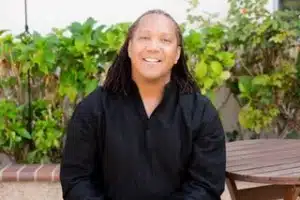
There is a question I have wanted to ask Ajené for years, and as we continue our 3 part conversation I finally asked it when we sat down together: what is the connective tissue across everything you do? Because from where I sit, the list is remarkable. Distinguished Professor at Riverside City College — recently elevated to Professor Emeritus after more than three decades. Spiritual director. Six Seconds EQ faculty. Enneagram teacher. Minister. Business consultant. Dream worker trained in the Jungian mystical tradition at the Haden Institute. Scuba diver, salsa dancer, Lego builder, student of classical guitar.

He smiled at the question. Then he said something I have been turning over ever since.

“Emotional intelligence is intertwined with who I am at a soul level. One moves the other. From this perspective, I am passionate about living and teaching how to experience a soul-centered emotionally intelligent life.”

That is the connective tissue. Not a set of skills or roles, but a way of being — the conviction that what we feel and what we believe and how we treat the people in front of us are not separate compartments but a single integrated life. Everything Ajené does flows from that integration.

The classroom is where I have seen him described most often by others, and the descriptions are strikingly consistent. His dean at RCC said he has a natural ability to connect with his students — that he “allows students to find solace in his presence when they are struggling.” The Accreditation Council for Business Schools and Programs recognized him with their Teaching Excellence Award; he was one of only twenty faculty nationwide to receive it that year. But when you ask Ajené what he is doing in the classroom, he does not talk about pedagogy. He talks about presence.

“The classroom is the students’ space, not mine,” he told me. “I enter their space with respect. I leave my own baggage outside the door so I can meet them where they are.” His approach is rooted in listening rather than answers — in the recognition that every person arriving in that room is carrying something, and that learning cannot happen until the person feels held.

This is, at its core, an emotional intelligence practice. In the Six Seconds model, the capacity to “increase empathy” — to genuinely enter another person’s experience before responding to it — is one of the deepest and most difficult competencies to develop. Ajené has built a classroom around it. And notably, he has done this in a business and entrepreneurship department, which is not the first place most people would look for this kind of formation work. That gap between where it is expected and where he practices it is, I think, part of the point.

The spiritual direction practice carries the same posture into a different room. Ajené works with people across Buddhist, Christian, Hindu, Islamic, Jewish, and no-tradition backgrounds — a range that reflects his own formation. He grew up with a mother who was Jehovah’s Witness, a father who was Buddhist, a grandmother who was Baptist, an uncle who was Muslim, and a Catholic school. His doctorate from New York Theological Seminary was in interfaith, inter-spiritual, and intercultural theology — not because he chose a specialty, but because he was already living at that intersection and needed language for it.

He describes his approach to spiritual diversity through a Baha’i image: the most beautiful garden is a mixture of flowers. He is not interested in resolving difference into uniformity. He is interested in what each tradition offers to the whole — and in holding space wide enough that a person from any background can find their own ground.

“The most beautiful gardens are a mixture of flowers. I see my own spiritual life that way — enriched by every stream, not threatened by any of them.”

His work as a Enneagram coach sits at the center of all of this. The Enneagram tradition is distinctive in that it asks real people to speak from their own lived experience of a type — not to have a type explained to them, but to hear from those who inhabit it. Ajené is a Nine, the Peacemaker, and he brings to that work a rare self-awareness about both the gift and the cost of his type. Nines tend to minimize their own needs and giftedness in service of harmony. They absorb the priorities of others. They can mistake self-erasure for humility.

When I asked him where his Nine-ness serves him most and where it costs him most, he was characteristically honest. The gift: the capacity to enter any room and genuinely see every person in it, to hold multiple realities at once without needing to collapse them into a winner. The cost: the temptation to smooth over things that need to be said, to defer his own voice when it is exactly his voice that is required. He is aware of both. That awareness is itself the work.

He describes his current life season as winter — and he is careful to define what he means. Not decline. Not retreat. Spaciousness. The steadiness that comes from having built something over decades and knowing now what matters. He hopes, he told me, for more presence over productivity, more wisdom than certainty, more accompaniment over expertise. And the phrase that has stayed with me: not trying to become more but learning to become enough.

That phrase does a particular kind of work on me, because it runs counter to almost everything our culture tells us about professional life. Enough is not a word our productivity-saturated age handles well. But for a man who has earned Distinguished Professor status and a national teaching award and a doctorate and a spiritual direction practice and three decades of student relationships — for that man to say he is learning to become enough — that is not resignation. That is a different kind of ambition entirely.

There is a thread in the contemplative tradition — I am thinking of Thomas Merton, of Howard Thurman, of the desert fathers and mothers — about the movement from doing to being, from accumulation to presence. Ajené is living that transition with his eyes open. He knows what season he is in. And he is choosing to inhabit it rather than fight it.

In our next conversation, we will go to the harder places. The grief he carries about racial injustice. The threats he faced in high school for speaking up. The discrimination he encountered at the institution where he would go on to build one of the most distinguished careers in its history. And his word — direct and unhurried — to the people standing at the edge of the room, wondering whether there is a place for them.

But here, in this middle movement, I want to simply name what I see when I look at his life whole: a man who has refused, across decades and contexts, to let his work be less than his faith. That refusal is its own kind of witness.

To get in touch with Ajene use this link. mailto:ajene@donajene.com

If you are curious about how emotional intelligence and the Enneagram can deepen your own integration of work, faith, and presence, we would love to continue the conversation at spiritofeq.com.

Peace and every good.


The Garden He Grew from Honest Contradiction

Post One:   The Garden He Grew From

Formation, the village of mentors, and the name given by a king

Post Two:   A Man Who Stands in the Room

Teaching, spiritual direction, EQ practice, and the soul-centered integrated life

Post Three:  When the Whisper Is Louder Than the Fear

Racial injustice, the cost of speaking, grief, and the word for those at the edge of the room


A CONVERSATION WITH DR. DON AJENÉ WILCOXSON · PART ONE OF THREE

The Garden He Grew From

What hard soil and an unlikely village made of one remarkable man

There is a photograph I keep returning to in my mind — not a real one, but the kind your imagination makes when someone tells you a story about a boy walking to school alone, afraid, and arriving anyway. I have known Dr. Don Ajené Wilcoxson for years. I know the man he became. But it was only when we sat down together for a long conversation that I began to understand the terrain that formed him.

He described his childhood plainly, without self-pity, in the way that people speak about hard things they have long since made peace with. Physical abuse. A biological father he never met. The daily threat of being beaten walking to school. He called it “really challenging.” What stayed with me was not the weight of those words but the steadiness with which he carried them — the way a man speaks about weather he has already walked through.

“I was blessed,” he said, and meant it. Because running alongside those hardships was something else: a community of people who saw him and chose to stay.

His adoptive father became, in his words, “the best thing that could ever happen” to his life — a man who taught him about all cultures, all music, all the beautiful width of what it means to be human.

There was also Dell Roberts, a friend who showed him what it looks like for a young Black man to move through the world with dignity. His mother, who helped him find stillness. His godmother, who taught him ethics — not as rules, but as a way of being. And his nana, who pressed into him the twin practices of listening and caring. He didn’t point to a single turning point the way we often hope people will. He pointed instead to a village.

There is a concept in the Enneagram — and Ajené is a deeply self-aware Nine — about the way the Peacemaker absorbs the world around them, becoming, in some sense, an amalgam of the people they love. What he described from his childhood is not just biography. It is the formation of a man who would go on to hold space for people from every tradition, every background, every wound — and do it with the naturalness of someone who learned to navigate difference before he could name it.

He was the darkest member of his family. Extended family and outsiders noticed. He noticed. And rather than letting that experience narrow him, it became a doorway. “It taught me to navigate that difference,” he said, “and that helped me work across cultures and faiths later.” What looked, from the outside, like a wound had quietly become a gift.

This is the movement that the Six Seconds emotional intelligence framework calls “exercising optimism” — not the naive insistence that things are fine, but the practiced discipline of asking what is generative alongside what is broken. Ajené did not learn this from a book. He learned it the way most lasting things are learned: by living through something hard and refusing to let it be the last word.

The name Ajené arrived later. He was in his mid-twenties, teaching, when an African king whose daughter had been moved by his work gave him the name. It means, roughly, “a businessman who truths” — which Ajené himself acknowledged is something of an oxymoron, a contradiction held together by purpose. He carries that name now not as an identity to perform but as a reminder. Something higher, he said, is always calling him in everything he does.

“The name is a constant reminder that I have something higher that is calling me in everything I do.”

That sense of calling runs through everything that follows: the classroom, the sanctuary, the spiritual direction session, the emotional intelligence coaching circle. But it began here, in the soil of a childhood that was genuinely difficult and genuinely held — held by a father who taught him wonder, a friend who modeled dignity, a grandmother who modeled listening, a godmother who modeled integrity.

There is a phrase from the Celtic tradition that has long moved me: the idea that what we are is not something we construct alone, but something we receive — from the land, from the ancestors, from the people who pray over us before we know we need praying over. Ajené did not use that language, but he described that reality. He is, in a deep sense, a man made by his village.

And the village made something extraordinary. A man who enters rooms prepared to meet whoever is already inside. A man who learned, before he had words for it, that difference is not a problem to be solved but a garden to be tended. A man who was given a name that named him more truly than he could have named himself — and who has spent the decades since trying to live worthy of it.

On Wednesday and Thursday, we will follow Ajené into the classroom and the sanctuary, into his work at the intersection of emotional intelligence and spiritual formation, and into the harder places — the grief he carries about racial injustice, the cost of speaking when silence would be easier, and what keeps the pilot light lit even now. But this is where we begin: with the boy, and the village, and the soil that made him.

The boy walked to school afraid and arrived anyway. That was, perhaps, the first lesson.

To get in touch with Ajene use this link.ajene@donajene.com

If this reflection stirred something in you, we invite you to explore the work of emotional intelligence and spiritual formation at spiritofeq.com and mystical seeker.substack.com

Peace and every good.

The Most Intelligent Thing You Can Do Is Slow Down

When You Know Why You React, You Can Choose How You Respond

What the Enneagram and emotional intelligence reveal about the space between trigger and response

There is a photograph I keep coming back to in my mind — not an actual photograph, but the kind that forms over years of sitting across from people in coaching conversations. It is the image of a person mid-sentence, eyes slightly wide, voice pitched a half-step higher than usual, saying something they will probably wish they hadn’t. And in the moment before the words arrive, there is this invisible space — a fraction of a second, maybe less — where everything that matters is happening.

Viktor Frankl called it the space between stimulus and response. He wrote about it from inside a concentration camp, which means he earned the right to talk about it. That space, he said, is where our freedom lives. It is also, I’ve come to believe, where emotional intelligence and the Enneagram converge into something genuinely transformative.

The Intelligence Beneath the Surface

Emotional intelligence, as Daniel Goleman mapped it, begins with self-awareness — the capacity to notice what’s happening inside you before it moves through you and into the world. Josh Freedman of Six Seconds distills it differently, into a sequence I return to often: Know Yourself, Choose Yourself, Give Yourself. The knowing comes first. Without it, we are largely reactive — moved by currents we can’t name.

Most of us have experienced this. A colleague’s offhand comment lands wrong and we feel our jaw tighten before we understand why. A family member raises a familiar complaint and we hear ourselves responding in the old way again — the way we promised ourselves we wouldn’t. The reaction isn’t irrational exactly. It’s just faster than our awareness.

This is where the Enneagram enters the room.

A Map of the Interior

The Enneagram is a nine-type system of personality that goes deeper than behavior into motivation — into the core fears and longings that drive us. It is not a label to be worn comfortably. At its best, it is an unsettling mirror, one that shows you not only what you do but why, and what you are protecting when you do it.

A Type Eight (the Challenger) doesn’t lead aggressively because they are cruel. They lead that way because somewhere underneath the forcefulness is a terror of being controlled or betrayed — and strength feels like the only reliable protection. A Type Two (the Helper) doesn’t overextend themselves because they are foolish. They do it because their worth, in some deep and often unconscious way, feels contingent on being needed.

When you understand this about yourself — really understand it, not just intellectually but in the body — something shifts. The reaction doesn’t disappear. But there is more space around it.

The Place Where They Meet

I’ve seen this play out in workshops and in one-on-one coaching more times than I can count. A leadership team I worked with had a Type Eight and a Type Nine in constant friction. The Eight moved fast, spoke bluntly, made decisions before the Nine felt heard. The Nine withdrew, agreed on the surface, and then quietly undermined the direction — not out of malice but out of a desperate need for harmony they didn’t know how to ask for. What made it harder was that both of them were genuinely trying. The Eight believed clarity and decisiveness were acts of respect — waste no one’s time, say what’s true, move forward. The Nine believed keeping the peace was its own form of care — absorb the friction, hold the group together, avoid the rupture. Neither of them was wrong exactly. They were just operating from entirely different interior maps, and no one had ever handed them the other person’s.

When we named what was happening through the lens of both the Enneagram and emotional intelligence, something loosened. The Eight didn’t need to become soft. The Nine didn’t need to become confrontational. They needed to understand each other’s interior logic — and then, from that understanding, choose something different than their default. What I watched happen in that room was not a personality makeover. It was something quieter and more durable: two people recognizing that the other person’s behavior had a reason, and that the reason wasn’t contempt or weakness. That recognition created enough safety for genuine conversation — maybe for the first time in years of working together.

That’s the intersection. The Enneagram names what’s underneath. Emotional intelligence gives you tools to work with it. Together, they create the conditions for what I’d call non-reactive presence — the ability to be fully in a difficult moment without being fully hijacked by it.

Some Places to Begin

If this is new territory for you, here are a few entry points worth sitting with:

  1. Get curious before you get defensive. The next time you feel a strong reaction — irritation, anxiety, the urge to withdraw or escalate — ask yourself what it’s protecting. Not in a clinical way, but genuinely. What’s at stake for me right now?
  2. Learn your Enneagram type as a spiritual practice, not a personality quiz. The Narrative Enneagram tradition invites you into the type through lived experience and community, not just a test score. There’s a difference.
  3. Practice the pause. Frankl’s space between stimulus and response can be cultivated. Centering Prayer, mindful breathing, simple body awareness — any practice that builds your capacity to notice before acting will serve you here.
  4. Make it relational. Understanding your own type is valuable. Understanding the types of the people you love and work with alongside yours is where transformation tends to happen. The framework becomes a bridge rather than a mirror.

I don’t think any of us become non-reactive all the way down. That would require not being human. But I do believe we can cultivate the capacity to meet our reactions with a little more light and a little less automatic machinery. The Enneagram helps us see ourselves clearly. Emotional intelligence gives us something to do with what we see.

That space between stimulus and response — Frankl was right. Something important lives there. And with practice, we can learn to inhabit it.

If you’re curious about exploring the Enneagram and EQ together — for yourself, your team, or your community — visit spiritofeq.com to learn more about our workshops and coaching.

Peace and every good.

— — —

Subscribe to The Mystical Seeker on Substack  — in-depth posts on the contemplative life

Detroit Eight: From Fury to Integrated Nonviolence

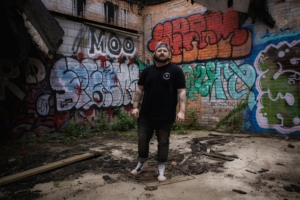
I grew up in Detroit, a city of factories and funeral parades, Motown records and mended fences. The streets I learned to walk on were loud with engines and louder still with ambition. In that city — in that era, especially — toughness was currency. I learned early to stand my ground, to protect my own, to make my small kingdom unassailable. I was quick to anger, 0 to 60 in a tenth of a second. I would ask myself, (because I did not like who I was) what’s wrong with me? No answer came that felt right, and the pattern repeated and repeated: I’d lash out, hurt people I loved, and then retreat into shame. For a long while that cycle defined me.

It took a long time — and a lot of embarrassing, painful failures — before I started to look for explanations that could become pathways instead of the same dead ends. That search, over the last 45 years, led me through countless trainings, retreats, and relationships. I studied plenty of systems and skills, but one of the most meaningful things I discovered was the Narrative Enneagram. Within that circle of nine, I found my number. I was an Eight! At first, being an Eight offered relief — finally a label that explained the force that drove me. But labels can also be prisons. I saw that I was not “integrated.” I was functioning at half speed, armed and dangerous, without most of the inward tools that make a life human.


When people talk about Detroit in the 1960s, they talk about dynamism and danger together. It was a place of industrial might — auto plants humming, assembly lines that made America mobile — and it was also a city simmering with social change, racial tension, and the scream of a neighborhood that felt squeezed. The Detroit of my youth carried the echoes of the Great Migration and the rising voice of civil rights. The city’s heartbeat was Motown: Berry Gordy’s miracle where Black voices found national airwaves and a kind of dignity that shimmered in lacquered records. Yet alongside that soundtrack was the sound of helicopters over riots, the crack of police batons, and the heavy grief of lives upended in streets that once felt safe.


In that environment, my Eight side learned to armor up fast. Eights, by temperament, protect themselves and others. We can be decisive, direct, and resolute. But when an Eight is not integrated — when the strength becomes defensiveness, when the will becomes domination — the results are destructive. I protected, but too often that protection translated into control. I could make things erupt and keep going long after the battle was over. Nonviolence? It felt distant, like a lighthouse across a foggy dreamscape — brilliant and unreachable.

The turning point was not a single dramatic event. It was a slow bringing together of consequences: the relationships I broke, the loneliness that followed victories, the growing realization that power without wisdom made me small, not big. I began to understand that being an Eight did not have to mean living in constant fight or flight. My work — a lifetime of practice — became a work of integration: bringing heart into will, softness into strength. Becoming a Narrative Enneagram Teacher was more than a credential; it was a map and a mirror. The map helped me see the directions toward healthier functioning. The mirror showed me what I had been avoiding: pain, vulnerability, and the need to learn how to love without expecting payment.


Part of what made this path possible was a latent contemplative streak. Even as a tough kid in Detroit, I had a part of myself drawn to silence, to long walks, to listening. But that contemplative part and my Eight-protector part were at war. It took years, and a lot of gentle but relentless practice, to let the contemplative side come in and lead sometimes. Nonviolence slowly revealed itself not as weakness, but as another kind of courage — a deeper, riskier courage that asks you to enter the world without armor and to offer dignity to people who may not deserve it by any conventional measure.


Nonviolence as an ethic is often mistaken for passivity. But the courage to be nonviolent is active; it is fiercely moral. It expects nothing in return. It sees others with dignity and honor. It listens more than it talks. It walks with, sits with, eats with, cries with, works with, and is present with. For me, this shift was seismic. I began practicing presence, sitting still with discomfort instead of scattering it with aggression. I learned restraint — not the brittle restraint of suppressing emotion so it later detonates, but the integrated restraint of feeling fully and choosing a wise response.

Detroit taught me a lot that helped on this path. In the 60s, the city showed both the worst and the best of human responses to pressure. It taught an appreciation for community — neighbors who checked on one another, churches that organized, and storefronts that doubled as meeting houses. It taught resilience. Coming out of factories and through hard winters taught people how to persevere; it taught me, too, that endurance can be tempered with tenderness. The music was a school of its own. Motown taught us how to turn sorrow into voice, outrage into rhythm, and marginalization into artistry. That artistry taught me how expression can be both a release and a bridge.


Becoming a healthy Eight required that I relearn power. True power, I discovered, is not about the loudest voice or the most forceful stance. True power is presence. It is the capacity to hold complexity without collapsing into defensiveness. It is the humility to ask for help. It is the willingness to risk being known as imperfect. I practiced sitting with people I feared, letting them see me, letting me see them. I practiced listening without planning my rebuttal. I practiced the kind of attentiveness that honors the other as worthy.


Was it easy? No. I would be lying if I claimed to have become saintly. Old habits die slowly and some are stubborn in their refusal to die. I am still not perfect. But the change has been profound. The storms have calmed. I have real peace now — a presence that feels more alive and less like a bluff. And that peace has given me the capacity to teach from a place of empathy rather than coercion. As a Narrative Enneagram Teacher, MCC (Master Certified Coach), and a Spiritual Director I don’t just help people identify their numbers; I help them see the paths toward integration: how to bring heart to will, how to temper justice with mercy, how to turn fierce protection into compassionate stewardship.


This journey taught me a lesson that reaches beyond personality systems: transformation is possible when courage is directed inward. The bravest thing I did was not a heroic outward act, but a quiet, repeated turning inward — to ask hard questions, to allow grief and shame to be felt, and to choose differently each time. From Detroit’s fists and furnace, I forged a softer kind of steel: resilient, flexible, and honest.


If you are an Eight reading this, or the loved one of an Eight, know this: your force can be your greatest gift when it is integrated with tenderness. Try to see the lighthouse of nonviolence not as a retreat but as a harbor. If you are someone who grew up in tough places — in cities of industry and unrest, where survival required a hard face — know you can let down that face without losing yourself. You can keep your dignity while showing vulnerability. You can hold others without crushing them.


If you are not an Eight, perhaps you recognize in this story a pattern you know well: a part of you that is reactive; a part that wants to protect at all costs. Our work is similar: to find the courage to be less sure, more present, more generous with silence and attention. To listen. To walk with. To sit with.


I won’t pretend the path is quick. It took me decades to move from a default of fury to a life where peace is possible. But the effort is worth it. The city taught me that too — to endure, to repair, to keep making music even when the world is cracked. There is a tenderness in Detroit that does not compromise grit. There is a sanctity in power when it is used to steward rather than dominate.


Try it. Sit in an uncomfortable silence, and don’t fill it with force. Walk toward someone you fear and stay long enough to see them. Speak quietly when the instinct is to roar. You might be surprised by how powerful you can be when you are softer. You might just like it.

Peace and every good.