Posts

From Scoreboard to Tapestry: Embrace Nonviolence

My business partner’s offhand metaphor about the United States not engaging in a nationwide football game—where there are winners and losers—stayed with me. At first, it sounded like a crazy joke, the kind people make to underline how competitive and spectacle-driven our society has become. But on my reflection, that “football” image is more instructive than flippant. It captures a deep, pervasive fact: life as contest, the world as scoreboard. What if we loosened our grip on that metaphor? What if, instead of celebrating winners and humiliating losers, we reimagined success as a collective flourishing and centered a culture of nonviolence? It is a radical reframe, so bear with me and it is also one that deserves serious attention.

Competition has undeniable value. It spurs innovation, drives excellence, and gives shape to many of our institutions—from markets to sports, academic achievement to civic engagement. Yet when competition becomes the dominant frame for all human interaction, it blinds us to alternatives and normalizes collateral damage. A zero-sum mentality assumes that another’s gain is automatically our loss. It trains us to view relationships, resources, and even the planet as limited commodities to be conquered or defended. The result is not just interpersonal friction but systemic harm: escalating violence, widening inequality, environmental degradation, and eroded trust in institutions.

And…I remember times back home when I was just not up to the competition and I got my clock cleaned. The funny thing is, I was not small or weak or without merit, so I became angry, was belittled, and was told that I was less then. I wanted to quit, to run away, to hide and to lash out. Little good it did me with the overwhelming prevailing attitude of the coaches, players, cheerleaders and spectators. I didn’t stand a chance.

This is where the teachings of nonviolence offer a profound corrective. Nonviolence is often mistaken for passivity or simple conflict avoidance. But figures like Jesus and Mahatma Gandhi modeled a far more active ethic. These men and women who lived and walked on the earth had to find a courage that defied comprehension and for them nonviolence, in their practice and lifestyle, was a disciplined way of engaging the world—rooted in courage, principles, and creative action. It is not the absence of conflict; it is the commitment to resolve conflict without dehumanizing others. It asks us to cultivate empathy, to recognize the dignity of adversaries, and to seek solutions that heal rather than simply punish.

Reimagining “winning” through the lens of nonviolence means changing our metrics. Instead of tallying victories and defeats, we begin to ask different questions: Who is flourishing? Are communities strengthened or weakened? Is the planet being cared for or exploited? Do our policies and practices expand freedoms and opportunities for the many, or do they concentrate advantage among the few? Success, in this framework, is measured by collective well-being, resilience, and regenerative practice.

The stakes of this shift are extremely high. Imagine what people will say about you? Because we are living in a moment of converging crises. Climate change destabilizes ecosystems and economies; social and political polarization deepens mistrust and reduces the space for reasoned debate; economic systems often prioritize short-term profit over long-term sustainability. In such a context, a competitive, winner-take-all logic exacerbates harm. It encourages resource extraction without stewardship, political brinkmanship without compromise, and a politics of humiliation that breeds resentment and cycles of retaliation. Nonviolence, conversely, invites us to break those cycles. It reframes adversity as an opportunity for creativity and collective problem-solving.

What would living into this shift look like in practice? First, it requires cultivating inner practices that temper reactivity and encourage empathy. Mindfulness, contemplative traditions, and reflective dialogue help people recognize their fears and attachments. When we know our triggers, we can choose responses that align with shared human dignity rather than reflexively seeking to dominate. Education systems that prioritize social-emotional learning, critical thinking, and civic literacy prepare citizens to engage in public life as collaborators rather than combatants. How would that look?

 

Second, institutional redesign matters. Democracy works best when it incentivizes cooperation and reduces zero-sum incentives. Electoral systems, media ecosystems, and corporate governance structures can be retooled to reward long-term, inclusive solutions. Policies that incentivize sustainable production, equitable distribution, and restorative justice create feedback loops where nonviolent solutions are not merely moral but also pragmatic. Imagine electoral incentives that reward coalition-building, or corporate accountability systems that value community well-being as much as shareholder profit. These are not utopian fantasies; they are policy directions that have been piloted at local levels and can be scaled.
Third, we must honor the language and practice of restorative justice. Traditional punitive systems focus on retribution, often producing repeat harm. Restorative approaches center repair and the restoration of relationships. They ask victims, offenders, and communities to participate in making amends, offering a path toward reconciliation and reduced recidivism. When societies adopt restorative frameworks, they acknowledge human fallibility while working toward healing—transforming conflict into an opportunity to rebuild trust.

Fourth, environmental stewardship must be reframed as a nonviolent act. Exploiting nature as though it were inert inventory is a form of violence that kills biodiversity, undermines livelihoods, and creates crises that disproportionately burden the most vulnerable. Nonviolent stewardship means honoring ecological limits, investing in regenerative agriculture and clean energy, and ensuring access to resources for future generations. This is not a sacrifice so much as an investment in our common home and in the long-term survival of our species.

This vision of nonviolence is not naive. History is full of examples where nonviolent movements achieved change against overwhelming odds—India’s independence movement, the U.S. civil rights movement, and more recent peaceful uprisings that led to democratic opening in various parts of the world. These movements did not succeed solely because of moral superiority; they succeeded because they leveraged strategy, discipline, broad-based coalition, and the ability to expose the injustice of violent systems without mirroring their brutality.

Adopting a nonviolent orientation at scale will be messy. People will disagree about priorities and means. There will be moments when force is necessary to protect those who cannot protect themselves. The point is not to deny complexity but to insist that violence should not be the default logic for solving problems. Instead, we should design systems and cultures that exhaust nonviolent options first, that prioritize de-escalation and mutual uplift, and that recognize the moral and practical costs of violence.

If we commit to this path, the benefits are both moral and practical. Societies organized around nonviolence tend to be more stable, more prosperous, and more resilient. They foster innovation not by crushing competitors but by building networks of trust and shared purpose. They produce healthier citizens—physically, mentally, and socially—because communities that care for one another reduce the stressors that lead to harm. And they leave a legacy that matters most: a habitable planet and institutions capable of delivering justice and dignity for generations to come.

Returning to my partner’s football metaphor, I now hear it less as a quip and more as an alarm bell. AND you may not feel the way that I am writing this blog, lets have dialogue in the comments. The spectacle of competition can be exhilarating, but it can also normalize division and glorify winners at the expense of many. When we start measuring success by abundance—by how many people thrive, how well ecosystems recover, how justly opportunities are distributed—we remember that life is a tapestry, not a scoreboard. Each thread—human, animal, plant, waterway—contributes to the strength of the whole.
This transformation begins with personal commitments and ripples outward. It begins with conversations where we listen to learn, not to win. It begins with leaders who model humility and curiosity rather than invulnerability. It begins with institutions that reward cooperation and designers who build systems that align individual incentives with collective flourishing.

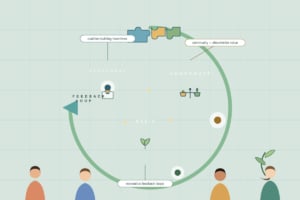
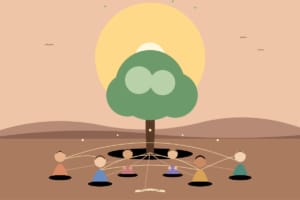
These Illustrations were built and drawn to portray a different way of being. What do you think?

FOR me to close here I must say that winning—if we must use that word—should mean creating conditions where everyone has the opportunity to flourish. It should mean a world where peace is not merely the absence of conflict but the presence of justice, equity, and compassion. It is a lofty aim, but not an impossible one. If even a small fraction of us commit to moving in that direction—toward nonviolence, toward stewardship, toward shared success—the change will be seismic. I promise you: start down that path even a little bit, and everything will begin to change. Hard as it will be.

Detroit Eight: From Fury to Integrated Nonviolence

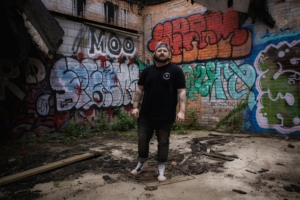
I grew up in Detroit, a city of factories and funeral parades, Motown records and mended fences. The streets I learned to walk on were loud with engines and louder still with ambition. In that city — in that era, especially — toughness was currency. I learned early to stand my ground, to protect my own, to make my small kingdom unassailable. I was quick to anger, 0 to 60 in a tenth of a second. I would ask myself, (because I did not like who I was) what’s wrong with me? No answer came that felt right, and the pattern repeated and repeated: I’d lash out, hurt people I loved, and then retreat into shame. For a long while that cycle defined me.

It took a long time — and a lot of embarrassing, painful failures — before I started to look for explanations that could become pathways instead of the same dead ends. That search, over the last 45 years, led me through countless trainings, retreats, and relationships. I studied plenty of systems and skills, but one of the most meaningful things I discovered was the Narrative Enneagram. Within that circle of nine, I found my number. I was an Eight! At first, being an Eight offered relief — finally a label that explained the force that drove me. But labels can also be prisons. I saw that I was not “integrated.” I was functioning at half speed, armed and dangerous, without most of the inward tools that make a life human.


When people talk about Detroit in the 1960s, they talk about dynamism and danger together. It was a place of industrial might — auto plants humming, assembly lines that made America mobile — and it was also a city simmering with social change, racial tension, and the scream of a neighborhood that felt squeezed. The Detroit of my youth carried the echoes of the Great Migration and the rising voice of civil rights. The city’s heartbeat was Motown: Berry Gordy’s miracle where Black voices found national airwaves and a kind of dignity that shimmered in lacquered records. Yet alongside that soundtrack was the sound of helicopters over riots, the crack of police batons, and the heavy grief of lives upended in streets that once felt safe.


In that environment, my Eight side learned to armor up fast. Eights, by temperament, protect themselves and others. We can be decisive, direct, and resolute. But when an Eight is not integrated — when the strength becomes defensiveness, when the will becomes domination — the results are destructive. I protected, but too often that protection translated into control. I could make things erupt and keep going long after the battle was over. Nonviolence? It felt distant, like a lighthouse across a foggy dreamscape — brilliant and unreachable.

The turning point was not a single dramatic event. It was a slow bringing together of consequences: the relationships I broke, the loneliness that followed victories, the growing realization that power without wisdom made me small, not big. I began to understand that being an Eight did not have to mean living in constant fight or flight. My work — a lifetime of practice — became a work of integration: bringing heart into will, softness into strength. Becoming a Narrative Enneagram Teacher was more than a credential; it was a map and a mirror. The map helped me see the directions toward healthier functioning. The mirror showed me what I had been avoiding: pain, vulnerability, and the need to learn how to love without expecting payment.


Part of what made this path possible was a latent contemplative streak. Even as a tough kid in Detroit, I had a part of myself drawn to silence, to long walks, to listening. But that contemplative part and my Eight-protector part were at war. It took years, and a lot of gentle but relentless practice, to let the contemplative side come in and lead sometimes. Nonviolence slowly revealed itself not as weakness, but as another kind of courage — a deeper, riskier courage that asks you to enter the world without armor and to offer dignity to people who may not deserve it by any conventional measure.


Nonviolence as an ethic is often mistaken for passivity. But the courage to be nonviolent is active; it is fiercely moral. It expects nothing in return. It sees others with dignity and honor. It listens more than it talks. It walks with, sits with, eats with, cries with, works with, and is present with. For me, this shift was seismic. I began practicing presence, sitting still with discomfort instead of scattering it with aggression. I learned restraint — not the brittle restraint of suppressing emotion so it later detonates, but the integrated restraint of feeling fully and choosing a wise response.

Detroit taught me a lot that helped on this path. In the 60s, the city showed both the worst and the best of human responses to pressure. It taught an appreciation for community — neighbors who checked on one another, churches that organized, and storefronts that doubled as meeting houses. It taught resilience. Coming out of factories and through hard winters taught people how to persevere; it taught me, too, that endurance can be tempered with tenderness. The music was a school of its own. Motown taught us how to turn sorrow into voice, outrage into rhythm, and marginalization into artistry. That artistry taught me how expression can be both a release and a bridge.


Becoming a healthy Eight required that I relearn power. True power, I discovered, is not about the loudest voice or the most forceful stance. True power is presence. It is the capacity to hold complexity without collapsing into defensiveness. It is the humility to ask for help. It is the willingness to risk being known as imperfect. I practiced sitting with people I feared, letting them see me, letting me see them. I practiced listening without planning my rebuttal. I practiced the kind of attentiveness that honors the other as worthy.


Was it easy? No. I would be lying if I claimed to have become saintly. Old habits die slowly and some are stubborn in their refusal to die. I am still not perfect. But the change has been profound. The storms have calmed. I have real peace now — a presence that feels more alive and less like a bluff. And that peace has given me the capacity to teach from a place of empathy rather than coercion. As a Narrative Enneagram Teacher, MCC (Master Certified Coach), and a Spiritual Director I don’t just help people identify their numbers; I help them see the paths toward integration: how to bring heart to will, how to temper justice with mercy, how to turn fierce protection into compassionate stewardship.


This journey taught me a lesson that reaches beyond personality systems: transformation is possible when courage is directed inward. The bravest thing I did was not a heroic outward act, but a quiet, repeated turning inward — to ask hard questions, to allow grief and shame to be felt, and to choose differently each time. From Detroit’s fists and furnace, I forged a softer kind of steel: resilient, flexible, and honest.


If you are an Eight reading this, or the loved one of an Eight, know this: your force can be your greatest gift when it is integrated with tenderness. Try to see the lighthouse of nonviolence not as a retreat but as a harbor. If you are someone who grew up in tough places — in cities of industry and unrest, where survival required a hard face — know you can let down that face without losing yourself. You can keep your dignity while showing vulnerability. You can hold others without crushing them.


If you are not an Eight, perhaps you recognize in this story a pattern you know well: a part of you that is reactive; a part that wants to protect at all costs. Our work is similar: to find the courage to be less sure, more present, more generous with silence and attention. To listen. To walk with. To sit with.


I won’t pretend the path is quick. It took me decades to move from a default of fury to a life where peace is possible. But the effort is worth it. The city taught me that too — to endure, to repair, to keep making music even when the world is cracked. There is a tenderness in Detroit that does not compromise grit. There is a sanctity in power when it is used to steward rather than dominate.


Try it. Sit in an uncomfortable silence, and don’t fill it with force. Walk toward someone you fear and stay long enough to see them. Speak quietly when the instinct is to roar. You might be surprised by how powerful you can be when you are softer. You might just like it.

Peace and every good.

Building Empathy in Politics

Building Empathy in Politics: A Path to Understanding and Compassion

I wanted to step into this arena because I think it is important to talk about. I do NOT in anyway think one group is better than another and this is not meant to be an endorsement of a group. Being a MCC, Master Certified Coach with ICF, the International Coach Federation, gives me a slightly different perspective using empathy and in an era marked by political polarization and divisive, destructive rhetoric. The need for empathy in politics has never been more critical! Empathy—is the ability to understand and share the feelings of others and of your own feelings, as 6 Seconds likes to say—can serve as a bridge across ideological divides, fostering dialogue and collaboration. This blog post while talking about a tough subject explores various empathy-building activities designed to enhance understanding among people you know and yourself. It can be used in team building, family conversations and other communities, encouraging them to step into the shoes of others and appreciate diverse experiences and backgrounds. By cultivating empathy, we can promote non-violent interactions and create a more compassionate political landscape.

The Importance of Empathy in Politics

Politics is often viewed as a battleground where opposing views clash, leading to hostility and misunderstanding. However, at its core, politics is about people—individuals with unique experiences, values, and aspirations. Empathy allows us to connect with these individuals on a human level, transcending ideological differences. When we practice empathy, we open ourselves to understanding the motivations and fears that drive others, paving the way for constructive dialogue and collaboration. YES, I know that doing this type of perspective is hard or even impossible from where you stand now. I can promise you that if you practice empathy you will be able to heal relationships that you thought were broken for ever. So please look at these activities with me and see which one may work for you……..

Activity 1: Role-Playing Scenarios

Role-playing is a powerful tool for enhancing empathy. By stepping into the shoes of others, you can gain insights into different perspectives and experiences. Here’s how to conduct a role-playing activity focused on political issues:

1.Choose Scenarios: Select relevant political scenarios that highlight differing viewpoints. For example, you could role-play a town hall meeting discussing a controversial policy, such as immigration reform or climate change.

2. Assign Roles: Divide the people into groups and assign them roles representing various stakeholders—such as community members, policymakers, activists, and business owners. Encourage them to research their roles and understand the motivations behind their perspectives.

3. Facilitate the Discussion: Allow each group to present their viewpoints in a structured discussion. Encourage participants to express their characters’ feelings and concerns authentically.

4. Debrief: After the role-play, hold a debriefing session. Ask everyone to reflect on their experiences. What did they learn about the perspectives of others? How did it feel to advocate for a viewpoint different from their own?

Through this activity, everyone can develop a deeper understanding of the complexities surrounding political issues, fostering empathy for those with differing opinions.

Activity 2: Active Listening Exercises

Active listening is a crucial skill for fostering empathy. It involves fully concentrating, understanding, and responding to what others are saying. Here’s a simple exercise to enhance active listening skills:

1. Pair Up Participants: Divide everyone into pairs and have them sit facing each other.

2. Set a Timer: Assign one person in each pair to speak for three minutes about a political issue that matters to them. The other person should listen without interrupting.

3. Reflect and Respond: After the speaker finishes, the listener should summarize what they heard, reflecting back the speaker’s feelings and concerns. Then, they can ask clarifying questions to deepen their understanding.

4. Switch Roles: After the first round, have participants switch roles and repeat the exercise.

5. Group Discussion: After both rounds, bring everyone back together for a group discussion. Encourage everyone to share their experiences. How did it feel to be listened to? What insights did they gain from listening to others?

This exercise not only enhances empathy but also builds trust and respect among individuals  and groups, creating a more open and understanding environment.

Activity 3: Perspective-Taking Tasks

Perspective-taking tasks challenge participants to consider issues from viewpoints different from their own. This activity can be particularly effective in political discussions, where entrenched beliefs often hinder understanding. Here’s how to facilitate a perspective-taking exercise:

1. Identify a Controversial Topic: Choose a political issue that elicits strong opinions, such as healthcare reform or gun control.

2. Research and Prepare: Assign each person to research the topic from multiple perspectives. Encourage them to explore articles, interviews, and personal stories that represent various viewpoints.

3. Group Sharing: In small groups, have each person share what they learned about the different perspectives. Encourage them to discuss the underlying values and emotions that drive each viewpoint.

4. Reflect on Common Ground: After sharing, ask participants to identify common values or concerns that emerged from the discussion. What do they all care about, even if they disagree on solutions?

5. Personal Reflection: Finally, encourage everyone to reflect on how this exercise impacted their understanding of the issue. Did it change their perspective? How can they apply this empathy in their daily lives?

By engaging in perspective-taking, you can cultivate a deeper understanding of the complexities surrounding political issues, fostering a culture of compassion and respect.

Practicing Empathy in Daily Life

Building empathy in a workshop or group setting is just the beginning. To create lasting change, you must practice empathy in your daily life. Here are some strategies to encourage ongoing empathy-building:

1. Engage in Conversations: Encourage contributors to engage in conversations with people who hold different political views. Approach these discussions with curiosity and a willingness to listen.

2. Volunteer in the Community: Volunteering for local organizations can expose participants to diverse experiences and challenges faced by others. This firsthand experience can deepen their understanding and empathy.

3. Reflect on Interactions: Encourage everyone to reflect on their daily interactions. How do they respond to differing opinions? Are they open to understanding others, or do they dismiss opposing views?

4. Share Stories: Create opportunities for participants to share personal stories related to political issues. Storytelling can humanize complex topics and foster empathy among listeners.

5. Model Empathy: Encourage the group to model empathetic behavior in their communities. By demonstrating compassion and understanding, they can inspire others to do the same.

 The Impact of Empathy on Relationships and Community Dynamics

As you cultivate empathy, you will likely notice positive changes in your relationships and community dynamics. Empathy fosters trust, respect, and collaboration, creating an environment where diverse voices are heard and valued. When individuals feel understood, they are more likely to engage in constructive dialogue and work together toward common goals.

Moreover, empathy can help reduce conflict and promote non-violent interactions. In a political landscape often characterized by hostility and division, empathy serves as a powerful antidote, encouraging individuals to seek common ground rather than focusing on differences.

A Call to Action

In a world where political polarization seems to dominate the conversation, the importance of empathy cannot be overstated. By engaging in empathy-building activities, individuals can develop a deeper understanding of diverse experiences and foster a culture of compassion. As we practice empathy in our daily lives, we can create a more inclusive and respectful political landscape.

Let us commit to stepping into the shoes of others, listening actively, and embracing the complexities of our shared humanity. Together, we can build bridges across divides, promote non-violent interactions, and cultivate a more compassionate society. The journey toward empathy begins with each of us—let’s take that first step today.

Peace and every good to you…

Jim

Connecting Emotional Intelligence and the Enneagram

Connecting Emotional Intelligence and the Enneagram: A Pathway to Non-Violence

In this world increasingly marked by conflict and misunderstanding, the need for effective communication and emotional understanding has never been more critical for all of us. Two of the powerful tools I have been talking about that can facilitate this understanding are Emotional Intelligence (EI) and the Enneagram. While they originate from different frameworks, their way of intersecting offers profound insights with our human behavior, enhancing self-awareness and empathy—two essential components of emotional intelligence. Today’s blog post explores how these tools complement each other in promoting non-violence, providing real-life examples and case studies to illustrate their application in resolving conflicts and fostering harmonious relationships.

 Understanding Emotional Intelligence

Emotional Intelligence refers to the ability to recognize, understand, and manage our own emotions while also being able to recognize, understand, and influence the emotions of others. Daniel Goleman and Josh Freedman, pioneers in the field, Daniel  identifies five key components of EI: self-awareness, self-regulation, motivation, empathy, and social skills, while Josh identifies  (my favorite) Know, Choose, Give. These components are crucial in navigating interpersonal relationships and resolving conflicts peacefully.

The Enneagram: A Tool for Self-Discovery

The Enneagram is a personality typing system that categorizes human behavior into nine distinct types, each with its own motivations, fears, and coping mechanisms. Understanding one’s Enneagram type can significantly enhance self-awareness, as it provides insights into our core motivations and emotional triggers. This self-awareness is the first step toward developing emotional intelligence.The Nine Enneagram Types

1. Type One: The Reformer – Principled, purposeful, and self-controlled.

2.Type Two: The Helper – Generous, people-pleasing, and possessive.

3. Type Three: The Achiever – Adaptable, driven, and image-conscious.

4. Type Four: The Individualist – Sensitive, introspective, and self-absorbed.

5. Type Five: The Investigator – Perceptive, innovative, and secretive.

6. Type Six: The Loyalist – Committed, security-oriented, and anxious.

7. Type Seven: The Enthusiast – Spontaneous, versatile, and scattered.

8. Type Eight: The Challenger – Self-confident, decisive, and confrontational.

9. Type Nine: The Peacemaker- Receptive, reassuring, and complacent.

The Intersection of EI and the Enneagram

Enhancing Self-Awareness

Understanding one’s Enneagram type can significantly enhance self-awareness, a foundational element of emotional intelligence. For instance, a Type One (Reformer) may recognize their tendency toward perfectionism and how it can lead to frustration and conflict with others. By acknowledging this trait, they can work on self-regulation, learning to manage their expectations and communicate more effectively with those around them.

Fostering Empathy

Empathy, another critical component of emotional intelligence, can also be deepened through the lens of the Enneagram. For example, a Type Two (Helper) may struggle with setting boundaries, often leading to feelings of resentment. By understanding their type, they can better empathize with others’ needs and learn to communicate their own more effectively. This understanding fosters healthier relationships and reduces the likelihood of conflict.

Case Studies: Real-Life Applications

 Case Study 1: Workplace Conflict Resolution

In a corporate setting, a team comprised of various Enneagram types faced significant conflict due to differing communication styles. A Type Eight (Challenger) was often perceived as aggressive, while a Type Nine (Peacemaker) felt overwhelmed and silenced. By facilitating a workshop on the Enneagram and emotional intelligence, team members gained insights into each other’s motivations and fears. The Type Eight learned to temper their assertiveness with empathy, while the Type Nine found their voice, leading to improved collaboration and a more harmonious work environment.

Case Study 2: Family Dynamics

In a family struggling with communication, a Type Four (Individualist) often felt misunderstood, leading to emotional outbursts. By exploring the Enneagram together, family members learned to appreciate the Type Four’s depth of feeling and creativity. The Type Four, in turn, gained insights into their emotional triggers and learned to express their needs more clearly. This mutual understanding fostered empathy and reduced conflict, promoting a more peaceful family dynamic.

 Encouraging Non-Violent Interactions

The insights gained from understanding one’s Enneagram type can inform emotional responses and interactions with others. For instance, a Type Six (Loyalist) may recognize their tendency to become anxious in uncertain situations. By acknowledging this, they can practice self-regulation techniques, such as deep breathing or seeking support from others, rather than reacting defensively. This awareness not only helps them manage their emotions but also promotes non-violent communication with those around them.

Practical Steps for our readers

1. Identify Your Enneagram Type: Take an Enneagram assessment to understand your core motivations and emotional triggers.

2. Reflect on Your Emotions: Consider how your type influences your emotional responses in various situations.

3. Practice Empathy: Engage in active listening and try to understand the perspectives of others, especially those with different Enneagram types.

4. Communicate Openly: Use “I” statements to express your feelings and needs without placing blame on others.

5. Seek Feedback: Encourage open dialogue with friends, family, or colleagues about how your behavior affects them.

Conclusion

The integration of Emotional Intelligence and the Enneagram offers a powerful framework for promoting non-violence in our interactions. By enhancing self-awareness and empathy, individuals can navigate conflicts more effectively and foster harmonious relationships. As we deepen our understanding of ourselves and others through these tools, we pave the way for a more compassionate and peaceful world. Embracing the insights gained from the Enneagram can lead to transformative changes in how we respond to our emotions and interact with those around us, reinforcing the vital connection between self-understanding and non-violent behavior and my goal is to continue to give you thoughts and ideas to help on the journey of intergration.

Peace and every good to you.


A way to non-violence

Connecting Emotional Intelligence and the Enneagram: What would happen if we had a discussion on how emotional intelligence and the Enneagram complement each other in promoting non-violence. Could we highlight the ways in which understanding one’s Enneagram type can enhance self-awareness and empathy, both of which are crucial components of emotional intelligence? This is a  case study and real-life examples to illustrate how these tools can be applied to resolve conflicts, improve communication, and foster harmonious relationships. We encourage participants to consider how their Enneagram insights can inform their emotional responses and interactions with others, reinforcing the connection between self-understanding and non-violent behavior.

This is case study using the Delent Group and that they did to help all of the companies stakeholders understand how to combat violence

Case Study: The Delent (name changed to protect the  company identity) groups journey to integrating the Enneagram and Emotional Intelligence to Support Non-Violence

The background

In a diverse urban community facing challenges related to violence and social unrest, a local non-profit organization sought innovative approaches to foster peace and understanding among its residents. The organization decided to implement a program that combined the Enneagram personality system with Emotional Intelligence (EQ) training to address the root causes of conflict and promote non-violence.

Their Objective

The primary objective was to help all stakeholders understand their own and others’ emotional responses and behaviors, thereby reducing misunderstandings and conflicts. By integrating the Enneagram with EQ, the program was aimed at tools to enhance self-awareness, empathy, and effective communication among the community members.

The Implementation

1. Workshops and Training Sessions: The program began with a series of workshops introducing participants to the Enneagram’s nine personality types. Each participant identified their Enneagram type, gaining insights into their core motivations, fears, and desires.

2. Emotional Intelligence Development: At the same time, participants engaged in EQ training, focusing on self-awareness, self-regulation, social awareness, and relationship management. This training helped individuals recognize and manage their emotions and understand the emotional dynamics of others.

3.We had integration sessions: Special sessions were held to integrate the Enneagram insights with EQ skills. Participants learned how their Enneagram type influenced their emotional responses and how to apply EQ strategies to manage these responses constructively.

4. We then did conflict resolution exercises: Role-playing and group exercises were conducted to practice non-violent communication and conflict resolution. Participants used their understanding of the Enneagram and EQ to navigate and resolve simulated conflicts. This process had up and down success until the process became embedded in the company.

Promising Outcomes

Increased Self-Awareness: Participants reported a deeper understanding of their emotional triggers and behavioral patterns. For example, a participant identified as an Enneagram Type 8 (The Protector) learned to recognize their tendency towards confrontation and applied EQ techniques to pause and choose more constructive responses. It took practice to get to a place of automatic response.

Enhanced Empathy and Understanding: By understanding the Enneagram types of others, participants developed greater empathy and appreciation for different perspectives. This understanding helped to reduce prejudices and fostered a more inclusive community environment.

Improved Communication: The integration of EQ skills with Enneagram insights led to more effective communication. Participants were better equipped to express their needs and listen to others, reducing misunderstandings and fostering collaboration.

Reduction in Conflicts: Over six months, the community reported a noticeable decrease in conflicts and violent incidents. Participants attributed this change to their improved ability to manage emotions and engage in non-violent communication.

The Conclusion

The case study demonstrates that integrating the Enneagram with Emotional Intelligence can be a powerful approach to supporting non-violence. By enhancing self-awareness, empathy, and communication skills, individuals are better equipped to understand and manage their emotions and interactions, leading to a more peaceful and harmonious community. This approach can serve as a model for other communities seeking to address violence and promote social cohesion. And while this approach is not new in anyway maintaining this direction takes effort and a desire to live in a more agreeable way.