Posts

To Everyone Standing at the Edge of the Room

A CONVERSATION WITH DR. DON AJENÉ WILCOXSON · PART THREE OF THREE

When the Whisper Is Louder Than the Fear

On racial injustice, the cost of standing up, and what he wants to say to everyone at the edge of the room

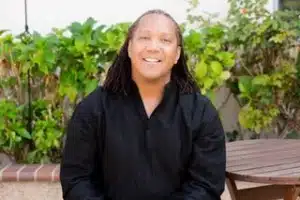
There is a particular kind of courage that does not announce itself. It does not look like charging a hill. It looks, more often, like a young man walking to the principal’s office to report something dangerous, knowing full well that the danger will follow him home.

Dr. Don Ajené Wilcoxson was in high school when he discovered that the Ku Klux Klan was recruiting on his campus. He reported it. Threats followed. He did not stop. When I asked him about it in our conversation, sitting with decades of distance from that moment, he said something I have turned over many times since: speaking out felt natural. It would have been uncomfortable not to speak out.

That sentence says a great deal about who he is. It also says something about the world he grew up in — a world where a young Black man could not afford the luxury of looking away from what was happening around him, where naming the danger was not bravery so much as clarity.

Speaking out felt natural. It would have been uncomfortable not to speak out.

He carried that clarity with him into his professional life. When he was hired at Riverside City College, someone told him directly that he had been selected because he was Black — even though he was more qualified than other candidates. He did not walk away from that institution. He went on to become one of only three or four people in the college’s history to earn the rank of Distinguished Professor and was recognized nationally as one of twenty faculty nationwide to receive the ACBSP Teaching Excellence Award.

He outlasted the smallness of that moment by becoming larger than it. But becoming larger than a moment does not mean the moment didn’t happen. And it does not mean the moments have stopped coming.

I asked him plainly, as his friend, to name what is breaking his heart right now. He did not flinch.

“A minority has influenced America to turn its back on its own ideology, on decency itself. That grieves me deeply.”

He is a Nine on the Enneagram — the Peacemaker — and Nines are not typically the ones who reach for the prophetic register. They are wired for harmony, for holding multiple perspectives, for reducing tension rather than naming it. And yet Ajené carries a grief about racial injustice that he does not minimize or set aside. The two things coexist in him: the genuine desire for peace, and the refusal to purchase that peace at the cost of silence.

He told me that he struggles. That he experiences depression at times. That watching the erosion of spaces where people on the margins were beginning to find room — watching that happen in real time, in a country whose stated ideals he has spent his life embodying — presses on him in ways that are not always easy to carry. He said this without drama, without performance, with the same steadiness he brings to everything. Which, I think, made it land harder.

In the Six Seconds emotional intelligence framework, one of the deepest competencies is what they call “increasing empathy” — the capacity to genuinely enter another person’s experience, not just understand it intellectually. Ajené has developed this to a rare degree. He extends it even toward those causing harm, drawing on Dr. Martin Luther King Jr.’s concept of “sincere ignorance” — the idea that some people do harm not from malice but from the limits of what they have been willing to see. He holds space for that distinction without surrendering his clarity about the harm itself.

That is a sophisticated and costly kind of empathy. It requires you to stay open without becoming numb. It requires you to show grace without pretending things are fine. Howard Thurman, who walked closely with the grief of his people and still wrote about the luminous possibility of human encounter across difference, described something similar: the discipline of seeing the person inside the ideology without excusing the ideology. Ajené practices this. It costs him something every time.

“The good people in my life who are trying to live reflectively and do important work — they are what keeps the pilot light lit.”

He does not sustain that kind of openness alone. He draws on the people around him — friends, collaborators, the daily presence of those who are choosing, in their own lives, to do the harder thing. He draws on what he calls ancestral energies — the sense that he is held by something larger and older than his present circumstances, a living connection to those who walked this road before him. He draws on rest: not collapse but the intentional return to breath, to presence, to the moment that is here.

And he draws on the conviction that the work of justice is necessary even when it does not produce visible results. “Even if it only changes one person’s perspective,” he said. There is no calculation of return in that sentence. There is only the clarity of calling — the same clarity that walked a teenager to a principal’s office in the face of threats, the same clarity that stayed at a college that had diminished him and built something remarkable there anyway.

Toward the end of our conversation, I asked him what he would say to someone watching who wonders whether there is a place for them — someone standing at the edge of a room, uncertain whether they are welcome, uncertain whether their presence matters. His answer was quiet and unhurried and direct.

“Fear wants you to hold back. But if you are called to live your purpose, have faith that the calling knows your direction. The call, even as a whisper, is more powerful than the fear you are experiencing.”

I have heard a lot of encouragement in my years of work in the EQ and formation space. Most of it is well-meant but lands lightly. This did not land lightly. It landed the way things land when the person speaking to them has earned the right to say them — when the words come not from aspiration but from having stood in that place, in that fear, and taken the next step anyway.

He is in his winter season now — spacious, steady, deep. He hopes for more presence over productivity, more wisdom than certainty, more love over fear, more accompaniment over expertise. He is done, he said, trying to become more. He is learning to become enough.

Three conversations with this man. Three movements of a life still very much in motion. The formation that made him. The work that holds him. And the fire that, even in winter, has not gone out.

If you are doing hard work in difficult conditions — work for justice, work for belonging, work that nobody may be watching — he is speaking to you. The whisper is louder than the fear. He would know. To get in touch with Ajene use this link. ajene@donajene.com

If this conversation touched something in you, we invite you to explore how emotional intelligence and spiritual formation can deepen your own capacity for courage and presence at spiritofeq.com.

Peace and every good.

spiritofeq.com/blog & mystical seeker.substack.com
The Work That Holds Everything Together

A CONVERSATION WITH DR. DON AJENÉ WILCOXSON · PART TWO OF THREE

A Man Who Stands in the Room

On teaching, spiritual direction, and what it means to carry many callings at once

There is a question I have wanted to ask Ajené for years, and as we continue our 3 part conversation I finally asked it when we sat down together: what is the connective tissue across everything you do? Because from where I sit, the list is remarkable. Distinguished Professor at Riverside City College — recently elevated to Professor Emeritus after more than three decades. Spiritual director. Six Seconds EQ faculty. Enneagram teacher. Minister. Business consultant. Dream worker trained in the Jungian mystical tradition at the Haden Institute. Scuba diver, salsa dancer, Lego builder, student of classical guitar.

He smiled at the question. Then he said something I have been turning over ever since.

“Emotional intelligence is intertwined with who I am at a soul level. One moves the other. From this perspective, I am passionate about living and teaching how to experience a soul-centered emotionally intelligent life.”

That is the connective tissue. Not a set of skills or roles, but a way of being — the conviction that what we feel and what we believe and how we treat the people in front of us are not separate compartments but a single integrated life. Everything Ajené does flows from that integration.

The classroom is where I have seen him described most often by others, and the descriptions are strikingly consistent. His dean at RCC said he has a natural ability to connect with his students — that he “allows students to find solace in his presence when they are struggling.” The Accreditation Council for Business Schools and Programs recognized him with their Teaching Excellence Award; he was one of only twenty faculty nationwide to receive it that year. But when you ask Ajené what he is doing in the classroom, he does not talk about pedagogy. He talks about presence.

“The classroom is the students’ space, not mine,” he told me. “I enter their space with respect. I leave my own baggage outside the door so I can meet them where they are.” His approach is rooted in listening rather than answers — in the recognition that every person arriving in that room is carrying something, and that learning cannot happen until the person feels held.

This is, at its core, an emotional intelligence practice. In the Six Seconds model, the capacity to “increase empathy” — to genuinely enter another person’s experience before responding to it — is one of the deepest and most difficult competencies to develop. Ajené has built a classroom around it. And notably, he has done this in a business and entrepreneurship department, which is not the first place most people would look for this kind of formation work. That gap between where it is expected and where he practices it is, I think, part of the point.

The spiritual direction practice carries the same posture into a different room. Ajené works with people across Buddhist, Christian, Hindu, Islamic, Jewish, and no-tradition backgrounds — a range that reflects his own formation. He grew up with a mother who was Jehovah’s Witness, a father who was Buddhist, a grandmother who was Baptist, an uncle who was Muslim, and a Catholic school. His doctorate from New York Theological Seminary was in interfaith, inter-spiritual, and intercultural theology — not because he chose a specialty, but because he was already living at that intersection and needed language for it.

He describes his approach to spiritual diversity through a Baha’i image: the most beautiful garden is a mixture of flowers. He is not interested in resolving difference into uniformity. He is interested in what each tradition offers to the whole — and in holding space wide enough that a person from any background can find their own ground.

“The most beautiful gardens are a mixture of flowers. I see my own spiritual life that way — enriched by every stream, not threatened by any of them.”

His work as a Enneagram coach sits at the center of all of this. The Enneagram tradition is distinctive in that it asks real people to speak from their own lived experience of a type — not to have a type explained to them, but to hear from those who inhabit it. Ajené is a Nine, the Peacemaker, and he brings to that work a rare self-awareness about both the gift and the cost of his type. Nines tend to minimize their own needs and giftedness in service of harmony. They absorb the priorities of others. They can mistake self-erasure for humility.

When I asked him where his Nine-ness serves him most and where it costs him most, he was characteristically honest. The gift: the capacity to enter any room and genuinely see every person in it, to hold multiple realities at once without needing to collapse them into a winner. The cost: the temptation to smooth over things that need to be said, to defer his own voice when it is exactly his voice that is required. He is aware of both. That awareness is itself the work.

He describes his current life season as winter — and he is careful to define what he means. Not decline. Not retreat. Spaciousness. The steadiness that comes from having built something over decades and knowing now what matters. He hopes, he told me, for more presence over productivity, more wisdom than certainty, more accompaniment over expertise. And the phrase that has stayed with me: not trying to become more but learning to become enough.

That phrase does a particular kind of work on me, because it runs counter to almost everything our culture tells us about professional life. Enough is not a word our productivity-saturated age handles well. But for a man who has earned Distinguished Professor status and a national teaching award and a doctorate and a spiritual direction practice and three decades of student relationships — for that man to say he is learning to become enough — that is not resignation. That is a different kind of ambition entirely.

There is a thread in the contemplative tradition — I am thinking of Thomas Merton, of Howard Thurman, of the desert fathers and mothers — about the movement from doing to being, from accumulation to presence. Ajené is living that transition with his eyes open. He knows what season he is in. And he is choosing to inhabit it rather than fight it.

In our next conversation, we will go to the harder places. The grief he carries about racial injustice. The threats he faced in high school for speaking up. The discrimination he encountered at the institution where he would go on to build one of the most distinguished careers in its history. And his word — direct and unhurried — to the people standing at the edge of the room, wondering whether there is a place for them.

But here, in this middle movement, I want to simply name what I see when I look at his life whole: a man who has refused, across decades and contexts, to let his work be less than his faith. That refusal is its own kind of witness.

To get in touch with Ajene use this link. mailto:ajene@donajene.com

If you are curious about how emotional intelligence and the Enneagram can deepen your own integration of work, faith, and presence, we would love to continue the conversation at spiritofeq.com.

Peace and every good.


The Garden He Grew from Honest Contradiction

Post One:   The Garden He Grew From

Formation, the village of mentors, and the name given by a king

Post Two:   A Man Who Stands in the Room

Teaching, spiritual direction, EQ practice, and the soul-centered integrated life

Post Three:  When the Whisper Is Louder Than the Fear

Racial injustice, the cost of speaking, grief, and the word for those at the edge of the room


A CONVERSATION WITH DR. DON AJENÉ WILCOXSON · PART ONE OF THREE

The Garden He Grew From

What hard soil and an unlikely village made of one remarkable man

There is a photograph I keep returning to in my mind — not a real one, but the kind your imagination makes when someone tells you a story about a boy walking to school alone, afraid, and arriving anyway. I have known Dr. Don Ajené Wilcoxson for years. I know the man he became. But it was only when we sat down together for a long conversation that I began to understand the terrain that formed him.

He described his childhood plainly, without self-pity, in the way that people speak about hard things they have long since made peace with. Physical abuse. A biological father he never met. The daily threat of being beaten walking to school. He called it “really challenging.” What stayed with me was not the weight of those words but the steadiness with which he carried them — the way a man speaks about weather he has already walked through.

“I was blessed,” he said, and meant it. Because running alongside those hardships was something else: a community of people who saw him and chose to stay.

His adoptive father became, in his words, “the best thing that could ever happen” to his life — a man who taught him about all cultures, all music, all the beautiful width of what it means to be human.

There was also Dell Roberts, a friend who showed him what it looks like for a young Black man to move through the world with dignity. His mother, who helped him find stillness. His godmother, who taught him ethics — not as rules, but as a way of being. And his nana, who pressed into him the twin practices of listening and caring. He didn’t point to a single turning point the way we often hope people will. He pointed instead to a village.

There is a concept in the Enneagram — and Ajené is a deeply self-aware Nine — about the way the Peacemaker absorbs the world around them, becoming, in some sense, an amalgam of the people they love. What he described from his childhood is not just biography. It is the formation of a man who would go on to hold space for people from every tradition, every background, every wound — and do it with the naturalness of someone who learned to navigate difference before he could name it.

He was the darkest member of his family. Extended family and outsiders noticed. He noticed. And rather than letting that experience narrow him, it became a doorway. “It taught me to navigate that difference,” he said, “and that helped me work across cultures and faiths later.” What looked, from the outside, like a wound had quietly become a gift.

This is the movement that the Six Seconds emotional intelligence framework calls “exercising optimism” — not the naive insistence that things are fine, but the practiced discipline of asking what is generative alongside what is broken. Ajené did not learn this from a book. He learned it the way most lasting things are learned: by living through something hard and refusing to let it be the last word.

The name Ajené arrived later. He was in his mid-twenties, teaching, when an African king whose daughter had been moved by his work gave him the name. It means, roughly, “a businessman who truths” — which Ajené himself acknowledged is something of an oxymoron, a contradiction held together by purpose. He carries that name now not as an identity to perform but as a reminder. Something higher, he said, is always calling him in everything he does.

“The name is a constant reminder that I have something higher that is calling me in everything I do.”

That sense of calling runs through everything that follows: the classroom, the sanctuary, the spiritual direction session, the emotional intelligence coaching circle. But it began here, in the soil of a childhood that was genuinely difficult and genuinely held — held by a father who taught him wonder, a friend who modeled dignity, a grandmother who modeled listening, a godmother who modeled integrity.

There is a phrase from the Celtic tradition that has long moved me: the idea that what we are is not something we construct alone, but something we receive — from the land, from the ancestors, from the people who pray over us before we know we need praying over. Ajené did not use that language, but he described that reality. He is, in a deep sense, a man made by his village.

And the village made something extraordinary. A man who enters rooms prepared to meet whoever is already inside. A man who learned, before he had words for it, that difference is not a problem to be solved but a garden to be tended. A man who was given a name that named him more truly than he could have named himself — and who has spent the decades since trying to live worthy of it.

On Wednesday and Thursday, we will follow Ajené into the classroom and the sanctuary, into his work at the intersection of emotional intelligence and spiritual formation, and into the harder places — the grief he carries about racial injustice, the cost of speaking when silence would be easier, and what keeps the pilot light lit even now. But this is where we begin: with the boy, and the village, and the soil that made him.

The boy walked to school afraid and arrived anyway. That was, perhaps, the first lesson.

To get in touch with Ajene use this link.ajene@donajene.com

If this reflection stirred something in you, we invite you to explore the work of emotional intelligence and spiritual formation at spiritofeq.com and mystical seeker.substack.com

Peace and every good.

The Most Intelligent Thing You Can Do Is Slow Down

When You Know Why You React, You Can Choose How You Respond

What the Enneagram and emotional intelligence reveal about the space between trigger and response

There is a photograph I keep coming back to in my mind — not an actual photograph, but the kind that forms over years of sitting across from people in coaching conversations. It is the image of a person mid-sentence, eyes slightly wide, voice pitched a half-step higher than usual, saying something they will probably wish they hadn’t. And in the moment before the words arrive, there is this invisible space — a fraction of a second, maybe less — where everything that matters is happening.

Viktor Frankl called it the space between stimulus and response. He wrote about it from inside a concentration camp, which means he earned the right to talk about it. That space, he said, is where our freedom lives. It is also, I’ve come to believe, where emotional intelligence and the Enneagram converge into something genuinely transformative.

The Intelligence Beneath the Surface

Emotional intelligence, as Daniel Goleman mapped it, begins with self-awareness — the capacity to notice what’s happening inside you before it moves through you and into the world. Josh Freedman of Six Seconds distills it differently, into a sequence I return to often: Know Yourself, Choose Yourself, Give Yourself. The knowing comes first. Without it, we are largely reactive — moved by currents we can’t name.

Most of us have experienced this. A colleague’s offhand comment lands wrong and we feel our jaw tighten before we understand why. A family member raises a familiar complaint and we hear ourselves responding in the old way again — the way we promised ourselves we wouldn’t. The reaction isn’t irrational exactly. It’s just faster than our awareness.

This is where the Enneagram enters the room.

A Map of the Interior

The Enneagram is a nine-type system of personality that goes deeper than behavior into motivation — into the core fears and longings that drive us. It is not a label to be worn comfortably. At its best, it is an unsettling mirror, one that shows you not only what you do but why, and what you are protecting when you do it.

A Type Eight (the Challenger) doesn’t lead aggressively because they are cruel. They lead that way because somewhere underneath the forcefulness is a terror of being controlled or betrayed — and strength feels like the only reliable protection. A Type Two (the Helper) doesn’t overextend themselves because they are foolish. They do it because their worth, in some deep and often unconscious way, feels contingent on being needed.

When you understand this about yourself — really understand it, not just intellectually but in the body — something shifts. The reaction doesn’t disappear. But there is more space around it.

The Place Where They Meet

I’ve seen this play out in workshops and in one-on-one coaching more times than I can count. A leadership team I worked with had a Type Eight and a Type Nine in constant friction. The Eight moved fast, spoke bluntly, made decisions before the Nine felt heard. The Nine withdrew, agreed on the surface, and then quietly undermined the direction — not out of malice but out of a desperate need for harmony they didn’t know how to ask for. What made it harder was that both of them were genuinely trying. The Eight believed clarity and decisiveness were acts of respect — waste no one’s time, say what’s true, move forward. The Nine believed keeping the peace was its own form of care — absorb the friction, hold the group together, avoid the rupture. Neither of them was wrong exactly. They were just operating from entirely different interior maps, and no one had ever handed them the other person’s.

When we named what was happening through the lens of both the Enneagram and emotional intelligence, something loosened. The Eight didn’t need to become soft. The Nine didn’t need to become confrontational. They needed to understand each other’s interior logic — and then, from that understanding, choose something different than their default. What I watched happen in that room was not a personality makeover. It was something quieter and more durable: two people recognizing that the other person’s behavior had a reason, and that the reason wasn’t contempt or weakness. That recognition created enough safety for genuine conversation — maybe for the first time in years of working together.

That’s the intersection. The Enneagram names what’s underneath. Emotional intelligence gives you tools to work with it. Together, they create the conditions for what I’d call non-reactive presence — the ability to be fully in a difficult moment without being fully hijacked by it.

Some Places to Begin

If this is new territory for you, here are a few entry points worth sitting with:

  1. Get curious before you get defensive. The next time you feel a strong reaction — irritation, anxiety, the urge to withdraw or escalate — ask yourself what it’s protecting. Not in a clinical way, but genuinely. What’s at stake for me right now?
  2. Learn your Enneagram type as a spiritual practice, not a personality quiz. The Narrative Enneagram tradition invites you into the type through lived experience and community, not just a test score. There’s a difference.
  3. Practice the pause. Frankl’s space between stimulus and response can be cultivated. Centering Prayer, mindful breathing, simple body awareness — any practice that builds your capacity to notice before acting will serve you here.
  4. Make it relational. Understanding your own type is valuable. Understanding the types of the people you love and work with alongside yours is where transformation tends to happen. The framework becomes a bridge rather than a mirror.

I don’t think any of us become non-reactive all the way down. That would require not being human. But I do believe we can cultivate the capacity to meet our reactions with a little more light and a little less automatic machinery. The Enneagram helps us see ourselves clearly. Emotional intelligence gives us something to do with what we see.

That space between stimulus and response — Frankl was right. Something important lives there. And with practice, we can learn to inhabit it.

If you’re curious about exploring the Enneagram and EQ together — for yourself, your team, or your community — visit spiritofeq.com to learn more about our workshops and coaching.

Peace and every good.

— — —

Subscribe to The Mystical Seeker on Substack  — in-depth posts on the contemplative life

The Exquisite Risk of Letting the Dark Do Its Work

There is a photograph I have carried in my memory for decades — not one taken on film, but one pressed into the body the way cold presses into bone. It is a winter morning in Detroit, still dark at six a.m., and I am standing at the kitchen window watching my mother mix paint in the silence before the house woke up. She wasn’t sad. She wasn’t lost. She was in that rare place artists sometimes go — a place that looks like emptiness from the outside but is, from the inside, a particular kind of waiting. A necessary hollow. I didn’t have words for it then. I do now.

The mystics called it la noche oscura — the dark night of the soul.

When the Ground Falls Away

Most of us arrive at the dark night not by choice but by collapse. Something that once held meaning — a career, a faith practice, a sense of self, a relationship — gives way beneath us. The fall is disorienting precisely because we didn’t see it coming, and because the things we reach for on the way down don’t hold.

This is not ordinary sadness. It is not burnout, though it can look like it. It is not clinical depression, though it can travel alongside it, and if it is significantly impairing your daily life or generating thoughts of self-harm, please reach out to a licensed professional — that is not weakness, it is wisdom.

What distinguishes the dark night is its spiritual texture: the loss isn’t just of energy or motivation but of meaning itself. Things that once lit you up feel hollow. Your spiritual practices go silent. You withdraw. You wonder, quietly or loudly, whether you have lost God, or whether God was ever there at all.

St. John of the Cross — a sixteenth-century Spanish mystic who wrote from inside a prison cell no larger than a closet, where he had been confined by the very religious order he was trying to reform — would say: you are exactly where you need to be.

That is hard to hear in the dark. It was for me.


The Poem That Knows the Way

What John wrote in that cell was not a lament. It was, against all reason, a love poem.

“Dark Night of the Soul” — in Mirabai Starr’s luminous translation opens not in despair but in secret motion. The soul slips out of the house while everything is still. She travels in darkness, not despite the darkness but through it, guided not by any external lamp but by something burning in her own chest.

No other light, no other guide Than the one burning in my heart. — St. John of the Cross, trans. Mirabai Starr

This is the paradox the dark night holds: what feels like abandonment is, in John’s vision, a form of being led. The stripping away of every consolation — every spiritual feeling, every certainty, every framework that once made sense — is not punishment. It is preparation. The soul is being emptied so that something truer can fill it.

The poem ends not in the darkness but in a garden. In rest. In transformation. Lover transformed in Beloved.

John doesn’t promise the journey will be short. He doesn’t promise it won’t hurt. He promises it goes somewhere.

What Emotional Intelligence Has to Do with It

Here is where the contemplative tradition and emotional intelligence meet in a way I find profound: both ask us to stay present with what is, rather than immediately managing it away.

One of the core competencies in the Six Seconds model of EQ is what we call Feel Your Feelings — the capacity to move toward your inner experience rather than away from it. Not to be consumed by it. Not to perform it. But to let it be what it is, without premature resolution.

The dark night, spiritually understood, asks for the same posture. It resists the fixes we reach for — the productivity systems, the five-step frameworks, the urgent need to locate the lesson and extract it. Those impulses are understandable. They are also, in the dark night, exactly what is being dismantled.

What the dark night wants from you is not your solutions. It wants your surrender.

And surrender — in the contemplative sense — is not passivity. It is a particular kind of courage: the willingness to stop managing the mystery and begin inhabiting it.


Five Things to Do When You Are in the Dark

I want to offer not a ladder out but a way of being in. These are not performance targets. They are invitations.

Stay close to your body.  The dark night is disorienting in the mind, but the body often knows more than we credit it with. Walk. Sit with your back against something solid. Pay attention to what you can smell, hear, feel. The Incarnation — God taking on a body — is itself a theological argument that matter matters. You are allowed to be a creature.

Release the spiritual performance.  If your prayer feels empty, don’t force it into the shape it used to have. John wrote from inside a prison cell with nothing but scraps of cloth and the words forming in him in the dark. The form of devotion may need to change entirely. Let it.

Find one trustworthy companion.  Not someone who will rush you to resolution, but someone who can sit in the not-knowing with you. A spiritual director. A therapist. A friend formed in contemplative patience. The dark night is not meant to be survived alone, even when it demands solitude.

Practice lectio divina with the darkness itself.  What if you read the darkness the way monastics read scripture — slowly, with openness, asking not what does this mean but what is this forming in me? The dark night, John insists, is doing something. You may not be able to name it yet. That is alright.

Trust the heart that burns inside.  Even when you cannot feel it. Even when the candle seems to have gone out. John’s soul travels the whole dark journey guided by what is burning inside her chest — not what she can see, not what makes rational sense, but what is alive in her. There is something in you that has not gone out. It may be very quiet. Tend it like an ember.

What the Darkness Already Knows Reflection Guide


What the Darkness Already Knows

My mother would finish her mixing before the sun came up, and then she would begin. I used to think the dark hours were the waiting. I understand now they were the work.

The dark night of the soul is not a detour from the spiritual life. For John of the Cross, for Meister Eckhart, for Howard Thurman writing from the underside of suffering, for Julian of Norwich holding her visions in the midst of plague — the darkness has always been the passage. Not the destination. But not the obstacle either.

It is, to borrow Mirabai Starr’s phrase, an exquisite risk.

And if you are in it right now — if the house has gone still and everything you reached for is no longer where you left it — you are not broken. You are, perhaps, being made.

The night that joins the lover with the Beloved does not announce itself. It simply comes. And it leads.

St. John of the Cross, Dark Night of the Soul, translated by Mirabai Starr, Riverhead Books, 2002 —

If this found you in a threshold season, we’d be honored to walk alongside you — explore spirit of EQ’s community on Substack or join us in our Mighty Networks space for ongoing conversation.

Peace and every good.

Awaken to Your Story: Attuning to Your Narrative

Do you feel that inner voice calling you to awaken to your own story? Perhaps it whispers to you amidst the chaos of daily life, urging you to sift through the messiness of your experiences. In a world saturated with stories—some uplifting, others disheartening—how do we navigate our own narrative? How do we transform the tales we tell ourselves into something more empowering?

In this blog, I would like to explore the concept of ATTUNING to what is true for you, drawing on some of the transformative work of Michael White and David Epston in Narrative Therapy. We will delve into the importance of critical thinking, critical feeling, and critical spiritual reflection, and how these practices can help us change the narratives we live by.

Every day, there is a call to awaken, (yes it is true) and since we are bombarded with stories—news headlines, social media posts, and of course the narratives of those around us, we may miss the call. These stories shape our perceptions, ideas and influence our beliefs about ourselves and the world. But amidst this cacophony of noise, do we take the time to listen to our own story?

The first step in this journey is recognizing that you have a story worth telling. It’s easy to feel lost in the noise, but your experiences, no matter how tangled or messy, are valid. They are the threads that weave the fabric of your identity.

To truly awaken to your story, you must engage in critical thinking, critical feeling, and critical spiritual reflection. This means being fearless in asking yourself the right questions about your life. Are you living in alignment with your values? Are you allowing external narratives to dictate your self-worth? Do you go along with the flow of information because it is much easier than “thinking”?

For instance, consider a person who has faced significant challenges in their career or life. They may feel defined by their failures, believing that they are not capable of success. However, through critical reflection, they can begin to identify moments of resilience and growth. Perhaps they overcame a difficult project or received positive feedback from a colleague. These “unique outcomes” can serve as powerful reminders that their narrative is not solely defined by setbacks. In fact the pain of a setback might just be like shedding skin that is to small for this next part of your like.

Ahhh now comes a part I love, attuning to your own story involves listening closely to your experiences and emotions. It requires a willingness to explore the depths of your inner narrative, even the uncomfortable parts. This is where the work of Michael White and David Epston becomes particularly relevant. Their approach emphasizes the importance of attuned listening and the exploration of life stories to identify unique outcomes that contradict problem-saturated narratives

Here is an example to put it in to context, imagine a woman named Sarah who has always struggled with feelings of inadequacy. She often compares herself to others, believing she falls short in her personal and professional life. This narrative has become so ingrained that it affects her relationships and self-esteem. Through the process of attuning to her story, Sarah begins to reflect on her experiences. She recalls a time when she successfully led a team project, receiving praise for her leadership skills. By focusing on this unique outcome for her, Sarah can start to re-author her narrative. Instead of seeing herself as inadequate, she begins to recognize her strengths and capabilities.

This reframing holds immense value. It empowers Sarah to approach future challenges with a renewed sense of confidence, allowing her to break free from the constraints of her previous narrative.

There is value in identifying unique outcomes that is a cornerstone of Narrative Therapy. These moments serve as evidence that contradicts the dominant, problem-saturated narratives we often tell ourselves. By focusing on these positive experiences, we can begin to shift our perspective and create a more empowering story

Please consider another example: a young man named Alex who has always felt overshadowed by his siblings. He believes he is the “black sheep” of the family, struggling to find his place. However, through attuned listening and reflection, Alex recalls a time when he pursued a passion for art, receiving recognition for his talent in a local exhibition. This unique outcome challenges his narrative of being unworthy or unaccomplished. By embracing this moment, Alex can begin to see himself as an individual with unique gifts and contributions. This shift not only enhances his self-esteem but also allows him to engage more authentically with his family and community.

Using myself as an example, I grew up with Dyslexia and ADHD together at a time when most professionals did not know what to do with this behavior. The outside noise in the names I was called, the looks I endured, and the extream loneliness was soul crushing. I truly felt that I was worth, nothing, absolutely nothing. But I had one teacher that saw something in me and suggested a cooking program that I started in 10th grade. It changed my life! I saw that I had value and started to tune out the noise that was destructive and paid attention to the noise that was helping me grow.  I eventually started the journey that took me to years of training in the social practices like spiritual direction and coaching.  It answered my questions and helped me to shine a light, illuminating that path that others might want to take.

So, here are a few of my thought in how we can change the narratives we tell ourselves? It begins with a commitment to attune to our own stories. Here are some practical steps to help you on this journey:


Practice Attuned Listening: Set aside time to reflect on your experiences. Write in a journal or speak to a trusted friend or therapist who can listen without judgment.

Identify Unique Outcomes: Look for moments in your life that contradict your dominant narrative. What achievements, strengths, or positive experiences can you highlight?

Re-author Your Story: Use the unique outcomes you’ve identified to reframe your narrative. Instead of focusing on limitations, emphasize your strengths and resilience.

Engage in Critical Reflection: Regularly ask yourself questions that challenge your beliefs. Are you living in alignment with your values? What stories are you allowing to define you?

Embrace the Messiness: Understand that your story may be complex and messy. Embrace the imperfections and recognize that they are part of your journey.

Awakening to your own story is a powerful and transformative process. By attuning to what is true for you, you can begin to change the narratives that shape your life. The work of Michael White and David Epston in Narrative Therapy can offer valuable insights into how we can explore our stories and identify unique outcomes that empower us.

As you embark on this journey, remember that your story is yours to tell. Embrace the messiness, engage in critical reflection, and allow yourself to re-author your narrative. The outcome may hold more value than you ever imagined, leading you to a life that is more authentic, fulfilling, and true to who you are.

So, do you feel called to awaken to your story? The journey begins with you.

This post is not about being woke……

A journey through our Bias,

In this world that is becoming increasingly interconnected, the importance of diversity for learning, acceptance and finding a way to include cannot be overstated. Yet, despite our differences, we often find ourselves struggling to understand each another. This is where emotional intelligence and tools like the Enneagram can play a transformative role. By exploring the intersections of these concepts, we can enhance our appreciation for diverse perspectives and promote environments that include rather then divide. 

Let’s take a short  journey through a few stories that challenge biases, build cultural competence, and encourage reflection on our own assumptions. Together, we will discover how understanding different Enneagram types can help us foster peaceful communities rooted in inclusivity.

There is power in Emotional intelligence (EI) and its ability to recognize, understand, and manage our own emotions while also being aware of the emotions of others. It is a crucial skill in navigating the complexities of human interactions, especially in diverse settings. 

Consider the story of Maya, a team leader in a multinational company, who I have worked with. Maya was known for her exceptional emotional intelligence. One day, during a team meeting, she noticed that her colleague, Ahmed, seemed unusually quiet. Instead of pushing forward with the agenda, Maya paused and asked Ahmed how he was feeling. (This is one of the most powerful things you can do with another person, as we DO NOT know what is going on inside of someone else)

“Honestly, I’m feeling a bit overwhelmed,” he admitted. “I’m the only one from my background in this meeting, and I sometimes feel like my voice doesn’t matter.”

Maya’s empathetic response opened the door for a deeper conversation about the challenges of being a minority in a predominantly different culture. By acknowledging Ahmed’s feelings, she not only validated his experience but also created a safe space for him to express himself. This moment of emotional intelligence fostered a sense of belonging and encouraged Ahmed to share his unique perspectives, enriching the whole team’s discussions. Another side benefit is that understanding another’s culture/life is a way to expand your own journey in ways that may surprise you. Lynette and I have traveled all over the world for work and although exhausting at times, changed our entire outlook on living life together with others and not living in a bubble.

Understanding the Enneagram  is a powerful tool for working with other personality types and the motivations behind our behaviors. It consists of nine distinct types, each with its own strengths, weaknesses, and ways of perceiving the world. By understanding these types, we can gain insights into how different individuals approach challenges, communicate, and relate to others.

By looking at the Enneagram through the lens of another story we can see how this works—this time featuring Sarah, a passionate advocate for diversity and inclusion. Sarah is a Type 2, known as the Giver. She thrives on supporting others and creating harmonious relationships. However, her desire to help can sometimes lead her to overlook her own needs.

During a workshop on diversity, Sarah met James, a Type 5, known as the Observer. James is analytical and values knowledge above all else. While Sarah was eager to engage in discussions about emotional experiences, James preferred to observe and analyze from a distance. Initially, Sarah felt frustrated by James’s quiet demeanor, interpreting it as disinterest.

However, as the workshop progressed, Sarah learned about the Enneagram and realized that James’s approach was simply different from her own. Instead of pushing him to participate, she began to appreciate his thoughtful insights when he did choose to speak. This understanding transformed their dynamic, allowing Sarah to embrace the diversity of thought that James brought to the table. And while Sarah admitted that allowing her normal thoughts to be more accepting was not easy the rewards were worth it.

Challenging biases through interactive stories can foster inclusivity, as we confront our biases and assumptions. Interactive storytelling can be a powerful tool for this purpose. Go with me as we imagine a scenario where you are part of a community meeting discussing a new initiative aimed at improving local resources. I have taken this scenario from the a mixture of countless board meetings I have been part of.

As the meeting unfolds, you notice a newcomer, Priya, who has just moved to the area. She shares her perspective on the initiative, drawing from her experiences in a different country. However, instead of listening, you find yourself dismissing her ideas, thinking, “What does she know about our community?”

Now, pause for a moment. What if you were to step into Priya’s shoes? Imagine the courage it took for her to speak up in a room full of unfamiliar faces. By reflecting on her experiences, you might begin to see the value in her insights. This exercise challenges your biases and encourages you to embrace diverse perspectives.

Building cultural competence is the ability to understand, communicate with, and effectively interact with people across cultures. It requires an ongoing commitment to learning and growth. 

I watched Maya, who decided to implement a cultural competence training program in her organization. She invited employees to share their stories and experiences related to diversity. One day, a quiet employee named Luis, a Type 9 known as the Mediator, shared his journey of growing up in a bilingual household. 

“I often felt caught between two cultures,” Luis explained. “I wanted to fit in with my peers, but I also cherished my heritage. It was a constant balancing act.”

Maya listened intently, recognizing the importance of Luis’s story. She encouraged others to share their experiences, creating a rich tapestry of narratives that highlighted the beauty of diversity. This initiative not only built cultural competence but also fostered a sense of community and belonging among employees.

**Reflecting on Our Own Biases**

Reflecting on our own biases as we navigate the complexities of diversity and inclusion, it’s essential to look at our own biases and assumptions. Consider the following questions:

1. What assumptions do I hold about individuals from different backgrounds?

2. How can I challenge these assumptions and open myself to new perspectives?

3. In what ways can I use my emotional intelligence to create a more inclusive environment?

By engaging in this self-reflection, we can begin to dismantle the barriers that prevent us from fully embracing diversity. 

**The Importance of Inclusivity in Fostering Peaceful Communities**

Ultimately, the importance of inclusivity in fostering peaceful communities is not just about creating a diverse environment; it’s about building those peaceful communities. When individuals feel valued and heard, they are more likely to contribute positively to their surroundings. 

Let’s back in with Sarah and James. After their initial misunderstandings, they began collaborating on a project that combined Sarah’s passion for community engagement with James’s analytical skills. Together, they developed a program that addressed the needs of underrepresented groups in their community. 

Their partnership not only strengthened their relationship but also created a ripple effect of inclusivity. Others in their organization began to recognize the value of diverse perspectives, leading to a more harmonious and productive workplace.

As we navigate the complexities of diversity and inclusion, let us remember the power of emotional intelligence and the Enneagram in fostering understanding and appreciation for one another. By embracing our differences and challenging our biases, we can create inclusive environments that promote peaceful communities.

Through these stories of empathy, reflection, and growth, we can inspire one another to become advocates for diversity and inclusion. Together, let’s embark on this journey, recognizing that our unique perspectives are what make our communities vibrant and resilient. 

In the end, it is our collective commitment to understanding and embracing diversity that will pave the way for a more peaceful and inclusive world. I also want to make sure that you understand the words “diversity” and “inclusion” are not dirty words. When we throw around words and they become commonplace we tend to look at them differently they were intended. Check out what the Pew Research Center says about people coming to our country since 1850. You might be surprised to find out they are your ancestors.

Finding Calm in Chaos

Finding Calm in Chaos How Mindfulness Transforms Emotional Regulation

I really could imagine standing in the eye of a storm, because it has often happened to me, where everything around me was chaotic, and at times I felt out of control.  Yet with mindfulness I  remained calm and centered. This is a story about  the power of mindfulness in emotional regulation. Using myself as the subject and by integrating these simple practices into my daily life, I was able to transform how I  responded to the world around me and found a life more filled with joy and happiness.

Let’s start with the story of Sarah, a busy professional who once felt overwhelmed by her emotions and often acted impulsively without thought to the outcomes. She was juggling work deadlines, family responsibilities with her wonderful 3 kids and social commitments that left her feeling anxious and reactive. However, when she had no where else to turn she tried a simple mindfulness practice that a friend recommended to her, and everything changed almost overnight. When she went to the course put on by one of my favorite teachers, Jon Cabot Zinn, he taught her the basics of meditation, deep breathing exercises, and body awareness techniques. Sarah learned to regain control over her emotional responses. Her journey continues today with a deeper understanding of why we need tools to become free and illustrates the profound impact mindfulness can have on emotional intelligence.

When you have a regular mindfulness practice you are able to enhance emotional regulation.    Some effective mindfulness practices that can help you manage your emotions are listed here.

Meditation is a way to start and starting with just five minutes a day to center your thoughts. Find a quiet space, close your eyes, and focus on your breath. This simple practice can help clear your mind and set a positive tone for the day.

Deep Breathing helps in moments of stress, by reminding us to just breathe. Inhale slowly through your nose, hold for a few seconds, and exhale through your mouth. This technique can significantly reduce reactivity and bring a sense of calm. This type of breathing is called box breathing.

Body Awareness is how you tune into your physical sensations. Take a moment to notice how your body feels—are there areas of tension? Acknowledging these sensations can foster self-awareness and help you respond to emotions more thoughtfully.

One of my favorite things for creating a mindful environment is to picture yourself in a serene garden: each breath is a gentle breeze that calms your mind. This is the pure essence of mindfulness—a practice that brings peace amidst the world’s noise. If you want to cultivate this environment, consider incorporating elements that promote tranquility, such as plants, calming colors, or soothing sounds.

I have, like many of you, struggled with emotional reactivity. I could get mad or even jealous at the drop of a hat. It is not very attractive to others that I was close to, and frankly I lost friendships because of my non-regulation. When I had nothing else to lose and embraced mindfulness, it turned out to be a game-changer for me, helping me to navigate the hard challenges of life with grace and composure. I found that by practicing mindfulness regularly, I could respond to stressors with a clearer mind and a more balanced perspective.

I had to understand what it meant to “Engage with MY journey,” meaning what was going on inside of me. As an invitation, how do you currently manage stress? I invite you to share your experiences in the comments below. By doing this we can explore mindfulness together and support one another on this journey toward emotional regulation.

By weaving and embracing mindfulness into your daily routine, you will not only manage your emotional responses but also promote non-violent behavior. Why is this important? Because we don’t realize how often we do violence to ourselves with our responses to emotions. Start today, and experience the tranquility that mindfulness brings. Remember please, every small step counts on the path to emotional well-being.


Building Empathy in Politics

Building Empathy in Politics: A Path to Understanding and Compassion

I wanted to step into this arena because I think it is important to talk about. I do NOT in anyway think one group is better than another and this is not meant to be an endorsement of a group. Being a MCC, Master Certified Coach with ICF, the International Coach Federation, gives me a slightly different perspective using empathy and in an era marked by political polarization and divisive, destructive rhetoric. The need for empathy in politics has never been more critical! Empathy—is the ability to understand and share the feelings of others and of your own feelings, as 6 Seconds likes to say—can serve as a bridge across ideological divides, fostering dialogue and collaboration. This blog post while talking about a tough subject explores various empathy-building activities designed to enhance understanding among people you know and yourself. It can be used in team building, family conversations and other communities, encouraging them to step into the shoes of others and appreciate diverse experiences and backgrounds. By cultivating empathy, we can promote non-violent interactions and create a more compassionate political landscape.

The Importance of Empathy in Politics

Politics is often viewed as a battleground where opposing views clash, leading to hostility and misunderstanding. However, at its core, politics is about people—individuals with unique experiences, values, and aspirations. Empathy allows us to connect with these individuals on a human level, transcending ideological differences. When we practice empathy, we open ourselves to understanding the motivations and fears that drive others, paving the way for constructive dialogue and collaboration. YES, I know that doing this type of perspective is hard or even impossible from where you stand now. I can promise you that if you practice empathy you will be able to heal relationships that you thought were broken for ever. So please look at these activities with me and see which one may work for you……..

Activity 1: Role-Playing Scenarios

Role-playing is a powerful tool for enhancing empathy. By stepping into the shoes of others, you can gain insights into different perspectives and experiences. Here’s how to conduct a role-playing activity focused on political issues:

1.Choose Scenarios: Select relevant political scenarios that highlight differing viewpoints. For example, you could role-play a town hall meeting discussing a controversial policy, such as immigration reform or climate change.

2. Assign Roles: Divide the people into groups and assign them roles representing various stakeholders—such as community members, policymakers, activists, and business owners. Encourage them to research their roles and understand the motivations behind their perspectives.

3. Facilitate the Discussion: Allow each group to present their viewpoints in a structured discussion. Encourage participants to express their characters’ feelings and concerns authentically.

4. Debrief: After the role-play, hold a debriefing session. Ask everyone to reflect on their experiences. What did they learn about the perspectives of others? How did it feel to advocate for a viewpoint different from their own?

Through this activity, everyone can develop a deeper understanding of the complexities surrounding political issues, fostering empathy for those with differing opinions.

Activity 2: Active Listening Exercises

Active listening is a crucial skill for fostering empathy. It involves fully concentrating, understanding, and responding to what others are saying. Here’s a simple exercise to enhance active listening skills:

1. Pair Up Participants: Divide everyone into pairs and have them sit facing each other.

2. Set a Timer: Assign one person in each pair to speak for three minutes about a political issue that matters to them. The other person should listen without interrupting.

3. Reflect and Respond: After the speaker finishes, the listener should summarize what they heard, reflecting back the speaker’s feelings and concerns. Then, they can ask clarifying questions to deepen their understanding.

4. Switch Roles: After the first round, have participants switch roles and repeat the exercise.

5. Group Discussion: After both rounds, bring everyone back together for a group discussion. Encourage everyone to share their experiences. How did it feel to be listened to? What insights did they gain from listening to others?

This exercise not only enhances empathy but also builds trust and respect among individuals  and groups, creating a more open and understanding environment.

Activity 3: Perspective-Taking Tasks

Perspective-taking tasks challenge participants to consider issues from viewpoints different from their own. This activity can be particularly effective in political discussions, where entrenched beliefs often hinder understanding. Here’s how to facilitate a perspective-taking exercise:

1. Identify a Controversial Topic: Choose a political issue that elicits strong opinions, such as healthcare reform or gun control.

2. Research and Prepare: Assign each person to research the topic from multiple perspectives. Encourage them to explore articles, interviews, and personal stories that represent various viewpoints.

3. Group Sharing: In small groups, have each person share what they learned about the different perspectives. Encourage them to discuss the underlying values and emotions that drive each viewpoint.

4. Reflect on Common Ground: After sharing, ask participants to identify common values or concerns that emerged from the discussion. What do they all care about, even if they disagree on solutions?

5. Personal Reflection: Finally, encourage everyone to reflect on how this exercise impacted their understanding of the issue. Did it change their perspective? How can they apply this empathy in their daily lives?

By engaging in perspective-taking, you can cultivate a deeper understanding of the complexities surrounding political issues, fostering a culture of compassion and respect.

Practicing Empathy in Daily Life

Building empathy in a workshop or group setting is just the beginning. To create lasting change, you must practice empathy in your daily life. Here are some strategies to encourage ongoing empathy-building:

1. Engage in Conversations: Encourage contributors to engage in conversations with people who hold different political views. Approach these discussions with curiosity and a willingness to listen.

2. Volunteer in the Community: Volunteering for local organizations can expose participants to diverse experiences and challenges faced by others. This firsthand experience can deepen their understanding and empathy.

3. Reflect on Interactions: Encourage everyone to reflect on their daily interactions. How do they respond to differing opinions? Are they open to understanding others, or do they dismiss opposing views?

4. Share Stories: Create opportunities for participants to share personal stories related to political issues. Storytelling can humanize complex topics and foster empathy among listeners.

5. Model Empathy: Encourage the group to model empathetic behavior in their communities. By demonstrating compassion and understanding, they can inspire others to do the same.

 The Impact of Empathy on Relationships and Community Dynamics

As you cultivate empathy, you will likely notice positive changes in your relationships and community dynamics. Empathy fosters trust, respect, and collaboration, creating an environment where diverse voices are heard and valued. When individuals feel understood, they are more likely to engage in constructive dialogue and work together toward common goals.

Moreover, empathy can help reduce conflict and promote non-violent interactions. In a political landscape often characterized by hostility and division, empathy serves as a powerful antidote, encouraging individuals to seek common ground rather than focusing on differences.

A Call to Action

In a world where political polarization seems to dominate the conversation, the importance of empathy cannot be overstated. By engaging in empathy-building activities, individuals can develop a deeper understanding of diverse experiences and foster a culture of compassion. As we practice empathy in our daily lives, we can create a more inclusive and respectful political landscape.

Let us commit to stepping into the shoes of others, listening actively, and embracing the complexities of our shared humanity. Together, we can build bridges across divides, promote non-violent interactions, and cultivate a more compassionate society. The journey toward empathy begins with each of us—let’s take that first step today.

Peace and every good to you…

Jim

Connecting Emotional Intelligence and the Enneagram

Connecting Emotional Intelligence and the Enneagram: A Pathway to Non-Violence

In this world increasingly marked by conflict and misunderstanding, the need for effective communication and emotional understanding has never been more critical for all of us. Two of the powerful tools I have been talking about that can facilitate this understanding are Emotional Intelligence (EI) and the Enneagram. While they originate from different frameworks, their way of intersecting offers profound insights with our human behavior, enhancing self-awareness and empathy—two essential components of emotional intelligence. Today’s blog post explores how these tools complement each other in promoting non-violence, providing real-life examples and case studies to illustrate their application in resolving conflicts and fostering harmonious relationships.

 Understanding Emotional Intelligence

Emotional Intelligence refers to the ability to recognize, understand, and manage our own emotions while also being able to recognize, understand, and influence the emotions of others. Daniel Goleman and Josh Freedman, pioneers in the field, Daniel  identifies five key components of EI: self-awareness, self-regulation, motivation, empathy, and social skills, while Josh identifies  (my favorite) Know, Choose, Give. These components are crucial in navigating interpersonal relationships and resolving conflicts peacefully.

The Enneagram: A Tool for Self-Discovery

The Enneagram is a personality typing system that categorizes human behavior into nine distinct types, each with its own motivations, fears, and coping mechanisms. Understanding one’s Enneagram type can significantly enhance self-awareness, as it provides insights into our core motivations and emotional triggers. This self-awareness is the first step toward developing emotional intelligence.The Nine Enneagram Types

1. Type One: The Reformer – Principled, purposeful, and self-controlled.

2.Type Two: The Helper – Generous, people-pleasing, and possessive.

3. Type Three: The Achiever – Adaptable, driven, and image-conscious.

4. Type Four: The Individualist – Sensitive, introspective, and self-absorbed.

5. Type Five: The Investigator – Perceptive, innovative, and secretive.

6. Type Six: The Loyalist – Committed, security-oriented, and anxious.

7. Type Seven: The Enthusiast – Spontaneous, versatile, and scattered.

8. Type Eight: The Challenger – Self-confident, decisive, and confrontational.

9. Type Nine: The Peacemaker- Receptive, reassuring, and complacent.

The Intersection of EI and the Enneagram

Enhancing Self-Awareness

Understanding one’s Enneagram type can significantly enhance self-awareness, a foundational element of emotional intelligence. For instance, a Type One (Reformer) may recognize their tendency toward perfectionism and how it can lead to frustration and conflict with others. By acknowledging this trait, they can work on self-regulation, learning to manage their expectations and communicate more effectively with those around them.

Fostering Empathy

Empathy, another critical component of emotional intelligence, can also be deepened through the lens of the Enneagram. For example, a Type Two (Helper) may struggle with setting boundaries, often leading to feelings of resentment. By understanding their type, they can better empathize with others’ needs and learn to communicate their own more effectively. This understanding fosters healthier relationships and reduces the likelihood of conflict.

Case Studies: Real-Life Applications

 Case Study 1: Workplace Conflict Resolution

In a corporate setting, a team comprised of various Enneagram types faced significant conflict due to differing communication styles. A Type Eight (Challenger) was often perceived as aggressive, while a Type Nine (Peacemaker) felt overwhelmed and silenced. By facilitating a workshop on the Enneagram and emotional intelligence, team members gained insights into each other’s motivations and fears. The Type Eight learned to temper their assertiveness with empathy, while the Type Nine found their voice, leading to improved collaboration and a more harmonious work environment.

Case Study 2: Family Dynamics

In a family struggling with communication, a Type Four (Individualist) often felt misunderstood, leading to emotional outbursts. By exploring the Enneagram together, family members learned to appreciate the Type Four’s depth of feeling and creativity. The Type Four, in turn, gained insights into their emotional triggers and learned to express their needs more clearly. This mutual understanding fostered empathy and reduced conflict, promoting a more peaceful family dynamic.

 Encouraging Non-Violent Interactions

The insights gained from understanding one’s Enneagram type can inform emotional responses and interactions with others. For instance, a Type Six (Loyalist) may recognize their tendency to become anxious in uncertain situations. By acknowledging this, they can practice self-regulation techniques, such as deep breathing or seeking support from others, rather than reacting defensively. This awareness not only helps them manage their emotions but also promotes non-violent communication with those around them.

Practical Steps for our readers

1. Identify Your Enneagram Type: Take an Enneagram assessment to understand your core motivations and emotional triggers.

2. Reflect on Your Emotions: Consider how your type influences your emotional responses in various situations.

3. Practice Empathy: Engage in active listening and try to understand the perspectives of others, especially those with different Enneagram types.

4. Communicate Openly: Use “I” statements to express your feelings and needs without placing blame on others.

5. Seek Feedback: Encourage open dialogue with friends, family, or colleagues about how your behavior affects them.

Conclusion

The integration of Emotional Intelligence and the Enneagram offers a powerful framework for promoting non-violence in our interactions. By enhancing self-awareness and empathy, individuals can navigate conflicts more effectively and foster harmonious relationships. As we deepen our understanding of ourselves and others through these tools, we pave the way for a more compassionate and peaceful world. Embracing the insights gained from the Enneagram can lead to transformative changes in how we respond to our emotions and interact with those around us, reinforcing the vital connection between self-understanding and non-violent behavior and my goal is to continue to give you thoughts and ideas to help on the journey of intergration.

Peace and every good to you.