Let Me Listen: Shared Humanity Love

Let Me Listen: A Love Letter to Shared Humanity (and What It Asks of Us

There’s a particular kind of courage in saying: let me listen. Not “let me fix.” Not “let me respond.” Not even “let me impress you with my empathy.” Just… listen.

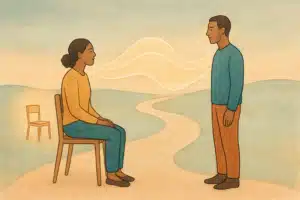
In a poem by Charles Anthony Silvestri (2022), that invitation becomes the heart of a relationship—between two people, yes, but also between any two humans who have crossed paths and recognized the sacred value of another person’s inner world. I have learned that we do not need to rush to claim space; we ask permission to walk alongside someone for a while, to hear their story, to respect their silence, and to be present long enough that loneliness can loosen its grip.

If you’ve ever felt overlooked, talked over, or trapped in a conversation where you were really just waiting to be heard—this poem may land with surprising force. Because listening is not merely a skill; it’s a form of emotional attention. And emotional attention changes people.

A Brief History of Listening (That Isn’t Just “Being Quiet”)

Listening has been discussed for centuries, but what’s powerful about Silvestri’s poem is how it modernizes the idea: not listening as passive silence but listening as a relational commitment.

  • In many traditions, listening is treated as a spiritual discipline. Ancient teachings often place “attentive listening” at the center of wisdom—because wisdom requires receptivity.
  • In philosophy and ethics, listening becomes a way of acknowledging another person’s reality rather than dismissing it as irrelevant.
  • In psychology, listening is central to connection and mental health. Therapists and counselors often emphasize that feeling truly heard can reduce stress and shame while increasing emotional safety.
  • In communication research, we’ve learned that “active listening” involves behaviors—reflecting feelings, asking clarifying questions, and validating experiences—rather than simply keeping quiet. What we do in Spiritual Direction.

But Silvestri’s poem goes a step further. It frames listening as presence with boundaries: if the other person’s silence is their choice, the listener doesn’t break it. They honor it. That is both an emotional intelligence skill and a relational ethics practice: letting someone control their pacing and their vulnerability.

“We Come from Different Places” Why Listening Begins Before Speech

The poem opens with difference: “We come from different places… on different paths we journey.” This matters. Many of us approach conversation as though common ground is required before empathy can begin. Silvestri suggests the opposite: you can begin connection precisely because people are different. You can honor a person’s path without needing it to match your own.

That’s a subtle shift and a powerful one….

  • Instead of asking, “Does your story make sense to me?” we start with, “What is true for you?”
  • Instead of asking, “What can I say to show I understand?” we ask, “What do you need from me right now?”
  • Instead of rushing to similarity, we slow down to curiosity.

Emotional intelligence begins with awareness—of self, of emotion, of impact. If you’re carrying your own anxiety into the conversation, your listening will become a performance. But if you arrive grounded, you can stay open long enough to see what’s there.

Loneliness Ends When Someone Learns Your Song

Silvestri writes about convergence: “So briefly do our lonely paths converge… Yours and mine, along this human journey.” That line hits me because loneliness isn’t always about being alone. Sometimes it’s about being misread. It’s about feeling like your story doesn’t get recognized.

Then comes one of the most striking phrases in the poem: “what hollow loss to never hear your song.” The metaphor of a “song” is more than romantic language. It implies identity—each person has a unique rhythm, a pattern of hopes and griefs, strengths and wounds. If we never listen deeply enough, we don’t just miss information. We miss meaning.

In real life, this looks like

  • Someone repeating the same emotional truth because nobody responded to it the first time.
  • Someone choosing silence because every previous attempt to share was met with judgment or speed.
  • Someone shrinking themselves to fit the conversation, only to become quieter over time.

Listening restores dignity. It tells a person: You matter enough for me to slow down.

“Let Me Listen” The Emotional Intelligence of Being With

The poem’s repeated refrain— “Let me listen”—isn’t only a request. It’s a method. Listening here includes

  1. Allowing the story to be theirs.

The speaker says: “Your story never has been mine to tell—so let me listen.” This is emotional intelligence at work. Some of us accidentally steal someone’s narrative by translating it into our experiences (“That happened to me too…”). Others appropriate by concluding how the person must feel or what they must have meant. Silvestri’s speaker refuses that impulse. They don’t take over the narrative; they honor the ownership of the voice.

  1. Valuing the whole range of emotion.

“Your triumphs and your tears / Your trials and your fears.” Many people are comfortable with success stories but stumble with pain. Yet real listening includes joy and sorrow. It also means you don’t treat sadness as an inconvenience or “overreaction.” You recognize emotion as information.

  1. Staying present without forcing resolution.

Listening doesn’t always lead to solutions. Sometimes the “help” a person needs is not action but witnessing. Emotional safety often comes from being allowed to feel without being rushed to fix.

  1. Respecting silence as a choice.

“And if a silence is your choice to keep, then I will keep it with you.” This is especially rare. Many conversations become uncomfortable when someone stops talking, and that discomfort pushes the other person to fill space or pressure them for more. But Silvestri suggests something gentler: you can stay in the quiet and still communicate care.

If you’ve ever felt pressured to “say something” while your heart was still assembling its words, you’ll understand why that line matters. Silence is sometimes where grief breathes. Silence can also be where a person regains control after overwhelming.

“Too Long You’ve Waited” Listening Is Also an Act of Repair

The poem concludes with urgency: “Too long you’ve waited, too long, to share your journey, your song—so let me listen.” That “too long” is a mirror. It asks: how many people around us have been waiting—patiently or desperately—for someone to hear them?

Waiting may show up as

  • Being consistently the “strong one,” while everyone else forgets they also need care.
  • Staying agreeable, because honesty has not led to safety in the past.
  • Sharing gradually, as if testing whether the listener will punish vulnerability.

When you truly listen, you don’t just respond to words—you signal that waiting is no longer necessary.

Practice Listening Like You Mean It

So, what can we do with this poem right now—today—with real emotional intelligence, not just inspiration?

Here are three practical actions you can take, whether with a partner, friend, coworker, parent, or even yourself

  1. Choose a listening posture for 10 minutes.

Put your phone away. Don’t plan your reply. Ask one open question: “What part of your story feels most important for me to understand?” Then reflect what you heard: “It sounds like…” and “What I’m noticing is…” Keep going until they say you got it.

  1. Validate the emotion before evaluating the facts.

Try phrases like,

  • “That sounds painful.”
  • “I can see why you’d feel that way.”
  • “Your fear makes sense given what you’ve been through.”

Validation doesn’t mean you agree—it means you respect the person’s internal experience.

  1. Honor silence without panic.

If they go quiet, don’t rush to fill it. Let the quiet exist. You can say: “I’m here. Take your time.” That sentence alone can create safety.

And if you want a simple daily prompt: Listen for the “song.” Ask yourself: What unique rhythm is this person carrying—what are they trying to express that words can’t fully capture?

Make Listening a Way of Loving

Charles Anthony Silvestri’s poem is ultimately a vow. It says: I will not rush you. I will not take your story. I will walk beside you. And if you cannot speak yet, I will stay with your silence.

If we take that seriously, relationships change. Communities change. Even workplaces change—because listening is one of the fastest pathways to trust.

So, here’s your invitation, in the spirit of the poem:

Who in your life has waited too long to be heard?

Choose one person. Give them ten minutes of honest listening this week. Let your presence be the response. And when they share—triumphs, tears, trials, fears—remember, you don’t need to become their hero. You only need to be a safe witness.

Let me listen. Now—go do it.

Peace and every good

We come from different places,
You and I,
on different paths we journey;
let me walk beside you for a while –
let me listen.

So briefly do our lonely paths converge,
Yours and mine,
along this human journey;
what hollow loss to never hear your song –
let me listen.

Let me listen,
let me listen as you tell your story:
Your triumphs and your tears,
Your trials and your fears.
Your story never has been mine to tell –
so let me listen.

And if a silence is your choice to keep,
then I will keep it with you;
as long as we walk together,
You and I,
I will listen.

Too long you’ve waited, too long,
to share your journey, your song –
so let me listen.

             – Charles Anthony Silvestri, 2022


Numbness, Discernment, and Voting with Care

Sometimes I am just plain numb.

Not in a dramatic, storybook way—no fireworks, no sudden collapse. It’s quieter than that. It feels like driving through fog for days: my hands still move, my calendar still gets filled, my words still come out in the right order. I can answer emails. I can make dinner. I can show up.

But something inside me turns down the brightness.

It’s as if my heart has decided, If I can’t carry all this, I’ll carry less. Do you know what I mean here? Not because I’ve stopped caring—at least not exactly—but because my body seems to be trying to protect me from the cost of caring all at once, for too long, in a world that never stops asking for attention. EVER!

Numbness doesn’t always announce itself. Sometimes it disguises itself as competence. Sometimes it sounds like, “It’s fine,” when what I mean is, “I can’t feel the full weight of this moment and still function.”

Then the information comes.

It doesn’t arrive all at once anymore—it arrives like weather. Right? Headlines. Updates. Breaking news. A constant parade of opinions wrapped in certainty, wrapped in urgency, wrapped like they’re personal medicine for whatever I’m currently hungry for. You don’t even have to choose it. It just finds you. It knows what makes you afraid. It knows what makes you feel righteous. It knows what you’re lonely for.

And somehow it keeps stacking until numbness looks less like rest and more like survival.

I used to think numbness was the opposite of hope. Lately I’m wondering if numbness can be a protective shutoff—not because we stopped caring, but because we’ve been overwhelmed with caring for too many things we can’t fix alone.

And that leads me to a question that keeps waking me up at night:

What can we believe? Anything?

Because belief—at least the kind that’s constantly being pushed at us—doesn’t always arrive through reflection. It arrives through pressure. Through targeting. Through personalization. Through a feed that seems to understand my nerves better than I do.

If everything is designed to convince you, then belief itself becomes slippery. I don’t just weigh information; I experience a kind of emotional tug-of-war. I borrow certainty for relief in the moment. I scroll until I find a voice that makes my feelings sound wise. I trade listening for winning. I trade the slow work of discernment for the quick thrill of being right.

Then the next wave arrives.

And I realize the certainty I leaned on wasn’t built to last inside me. It doesn’t grow roots in my values or my conscience. It just briefly covers the exposed parts of me. It soothes discomfort without earning trust. It can feel true because it feels stabilizing—but stability isn’t the same thing as truth.

What I didn’t fully understand until very recently is that the battle isn’t only “what people believe.” The battle is also the environment that trains my mind to adopt beliefs quickly, intensely, and defensively.

And I’ve felt what that training does to me—especially when I start getting stuck around elections.

I keep thinking about how I decide when everything feels like it’s trying to decide for me.

Not just who wins. Not just what side I’m on. But what I can responsibly believe long enough to vote. I was talking with one of my daughters the other day, and she is pretty dog gone smart, we got into this tug of war over voting, who’s right, who’s wrong. Because there are only two choices, correct? I mean we must stand on that statement, right?

Well, voting isn’t theoretical for me. It’s a real choice with real consequences. And I don’t want numbness to steal my discernment while I’m pretending, I’m just “being realistic.”

I’ve noticed a pattern in myself that I don’t like but can’t ignore when information gets relentless, I start chasing certainty. Then I start getting suspicious. Then I start getting overwhelmed. Then numbness shows up again—not calm, not peace, but a kind of emotional dimming so I don’t have to keep bracing.

It’s not that I can’t think. It’s that my thinking gets hijacked by urgency. Can you hear that? Urgency!

So, I’ve been trying to build a decision process that slows down instead of speeding up—one that treats belief like something I cultivate, not something I grab.

Here are a few shifts that have helped me, at least a little:

1) I check my nervous system before I check the headline.

When I’m tense, my brain reads like a courtroom. I look for evidence that will make me feel safe in my conclusion. If I notice my body is on alert, I don’t scroll as much. I pause long enough to ask: Am I trying to find truth—or trying to calm fear? Those are very different tasks.

2) I separate “credible” from “certain.”

A claim can sound confident and still be unreliable. A person can sound convincing and still be careless. When I’m tempted to treat certainty as proof, I try to look for things that last longer than a moment: consistency, willingness to update, clear sourcing, and an ability to hold up under questions.

3) I let my values be a filter, not a shortcut.

Values matter to me—compassion, justice, truth-seeking. But I’ve learned that values can accidentally become permission slips. So instead of asking, “Does this match my values?” I try to ask, “If this policy is applied in the world, who does it help, who does it harm, what tradeoffs are being ignored?”

4) I make decisions in steps, not in panic.

The election cycle tempts me to compress everything into one anxious sprint: gather all info, feel certain, choose immediately, feel morally resolved. But discernment doesn’t work well under time pressure that’s designed by other people. I’ve started asking myself what I can know enough to make the next small responsible decision—and what I need to postpone until I can look again with better clarity.

5) I treat belief like a draft.

If I notice my belief requires me to reject nuance completely—if it demands, I treat disagreement as stupidity or betrayal—that’s a sign. I want convictions that can survive complexity, not convictions that collapse the moment reality gets complicated.

Numbness and discernment both show up as signals, not enemies. Numbness can mean I’m overloaded. It can mean I need boundaries with my attention. It can mean I’ve absorbed too much conflict with no outlet except more information.

But numbness can also become its own trap: a quiet way of opting out. A way of “not feeling” that looks like neutrality while it quietly reshapes what I’m willing to care about.

I don’t want numbness to decide my vote by dulling my conscience. I don’t want exhaustion to turn into apathy dressed as wisdom.

And this is where my concern returns, again and again—back to elections.

I worry about how easily I can be pulled into certainty that doesn’t actually come from evidence. I worry about how easily my mind can be trained to treat emotion as proof. I worry about how the feed can make every issue feel like a personal referendum on whether I’m good, smart, safe, or right.

I worry that the louder the certainty gets, the more I may reach for it simply to stop the feeling of being unmoored.

When I think about voting, I try to come back to a simpler question than “Who is correct?”—a harder question that might protect my integrity:

What would I choose if I weren’t being rushed into belief?

Not what would feel best in the moment. Not what would win the argument. Not what would make me feel righteous fastest. What would I choose if I had time to look carefully, compare responsibly, and accept that I might need to revisit my understanding?

I’m still learning how to do that. I’m still prone to getting tugged into the certainty treadmill, still vulnerable to the fog.

But I’m trying to treat this moment—this election moment—as more than a headline cycle. As a chance to practice discernment instead of numbness. As a chance to believe with care, not with cravings for certainty.

Because at the end of all this, I want my vote to be an act of responsibility, not an act of shutdown. And I want my belief to be sturdy enough to survive contact with reality—especially when reality keeps changing.

Peace and every good!

The Light That Holds Back Darkness 2

First Comes Justice: The Light That Holds Back the Darkness

This is one story I feel strongly about.

I will not soon forget the first time I walked through the heavy steel doors of a state prison with Kairos Prison Ministries. The Sally port has a clang when it shuts behind you that feels final, like the world I knew had been sealed off, and what lay ahead of me in the eyes of forty plus men whose lives most of society had quietly written off was unknown. And what I did not know when I went in is that you cannot get out of the prison until they let you out, period. And I was dead tired that day. I had convinced myself on the drive over that nothing I said would matter. Surely there were better people, more eloquent people, more useful people for this work. I almost turned around in the parking lot. I never told anyone that feeling until today.

But something made me go in. And in the back row sat a man I will call Marcus (not his name) He had not spoken a word the entire first morning, his arms crossed, his eyes anywhere but on us. No trust, none, by the afternoon, he had shifted. By the second day, he raised his hand, and no one made fun of the question. And on the third day, with tears in his eyes, he told me, “Nobody has visited me in fourteen years. Nobody. Until you.” I cried.

That is when I understood something I had read a hundred times but never felt in my bones. Justice is not a verdict handed down from a bench. Justice is a face in a doorway. Justice is the willingness to walk through the gate when every instinct says RUN the other direction. Justice is showing up, especially for the people the world has decided do not count.

Marcus did not need me to fix his life; in fact, he would have run the other way if I had tried. He needed someone to say, by their presence, that his life still mattered. That is the smallest unit of justice, and it is also the largest. Every policy, every program, every reform is built on that single brick. Just a quick note here for those of you maybe thinking this, No I do not think he needed to be let of prison because we from Kairos came to visit. Some statistics put it this way, 10% are innocent, 80% are doing their time for things they have done, and 10% should never see the light of day.

A Little History for Background

The word justice is older than any nation that claims it. In ancient Hebrew, the concept came in two intertwined words. Mishpat described justice in its sharp, courtroom sense, the kind that punishes wrongdoing and protects the innocent. Tzedakah described justice as right relationship, the kind that restores what has been broken between people. The ancients understood that you cannot have one without the other. Punishment without restoration is cruelty. Restoration without accountability is sentimentality. We learned this in Kairos.

Greek philosophers gave us the idea of justice as a virtue, the fair distribution of what is owed. The Romans codified it into law. The framers of Magna Carta in 1215 forced a king to admit that even he stood under it. Centuries later, abolitionists like Frederick Douglass and Harriet Tubman risked their lives to insist that justice could not coexist with chains. Suffragists marched for it. Workers organized for it. Dr. King wrote about it from a Birmingham jail, reminding a comfortable nation that injustice anywhere is a threat to justice everywhere.

Every generation has had to learn the same lesson the hard way. Justice is not inherited. It is not automatic. It is not the natural state of human affairs. We live with it and it is built, defended, and rebuilt by ordinary people who decide that the world as it is cannot be the world as it should be. Again, Kairos helped me here.

Justice Today, Justice Here

We live, right now, in a moment that tests whether we have learned anything at all.

Roughly two million of our neighbors are behind bars in this country, more than in any other nation on earth. And truly if you added up the next few largest countries together, we still have more in our prisons then they in theirs. Tens of millions go to bed hungry in a land of plenty. Healthcare remains a privilege rather than a right for far too many families. When we had our mission, Everyday People Ministries, we gave out 30 tons of food a month. I saw veterans sleep on sidewalks within sight of the monuments built to honor them. Children grow up in zip codes that determine, with frightening accuracy, what their futures will hold. Like the one I grew up in, in Detroit.

These are not natural disasters. They are choices. Our choices. And choices can be unmade.

The good news is that justice still wears a human face. It looks like the nurse who stays an extra hour with the patient who has no visitors. It looks like the teacher who buys school supplies out of her own paycheck. It looks like the volunteer who delivers a meal, the lawyer who takes a case without payment, the neighbor who pays attention. It looks like Lynette and me sitting at tables in countries far from home, learning that loneliness and hunger speak every language. It looks like a Kairos weekend, where men who have done terrible things and men who have had terrible things done to them sit in the same circle and discover that grace is bigger than any of us deserve.

You do not have to fix the whole system to be part of the answer. You only have to refuse the lie that this is somebody else’s problem. Volunteer for one organization. Mentor one young person. Advocate for one policy. Write one letter. Sit with one person in the hospital. The work is never finished, but the work is never wasted either.

The darkness is loud right now. It tells us we are too small to matter, too tired to try, too divided to agree on anything. It wants us to scroll past, to look away, to whisper “not my problem.” Every time we refuse that whisper, we hold the line. Every time we show up, we push the darkness back by an inch. Inches add up.

Linking Arms

I think often about Marcus, and about the hundreds of others I have met inside those walls. They taught me that I nearly missed the gift by almost “not walking through the gate”. How many gates do the rest of us almost not walk through? How many people are waiting on the other side, not for our money or our expertise or our opinions, but simply for our presence?

We began with a question. What is justice in a world teetering on the edge of chaos? It is fairness, yes. It is accountability, yes. It is law, yes. But underneath all of that, justice is love with its sleeves rolled up. All the way up. It is compassion that has stopped talking and started walking. It is the moment when the comfortable decide that the comfort of the comfortable is not the point.

So here we are, you and I. The need has not gotten smaller since you started reading. Somewhere a child is going to bed afraid tonight. Somewhere a sick person is waiting for someone who will not come. Somewhere a person behind bars is wondering if anyone remembers their name. And somewhere, a gate is waiting for someone to walk through it.

Let us be the ones who walk through. Let us be the ones who link arms across our differences and hold back the darkness together. Let us be known not by what we accumulated or what we argued about, but by who we visited, who we lifted, and who we refused to forget. Let us be the fillers of the breach, the lighters of small candles, the keepers of one another.

The world is not going to save itself. Neither is the person across the street, the person across the country, or the person across the wall. They are waiting on us, and we are waiting on each other, and somewhere in the middle of all that waiting, justice is asking whether we will finally say yes.

First comes justice. Everything else, everything good, everything lasting, everything worth handing down, follows.

Peace and every good.

Sources

  1. Hugh Whelchel, “Understanding Tzedakah & Mishpat (Righteousness & Justice),” Institute for Faith, Work & Economics. https://tifwe.org/tzedakah-mishpat-righteousness-justice/ — for the paired meanings of mishpat(rectifying/retributive justice) and tzedakah (right relationship), and the way the two words function together in the Hebrew Scriptures.
  2. Martin Luther King Jr., Letter from Birmingham Jail, April 16, 1963. Full text hosted by the University of Pennsylvania African Studies Center: https://www.africa.upenn.edu/Articles_Gen/Letter_Birmingham.html — source of the line “Injustice anywhere is a threat to justice everywhere.”

The Tender Work of Healing Loneliness, Gently, Slowly.

The ache of loneliness is deep and profound for some of us. It shows up in our posture, our energy, and the way we relate to the world. I remember when I went through a painful divorce and the loneliness I felt. I didn’t have self-esteem, and I didn’t know what was next in my life. I traveled on autopilot, grunted responses to questions, and went deep inside myself in a protective stance.

My shoulders hunched as if trying to make myself smaller so I would take up less space—and maybe be less likely to be hurt again. That posture mirrored how I felt inside: small, raw, and on guard. My days blurred together. I thought loneliness was something to be fixed quickly, as if I were just a machine with a loose bolt. But loneliness isn’t just a problem to be solved. It’s a human experience that asks for tenderness, time, and gradual re-learning about who we are when we are alone.

Loneliness wears many faces. Sometimes it’s noisy—restless, consuming, hard to shake. Sometimes it’s silent. It can arrive after a breakup, a move, retirement, the loss of a loved one, or during seasons when you don’t fit into the surrounding culture. And sometimes it arrives without an obvious cause. You might be surrounded by people yet feel profoundly disconnected. Loneliness can color how you see yourself (when I felt unlovable) and how you see others (“nobody understands me”). That lens is heavy. It makes ordinary tasks feel larger, heavier, and harder to start.

When loneliness becomes long-term, it shapes habits. You might withdraw from invitations, avoid phone calls, or spend afternoons scrolling through images of other people living bright, full lives. Facebook (as an example) can be especially brutal in these seasons. You might develop defensive behaviors—sarcasm, irritability, or constant self-criticism—to keep others at a safe distance. These are understandable survival strategies. But they can keep us stuck, tightening the loop between pain and isolation.

A friend of mine, John, is a gregarious person by nature. But after his father died, he sank into a quiet, deep loneliness. He would show up to gatherings and laugh easily, but afterward he would go home and close the curtains. One night he told me he felt like a house with rooms no one ever walked into.

Over the next few months, he knew something needed to change. He began meeting with a grief group and volunteered at a local community garden. The volunteers didn’t try to fix him. They simply shared tasks and stories. With time, his personal rooms were visited more often—not because he suddenly changed overnight, but because small, consistent human interactions built a sense of belonging again. (True Story)

Another story: Ana moved to Italy for work and felt disconnected from the language and customs. Her loneliness was layered with isolation and cultural disorientation. She found solace by starting a weekly ritual—Tuesday potluck evenings with a few colleagues. No grand obligations, just a bowl of soup and one good question: “What was the best thing you did for yourself this week?” That question became a conduit for sharing. It helped her feel seen, not solved. (Example)

If you’re lonely right now, I want to say this clearly: being lonely is not a personal failing. Gentleness is not indulgence. Responding to loneliness with self-blame usually increases the pain, as if the heart needs to be punished before it can heal. Instead, try meeting yourself with care and clarity—like you would meet a friend who is hurting.

Here are four practical, compassionate ways to be gentle with yourself on this path:

  • Acknowledge the ache without rushing it.

Sit with the feeling and name it: “This is loneliness.” Naming reduces the power of the sensation and helps you observe it instead of being swallowed by it. You might say it aloud when you’re alone or write it in a journal.

  • Normalize your experience.

Many people have felt this—it’s part of being human. Reading stories, memoirs, or essays about loneliness can make you feel less alone in your aloneness. You’re not broken; you’re human.

  • Create small rituals of care.

When we’re lonely, big plans can feel impossible. Start with tiny rituals: a cup of tea at the same time each afternoon, a ten-minute walk, lighting a candle before dinner. Rituals create structure and a sense of predictability—soothing when the world feels unstable.

  • Befriend your body.

Loneliness often settles physically tight shoulders, shallow breathing, a heavy chest. Try simple body-based practices: slow diaphragmatic breathing (inhale for 4, exhale for 6), progressive muscle relaxation, or a short yoga sequence that opens the chest. Even gentle movement can change your internal state and communicate kindness to yourself.

Even with these practical steps, there may be times when seeking therapeutic support is the most important thing you can do. A therapist, counselor, or spiritual director can provide tools to navigate loneliness, process past hurts, and gently challenge patterns that keep you isolated. Group therapy can be especially powerful because it combines professional help with human connection.

Comforting exercises you can try today

  • Write a letter to your future self.

Describe what you are feeling right now and what you need. Seal it or save it to be opened in six months. This creates continuity and an ally you can visit later.

  • Try the “two-minute reach” practice.

Each day, do one small, friendly thing for someone: send a message saying, “Thinking of you,” or thank the person who refilled the coffee. Small gestures often return warmth and remind you you’re part of a social web.

  • Use the self-compassion break.

When you notice pain, put a hand on your heart and say: “This is a moment of suffering. Suffering is part of life. May I be kind to myself.” Pause and breathe for several rounds.

  • Make a list of “gentle yeses.”

These are optional social activities that feel manageable—a short walk with a friend, an hour at the library, calling a sibling. Start with one gentle yes per week.

When loneliness persists

If loneliness feels chronic—or if it’s accompanied by hopelessness, persistent fatigue, or changes in appetite or sleep—reach out for professional support. Loneliness can be connected to mental health conditions like depression, and it can benefit from therapy, medication, or both. Asking for help is a courageous, practical step. It can comfort your heart and change the trajectory of your days.

A compassionate ending

Loneliness can be a fierce teacher. It can expose where you’re tender, where you fear rejection, and where you’ve forgotten how to tend to yourself. But it can also be a doorway to deeper self-knowledge. When we meet loneliness with small acts of kindness—tending our bodies, creating rituals, reaching out in tiny ways, and seeking community—we slowly reweave the threads of belonging.

Please hear me when I say, “you don’t need to hurry the healing.” On hard days, remember the posture you instinctively assume in pain: protective, small. Try instead to soften one muscle at a time. Breathe. Put a hand over your heart. Say one gentle thing to yourself. These are not grand solutions, but they are steady—and steadiness is what heals. Over time, small moments of tenderness add up, and the world starts to feel a little less cold.

A poem I wrote about loneliness….

Alone, I fold myself into small shapes, a quiet shell against the world’s bright wind.

Don’t see me

My shoulders learn to hide, my breath grows shallow, and I move through days on soft autopilot.

Don’t see me

Inside, a spark remembers how to rest and keeps a small light against the dark.

Don’t see me

I light a tiny ritual — tea, a song, a name — and let the ache be a visitor, not the whole house.

Maybe see me

Softly I unfold, muscle by muscle, word by word, until a single hand on my chest becomes a bridge.

See me

Peace and every good.